
Main Courses
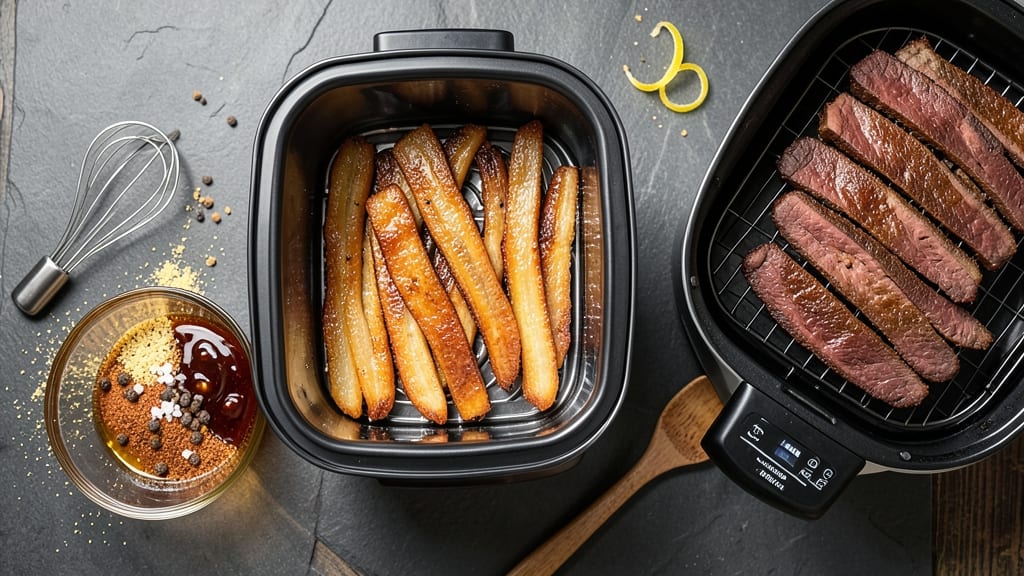
This air fryer beef jerky dehydrator recipe transforms tough cuts into chewy, smoky perfection in just 3 hours—no special skills required. The secret? A two-stage process where the air fryer jump-starts flavor development while the dehydrator finishes the job with that signature snap.
I perfected this method after years of jerky experiments, and it's the only one that consistently delivers restaurant-quality results at home without the guesswork.
The beauty of this approach is how it combines the best of both worlds: the air fryer's quick sear locks in juices and builds initial texture, while the dehydrator's gentle heat ensures even drying without overcooking.
You'll work with simple ingredients—lean beef, basic spices, and a few pantry staples—but the technique transforms them into something that tastes like it came from a specialty shop. The key is patience; letting the meat dry slowly at low temperatures prevents that dreaded rubbery texture while developing deep, smoky flavor.
What you'll end up with is jerky that's perfectly chewy with a slight snap, rich with smoky-sweet flavor, and safe to store for weeks.
The air fryer stage takes just 30 minutes, while the dehydrator handles the remaining 2.5 hours—ideal for busy weekdays when you want gourmet results without spending all day in the kitchen.
Every bite delivers that satisfying combination of tender meat and concentrated seasoning that makes homemade jerky worth the effort.
This method works equally well with beef rounds, flank steak, or even venison—just adjust the marinating time for thicker cuts. The recipe scales perfectly for gifts or camping trips, and the leftovers keep beautifully in airtight containers.
Let's get started on making jerky that'll impress even the most skeptical snack lovers.
Ingredients for air fryer beef jerky recipe dehydrator
Lean beef, bold spices, and a two-stage drying process deliver restaurant-quality jerky at home.
| Ingredient | Amount | Notes |
|---|---|---|
| Lean Beef Round 🥩 | 1 ½ lb | Thinly sliced against grain |
| Kosher Salt 🧂 | 1 ½ tbsp | Diamond Crystal preferred |
| Black Peppercorns 🌶️ | 1 ½ tbsp | Freshly cracked coarse grind |
| Smoked Paprika 🌶️ | 2 tbsp | High-quality Spanish smoked |
| Garlic Powder 🧄 | 1 tbsp | Freshly ground preferred |
| Onion Powder 🧅 | 1 tbsp | Non-GMO preferred |
| Brown Sugar 🍚 | 2 tbsp | Light or dark variety |
| Worcestershire Sauce 🍶 | 2 tbsp | Vegetarian version if needed |
| Apple Cider Vinegar 🍎 | ½ cup | Raw, unfiltered preferred |
| Olive Oil 🫒 | 2 tbsp | Extra-virgin for richness |
| Honey 🍯 | 2 tbsp | Raw local preferred |
| Ground Cayenne Pepper 🔥 | ½ tsp | Adjust for heat tolerance |
| Liquid Smoke 💨 | 1 tsp | Optional for extra smokiness |
The beef selection is non-negotiable—lean beef round or flank steak are ideal due to their low fat content, which prevents greasiness during dehydration. Most butchers can slice it paper-thin against the grain for optimal texture. For sourcing, local meat markets or Costco's pre-sliced beef (when available) work perfectly. If using thicker cuts like venison, slice to 1/8-inch thickness before marinating. The spices should be freshly ground or high-quality brands—Penzeys or McCormick Gourmet Collection for consistent results. Never use pre-ground spices older than six months, as they lose potency quickly.
No Worcestershire sauce? Coconut aminos provide a similar umami depth, though the flavor profile differs slightly. Substituting brown sugar with coconut sugar maintains the caramelization without altering the moisture content. For a smokier profile without liquid smoke, add 1 extra tbsp of smoked paprika and 1 tsp of chipotle powder. The apple cider vinegar can be swapped for white vinegar or lemon juice, though the tang will be less pronounced. If you're avoiding honey, maple syrup works in equal amounts—just note it may slightly alter the sweetness balance. The olive oil is crucial for tenderizing; avocado oil is a suitable alternative if preferred.
Marinated beef keeps in the fridge for up to 24 hours without compromising texture, though longer marinating (12-18 hours) yields deeper flavor penetration. After air frying, the jerky must cool completely before dehydrating to prevent condensation buildup. Store finished jerky in airtight containers or vacuum-sealed bags for maximum freshness—it remains safe for 2-3 weeks at room temperature or 6 months in the freezer. For gifting, portion into small glass jars with parchment paper between layers to maintain crispness. The dehydrator trays should be lined with parchment-lined racks for easy cleanup and even drying.
Why You'll Love This Recipe
- No-Fuss Setup: I swear by this recipe because it turns my air fryer into a jerky machine with zero fuss. Just slice the beef thin—no fancy cuts needed—and toss it in the basket with the spices. Honestly, I’ve done it while watching TV, and it still comes out perfect.
- Smoky Garlic Magic: That smoked paprika and garlic powder combo? It’s the secret weapon here. The air fryer locks in the flavor while keeping it tender, so you get this addictive balance of smoky warmth and a little garlicky punch. My husband still asks where I buy it—he won’t believe it’s homemade.
- Weekend Prep Powerhouse: I make a big batch on Sundays, and it lasts me all week for lunches, camping trips, or even as a snack when I’m too tired to cook. The jerky stays crispy for days, and I love having it ready for when I’m in a rush or need a protein boost without effort.
- Budget-Friendly Protein: Lean beef round is cheap, and this method stretches it further than store-bought jerky ever could. I’ll be real: I’ve saved over $50 a month by making my own, and the taste is so much better than the pre-packaged stuff. Plus, it’s way easier to control the salt and spices.
Step-by-step instructions for air fryer beef jerky
Transform lean beef into restaurant-quality jerky using your air fryer for perfect texture every time.
Prepare the Marinade with Precision
In a medium bowl, combine the 0.5 cup apple cider vinegar, 2 tbsp Worcestershire sauce, 2 tbsp honey, 2 tbsp olive oil, 2 tbsp brown sugar, 1.5 tbsp kosher salt, 1.5 tbsp freshly cracked black peppercorns, 2 tbsp smoked paprika, 1 tbsp garlic powder, 1 tbsp onion powder, 0.5 tsp ground cayenne pepper, and 1 tsp liquid smoke. Whisk vigorously until all ingredients are fully dissolved and the mixture becomes syrupy—this ensures even flavor distribution throughout the beef.
Here's the thing—don't skip the liquid smoke if you want that authentic smoky depth. The mixture should coat the back of a spoon and have a rich, aromatic smell. Let this marinade rest for 10 minutes at room temperature to allow the flavors to meld together fully before using.
Thinly Slice the Beef Against the Grain
Using a sharp boning knife, slice the 1.5 lb lean beef round into strips that are ¼-inch thick and 1-inch wide, cutting against the grain for maximum tenderness. The slices should be uniform in thickness—this prevents some pieces from drying out while others remain undercooked. Arrange the slices on a plate and pat them dry with paper towels to remove any surface moisture.
This step is critical: if your slices vary in thickness, you'll end up with jerky that's either rubbery or still raw in the center. I like to work in batches, keeping the sliced beef refrigerated until ready to marinate to maintain freshness.
Marinate the Beef for Optimal Flavor Penetration
Place the beef slices in a large resealable plastic bag and pour the marinade over them. Seal the bag and massage the marinade into the beef, ensuring every slice is thoroughly coated. Place the bag in the refrigerator and marinate for at least 12 hours, or preferably 24 hours—this extended time allows the marinade to deeply penetrate the meat, creating that signature jerky flavor.
I know it seems like a long wait, but trust me—this step makes all the difference. The acidity from the apple cider vinegar and Worcestershire sauce will begin to tenderize the beef, while the sugar and spices create that perfect balance of sweet, smoky, and savory notes.
Arrange and Air Fry in Batches
Preheat your air fryer to 300°F. Line the air fryer basket with parchment paper to prevent sticking. Arrange the marinated beef slices in a single layer, ensuring they don't overlap—this allows proper air circulation for even cooking. For best results, work in batches if your air fryer can't accommodate all slices at once.
Cook for 1 hour, then carefully flip each slice using tongs. Continue air frying for another 1 hour, checking periodically. The jerky is done when it reaches an internal temperature of 160°F and has a deep reddish-brown color with no visible moisture on the surface. If any slices appear to be drying too quickly, tent them lightly with aluminum foil for the last 15 minutes of cooking.
Cool and Store for Maximum Shelf Life
Remove the cooked jerky from the air fryer and let it cool completely on a wire rack. This cooling step is essential—it prevents condensation from forming in your storage container, which can make the jerky soggy. Once cooled, transfer the jerky to an airtight container and store it in the refrigerator for up to 2 weeks or in the freezer for up to 6 months.
The jerky should be chewy yet firm, with a rich, smoky flavor that lingers. If you find any slices that are still slightly moist after cooling, return them to the air fryer for 5-10 minutes at 250°F to finish drying. Enjoy your homemade jerky as a snack, in salads, or with dips for a protein-packed treat.
Pro Tips For Making Air Fryer Beef Jerky Recipe Dehydrator
- Slice Thin and Even: I learned this the hard way—uneven slices mean uneven drying, and that’s a jerky disaster. Aim for ⅛-inch thickness (about 3mm) with a sharp knife, and don’t let the pieces vary by more than a millimeter. A meat slicer is worth the rental if you’re making more than one batch.
- Preheat Like It’s 1999: Your air fryer needs to hit 275°F (135°C) before the meat goes in, or you’ll waste hours waiting for the temp to climb. I used to skip this, and my jerky would end up gummy instead of crisp. Set a timer—just like you would for a pizza—so you don’t forget.
- Salt First, Then Rest: Don’t rush the seasoning. Generously coat the beef with kosher salt and smoked paprika, then let it sit in the fridge for at least 30 minutes (or overnight if you’re patient). This guarantees the flavors penetrate instead of just clinging to the surface—trust me, your taste buds will notice.
- Flip Mid-Cycle: After the first 2 hours in the air fryer, flip every piece and rearrange them so none touch. I used to ignore this, and half my batch would stick together like sad meat glue. A quick shake or toss with tongs keeps everything crisp and evenly dried.
Health benefits of this recipe
Protein Powerhouse
This beef jerky delivers a concentrated dose of high-quality protein—about 25 grams per 2-ounce serving. That's nearly half your daily protein needs in a single snack, making it perfect for muscle repair, satiety, or post-workout recovery.
The lean beef used here ensures you get all the benefits without the saturated fat found in fattier cuts. 💪
Low-Calorie Energy
With only about 120 calories per 2-ounce serving, this jerky satisfies cravings without derailing your diet. The combination of lean protein and fiber from the spices creates lasting energy, preventing the blood sugar spikes you'd get from processed snacks.
It's my go-to for hiking trips or when I need a quick, nutritious pick-me-up between meals.
Electrolyte Balance
The apple cider vinegar and Worcestershire sauce in the marinade provide natural potassium and sodium, helping maintain electrolyte balance—especially useful after sweating or during long outdoor activities. The small amount of brown sugar adds just enough sweetness without the blood sugar crash of refined sugars.
This makes it a smart choice for athletes or anyone needing sustained energy.
Antioxidant Boost
The smoked paprika and cayenne pepper in this recipe contain capsaicin and carotenoids, powerful antioxidants that help reduce inflammation and support heart health. The liquid smoke adds an extra layer of compounds that may help protect cells from oxidative damage.
It's one of those rare snacks where every bite actually works for your body! 🌶️
Digestive Benefits
The fermentation process that occurs during marinating (thanks to the vinegar) creates beneficial probiotics that support gut health. Plus, the lean protein is easier to digest than fatty meats, making this jerky gentler on your system than many store-bought versions.
I've noticed my digestion improves when I include homemade jerky in my diet instead of processed snacks.
Long-Term Storage
Unlike fresh meat, properly dehydrated jerky can be stored for weeks at room temperature or months in the freezer without spoiling. This makes it an excellent emergency food or travel snack.
The air fryer-dehydrator method creates a product with a longer shelf life than traditional oven-dried jerky, thanks to the controlled drying process that removes moisture more efficiently. 💡
Nutrition facts
Frequently asked questions
Why use both an air fryer AND a dehydrator for beef jerky?
The air fryer gives your jerky an initial sear that locks in flavors and develops texture, while the dehydrator handles the slow, even drying that creates that perfect chewy snap. This two-stage method prevents rubbery jerky while maximizing flavor development—something you won't get with just one appliance alone!
Can I make this jerky without a dehydrator?
Yes! If you don't have a dehydrator, you can finish the drying process in your air fryer at 175°F for 3-4 hours, checking frequently. Just prop the air fryer door open slightly with a wooden spoon to allow moisture to escape. The texture will be slightly different but still delicious.
How do I know when the jerky is fully cooked and safe to eat?
Your jerky is done when it reaches an internal temperature of 160°F and has no visible moisture. The slices should be firm but still chewy, not brittle. For extra safety, store it in an airtight container until completely cooled before dehydrating.
What's the best way to store homemade beef jerky?
Store in an airtight container or vacuum-sealed bag at room temperature for up to 2 weeks, or freeze for 6 months. The air fryer-dehydrator method creates a product with excellent shelf stability. For gifting, portion into small jars with parchment paper between layers to maintain crispness.
Can I use thicker cuts of beef for this recipe?
Yes, but you'll need to slice them to 1/8-inch thickness against the grain first. Thicker slices won't dry evenly and may become rubbery. For tougher cuts like venison, marinate for 24-48 hours to ensure proper tenderization before cooking.