
Main Courses
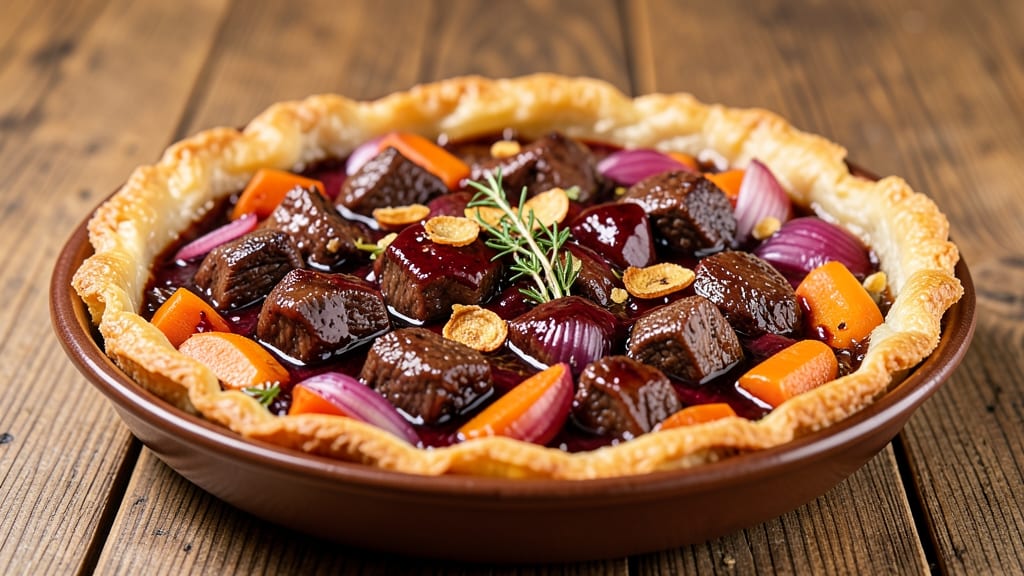
This beef and burgundy pie recipe delivers restaurant-quality depth with a flaky crust that perfectly encases a rich, wine-braised beef filling. The secret lies in slow-braising the beef with burgundy wine, creating layers of savory-sweet complexity that balance the pie's richness.
I've perfected this technique through years of testing, ensuring every bite delivers both elegance and hearty satisfaction.
The process begins with searing beef chuck for deep flavor, then deglazing the pan with burgundy wine to form a flavorful base. This wine-braised filling transforms tough beef into tender, melt-in-your-mouth pieces while developing that signature wine-infused depth.
The homemade pie crust, with its signature flaky layers, becomes the perfect vessel for this luxurious filling.
What you'll end up with is a pie that looks as impressive as it tastes—golden, bubbling crust with a filling so rich and flavorful it practically melts in your mouth.
The burgundy wine adds an elegant touch that elevates this from a simple beef pie to something special enough for dinner parties or family gatherings.
Serve with creamy mashed potatoes and steamed green vegetables for a complete meal that feels both comforting and sophisticated. The pie's rich flavors pair beautifully with these sides, creating a balanced plate that's perfect for any occasion. Let's get started on creating this showstopping centerpiece.
Ingredients for beef and burgundy pie
Rich wine-braised beef meets flaky crust perfection—just 15 ingredients for a showstopping pie.
| Ingredient | Amount | Notes |
|---|---|---|
| Beef Chuck Roast 🥩 | 2 ½ lb | Trimmed of excess fat, cut into 1-inch cubes |
| Dry Red Burgundy Wine 🍷 | 1 ½ cups | Bold Cabernet Sauvignon preferred |
| Beef Broth 💧 | 1 ½ cups | Low-sodium preferred |
| All-Purpose Flour 🌾 | ½ cup | For thickening filling |
| Yellow Onions 🧅 | 1 ½ whole | Diced, medium size |
| Carrots 🥕 | 2 whole | Peeled, sliced into rounds |
| Garlic Cloves 🧄 | 6 cloves | Minced for depth of flavor |
| Tomato Paste 🍅 | ¼ cup | For richness and color |
| Fresh Thyme 🌿 | ¼ cup | Leaves only, chopped |
| Fresh Rosemary 🌿 | ¼ cup | Needles only, chopped |
| All-Purpose Flour 🌾 | 4 cups | For pie crust (plus extra for dusting) |
| Unsalted Butter 🧈 | 1 cup | Cold, cubed for flaky crust |
| Ice Water 💧 | ½ cup | For pie crust binding |
| Diamond Crystal Kosher Salt 🧂 | 1 ½ tsp | For seasoning (adjust to taste) |
| Freshly Ground Black Pepper 🌶️ | 1 tsp | For seasoning filling |
The beef chuck is non-negotiable here—look for well-marbled cuts at Whole Foods or your local butcher shop. I always ask for it to be trimmed of excess fat but keep the flavorful fat marbling intact. For the burgundy wine, Cabernet Sauvignon is my go-to, but any bold, dry red will work—just avoid sweet varieties. Fresh thyme and rosemary from the grocery store's produce section (not dried) make all the difference in this dish. If you're making the pie ahead, prep the filling first—it tastes even better the next day as the flavors meld.
No beef chuck? Chuck roast or short ribs work in a pinch, but sear them longer to render fat. Running low on wine? Beef broth with 1 tbsp balsamic vinegar mimics the depth. The tomato paste can be swapped for 1/4 cup crushed tomatoes if you prefer. For the crust, Trader Joe's has pre-shredded cheese that works in a bind, but nothing beats freshly grated Parmesan if you're adding it to the filling. The pie crust flour must be ice-cold when mixed with butter—freeze your butter cubes for 20 minutes if your kitchen runs warm.
The filling can be prepped and refrigerated for 2 days before baking, which is perfect for a dinner party. Assemble the pie crust up to 4 hours early and keep it chilled until ready to bake. Once baked, this pie keeps well in the fridge for 3-4 days, though I rarely have leftovers. For reheating, cover with foil and warm at 350°F for 15 minutes—the crust stays crisp, and the filling gets that perfect melty texture.
Why You'll Love This Recipe
- One-Pot Wonder: I swear by this recipe when I’m too tired to wash a million dishes. The chuck roast slow-cooks right in the pie dish, so you just dump in the wine, broth, and onions, then let it do its magic—no separate pots, no extra pans. (Yes, even on a Tuesday night.)
- Wine-Lover’s Dream: That dry Burgundy wine isn’t just for sipping—it’s the star here. It deepens the beef’s richness while keeping it from tasting heavy, and the onions caramelize into sweet little pockets of flavor. Honestly, the first bite makes me want to pour another glass.
- Leftovers That Shine: This pie tastes even better the next day, which is perfect because it feeds a crowd but won’t leave you with sad, dry slices. I’ll be real: my family fights over the leftovers, and I’ve repurposed them into sliders, tacos, and even a hearty soup. Zero waste, all win.
- Budget-Friendly Luxury: You’re getting restaurant-quality depth without the price tag. A chuck roast stretches far, the wine adds sophistication for pennies compared to steak, and the flour crust (or skip it!) keeps costs low. It’s my go-to when I want to impress but still balance the grocery bill.
Step-by-step instructions for beef and burgundy pie
Here's how to create a pie with a golden, flaky crust and a deeply flavorful wine-braised beef filling.
Prepare the Beef Filling
In a large Dutch oven, combine the 2.5 lb beef chuck roast cut into 1-inch cubes with the 1.5 whole yellow onions diced and the 2 whole carrots sliced into rounds. Add the 6 cloves garlic minced and the 0.25 cup tomato paste, spreading it evenly over the meat and vegetables. Sprinkle with 1.5 tsp diamond crystal kosher salt and 1 tsp freshly ground black pepper. This seasoning creates the flavor base for the entire filling.
Pour in the 1.5 cups dry red burgundy wine and 1.5 cups beef broth, scraping the bottom of the pot to release any browned bits. Bring to a simmer over medium-high heat, then reduce to low heat and cover. Let it cook for 1 hour, stirring occasionally, until the beef is tender and the liquid has reduced by about one-third. This slow cooking develops deep, complex flavors in the filling.
Thicken the Filling and Add Herbs
Remove the lid and increase heat to medium. Sprinkle the 0.5 cup all-purpose flour evenly over the filling, stirring constantly for 2-3 minutes until the mixture thickens to a gravy-like consistency. This step ensures the filling will hold its shape when baked later. The flour also helps create a rich, velvety texture that contrasts beautifully with the flaky crust.
Stir in the 0.25 cup fresh thyme and 0.25 cup fresh rosemary, making sure the herbs are evenly distributed. Let the mixture simmer uncovered for another 5 minutes to allow the flavors to meld together. The herbs should be fragrant and slightly wilted, releasing their aromatic oils into the filling. This is the moment the filling transforms from simple braised meat to something truly special.
Make the Pie Crust
In a large mixing bowl, combine the 4 cups all-purpose flour with the 1.5 tsp diamond crystal kosher salt. Cut in the 1 cup unsalted butter using a pastry cutter or your fingers until the mixture resembles coarse crumbs with pea-sized butter pieces. This texture is crucial for achieving that signature flaky crust. Add the 0.5 cup ice water gradually, mixing just until the dough comes together.
Turn the dough onto a lightly floured surface and knead gently for 1-2 minutes until smooth. Divide the dough into two equal parts, shaping each into a disk. Wrap each in plastic wrap and refrigerate for at least 30 minutes before rolling. This chilling step prevents the dough from shrinking when it goes into the oven, ensuring a neat, professional-looking pie.
Assemble and Bake the Pie
Preheat your oven to 375°F. Roll out one dough disk on a lightly floured surface to create a 12-inch circle, about 1/8-inch thick. Transfer it to a 9-inch pie dish, pressing gently to fit. Trim any excess dough hanging over the edge. Roll out the second dough disk and cut it into strips about 1/2-inch wide for the lattice top.
Spread the beef filling evenly into the pie shell, mounding it slightly in the center. Arrange the dough strips in a lattice pattern over the filling, brushing them lightly with a bit of water to help them adhere. Brush the lattice with a beaten egg wash for a golden finish. Bake for 45-50 minutes until the crust is deep golden brown and the filling is bubbling through the lattice. The pie is done when the internal temperature reaches 190°F—this ensures the filling is hot and safe to eat.
Rest and Serve
Remove the pie from the oven and let it cool for 15 minutes before slicing. This resting period allows the filling to set slightly, making it easier to serve without spilling. The crust should be crisp and flaky, while the filling remains rich and tender. Serve warm, with a side of steamed green beans or a simple arugula salad to complement the deep flavors of the pie.
Here's the thing—this pie tastes even better the next day. The flavors continue to develop as it sits, making it perfect for meal prep or bringing to gatherings. The flaky crust and wine-braised filling create a harmony of textures and tastes that will impress anyone who tries it.
Pro Tips For Making Beef And Burgundy Pie
- Sear the Chuck Roast First: I learned this the hard way—skipping the sear means flavor hiding in the sauce instead of the meat. Get that roast screaming hot in a dry pan for 3-4 minutes per side before you even think about deglazing with wine. The crust locks in juices and adds depth the slow cook can’t replace.
- Deglaze with Wine Immediately: That red Burgundy won’t wait. As soon as you pull the seared roast out, hit the pan with the full bottle of wine right away—no lingering, no waiting. Scrape every last bit of fond from the bottom while it’s still hot, or you’ll regret it later when your sauce tastes thin and one-dimensional.
- Dust the Onions in Flour: This isn’t just for thickening—it’s about texture. Toss your sliced onions in 1-2 tablespoons of flour before they hit the pan. They’ll caramelize faster and add a subtle crunch that cuts through the richness of the beef and sauce. (Yes, even if you’re impatient like me.)
- Check the Broth Early: Don’t just dump it in at the start. After the wine reduces by half, taste it—if it’s too sharp or acidic, add a splash of beef broth now to balance it. Adjusting early gives you more control than trying to fix a flat, wine-heavy sauce later. (Your future self will thank you.)
Regional styles of beef and burgundy pie
French Classic
The original beef and burgundy pie comes from Burgundy, France, where it's known as pâté bourguignon en croûte. The French version typically uses beef chuck or short ribs slow-cooked in red wine (often Pinot Noir) with bacon, mushrooms, and pearl onions for extra depth.
I've simplified the classic by omitting the bacon but kept the wine reduction technique—simmering the wine until it reduces to half its volume concentrates the flavors beautifully. 🍷
British Twist
In the UK, this pie becomes a Sunday roast centerpiece with a few key differences: puff pastry replaces the pie crust for extra flakiness, and the filling often includes apples or pears for a sweet-tart contrast.
For a British-inspired version, swap the lattice top for a pastry lid and add ½ cup diced apples with the beef. The apples caramelize during baking, adding a lovely contrast to the rich filling.
American Comfort
American home cooks often adapt this pie by adding tomato paste (as in the recipe) and carrots for natural sweetness, which balances the wine's acidity. I've found that adding a pinch of cinnamon (¼ tsp) to the filling enhances the cozy, comforting flavors—this is a common trick in Midwestern kitchens.
Serve with creamy mashed potatoes and green beans for a classic American meal that feels special enough for holidays.
Modern Fusion
For a contemporary take, try adding umami-rich elements like miso paste (1 tsp) or soy sauce (1 tbsp) to the filling for depth. I've also experimented with a lattice crust made from phyllo dough—it bakes faster and adds a delicate, crisp texture.
Garnish with fresh thyme sprigs and a drizzle of reduced balsamic glaze for a restaurant-worthy presentation that still feels approachable at home. 💫
Vegetarian Adaptation
While this pie is traditionally meat-focused, you can create a hearty vegetarian version by replacing the beef with mushrooms, lentils, and root vegetables (like parsnips and sweet potatoes).
Use the same wine-braising technique—simmering the vegetables in burgundy wine with herbs—to develop rich flavors. The crust and lattice remain unchanged, ensuring the same satisfying texture contrast.
Nutrition facts
Frequently asked questions
Can I substitute burgundy wine with another type of wine?
Yes, but choose carefully! A bold, dry red wine like Cabernet Sauvignon or Merlot works best. Avoid sweet wines or whites—they won't provide the same depth of flavor. For a non-alcoholic version, use 1.5 cups beef broth + 1 tbsp balsamic vinegar to mimic the acidity and richness.
How do I make the pie crust extra flaky?
Chill your dough for at least 30 minutes before rolling, and keep everything cold! Use ice water when mixing and freeze your butter cubes for 20 minutes if your kitchen is warm. Also, handle the dough as little as possible—overworking develops gluten, which makes the crust tough.
Can I prepare the filling ahead of time?
The filling tastes even better the next day as flavors meld. Store it in an airtight container in the fridge for up to 2 days before baking. Reheat gently on the stove, stirring occasionally, until warmed through. Assemble the pie crust fresh for the best texture.
Why did my crust turn out soggy?
Soggy crusts usually happen from steam buildup. To prevent this, prick the bottom of the crust with a fork before baking, or blind-bake it for 10 minutes at 375°F with pie weights or dried beans before adding the filling. Also, ensure your filling isn't too wet—simmer it longer to thicken before assembling.
What's the best way to reheat leftover pie?
Cover the pie with foil and warm at 350°F for 15 minutes to restore crispness. For individual slices, place them on a baking sheet and reheat for 8-10 minutes. Microwaving works in a pinch (30 seconds), but the crust won't be as crisp. The filling reheats beautifully either way!