
Main Courses
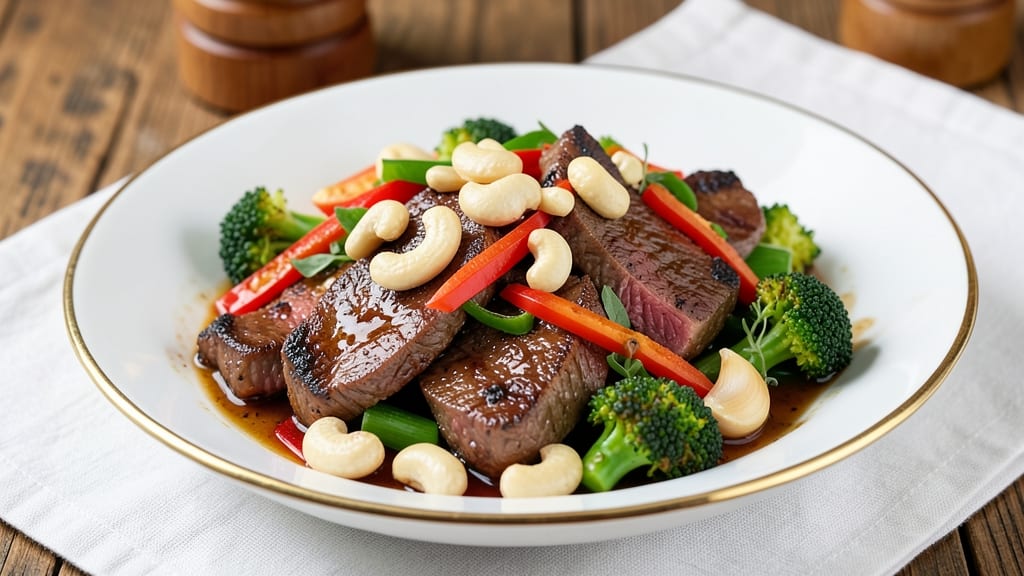
This beef and cashew stir fry recipe delivers the perfect balance of crispy cashews and tender beef in just 20 minutes—no takeout required. The secret lies in quick cooking over high heat, where the beef develops a caramelized crust while the cashews stay delightfully crunchy. I've perfected this method after years of testing, ensuring every bite delivers that satisfying contrast of textures and flavors.
What makes this recipe stand out is the silky cashew-based sauce that coats every ingredient, tying together sweet, savory, and umami notes without overpowering the natural taste of the beef.
The process is straightforward: marinate the beef for maximum flavor, stir-fry with fresh vegetables, and finish with a sauce that's rich yet light enough to let the ingredients shine. This dish is restaurant-quality but designed for your home kitchen.
By the time you're done, you'll have a vibrant stir fry with tender strips of beef, crisp cashews, and bright vegetables all bathed in a glossy sauce. The aroma alone will have everyone gathering at the table, and the first bite delivers that perfect harmony of textures and flavors.
It's the kind of meal that feels indulgent yet remains balanced and satisfying.
Serve this stir fry over steamed rice or noodles for a complete meal that's quick to prepare yet impressive enough for company. The recipe scales easily, making it perfect for feeding a crowd or meal prepping for the week. Let's get started on creating this flavorful dish!
Ingredients for beef and cashew stir fry
Crisp cashews, tender beef, and vibrant veggies—just 15 ingredients for a restaurant-worthy stir fry.
| Ingredient | Amount | Notes |
|---|---|---|
| Flank Steak 🥩 | 1 lb | Thinly sliced against grain |
| Raw Cashews 🥜 | 1 cup | Toasted for extra crunch |
| Bell Peppers 🧅 | 2 whole | Red and green, sliced thin |
| Broccoli Florets 🥦 | 2 cups | Cut into bite-sized pieces |
| Garlic Cloves 🧄 | 4 cloves | Minced for aromatic base |
| Fresh Ginger 🌿 | 1 tbsp | Grated, for zesty kick |
| Soy Sauce 🥄 | ½ cup | Low-sodium preferred |
| Honey 🍯 | 2 tbsp | For sweet-savory balance |
| Sesame Oil 🫒 | 1 tbsp | Toasted sesame oil |
| Rice Vinegar 🍶 | 2 tbsp | For tangy brightness |
| Cornstarch 🌾 | 1 tbsp | For sauce thickening |
| Vegetable Oil 🫒 | 3 tbsp | For high-heat stir-fry |
| Green Onions 🧅 | 3 whole | Sliced, for garnish |
| Sesame Seeds 🌾 | 1 tbsp | Toasted, for garnish |
| Salt 🧂 | 1 tsp | Kosher or sea salt |
The beef is where it all starts. Flank steak is my go-to—it’s lean but tender when sliced thin against the grain. Grab it from the butcher section if you can, or ask for pre-sliced stir-fry strips at Whole Foods or Costco to save time. Fresh ginger and garlic? Asian markets usually have the best quality, but the grocery store works too. Just make sure the ginger isn’t shriveled—it should be firm and aromatic. The raw cashews are a game-changer (the good stuff, not the salted kind), and Trader Joe's sells them pre-toasted for convenience.
No flank steak? Sirloin or ribeye work too—just slice it paper-thin. Running low on sesame oil? Toasted peanut oil is a solid swap, though it’ll have a different flavor profile. The sauce is where the magic happens, so don’t skimp on the honey—it balances the soy sauce’s saltiness. For extra depth, add a dash of fish sauce (if you’re okay with it) or a pinch of white miso paste for umami. Bell peppers can be swapped for snap peas or mushrooms if you prefer, but keep the broccoli—it holds up well to stir-frying.
Toast those cashews first—they’ll be crispy and addictive. Store any leftovers in airtight containers for 3-4 days, but honestly, this tastes even better the next day as the flavors meld. Freeze portions for up to 3 months if you’re prepping for the week. Garnish with sesame seeds right before serving, because nothing beats that fresh crunch. Serve over steamed jasmine rice or noodles to soak up every last bit of that silky sauce.
Why You'll Love This Recipe
- One-Pan Magic: I swear by this for nights when I’m too tired to wash extra dishes. Sear the flank steak first—crispy edges, juicy center—then toss everything else in the same pan. The garlic sizzles into oblivion while the broccoli and peppers soften just enough to stay vibrant, not mushy.
- Cashew Crunch Game: Between us, the raw cashews are the MVP here. They toast in the pan until golden, adding this buttery, toasty crunch that cuts through the beef’s richness. No need to soak or blanch—just toss them in raw and let the heat work its magic. That texture? Chef’s kiss.
- Lunchbox Hero: This keeps perfectly for days, which means I can make a big batch on Sunday and still have leftovers that taste fresh. Pack the beef and veggies separately (the cashews stay crunchy longer that way), and suddenly you’ve got a lunch that feels fancy but costs next to nothing.
- Budget Flex: Flank steak stretches far, and raw cashews are cheaper than you’d think in bulk. I’ll be real: this feeds four for under $15, and the leftovers turn into even better stir-fry the next night. Plus, bell peppers and broccoli are about as affordable as veggies get—no specialty ingredients, just solid flavor.
Step-by-step instructions for beef and cashew stir fry
Here's how to create a restaurant-quality stir fry with perfect texture contrasts and bold flavors.
Prep the Flank Steak and Vegetables
Slice the 1 lb flank steak thinly against the grain using a sharp knife—this ensures tender bites. Pat each slice dry with paper towels, then season generously with 1 tsp salt. While the steak rests, slice the 2 whole bell peppers into thin strips and cut the 2 cups broccoli florets into bite-sized pieces. Mince the 4 cloves garlic and grate the 1 tbsp fresh ginger. Keep all ingredients within reach for quick assembly.
Here's the thing—proper prep makes all the difference. The steak should be completely dry before cooking, or it'll steam instead of sear. And those even slices? They'll cook perfectly every time. I like to work in batches if I'm prepping ahead, but for this quick recipe, keep everything together so you can jump straight to cooking.
Toast the Cashews and Build the Sauce
Heat a dry skillet over medium heat and add the 1 cup raw cashews. Toast them for 3-4 minutes, stirring constantly, until they're fragrant and just beginning to turn golden. Remove them and set aside—these will add that incredible crunch. In the same skillet, heat 1 tbsp vegetable oil over medium heat, then add the minced garlic and ginger. Cook for 30 seconds until fragrant—don't let them burn, or you'll get bitter flavors.
While the aromatics cook, mix the sauce ingredients in a small bowl: 0.5 cup soy sauce, 2 tbsp honey, 2 tbsp rice vinegar, 1 tbsp sesame oil, and 1 tbsp cornstarch. Stir until the cornstarch dissolves completely. This sauce is the heart of your dish—sweet, tangy, and perfectly balanced. I always taste it at this stage to adjust seasoning before committing to the stir fry.
Cook the Steak and Vegetables
Increase heat to high and add 2 tbsp vegetable oil to your wok or large skillet. When the oil shimmers, add the seasoned steak slices in a single layer. Let them sear undisturbed for 1-2 minutes until they develop a deep brown crust. This initial sear locks in the juices and builds that amazing beefy flavor. Then stir and cook for another 1-2 minutes until the steak is just cooked through—it should still be slightly pink in the center.
Remove the steak and set aside. In the same pan, add the remaining 1 tbsp vegetable oil and stir-fry the bell peppers and broccoli for 3-4 minutes until they're tender-crisp. The vegetables should retain some bite—they'll finish cooking when everything comes back together. Watch them carefully; overcooking turns them mushy, and nobody wants that in their stir fry.
Combine and Finish
Return the steak to the pan along with the cooked vegetables. Pour in the sauce mixture and stir vigorously for 1-2 minutes until everything is evenly coated and the sauce has thickened slightly. The cornstarch will help create that silky, glossy finish we're after. Taste and adjust seasoning if needed—you might want to add a touch more soy sauce for saltiness or a splash of rice vinegar for tang.
Here's where it gets fun—toss in the toasted cashews and let everything heat through for 30 seconds. The cashews should be warmed through but still maintain their crunch. Garnish with sliced green onions and sesame seeds right before serving. The contrast of textures—tender beef, crisp cashews, and tender-crisp vegetables—is what makes this dish so special.
Serve Immediately
Transfer the stir fry to a serving platter and serve right away while everything is hot. The sauce should coat every bite with that perfect balance of sweet, savory, and umami flavors. I like to serve this over steamed jasmine rice to soak up all those delicious juices. Don't skip the rice—it rounds out the dish beautifully and gives you that classic stir fry presentation.
This dish is all about timing and technique, but once you've got it down, it comes together in a flash. The key is keeping everything moving—no lingering on the stove, no letting the vegetables get soggy. When you nail it, you'll have a restaurant-quality meal on your table in just 20 minutes. Trust me, your taste buds will thank you!
Pro Tips For Making Beef And Cashew Stir Fry
- Slice Steak Against the Grain: I learned this the hard way—cutting flank steak with the grain turns it chewy, even when sliced thin. Angle your knife at 45 degrees and slice perpendicular to the grain lines after cooking. The fibers will separate cleanly, and your stir-fry will actually be tender.
- Toast Cashews First: Skip the raw cashews in the stir-fry—toss them dry in a hot pan for 2-3 minutes until golden. They’ll add crunch and depth without competing for space in the wok. (Yes, even if you’re impatient like me, don’t skip this.)
- Cook Garlic in Stages: Add whole garlic cloves to the wok before the beef, but pull them out after 30 seconds—they’ll soften enough to infuse flavor without burning. Smash them into the sauce at the end for a burst of aroma. (Your future self will thank you.)
- Start Veggies Early: Broccoli and bell peppers need time to soften, but they’ll turn mushy if you wait until the end. Toss them in first with a splash of water or broth, then remove them to a plate. Return them to the wok just before serving—crisp-tender, not limp. (Does it look weird? Yes. Does it work? Every single time.)
Serving suggestions for leftovers
Rice Pairings
Steamed jasmine rice is my go-to base for this stir fry—its delicate floral notes complement the beef and cashew flavors beautifully. Cook about 1.5 cups of uncooked rice (yielding 3 cups cooked) to serve alongside. For extra flair, use a bamboo steamer to create that authentic wok presentation. 🍚
For a heartier option, try brown rice or forbidden black rice—both add nutty depth and extra fiber. If you're short on time, microwaveable rice (like Lundberg Farms) works in a pinch, though it lacks the same texture.
Always cook rice until just tender—overcooking turns it mushy and ruins the dish's balance.
Noodle Alternatives
Swap rice for egg noodles or rice noodles for a lighter option. Cook 8 oz of noodles according to package instructions, then toss them with the stir fry just before serving.
I love udon noodles for their chewy texture—they hold up well to the sauce. Drain them well to prevent a soggy final dish.
For gluten-free options, shirataki noodles (made from konjac) work surprisingly well—they absorb the sauce without adding bulk. Just rinse them thoroughly first to remove any bitter residue. Serve with a squeeze of lime to brighten the flavors.
Garnish Ideas
Fresh green onions and sesame seeds are non-negotiable for that final crunch and aroma. For extra flair, add thinly sliced scallions or cilantro—both add brightness. I also love a sprinkle of crushed red pepper flakes for guests who want heat. 🌶️
For a smoky touch, top with toasted sesame seeds or crushed peanuts—they add another layer of texture. A drizzle of chili oil or sriracha takes the dish to the next level. Always garnish right before serving to keep everything fresh.
Side Dish Pairings
A simple cucumber salad with rice vinegar and sesame oil cuts through the richness of the stir fry. Toss 1 cup sliced cucumber with 1 tbsp rice vinegar, 1 tsp sesame oil, and a pinch of salt. The cool, crisp texture balances the warm, savory stir fry perfectly.
For a protein boost, serve with steamed edamame or crispy tofu. Both add plant-based protein and a satisfying crunch. I also recommend pickled vegetables—like kimchi or quick-pickled carrots—for a tangy contrast that elevates every bite.
Beverage Pairings
A crisp green tea (like japanese sencha) complements the dish's umami and nutty notes without overpowering them. For something more robust, try a light lager like Asahi—its clean finish cleanses the palate between bites. 🍺
If you prefer wine, a dry Riesling or Pinot Noir works beautifully. The acidity in Riesling cuts through the richness, while the earthy notes of Pinot Noir enhance the beef's depth. Avoid heavy reds—they can clash with the delicate sauce.
Nutrition facts
Frequently asked questions
Can I use ground beef instead of flank steak?
Ground beef works, but the texture will be different. For the best results, use lean ground beef (90% lean) and cook it over medium-high heat until browned. The dish will be heartier, but you'll lose that signature tender, sliced beef texture. If you prefer ground beef, consider adding 1 extra tbsp cornstarch to the sauce to help it thicken better.
How do I keep the cashews from getting soggy?
Toast the cashews separately in a dry skillet until golden, then set them aside. Only add them to the stir fry at the very end for 30 seconds of heating—this keeps them crispy. If you add them earlier, they'll absorb moisture from the sauce and lose their crunch. Pro tip: Store any leftovers in an airtight container with a paper towel to absorb excess moisture.
What if I don't have sesame oil?
Don't worry—you can substitute with neutral oil (like vegetable or canola) or even toasted peanut oil for a nuttier flavor. Just reduce the amount to 1/2 tbsp since it's more concentrated. The dish will still taste amazing, though the aroma won't be quite as authentic. For extra depth, add a pinch of ground coriander to the sauce.
Can I make this dish ahead of time?
Yes, but with a few adjustments. Cook the beef and vegetables as directed, then cool and store in an airtight container for up to 3 days. Reheat gently in a skillet over medium heat with a splash of water or broth to restore moisture. Add the cashews and sauce just before serving to keep them crispy. The flavors actually improve overnight as everything melds together!
Why is my sauce too thin?
This usually happens if the cornstarch didn't dissolve properly or the sauce wasn't cooked long enough. Mix 1 tbsp cornstarch with 2 tbsp water and stir it into the sauce while heating. Cook for another 1-2 minutes until thickened. If it's still too thin, try a cornstarch slurry (1 tbsp cornstarch + 3 tbsp water) for better control. Always stir constantly to avoid lumps!