
Soups & Stews
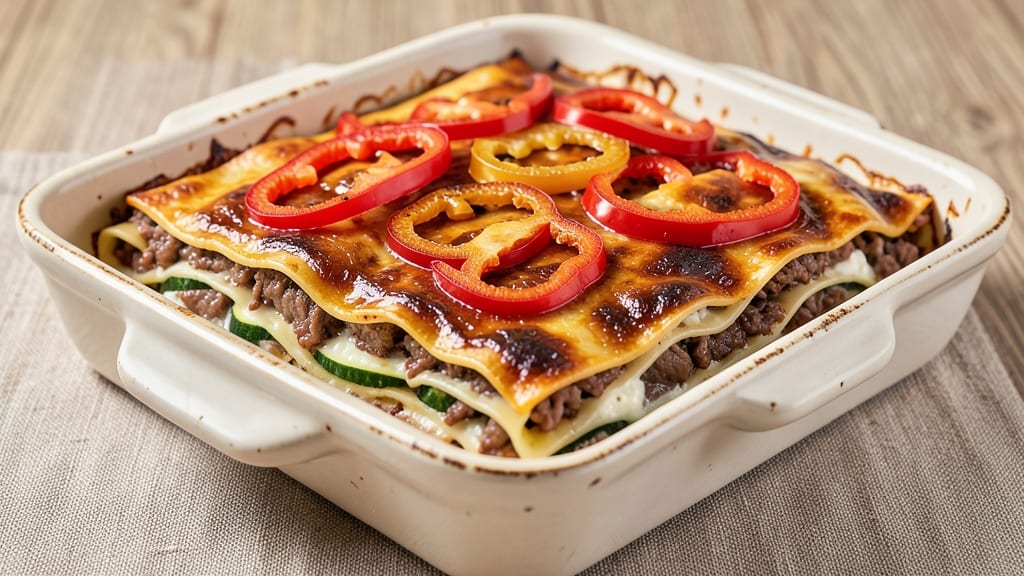
This beef and vegetable lasagne recipe delivers the ultimate comfort food experience—rich, hearty layers of tender beef, vibrant vegetables, and creamy béchamel, all baked to golden perfection. 🔥 The secret lies in balancing traditional Italian techniques with modern convenience, ensuring every forkful is packed with depth and texture. Whether you're feeding a hungry family or hosting dinner guests, this lasagne brings warmth and satisfaction to the table.
What sets this recipe apart is the harmonious blend of savory ground beef, fresh vegetables like bell peppers and zucchini, and a velvety béchamel sauce that binds everything together. The key to success? Proper layering—alternating noodles, meat, vegetables, and cheese to create a structure that holds up beautifully during baking.
No need for fancy equipment; just a baking dish and a little patience for the flavors to meld.
By the time it emerges from the oven, you’ll have a lasagne with a crispy, golden top layer, tender beef, and perfectly cooked vegetables infused with rich tomato sauce. The béchamel adds a creamy contrast, while melted cheese ties it all together.
This dish is hearty enough to be a centerpiece but flexible enough to accommodate dietary tweaks, like gluten-free pasta or extra vegetables.
The best part? Leftovers reheat beautifully, making it ideal for meal prep or feeding a crowd. Ready to create a lasagne that tastes like it came from an Italian trattoria? Here’s how to bring it to life.
Ingredients for beef and vegetable lasagne
Six servings of layered comfort—rich beef, vibrant vegetables, and velvety béchamel baked to golden perfection.
| Ingredient | Amount | Notes |
|---|---|---|
| Ground Beef (80% lean) 🥩 | 1 ½ lb | Finely ground for even cooking |
| Lasagne Noodles 🍝 | 12 pieces | No-boil or pre-cooked preferred |
| Ricotta Cheese 🧀 | 1 ½ cups | Part-skim for creaminess |
| Zucchini 🥒 | 2 medium | Sliced into 1/4-inch rounds |
| Yellow Onion 🧅 | 1 large | Diced into small pieces |
| Red Bell Pepper 🌶️ | 1 whole | Diced into small pieces |
| Garlic Cloves 🧄 | 4 cloves | Minced for rich flavor |
| Canned Tomato Sauce 🍅 | 2 cups | San Marzano preferred |
| Heavy Cream 🥛 | 1 cup | Full-fat for béchamel |
| All-Purpose Flour 🌾 | 2 tbsp | For roux thickening |
| Parmesan Cheese 🧀 | 1 cup | Freshly grated from block |
| Mozzarella Cheese 🧀 | 2 cups | Shredded, low-moisture |
| Olive Oil 🫒 | 2 tbsp | Extra-virgin for richness |
| Salt 🧂 | 1 ½ tsp | Diamond Crystal preferred |
| Black Pepper 🌶️ | 1 tsp | Freshly ground preferred |
| Dried Basil 🌿 | 1 tbsp | Or 1/4 cup fresh chopped |
The beef is the foundation—80% lean ground chuck delivers that perfect balance of tenderness and flavor. Most grocery stores carry it pre-ground, but if you're buying a whole chuck roast, trim excess fat and pulse in a food processor for even cooking. For the vegetables, freshness matters: zucchini should be firm with no soft spots, and bell peppers should be glossy and heavy for their size. Trader Joe's often has great pre-sliced options, but whole vegetables let you control the thickness of your layers. The ricotta? Part-skim gives you creaminess without excess wateriness—drain it in a sieve for 10 minutes if it's particularly wet.
No ricotta? Cottage cheese blended until smooth works in a pinch, though the texture will differ slightly. Short on zucchini? Substitute eggplant or mushrooms—both hold up well to baking. The tomato sauce can be homemade (simmer crushed tomatoes with garlic and basil) or store-bought, but San Marzano is worth the splurge for its sweetness. For the béchamel, heavy cream and butter create that signature velvety texture—don't skimp here. The flour should be sifted to avoid lumps, and Diamond Crystal kosher salt dissolves more easily than table salt. Fresh basil is ideal, but dried works at one-third the amount if you're in a hurry.
Prep ahead to save time: Cook the beef mixture and assemble the lasagne up to 24 hours in advance, then bake just before serving. The assembled lasagne keeps 3-4 days in the fridge, covered tightly. For longer storage, freeze portions for up to 3 months. When reheating, cover with foil to prevent the top from drying out. The béchamel sauce can be made a day ahead and stored in the fridge—just whisk vigorously before using. This lasagne tastes even better the next day as the flavors meld, so double the recipe if you're feeding a crowd.
Why You'll Love This Recipe
- No-Fuss Assembly: I swear by this recipe because it’s the kind of meal where you can prep while chatting with someone—or staring blankly at the TV. Just brown the beef with onions, toss in zucchini to soften, layer with noodles and ricotta, and bake. No fussing with multiple sauces or fussy veggie prep.
- Ricotta Magic: Honestly, the ricotta transforms this into something special. It’s creamy, slightly tangy, and soaks up the beef’s savory goodness without making it heavy. Plus, it cuts through the richness of the ground beef beautifully—like a little flavor hug in every bite.
- Leftovers That Beg: Between us, this lasagne tastes even better the next day. The noodles soften just right, the ricotta stays luscious, and the beef flavor deepens. I make it on Sundays so I can grab a slice for lunch all week—no sad, dry reheats here.
- Budget-Friendly Feast: This feeds four for under $15, and the ingredients stretch far. Ground beef is affordable, zucchini is cheap in season, and ricotta goes a long way. It’s my go-to when I need a hearty meal that won’t break the bank—or my willpower to resist seconds.
Step-by-step instructions for beef and vegetable lasagne
Layer by layer, we'll build a lasagne with tender beef, vibrant vegetables, and rich cheeses.
🍳 Step 1: Brown the Ground Beef and Sauté Vegetables
Heat the 2 tablespoons olive oil in a large skillet over medium-high heat. Add the 1.5 pounds ground beef (80% lean) and break it apart with a wooden spoon. Cook for 5-6 minutes until the beef loses its raw color and begins to brown, breaking it up into small, even pieces.
Push the beef to one side of the skillet and add the 1 large diced yellow onion, 1 whole diced red bell pepper, and 2 medium zucchini sliced into ¼-inch rounds. Cook for 4-5 minutes until the vegetables soften slightly and the onions become translucent. Stir in the 4 minced garlic cloves and cook for 30 seconds until fragrant.
Season everything with 1.5 teaspoons salt, 1 teaspoon black pepper, and 1 tablespoon dried basil, stirring to combine. Remove from heat and transfer the mixture to a bowl, leaving any rendered fat in the skillet.
🍳 Step 2: Prepare the Tomato Sauce and Béchamel
Return the skillet with the rendered beef fat to medium heat. Add the 2 tablespoons all-purpose flour and whisk continuously for 1-2 minutes until the mixture turns a light golden color and smells nutty. This creates a roux that will thicken our béchamel.
Slowly pour in the 1 cup heavy cream while whisking vigorously to prevent lumps from forming. Cook for 2-3 minutes until the sauce thickens enough to coat the back of a spoon. Remove from heat and stir in 1 cup grated parmesan cheese until fully melted and smooth.
In a separate saucepan, warm the 2 cups canned tomato sauce over low heat for 3-4 minutes. Season with an additional ½ teaspoon salt and ½ teaspoon black pepper to complement the beef mixture.
🥘 Step 3: Assemble the Lasagne Layers
Preheat your oven to 375°F. If using regular lasagne noodles, cook them according to package instructions until al dente, then drain and rinse briefly under cold water to stop the cooking process. For no-boil noodles, you can skip this step entirely.
Spread ½ cup of the tomato sauce on the bottom of a 9x13-inch baking dish. Arrange 4 lasagne noodles side by side, slightly overlapping if needed. Spread ⅓ of the beef and vegetable mixture evenly over the noodles, followed by ⅓ of the ricotta cheese and ⅓ of the mozzarella cheese.
Repeat the layering process: noodles, remaining tomato sauce, beef mixture, ricotta, and mozzarella. For the final layer, top with the remaining noodles and spread the béchamel sauce evenly over the top. Sprinkle the remaining ⅓ cup mozzarella cheese and ⅓ cup parmesan cheese over the béchamel.
🔥 Step 4: Bake Until Bubbly and Golden
Cover the baking dish tightly with aluminum foil and bake for 30 minutes. Remove the foil and bake for an additional 15-20 minutes until the top is golden brown and bubbly. The lasagne is done when the edges are slightly crisp and the cheese is fully melted.
Let the lasagne rest for 10-15 minutes before slicing. This resting period allows the layers to set and makes it easier to cut clean, neat portions. Serve immediately with a side of garlic bread and a simple green salad for a complete meal.
Pro Tips For Making Beef And Vegetable Lasagne
- Sear the Beef First: I learned this the hard way—skipping the sear means your lasagna tastes like a meaty stew instead of a rich, layered dish. Cook the ground beef in a hot skillet (no oil needed—it’ll render) until it’s deeply browned in spots, then drain the fat. That crusty bit? That’s flavor locked in.
- Salt the Ricotta Like You Mean It: Ricotta’s mild, so don’t treat it like an afterthought. Mix in at least ½ teaspoon of salt per cup (more if it’s unsalted) and let it sit for 10 minutes—this seasons the cheese and helps it blend better with the egg. Trust me, bland ricotta ruins everything.
- Pre-Cook the Zucchini: Raw zucchini turns to mush in lasagna, so blanch it first: cut into ¼-inch slices, boil for 2 minutes, then shock in ice water. This keeps it tender without soggy layers. (Yes, even if you’re impatient—this isn’t the step you’ll skip.)
- Build It in Stages, Cover Tight: Don’t dump everything in at once. Layer noodles, meat sauce, ricotta, and veggies in thirds, then press each layer gently with a spatula. Cover the whole thing with foil immediately—this traps steam and guarantees even cooking. Uncover only for the last 15 minutes to crisp the top.
Serving suggestions for leftovers
Garlic Bread Pairing
No lasagne is complete without a side of warm, buttery garlic bread. I like to use a baguette-style loaf split lengthwise, brushed with 3 tablespoons melted butter mixed with 2 minced garlic cloves and 1 teaspoon dried parsley.
Toast under the broiler for 3-4 minutes until golden and crisp. The garlic flavor complements the richness of the lasagne beautifully. 🥖
Simple Green Salad
A crisp green salad balances the heartiness of lasagne perfectly. Toss 6 cups mixed greens (spinach, arugula, romaine) with 2 tablespoons olive oil, 1 tablespoon balsamic vinegar, ½ teaspoon Dijon mustard, and a pinch of salt and pepper.
Add ¼ cup shaved parmesan and ¼ cup toasted pine nuts for crunch. The acidity cuts through the richness while adding freshness.
Roasted Vegetable Medley
For extra vegetables, roast 1 cup cherry tomatoes, 1 cup broccoli florets, and 1 cup asparagus with 1 tablespoon olive oil, ½ teaspoon dried oregano, and ½ teaspoon salt at 400°F for 15-20 minutes.
The caramelized flavors add depth to the meal. This works especially well if your lasagne has lighter vegetables like zucchini and bell peppers.
Wine Pairings
A medium-bodied red wine enhances the beef and tomato flavors. I recommend a Chianti Classico or Sangiovese—their bright acidity and cherry notes complement the rich layers.
For white wine lovers, a Pinot Grigio with citrus undertones provides a refreshing contrast. Avoid heavy, tannic wines that might overpower the dish. 🍷
Garnish Like a Pro
Before serving, sprinkle the lasagne with fresh basil leaves and a pinch of red pepper flakes for a pop of color and subtle heat. A drizzle of high-quality extra-virgin olive oil adds a luxurious finish.
For extra flair, use a lasagne cutter to create clean, restaurant-style slices. The presentation makes it feel like a special occasion meal.
Leftovers Reinvented
Transform leftover lasagne into crispy lasagne fries by cutting into 1-inch squares, brushing with olive oil, and baking at 425°F for 10-12 minutes until golden. Serve with marinara for dipping.
Alternatively, turn it into a lasagne grilled cheese by sandwiching between slices of bread and toasting in butter. These creative twists keep the meal exciting for days. ✨
Nutrition facts
Frequently asked questions
Can I use regular lasagne noodles instead of no-boil?
Yes, but you'll need to pre-cook them first! Boil regular lasagne noodles until al dente (about 8-10 minutes), then rinse with cold water to stop cooking. This prevents a mushy texture. For extra insurance, spread a thin layer of tomato sauce on the bottom of your baking dish before adding the first noodle layer.
What if I don't have ricotta cheese?
No problem! Blend 1.5 cups cottage cheese until smooth (strain through a sieve if needed) or use a mix of 1 cup mascarpone and ½ cup heavy cream. The texture will be slightly denser, but it still adds great creaminess. Just reduce the mozzarella by ½ cup to balance moisture.
How do I make this lasagne ahead of time?
You can assemble the lasagne up to 24 hours ahead! Cover tightly with foil and refrigerate. When ready to bake, add 10-15 extra minutes to the baking time (cover with foil for the first 40 minutes if needed). For freezing, bake as directed, cool completely, wrap in foil, and freeze for up to 3 months. Thaw overnight in the fridge before reheating.
Why did my lasagne get watery during baking?
This usually happens from excess moisture in ricotta or undercooked noodles. Next time, drain wet ricotta in a sieve for 10 minutes before using, and always use no-boil noodles or pre-cook regular noodles perfectly. Also ensure your baking dish isn't too large—9x13-inch is ideal. Bake uncovered for the last 10 minutes to evaporate any surface moisture.
Can I make this vegetarian?
Replace the beef with 1.5 cups lentils (cooked) or 1 lb mushrooms (sautéed with garlic and herbs). For extra protein, add 1 cup cooked chickpeas to the vegetable layer. Keep the ricotta and cheese amounts the same, and boost the tomato sauce by ½ cup to maintain moisture balance.