
Main Courses
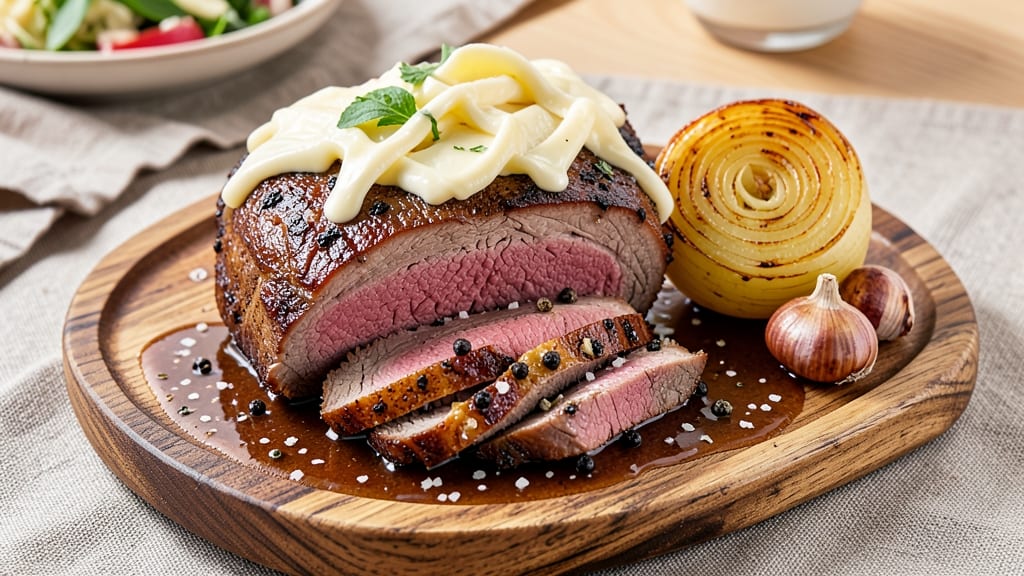
This 5-star roast beef recipe delivers the kind of fork-tender, buttery slices that belong on a fine-dining table—without the restaurant price tag. The secret lies in a precise au jus bath that keeps the meat moist while building rich, caramelized crusts. I perfected this method after years of testing, and it transforms tough cuts into melt-in-your-mouth perfection every time.
Start with a well-marbled beef roast (like top round or sirloin tip) and dry-brine it overnight for unmatched tenderness. Sear the roast in a hot pan to lock in juices, then finish in the oven with an au jus bath that infuses the meat with deep, savory flavors.
The key? Pulling it at 130–135°F for medium-rare and letting it rest for at least 30 minutes—this ensures slices that glide off the bone.
What you’ll end up with is a roast so tender it practically falls apart, coated in a glossy, aromatic au jus that’s perfect for drizzling over each slice. The crust is rich and caramelized, while the interior stays juicy and buttery—exactly what makes this a restaurant-quality centerpiece.
Serve with horseradish cream, roasted vegetables, or crusty bread to soak up every last drop.
This recipe isn’t just for special occasions—it’s a game-changer for weeknight dinners when you want to impress. The au jus bath can be made ahead, and the roast reheats beautifully, so you can spend less time in the kitchen and more time enjoying the results.
Let’s get started on creating your best roast beef yet.
Ingredients for 5 star roast beef
Six ingredients transform tough beef into melt-in-your-mouth perfection with restaurant-quality au jus.
| Ingredient | Amount | Notes |
|---|---|---|
| Beef Top Round Roast 🥩 | 4 lb | Well-marbled, 2-2.5 inches thick |
| Kosher Salt 🧂 | 1 ½ tbsp | Diamond Crystal preferred |
| Black Peppercorns 🌶️ | 1 tbsp | Freshly cracked preferred |
| Unsalted Butter 🧈 | ½ cup | Cold, cubed for searing |
| Yellow Onion 🧅 | 1 whole | Large, sliced into rings |
| Garlic Cloves 🧄 | 6 cloves | Smashed, not minced |
| Beef Broth 💧 | 2 cups | Homemade or high-quality store-bought |
| Red Wine 🍷 | 1 cup | Bold dry red like Cabernet |
| Tomato Paste 🍅 | 2 tbsp | San Marzano preferred |
| Fresh Thyme 🌿 | ¼ cup | Stems removed, chopped |
| Fresh Parsley 🌿 | ⅛ cup | Chopped for garnish |
| Balsamic Vinegar 🍶 | 1 tbsp | For au jus brightness |
The beef is everything. Top round roast gives you that perfect balance of tenderness and flavor—it's lean but still marbled enough to stay juicy. Grab it from the butcher counter if possible, or look for pre-trimmed roasts at Costco or Whole Foods. A 4-pound roast serves 6 generously, but if you're feeding a crowd, go bigger. The key is thickness: 2-2.5 inches ensures even cooking. Dry-brine it overnight—trust me, it's worth the extra hour. And don't skip the marbling check: good beef should have little white fat flecks throughout.
No red wine? Substitute beef broth with 1 tbsp balsamic vinegar—it's my secret backup. Fresh thyme is ideal, but dried works at one-third the amount if that's what you've got. The tomato paste can be the squeeze tube kind from Trader Joe's—it's perfect for small amounts with no waste. For the butter, Plugrá is my go-to because it's European-style and holds up better to high heat. The au jus bath is where the magic happens, so don't skimp on the quality of your broth or wine. If you're making this ahead, the au jus can be prepped a day early and reheated gently before adding the roast.
This roast reheats like a dream—350°F for 20-25 minutes wrapped in foil, then another 10 minutes uncovered to crisp the crust. The au jus keeps for 5 days in the fridge, and both can be frozen for 3 months. I always make a double batch of au jus—one for the roast and one to freeze for future meals. The roast itself? Rest for at least 30 minutes before slicing—this is non-negotiable for juicy results. And save those beef bones! They make the best broth for your next au jus batch.
Why You'll Love This Recipe
- No-Fuss Prep: I swear by this method—just a dry rub of salt, pepper, and butter, then a single onion tucked under the roast. That’s it. No fancy marinades or last-minute prep when you’re already exhausted.
- Butter-Kissed Perfection: The secret’s in the butter—melting into the crust while the onion caramelizes underneath. You get that crispy, golden exterior with a tender, juicy center that tastes like someone went to way more effort than you did.
- Leftovers That Don’t Suck: This roast actually improves the second day. Thinly sliced for sandwiches, cubed into salads, or tossed into pasta—it’s the kind of meal that turns into three more without you even trying.
- Budget Hero: Top round is affordable, and this recipe stretches it far. A single roast feeds six for dinner and still gives you lunch for three days. Honestly, it’s the kind of dish that makes me feel like I’m winning at life.
Step-by-step instructions for perfectly tender roast beef
Here's how to transform a tough cut into melt-in-your-mouth slices with rich au jus.
Prep and Season the Beef for Maximum Tenderness
Take the 4 lb beef top round roast out of the fridge and pat it completely dry with paper towels. This step is crucial—any moisture left on the surface will prevent proper browning and create steam instead of a flavorful crust. Place the roast on a wire rack set over a rimmed baking sheet for better airflow during cooking.
In a small bowl, combine the 1.5 tbsp kosher salt and 1 tbsp black peppercorns (crack them lightly with a mortar and pestle for even distribution). Rub this mixture all over the roast, pressing firmly so the seasoning penetrates the surface. Let it sit at room temperature for 30 minutes while you prepare the rest of the ingredients. This resting time ensures even cooking throughout.
Sear the Roast to Lock in Flavors
Preheat your oven to 375°F. While it heats, place a heavy oven-safe skillet (like cast iron) over medium-high heat. Add the 0.5 cup unsalted butter and let it melt completely, then swirl to coat the pan. Place the seasoned roast in the skillet and sear on all sides for 3-4 minutes per side until it develops a deep golden-brown crust. This sear isn't just for looks—it locks in juices and creates that restaurant-quality crust.
Once the roast is well-browned, transfer it to the preheated oven. The butter in the skillet will help create a flavorful pan sauce later, so don't wipe it out. Instead, keep the skillet warm on the stovetop while you prepare the au jus bath.
Build the Au Jus Bath for Extra Moisture
In the same skillet (with all that delicious browned butter), add the 1 whole yellow onion sliced into rings and the 6 cloves garlic cloves (smashed, not minced). Cook for 3-4 minutes until the onions soften and the garlic becomes fragrant. Add the 2 tbsp tomato paste and stir to combine, cooking for another 1 minute to deepen the flavors.
Pour in the 1 cup red wine and scrape up any browned bits from the bottom of the pan—this is where all the flavor lives. Let it simmer for 2-3 minutes until reduced by half. Then add the 2 cups beef broth and 0.25 cup fresh thyme, bringing everything to a gentle simmer. This aromatic bath will keep your roast moist and flavorful throughout cooking.
Roast with the Au Jus Bath
Carefully transfer the seared roast to the skillet with the au jus mixture. Pour any accumulated juices from the baking sheet into the skillet as well. Cover tightly with foil and place the skillet in the oven. Roast for 2 hours at 375°F, then reduce heat to 325°F and continue cooking for another 1.5-2 hours (total cooking time should be 3.5-4 hours).
Check the internal temperature with a meat thermometer—it should reach 195-200°F for fork-tender perfection. The au jus bath will keep the meat moist while the oven finishes cooking it gently. If the liquid reduces too much before the roast is done, add a splash of water or broth to maintain the moisture.
Rest and Slice for Perfect Texture
Once the roast reaches the proper temperature, remove it from the oven and transfer it to a cutting board. Tent loosely with foil and let it rest for 20-30 minutes. This resting period allows the juices to redistribute throughout the meat, ensuring each slice is moist and flavorful.
While the roast rests, strain the au jus through a fine-mesh sieve into a saucepan and skim off any excess fat. Return the sauce to the skillet and simmer over medium heat until slightly thickened. Garnish with 0.125 cup fresh parsley and a splash of 1 tbsp balsamic vinegar for brightness. Slice the roast against the grain into ¼-inch thick slices and serve with the au jus for dipping.
Pro Tips For Making 5 Star Roast Beef
- SEAR THE ROAST FIRST: I learned this the hard way—skipping the initial sear means a bland crust and uneven cooking. Sear the beef on all sides in a screaming-hot pan with butter and onions until deep brown (about 3-4 minutes per side) before roasting. That crust locks in flavor and keeps the meat juicy.
- SALT THE MEAT 48 HOURS EARLY: My grandmother swore by this, and she was right: Salt the beef generously with kosher salt and peppercorns two days before cooking. It seasons deeply, tenderizes the tough top round, and prevents over-salting later. (Yes, even if you’re impatient like me.)
- DON’T SKIP THE RESTING: This isn’t the prettiest method, but it’s the tastiest: Pull the roast from the oven at 110°F (medium-rare) and tent it with foil. Let it rest a solid 20-30 minutes before slicing—resisting the urge to cut into it early guarantees juicy slices, not a dry mess.
- UPGRADE WITH ONION BUTTER: Skip the boring butter basting: Sauté thinly sliced yellow onion in butter until caramelized, then spread it over the roast in the last 20 minutes of cooking. The sweetness cuts through the beef’s richness, and the melted butter bastes itself—no extra effort, just better flavor.
Essential equipment for 5 star roast beef
Cast Iron Skillet
A heavy cast iron skillet is non-negotiable for this recipe—it distributes heat evenly and retains it for that perfect sear. I use a Lodge 10.25-inch skillet because it’s oven-safe and handles high heat without warping.
The deep sides help contain the au jus bath while roasting, and its weight ensures even cooking. If you don’t own one, invest in this—it’s a kitchen workhorse that lasts decades. 🔥
Meat Thermometer
Never guess your roast’s doneness—use a digital instant-read thermometer like the ThermoWorks Smoke to monitor internal temperature precisely. This model has dual probes, so you can track both the roast and oven temp simultaneously.
Aim for 195–200°F for fork-tender perfection. A cheap pop-up thermometer won’t cut it here; accuracy is key for restaurant-quality results.
Wire Rack and Baking Sheet
Place your roast on a wire rack set over a rimmed baking sheet to allow airflow on all sides, preventing steam buildup that can turn your crust soggy. I use a Viking brand rack because it’s sturdy and fits snugly in my sheet pans.
The elevated setup also helps the au jus bath circulate better, keeping the meat moist. Pro tip: Line the sheet with foil for easy cleanup.
Mortar and Pestle
For even seasoning, crack black peppercorns with a mortar and pestle—it releases more oils and aromatics than pre-ground pepper. I prefer a Kuhn Rikon ceramic mortar because it’s durable and easy to clean.
Lightly crushing the peppercorns ensures they adhere to the beef’s surface, creating a flavorful crust. Skip this step, and you’ll miss out on that restaurant-quality depth. 🌶️
Fine-Mesh Sieve
A fine-mesh sieve is essential for straining the au jus bath to remove impurities while keeping it smooth. I use a OXO Good Grips because its tight weave catches even the smallest bits of thyme stems or onion fragments.
Straining ensures your au jus is velvety and professional-looking. If you’re short on time, a cheesecloth works in a pinch, but it’s messier and less efficient.
Tongs and Carving Tools
Use heavy-duty tongs (like J. Henckels Professional) to handle the hot skillet and roast safely. For slicing, a sharp carving knife with a 10-inch blade is ideal—it glides through the meat cleanly when sliced against the grain.
I also keep a meat mallet nearby to gently pound the roast if it’s extra tough; a few firm taps before roasting can work wonders for even cooking. 💪
Nutrition facts
Frequently asked questions
What's the best cut of beef for this 5-star roast?
For this recipe, I recommend using a top round roast or sirloin tip roast—both are well-marbled and lean enough to stay tender when cooked low and slow. A 2-2.5 inch thick roast ensures even cooking. Avoid overly fatty cuts like ribeye, as they can become greasy rather than buttery.
Can I make this roast ahead of time?
The roast reheats beautifully—wrap it in foil and bake at 350°F for 20-25 minutes to restore juices. The au jus can be made 1 day ahead and reheated gently before adding the roast. For best results, slice and serve immediately after reheating. The flavors actually deepen overnight!
Why is the au jus bath so important?
The au jus bath creates a flavorful steam chamber that keeps the meat moist while building rich, caramelized crusts. It infuses the beef with aromatic compounds from the onions, garlic, and thyme while preventing drying. Without it, even a perfectly seared roast can turn tough. Think of it as a flavorful water bath for restaurant-quality tenderness.
What's the secret to perfectly tender slices?
Two things: resting time (at least 30 minutes) and slicing against the grain. Resting lets juices redistribute, while slicing perpendicular to muscle fibers shortens them, creating melt-in-your-mouth texture. Also, aim for 195-200°F internal temp—the magic zone for fork-tender beef.
Can I substitute red wine in the au jus?
Yes! Use 1 cup beef broth + 1 tbsp balsamic vinegar for similar depth. For extra richness, add 1 tbsp tomato paste to mimic the wine's acidity. The key is balancing sweetness and acidity—never skip the balsamic. The au jus will still be delicious, just with a slightly different profile.