
Soups & Stews
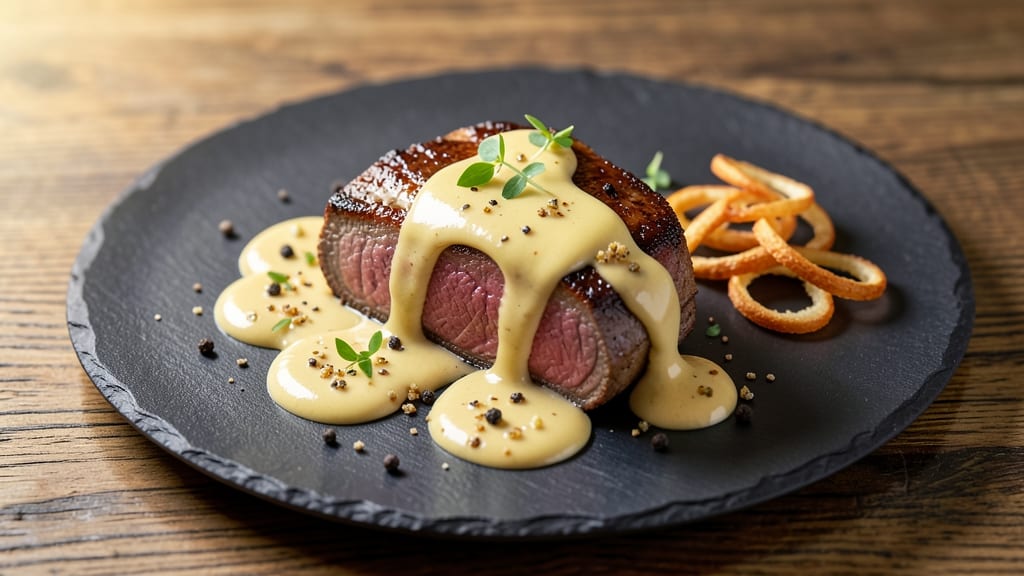
This beef bearnaise recipe transforms simple ingredients into a velvety, golden sauce that elevates any protein—steak, chicken, or fish—with its rich, buttery depth.
The secret lies in the careful reduction of vinegar and the delicate balance of egg yolks and clarified butter, creating an emulsion that’s both luxurious and foolproof once mastered. I’ve refined this technique over years, ensuring the sauce remains silky smooth without breaking, even when exposed to high heat.
The process begins with reducing white wine vinegar to a syrupy consistency, which forms the sauce’s tangy foundation. Shallots and tarragon infuse the vinegar with aromatic depth, while peppercorns add a subtle, warm kick.
The real magic happens when you temper the egg yolks with warm vinegar reduction, then slowly incorporate clarified butter to create that signature glossy, buttery finish. This method ensures a stable sauce that won’t separate, even when reheated.
What you’ll achieve is a restaurant-quality bearnaise—glossy, rich, and packed with layers of flavor—ready to drizzle over perfectly cooked steak or seafood. The sauce’s velvety texture and complex taste make it worth the effort, transforming an ordinary dish into something extraordinary.
With proper storage, it keeps beautifully in the fridge for up to 5 days, allowing you to prepare ahead for special occasions.
For those new to bearnaise, don’t let the technique intimidate you—the key is patience and precision. The reward? A sauce so luxurious it feels like a culinary achievement. Let’s get started on mastering this classic.
Ingredients for beef bearnaise
Eight essential ingredients crafting restaurant-quality bearnaise with velvety perfection.
| Ingredient | Amount | Notes |
|---|---|---|
| White Wine Vinegar 🍷 | 1 cup | High-quality, dry variety preferred |
| Shallots 🧅 | 3 whole | Finely minced, not chopped |
| Fresh Tarragon 🌿 | ¼ cup | Chopped, stems removed |
| Black Peppercorns 🌶️ | 10 whole | Crushed lightly in mortar |
| Large Egg Yolks 🥚 | 4 whole | Fresh, room-temperature preferred |
| Clarified Butter 🧈 | 1 ½ cups | Homemade or store-bought |
| Salt 🧂 | 1 tsp | Diamond Crystal preferred |
| Fresh Lemon Juice 🍋 | 1 tbsp | For acid balance |
The white wine vinegar sets the foundation—dry, high-quality varieties like La Vieille Ferme work best, avoiding the harshness of cheaper brands. Shallots should be fresh and firm, with no green shoots, and minced so finely they nearly dissolve. Whole Foods or specialty markets carry the best tarragon, but if using dried, reduce to one-third the amount. For peppercorns, Penzeys offers premium whole grains that crush beautifully. Clarified butter eliminates water content, ensuring a stable emulsion—store-bought works, but homemade (melted butter skimmed of milk solids) yields superior results.
No white wine vinegar? Apple cider vinegar or lemon juice can substitute at equal measure, though flavor will differ. Fresh tarragon unavailable? Dried tarragon or a blend of basil and thyme approximates the aroma, though not the exact profile. Egg yolks must be fresh and room temperature—older yolks emulsify poorly. For a dairy-free option, vegan butter clarified through chilling and skimming works, though texture may vary slightly. The clarified butter can be made ahead and stored in the fridge for up to 2 weeks.
Once emulsified, bearnaise thickens as it cools—thin with warm water if too stiff. Store in an airtight container with a thin layer of clarified butter on top to preserve shine. Keeps 3-5 days refrigerated, but reheat gently over a double boiler to maintain silkiness. For longer storage, freeze in ice cube trays, then transfer to a bag for up to 3 months. Always reheat slowly to prevent separation.
Why You'll Love This Recipe
- Here’s what sold me: the tarragon. Not the dried stuff from a jar—fresh tarragon, bright and peppery, with a whisper of licorice that makes this sauce taste like a restaurant secret. The black peppercorns add a subtle crack, and when you drizzle it over seared beef, it’s like a flavor hug you didn’t know you needed. (Yes, even on a Tuesday night.)
- No Fuss, Big Payoff: I swear by this sauce because it’s actually simpler than it looks. You’re not dealing with a temperamental reduction—just a quick vinegar simmer, a handful of shallots, and a double boiler (or a heatproof bowl over simmering water). That’s it. The yolks and tarragon do all the heavy lifting while you sip your wine and pretend you’re a French chef.
- Herb-Forward Magic: Here’s what sold me: the tarragon. Not the dried stuff from a jar—fresh tarragon, bright and peppery, with a whisper of licorice that makes this sauce taste like a restaurant secret. The black peppercorns add a subtle crack, and when you drizzle it over seared beef, it’s like a flavor hug you didn’t know you needed. (Yes, even on a Tuesday night.)
- Steak Night’s Best Friend: This isn’t just for fancy dinners. I use it on grilled burgers, roasted chicken thighs, or even scrambled eggs when I’m feeling fancy. The key? Make a double batch—the extra sauce keeps in the fridge for a week, and it’s still creamy when reheated gently. (Between us, I’ve also used it to dress up a sad-looking charcuterie board. Works every time.)
Step-by-step instructions for beef bearnaise
Master this classic sauce with precision—every element matters for that signature silky texture and rich flavor.
Reduce the Vinegar Base
Combine the 1 cup white wine vinegar with the 3 whole minced shallots in a small saucepan. Bring to a simmer over medium-high heat and reduce by half, which should take about 5-7 minutes. The mixture should reduce to roughly ½ cup of liquid with a deep, aromatic concentration.
Strain the reduced vinegar mixture through a fine-mesh sieve into a clean bowl, pressing gently on the shallots to extract all their flavor. This step is crucial—it removes any bitterness from the shallots while preserving their sweetness, which forms the foundation of the sauce. Discard the solids.
Infuse the Tarragon and Pepper
In a separate small saucepan, gently heat the 1.5 cups clarified butter over low heat until it reaches 160°F. Remove from heat and stir in the 0.25 cup chopped fresh tarragon and the 10 lightly crushed black peppercorns. Let the mixture steep for 10 minutes to infuse the butter with tarragon’s anise-like flavor and subtle pepper heat.
Strain the infused butter through a fine-mesh sieve into a heatproof bowl, again pressing gently to extract all the tarragon’s essence. The butter should now carry a vibrant green hue and a delicate aroma. Keep both the strained butter and the strained vinegar mixture warm—this ensures they’re ready to combine at the perfect temperature.
Temper the Egg Yolks
Place the 4 whole large egg yolks in a heatproof bowl. Slowly whisk in the 1 tbsp fresh lemon juice and 1 tsp salt to create a smooth, pale yellow mixture. This step is non-negotiable—acidic lemon juice helps stabilize the emulsion, while salt enhances the sauce’s depth of flavor.
Position the bowl over a pot of barely simmering water (double boiler method), ensuring the bottom of the bowl doesn’t touch the water. Whisk the yolks constantly as you gradually drizzle in the strained vinegar mixture from Step 1. The goal is to raise the temperature of the yolks to 160°F—just below the point where they would scramble. This tempering process is what transforms the yolks into a silky, velvety base for the sauce.
Emulsify the Sauce
With the yolks still over the double boiler, slowly drizzle in the strained, infused butter from Step 2, whisking vigorously and continuously. The sauce will begin to thicken and transform into a glossy, golden emulsion. This is the moment that matters: patience is key—add the butter gradually to avoid breaking the emulsion.
Once all the butter is incorporated, remove the bowl from the heat. The sauce should now coat the back of a spoon and hold its shape when drizzled. If it’s too thin, gently reheat it over low heat while whisking until it thickens slightly. Conversely, if it’s too thick, whisk in a few drops of hot water to loosen it. The final consistency should be luxurious yet pourable.
Finish and Serve
Strain the finished sauce through a fine-mesh sieve into a clean bowl to ensure a silky texture. Taste and adjust the seasoning—you may need a pinch more salt or a splash of lemon juice to balance the flavors. Keep the sauce warm over a gentle heat, stirring occasionally to prevent separation.
This bearnaise sauce is best served immediately alongside seared beef, grilled steaks, or roasted chicken. Its rich, buttery texture and bright tarragon notes elevate any protein, making it a showstopper for special occasions. The sauce should cling beautifully to the meat, leaving behind a velvety finish with every bite.
Pro Tips For Making Beef Bearnaise
- Cook Shallots Slow: I learned this the hard way—rush the shallots, and you’ll end up with bitter, sharp bits instead of sweet, golden paste. Simmer them in the butter over low heat for 8-10 minutes, stirring often, until they’re soft enough to mash with the back of a spoon. No need to rush; this is where the flavor builds.
- Strain the Vinegar: White wine vinegar often leaves sediment that ruins the texture of your sauce. After adding it to the shallot-butter mix, strain it through a fine-mesh sieve right away—no need to wait. This keeps your bearnaise silky, not gritty. (Yes, even if you’re impatient like me.)
- Temper the Yolks: Drizzle the hot butter emulsion into the yolks gradually, whisking like your life depends on it. If you pour too fast, you’ll scramble them faster than you can say “disaster.” Start with a few drops, then a slow, steady stream—this is the thing that matters most for that perfect, glossy finish.
- Toast the Peppercorns: Skip this, and your sauce will taste flat. Lightly crush the black peppercorns in a mortar and pestle (or a bag with a rolling pin) and dry-toast them in the butter for 30 seconds before adding the vinegar. This releases their aroma and gives the sauce depth—trust the process, even if it seems minor.
Make-ahead tips for this beef bearnaise
Prep Ahead Strategy
Start by making the clarified butter up to 2 weeks ahead—store it in an airtight container in the fridge. This eliminates the last-minute step of skimming milk solids, saving you 15 minutes before sauce assembly. I like to label it with the date to track freshness. 🧈
Vinegar Reduction Shortcut
Reduce the white wine vinegar and shallots the day before and refrigerate. The flavors meld beautifully overnight, and you’ll skip 5-7 minutes of active cooking. Just reheat gently before using—no need for extra reduction. This is my favorite time-saver for busy weeknights.
Egg Yolk Prep
Separate the egg yolks up to 12 hours ahead and store them in a sealed container at room temperature. Keep them covered with plastic wrap pressed directly on the surface to prevent drying. This ensures they’re perfectly tempered when you’re ready to assemble the sauce. 🥚
Tarragon Infusion Hack
Infuse the tarragon and peppercorns into the butter 2 days ahead—it develops deeper flavor. Store the infused butter in the fridge, then strain it just before emulsifying. The tarragon’s aroma intensifies over time, adding complexity without extra effort. This step transforms mediocre butter into restaurant-quality.
Sauce Assembly Timeline
Assemble the bearnaise 1 hour before serving—it’s best fresh but stable enough for last-minute prep. Keep the strained vinegar reduction and infused butter warm in separate containers while you temper the yolks. This organized approach prevents rushing during the critical emulsion phase. 🕒
Storage for Leftovers
Store any leftover bearnaise in an airtight container with a thin layer of clarified butter on top to preserve its shine. It keeps 3-5 days refrigerated—reheat gently over a double boiler, whisking constantly.
For longer storage, freeze in ice cube trays for up to 3 months. Thaw in the fridge overnight before reheating. ✨
Nutrition facts
Frequently asked questions
Why does my bearnaise sauce break or separate?
This usually happens when the sauce gets too hot or when butter is added too quickly. The yolks must be tempered gradually to 160°F and the butter should be drizzled in slowly while whisking constantly. If it separates, whisk in 1 tsp hot water or a small amount of warm vinegar reduction to re-emulsify.
Can I make bearnaise without clarified butter?
Yes, but regular butter contains water that can cause separation. Use unsalted butter and melt it gently, then skim off any milk solids before straining. For best results, clarify the butter ahead of time—it makes the sauce more stable and richer.
What's the best way to reheat leftover bearnaise?
Always reheat over a double boiler on low heat, whisking constantly to prevent separation. Never microwave it directly—this causes the emulsion to break. If it thickens too much, whisk in 1 tsp hot water to restore the silky texture.
Can I substitute tarragon in bearnaise?
Fresh tarragon is essential for authentic flavor, but you can use ½ tsp dried tarragon or a blend of ¼ tsp dried basil + ¼ tsp dried thyme if needed. For a different profile, try ½ tsp dried marjoram—though the taste will differ slightly. The herb should be finely chopped to release its aroma properly.
How do I know when the vinegar reduction is ready?
The reduction is complete when it reduces to about ½ cup and has a syrupy consistency (about 5-7 minutes** of simmering). It should smell intensely of shallots with no harsh vinegar bite. Test by dipping a spoon in—if it coats the back smoothly, it's ready. Over-reducing can make the sauce too concentrated.