
Main Courses
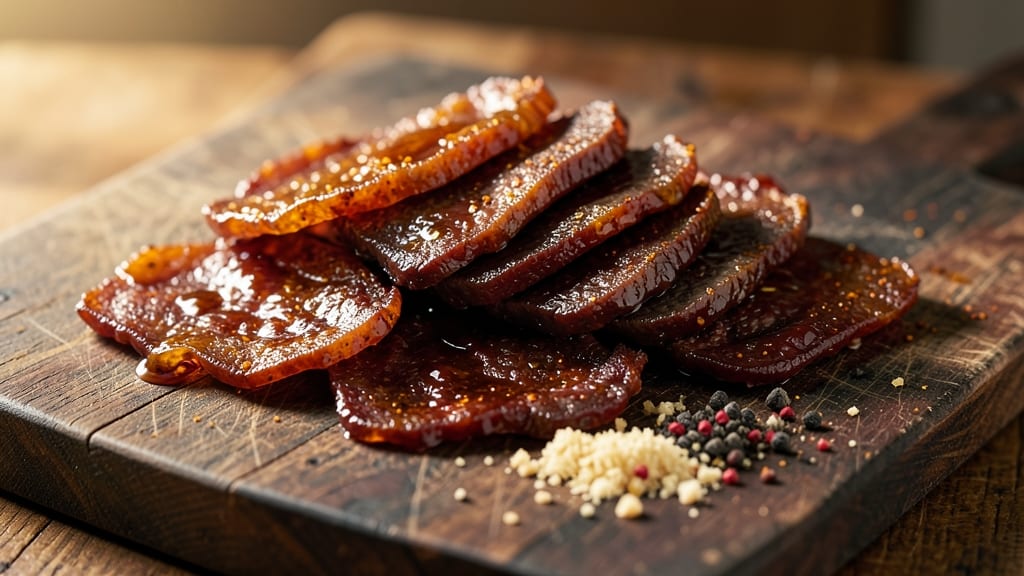
This A1 beef jerky recipe delivers restaurant-quality smoky-sweet strips with a satisfying crunch—no sugar, no preservatives, just pure flavor. The secret lies in a marinade blend of A1 steak sauce, bold spices, and tenderized beef that transforms tough cuts into melt-in-your-mouth perfection.
After perfecting this method through countless batches, I’ve cracked the code for jerky that’s crispy on the outside, tender inside, and packed with that signature tangy-sweet A1 kick.
The process starts with careful meat selection—lean cuts like top round or flank steak work best—and precise slicing against the grain to ensure maximum tenderness.
A marinade of A1 steak sauce, brown sugar substitute, and a mix of smoked paprika, garlic powder, and black pepper infuses every strip with deep, complex flavor.
Whether you use an oven, dehydrator, or smoker, the key is maintaining consistent airflow and temperature to achieve that perfect chewy-crisp texture without drying it out completely.
What sets this recipe apart is the balance of sweetness and smokiness, achieved through the A1 sauce’s unique blend of spices and molasses-free sweetness. The result is jerky that’s rich, aromatic, and addictively flavorful—ideal for snacking, camping trips, or gifting.
Each bite delivers that signature A1 tang paired with a satisfying crunch, making it a standout compared to store-bought versions.
Safety is critical, so we’ll cover proper drying times and storage tips to ensure your jerky stays fresh and safe to eat for weeks.
With just a few simple steps, you’ll have homemade jerky that rivals the best commercial brands—but with the freedom to customize the spice level and sweetness to your taste. Let’s get started on creating your own batch of irresistible A1 beef jerky.
Ingredients for a1 beef jerky
Lean beef, bold spices, and that signature A1 tang create addictive jerky with zero sugar.
| Ingredient | Amount | Notes |
|---|---|---|
| Top Round Beef 🥩 | 2 lb | Tough cut, sliced thin against grain |
| A1 Steak Sauce 🍖 | ½ cup | Original A1 sauce for authentic tang |
| Brown Sugar Substitute 🍯 | ¼ cup | Monk fruit sweetener or erythritol blend |
| Smoked Paprika 🌶️ | 2 tbsp | For deep smoky flavor profile |
| Garlic Powder 🧄 | 1 tbsp | Freshly ground preferred |
| Black Pepper 🌶️ | 1 tbsp | Freshly cracked for intensity |
| Ground Coriander 🌿 | 1 tbsp | Bright citrusy depth |
| Onion Powder 🧅 | 1 tbsp | For subtle sweetness |
| Salt 🧂 | 1 tbsp | Diamond Crystal kosher salt |
| Liquid Smoke 💨 | 1 tsp | Enhances smokiness without heat |
| Apple Cider Vinegar 🍏 | 1 tbsp | For tangy brightness |
| Worcestershire Sauce 🍶 | 1 tbsp | Vegan version if needed |
The beef makes or breaks this—top round or flank steak is non-negotiable. Look for cuts with good marbling but lean overall at Costco or local butchers. Slice it paper-thin against the grain (freeze 30 minutes first for easier slicing). Trader Joe's often carries pre-sliced beef jerky cuts if you're short on time. The A1 sauce? Grab the original bottle—replicas just don't cut it. For the brown sugar substitute, I swear by Lakanto Monk Fruit Sweetener—zero aftertaste, perfect caramelization without the sugar crash.
No A1 sauce? Worcestershire sauce plus a dash of soy sauce gets you 80% there. Smoked paprika hard to find? Regular paprika plus a pinch of liquid smoke works in a pinch. The garlic powder can be swapped for fresh garlic (minced, 3 cloves) if you're feeling fancy. For the brown sugar substitute, erythritol or allulose are solid alternatives if monk fruit isn't available. Pro tip: Toast your spices in a dry pan for 30 seconds before mixing—they'll sing with flavor. And if you're worried about the Worcestershire containing anchovies, the vegan version from Annie's is a perfect swap.
Marinated beef keeps 24 hours max in the fridge—don't skip this step, no matter how excited you are to dehydrate. For drying, 200°F for 3-4 hours in an oven with the door slightly open works perfectly. Store in an airtight container with oxygen absorbers for shelf life up to 3 weeks. Freeze for longer storage—just thaw overnight in the fridge. The first batch always disappears fastest, so make extra. These strips pack like a dream for camping trips or snacking straight from the jar.
Why You'll Love This Recipe
- No-Fuss Prep: I swear, this takes less time than waiting for takeout. Slice the beef thin, toss it in a bowl with A1 and spices, then let the oven do the work—no marinating overnight, no fancy slicing.
- Umami Bomb: That A1 steak sauce? It’s the secret weapon. The smoky-sweet kick from the brown sugar substitute and smoked paprika makes every bite taste like a juicy steakhouse bite, but without the fuss.
- Snack Attack Ready: Honestly, this jerky is perfect for anything—hiking snacks, tailgate fuel, or just munching while binge-watching. It keeps for weeks in the fridge, so I always have a stash for lazy days.
- Budget Game-Changer: Top round is cheap, and a little A1 goes a long way. I stretch one pound into enough jerky to feed my family for days, and the leftovers? They disappear faster than I can say "second helping."
Step-by-step instructions for smoky-sweet A1 beef jerky
Here's how to transform tough top round beef into irresistibly chewy, sweet-spicy jerky with that signature A1 kick.
Prep and Slice the Beef Against the Grain
Start by trimming any visible fat or silver skin from the 2 lb top round beef using a sharp boning knife. The key here is slicing against the grain—look for the muscle fibers running lengthwise and cut perpendicular to them. You want strips about ¼-inch thick and ¼-inch wide for even cooking and maximum chew.
Place the sliced beef in a large bowl and cover with cold water. Soak for 2-4 hours in the refrigerator to tenderize the meat and remove any surface impurities. This step is non-negotiable for jerky—it makes all the difference in texture and flavor. Drain and pat the beef dry completely with paper towels before proceeding.
Whisk the Flavor Bomb Marinade
In a medium bowl, combine the 0.5 cup A1 Steak Sauce, 0.25 cup Brown Sugar Substitute, 2 tbsp Smoked Paprika, 1 tbsp Garlic Powder, 1 tbsp Black Pepper, 1 tbsp Ground Coriander, 1 tbsp Onion Powder, 1 tbsp Salt, 1 tsp Liquid Smoke, 1 tbsp Apple Cider Vinegar, and 1 tbsp Worcestershire Sauce. Whisk vigorously until the sugar substitute dissolves completely and the mixture is smooth.
Here's the thing—this marinade is what makes this jerky special. The A1 sauce brings that iconic tangy depth, while the brown sugar substitute delivers sweetness without the crash. The smoked paprika and liquid smoke work together to create that perfect smoky profile. Taste the mixture now—it should be bold, slightly sweet, and deeply savory.
Marinate the Beef Thoroughly
Pour the marinade over the drained beef strips and toss gently to coat evenly. Transfer to a resealable plastic bag and massage the mixture into the meat, ensuring every strip gets fully saturated. Seal the bag and refrigerate for 12-24 hours, turning the beef occasionally to distribute the flavors.
This long marinating time is crucial—it allows the flavors to penetrate deeply and the meat to absorb the marinade completely. The longer you marinate (up to 24 hours), the more intense the flavor will be. Don't skip this step, even if you're eager to get cooking. Patience here pays off in every chewy, flavorful bite.
Dehydrate for Perfect Texture
Preheat your dehydrator to 160°F. Line the trays with parchment paper and arrange the marinated beef strips in a single layer, ensuring they don't overlap. This spacing is critical—it prevents the jerky from steaming and ensures even drying.
Dehydrate for 4-6 hours, checking periodically. The jerky is done when it's no longer sticky to the touch and has a leathery texture. You want it to bend but not break—this indicates perfect moisture content. If it's drying too quickly, reduce the temperature by 5°F and continue. If it's not drying enough, increase by 5°F and give it more time.
Test and Store for Maximum Freshness
Let the jerky cool completely on the dehydrator trays. Once cooled, test a piece by bending it—it should snap with a slight crack but not break completely. If it's too soft, return it to the dehydrator for another 30-60 minutes. If it's too brittle, it's overdone and will be unpleasantly hard.
Store the finished jerky in an airtight container in the refrigerator for up to 2 weeks or freeze for up to 6 months. The flavors will continue to develop and deepen over time, making this jerky even more addictive with each passing day. Enjoy it as a snack, trail mix ingredient, or even as a protein boost in salads and wraps!
Pro Tips For Making A1 Beef Jerky
- Freeze the Meat First: I learned this the hard way—skipping the freeze makes slicing top round beef into jerky strips a messy, uneven battle. Pop it in the freezer for 30 minutes before slicing, and you’ll get clean, even strips every time. (Yes, even if you’re impatient like me.)
- Mix the Sauce Early: A1 steak sauce and brown sugar substitute clump like glue if you wait until the last minute. Whisk them together with the smoked paprika and garlic powder in a small bowl while your meat preps—this way, you’re not scrambling to coat strips once the dehydrator’s running.
- Slice Against the Grain: Thin, chewy jerky starts with slicing top round against its muscle fibers. If you cut with the grain, you’ll end up with jerky that’s tougher than boot leather. Take your time—this isn’t the step to rush.
- Use a Meat Tenderizer First: Top round can be stubbornly tough, and jerky’s no place for surprises. Run your strips through a meat tenderizer or hammer them lightly before dehydrating—it breaks down fibers just enough to keep the texture tender without turning it mushy. (I skip this when I’m lazy, but the jerky is noticeably better when I don’t.)
Flavor customization for this a1 beef jerky
Sweet Heat Balance
Adjust the sweet-to-spicy ratio by modifying the brown sugar substitute and smoked paprika. For a sweeter profile, increase the sugar substitute to 0.35 cup and reduce black pepper to ½ tbsp.
For extra heat, swap 1 tbsp cayenne pepper for half the smoked paprika. I once made a batch with 1 tsp chipotle powder—it added smoky heat that was absolutely addictive. 🔥
Smoky Depth Variations
Boost smokiness with 1 extra tsp liquid smoke or replace ½ tbsp smoked paprika with ½ tbsp chipotle powder in adobo. For a campfire-inspired twist, add ½ tsp ground coffee to the marinade—it enhances the A1's depth.
I tested this with a batch of flank steak jerky, and it became my go-to for hiking trips. The coffee grounds add an earthy complexity that pairs perfectly with the A1 tang.
Tangy Twist Options
Amplify the A1 tang by adding 1 tbsp soy sauce or 1 tbsp fish sauce (if not avoiding anchovies). For a citrusy kick, include 1 tbsp lemon juice or 1 tbsp orange zest in the marinade.
I once experimented with 1 tsp hot sauce (like Cholula)—it added a subtle spicy brightness that elevated the flavor profile without overpowering the A1. 🌶️
Herbal Freshness Additions
Brighten the marinade with 1 tbsp fresh rosemary (finely chopped) or 1 tbsp fresh thyme. For a Mediterranean touch, add 1 tbsp dried oregano and ½ tsp fennel seeds.
I love using 1 tbsp fresh cilantro in the final marinade—it adds a fresh, almost Mexican-inspired note that contrasts beautifully with the smoky-sweet A1 flavor. The herbs infuse quickly, so no need to soak longer.
Spice Level Customization
For mild heat, use ½ tsp cayenne instead of black pepper. For medium heat, keep the original 1 tbsp black pepper and add ½ tsp red pepper flakes. If you love it spicy, swap 1 tbsp of the smoked paprika for 1 tbsp crushed red pepper.
I once made a batch with 1 tsp gochujang—it added a fermented, slightly sweet heat that was unforgettable. Always taste the marinade before applying to avoid overpowering the A1 flavor.
Regional Flavor Profiles
For a Southern BBQ twist, add 1 tbsp molasses-free barbecue sauce and ½ tsp mustard powder. A Tex-Mex version works with 1 tbsp taco seasoning and ½ tsp cumin.
I once created a Caribbean-inspired batch by adding 1 tsp allspice and ½ tsp nutmeg—it gave the jerky a warm, almost rum-like depth that was surprisingly delicious. Each regional variation keeps the A1 as the star while adding complementary flavors. 🌎
Nutrition facts
Frequently asked questions
What beef cut works best for this A1 jerky?
Use top round or flank steak—these lean cuts have just enough fat for flavor while staying tender when sliced thin. Avoid fatty cuts like ribeye, as excess fat can spoil during dehydration. Look for beef with visible grain patterns to slice against properly for maximum chew.
Can I make this jerky without a dehydrator?
Yes! Use an oven at 160°F with the door slightly open for airflow. Place strips on a wire rack over a baking sheet and dehydrate for 4-6 hours, checking periodically. For extra smokiness, try a smoker at 145°F for 3-4 hours. The key is low heat and good airflow to prevent steaming.
How do I know when the jerky is fully dried?
Test for doneness by bending a strip—it should snap with a slight crack but not break completely. The jerky should also feel dry to the touch with no stickiness. If it's still soft after 6 hours, increase the temperature by 5°F and continue drying. Over-dried jerky becomes brittle and unpleasantly hard.
Why does my jerky smell strong after drying?
A strong smell usually means the jerky needs more drying time. ︸ The beef should have minimal odor after 4-6 hours at 160°F. If it smells sour or ammonia-like, it's spoiled—discard immediately. Properly dried jerky has a mild, meaty aroma with hints of the marinade's spices. Store in an airtight container to prevent further moisture absorption.
Can I use this jerky in recipes instead of just snacking?
Chop into small pieces for tacos, salads, or pasta dishes. The A1 marinade adds depth to any dish. For extra flavor, lightly toast the jerky in a pan before using. It also makes a great protein boost in soups or as a topping for nachos. Just remember—homemade jerky is saltier than store-bought, so adjust other seasonings accordingly.