
Soups & Stews
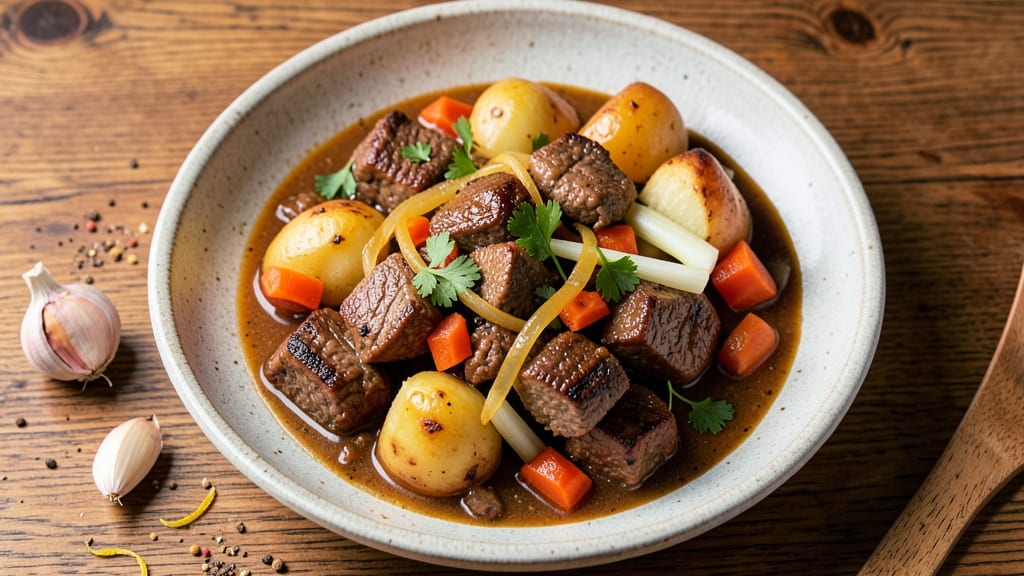
This all-natural beef stew recipe transforms tough chuck roast into melt-in-your-mouth tenderness through slow braising with deep red wine and caramelized roots. The secret lies in low-and-slow cooking, where tough cuts break down into rich, velvety meat that practically falls apart at the touch of a fork.
Every bite delivers layers of umami from the wine reduction, sweetness from caramelized onions and carrots, and earthy depth from fresh herbs.
The beauty of this recipe is its simplicity—just a few natural ingredients, no preservatives, and minimal processed shortcuts. You’ll start with a chuck roast, the perfect budget-friendly cut for stews, and build flavor through a deep red wine reduction that adds complexity without overpowering.
The slow cook (or Instant Pot for modern convenience) ensures the meat stays juicy while vegetables like carrots, potatoes, and celery soften into sweet, tender perfection.
What you’ll end up with is a hearty, restaurant-quality beef stew that smells like home the moment you lift the lid. The deep red wine braise adds a sophisticated touch, while the caramelized roots provide natural sweetness that balances the rich, savory beef.
This is the kind of stew that reheats beautifully and tastes even better the next day—ideal for feeding a crowd or meal prepping for the week.
Whether you’re using a traditional Dutch oven or an Instant Pot for faster results, this recipe delivers consistent, foolproof results. The all-natural approach means you’re using real ingredients without compromising on flavor or quality. Let’s get started on creating a stew that’s as nourishing as it is delicious.
Ingredients for all natural beef stew
Six hearty ingredients transform tough beef into restaurant-quality stew with deep red wine richness.
| Ingredient | Amount | Notes |
|---|---|---|
| Chuck Roast 🥩 | 3 lb | Well-marbled, cut into 1.5-inch chunks |
| Yellow Onions 🧅 | 2 whole | Cut into 1-inch wedges for caramelizing |
| Carrots 🥕 | 4 whole | Peeled, cut into 2-inch chunks |
| Celery Stalks 🧆 | 4 whole | Cut into 1-inch pieces |
| Russet Potatoes 🥔 | 2 lb | Peeled, cut into 1.5-inch chunks |
| Garlic Cloves 🧄 | 6 cloves | Minced for deep flavor infusion |
| Dry Red Wine 🍷 | 1 ½ cups | Bold variety like Cabernet Sauvignon |
| Beef Broth 💧 | 3 cups | Homemade or high-quality store-bought |
| Tomato Paste 🍅 | 2 tbsp | For rich umami depth |
| Fresh Thyme 🌿 | 2 tbsp | Leaves only, chopped finely |
| Fresh Rosemary 🌿 | 1 tbsp | Chopped, for earthy aroma |
| Bay Leaves 🍃 | 2 whole | For subtle aromatic complexity |
| Kosher Salt 🧂 | 2 tsp | Diamond Crystal preferred |
| Freshly Ground Black Pepper 🌶️ | 1 tsp | Cracked peppercorns preferred |
| Olive Oil 🫒 | 2 tbsp | Extra-virgin for initial searing |
The chuck roast is non-negotiable here—its marbling is what turns tough meat into melt-in-your-mouth perfection. Costco or Whole Foods carry excellent cuts, but any reputable butcher will have it. Look for pieces with good fat distribution, not lean cuts. For the wine, Cabernet Sauvignon or Merlot work best—they add complexity without overpowering. The beef broth? Homemade is ideal, but Kirkland Signature or Pacific Foods brands are solid shortcuts. Caramelizing the onions, carrots, and celery first is key—this builds the stew's natural sweetness that balances the wine's acidity.
No red wine? Beef broth with 2 tbsp balsamic vinegar mimics the depth. Fresh thyme and rosemary are ideal, but dried at half the amount works in a pinch (just crush the leaves first). The tomato paste can be swapped for 1 crushed can of San Marzano tomatoes if you prefer. For a vegetarian-friendly version, replace the beef with mushrooms and extra lentils—though the wine reduction still steals the show. The bay leaves add subtle aroma, so don't skip them, but remove them before serving.
This stew tastes even better the next day as flavors meld. Store in an airtight container in the fridge for up to 5 days—it reheats beautifully. For freezing, portion into 2-cup servings and it keeps for 3 months. The wine reduction can be made ahead too—simmer it down to 1 cup, cool, and store in the fridge for 1 week. I always double the batch because it disappears faster than you'd think, especially when paired with crusty bread.
Why You'll Love This Recipe
- Foolproof Prep: I swear by this—just sear the chuck roast in one pot, toss in the onions, carrots, and celery (no fancy dicing, just rough chop), then let it slow-cook. The only real effort is the initial sear, and honestly? That’s where the magic happens.
- Deep, Rich Taste: That chuck roast turns so tender it falls apart at a touch, while the potatoes soak up the broth until they’re creamy inside with a perfect bite. Between us, the caramelized onions make this taste like a hug in a bowl.
- Leftovers for Days: Serve it once, then reheat portions for lunch—it only gets better as the flavors meld. I’ve had this stew three times in a week, and my kids still beg for seconds. (Yes, even on a Tuesday night.)
- Budget Stretch: A single chuck roast feeds my family of four for three meals, and the veggies are cheap staples. This is my go-to when I need hearty, filling meals without breaking the bank—or making multiple trips to the store.
Step-by-step instructions for all natural beef stew
This deep-red wine braise transforms simple ingredients into a restaurant-quality stew.
Sear the Chuck Roast for Deep Flavor
Heat a large Dutch oven over medium-high heat until hot. Add the 2 tablespoons olive oil and let it shimmer for 30 seconds. Working in batches if needed, add the 3 lb chuck roast in 1.5-inch chunks and sear on all sides until deeply browned, about 3-4 minutes per side. This step develops the rich, caramelized crust that forms the stew's foundation.
Don't rush this process—you want those chunks to develop a deep mahogany color. If your pan gets crowded, work in batches to maintain proper heat. Transfer the seared beef to a plate and set aside. You'll notice the meat releases easily when properly seared, which means it's ready for the next stage.
Caramelize the Vegetable Base
In the same Dutch oven, add the 2 whole yellow onions cut into 1-inch wedges, 4 whole carrots cut into 2-inch chunks, and 4 whole celery stalks cut into 1-inch pieces. Cook over medium heat for 10-12 minutes, stirring occasionally, until the vegetables soften and develop a golden brown color.
This caramelization process creates complex sweetness that balances the stew's richness. You'll know it's ready when the onions are translucent and the carrots begin to soften at the edges. Here's the thing—don't skip stirring occasionally. This ensures even cooking and prevents burning at the bottom.
Build the Flavor Foundation
Add the 6 cloves garlic cloves that have been minced, 2 tablespoons tomato paste, 2 tablespoons fresh thyme, 1 tablespoon fresh rosemary, 2 whole bay leaves, 2 teaspoons kosher salt, and 1 teaspoon freshly ground black pepper to the Dutch oven. Stir everything together and cook for 2 minutes until fragrant.
The garlic should sizzle slightly and release its aromatic oils. This is where the magic happens—the tomato paste adds umami depth while the fresh herbs infuse their essential oils. You'll smell that wonderful combination of earthy rosemary, piney thyme, and sweet garlic filling your kitchen. Don't let it burn—keep the heat at medium and stir frequently.
Deglaze and Simmer with Wine and Broth
Pour in the 1.5 cups dry red wine and scrape up any browned bits from the bottom of the pot with a wooden spoon. This deglazing step captures all the flavor you've built so far. Let the wine simmer for 3-4 minutes until it reduces by half and the alcohol cooks off.
Next, add the 3 cups beef broth and return the seared beef to the pot. Bring everything to a gentle boil, then reduce heat to low and cover partially. Let it simmer for 1.5 hours, stirring occasionally. You want the liquid to bubble gently—this ensures the beef tenderizes without falling apart.
Add Potatoes and Finish the Stew
After 1.5 hours, add the 2 lb russet potatoes cut into 1.5-inch chunks to the stew. The potatoes will absorb some of the liquid as they cook, so this is the perfect time to add them. Return the stew to a simmer and cook uncovered for an additional 45-60 minutes.
You'll know the stew is ready when the potatoes are fork-tender and the beef is fork-tender with no resistance. The stew should have thickened slightly, coating the vegetables and meat in a rich, velvety sauce. Taste and adjust seasoning if needed—you might need a bit more salt or pepper to balance the flavors. Remove the bay leaves before serving as they can be bitter when overcooked.
Rest and Serve with Confidence
Let the stew rest for 10-15 minutes before serving. This resting period allows the flavors to meld together and the juices to redistribute throughout the meat and vegetables. The stew will actually taste better after resting—don't skip this step!
Ladle the stew into bowls and serve immediately. Each bite should deliver tender beef, caramelized vegetables, and that rich, wine-infused sauce. The aroma alone will make your kitchen smell like a cozy country restaurant. Pair it with crusty bread to soak up every last drop of that delicious sauce.
Pro Tips For Making All Natural Beef Stew
- SEAR THE ROAST FIRST: I used to skip this step, thinking it was unnecessary, but a deep caramelized crust on the chuck roast makes the whole stew richer. Hit medium-high heat with 1 tablespoon of oil—just enough to coat—and let it brown undisturbed for 5 minutes per side. The edges should be dark gold, not just lightly colored.
- CUT POTATOES LAST: Russet potatoes take forever to soften if added early. I learned this the hard way after serving mushy potatoes in an otherwise perfect stew. Toss them in 10 minutes before serving—just enough time to melt their starch and thicken the broth without turning them to paste.
- SALT THE MEAT TWICE: Generously salt the chuck roast right after searing, then add another pinch of salt to the pot when you pour in the liquid. This guarantees the meat stays juicy and the flavor penetrates deeply. Don’t be shy—this isn’t a delicate dish.
- SIMMER LOW AND COVERED: After the initial 30 minutes of boiling to tenderize the meat, drop the heat to a bare simmer and keep the lid on. I used to let it bubble away, and the broth would turn cloudy and weak. A gentle roll of steam means the flavors meld without breaking the meat apart.
Wine and beer pairings for this dish
Red Wine Pairings
The deep red wine braise in this stew calls for bold, medium-bodied reds that complement its rich umami flavors. I reach for a Cabernet Sauvignon from Napa Valley—its dark fruit notes and subtle oak enhance the beef's natural richness without overpowering.
For something more approachable, a Chianti Classico from Tuscany offers bright acidity that cuts through the stew's richness beautifully. Both wines mirror the Cabernet Sauvignon used in the recipe, creating a seamless pairing experience. 🍷
Beer Complements
For beer lovers, a dark amber ale like Fat Tire or a Belgian-style dubbel provides malty sweetness that balances the stew's acidity. The caramel and toasty notes in these beers echo the caramelized vegetables in the dish.
If you prefer lighter options, a German Helles with its crisp, clean finish lets the stew's flavors shine. I always keep a cold one handy—it's the perfect palate cleanser between bites.
White Wine Surprise
Don't overlook white wine pairings! A dry Riesling from Germany or Alsace offers surprising contrast with its bright acidity and citrus notes. The slight sweetness in some Rieslings complements the caramelized onions beautifully.
I've even tried a Chardonnay with minimal oak—its buttery texture pairs surprisingly well with the stew's creamy potatoes. It's a great option if you're serving guests who prefer whites.
Cocktail Pairings
For a festive touch, serve this stew with a red wine sangria made with the same Cabernet Sauvignon used in the recipe. Add sliced apples, pears, and a splash of brandy for extra depth.
Alternatively, a bourbon old-fashioned with its caramel and vanilla notes creates a sophisticated contrast. The smoky sweetness of the cocktail complements the stew's savory depth while cleansing your palate between bites. 🍹
Non-Alcoholic Options
Don't worry if alcohol isn't an option! A sparkling cranberry juice with a splash of ginger ale creates a refreshing, tart accompaniment. For something warmer, try a mulled apple cider with cinnamon sticks—its spiced sweetness enhances the stew's caramelized flavors.
I also love serving this stew with a chilled hibiscus iced tea for a bright, floral contrast that cuts through the richness.
Regional Variations
In France, this stew would traditionally pair with a Bordeaux red—its earthy tannins complement the beef beautifully. In Italy, a Barolo from Piedmont offers bold structure, while in Spain, a Rioja with its leather and tobacco notes adds complexity.
Each regional wine enhances the stew's natural flavors while reflecting local traditions. The key is always to match the wine's intensity with the dish's richness. 🌍
Nutrition facts
Frequently asked questions
Can I use a different cut of beef instead of chuck roast?
While chuck roast is ideal for its marbling and tenderness, you can substitute with brisket (add 30 extra minutes to cooking time) or stew meat (pre-cut for stews). Avoid lean cuts like sirloin—they won't become tender enough. For extra flavor, try bone-in short ribs (remove bones before serving).
How do I make this stew in an Instant Pot?
Sear the beef first in a separate pan, then add all ingredients to your Instant Pot. Use the high-pressure setting for 45 minutes (natural release), then add potatoes and cook an additional 10 minutes. The Instant Pot version cooks 60% faster but yields slightly less tender meat. Stir in 1 tablespoon cornstarch mixed with 2 tbsp water at the end to thicken the sauce.
What if I don't have red wine?
No problem! Replace the wine with 1 cup beef broth + 2 tbsp balsamic vinegar for acidity, or 1 cup apple cider for subtle sweetness. For deeper flavor, add 1 tsp soy sauce or 1/2 tsp smoked paprika. The stew will still be delicious—just slightly less complex. The key is maintaining the same 1.5 cup liquid volume from the wine.
Why did my stew turn out too thin?
This usually happens from overcooking or insufficient thickening. First, check if you used enough potatoes—they absorb liquid as they cook. For a quick fix, remove the lid and simmer uncovered for 10-15 minutes to reduce the sauce. If that's not enough, mix 1 tbsp cornstarch with 2 tbsp cold water and stir it in while the stew simmers.
Can I make this stew in a slow cooker?
Yes! Brown the beef first in a skillet, then transfer everything to your slow cooker. Cook on low for 7-8 hours or high for 4-5 hours. The slow cooker version is even more forgiving—just add potatoes during the last 1 hour of cooking. The meat will be extra tender, but the sauce may be thinner. Thicken it by simmering uncovered for 10 minutes before serving.