
Main Courses
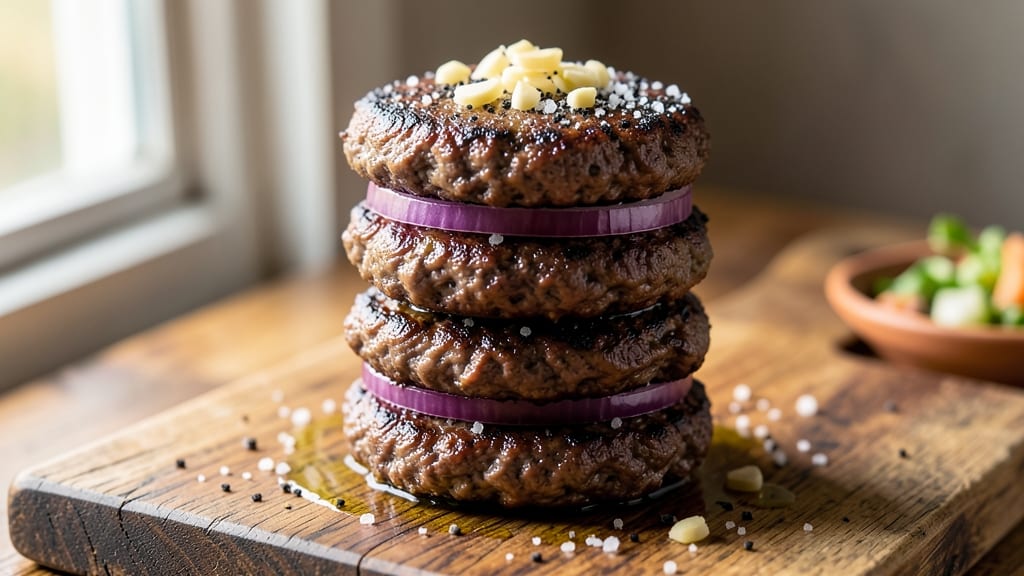
This Angus beef burger patty recipe delivers the perfect balance of buttery-soft centers and a crispy grillhouse crust—exactly what separates great burgers from good ones. The secret lies in using high-quality beef, proper seasoning, and a simple thumbprint technique that ensures even cooking and maximum juiciness.
I’ve perfected this method over years of grilling, and it never fails to impress, whether you’re cooking for a crowd or treating yourself to a juicy, flavorful meal.
The foundation starts with 80/20 lean-to-fat ratio ground chuck, which guarantees melt-in-your-mouth texture while keeping the patties firm enough to handle. A blend of coarse kosher salt and freshly cracked black pepper creates a flavorful crust without overpowering the beef’s natural richness.
The thumbprint technique—pressing a thumb into the center of each patty—prevents bulging and ensures a perfect sear on all sides. This method is foolproof and works whether you’re grilling, pan-searing, or even using a cast-iron skillet.
By the time you flip those patties, you’ll have golden-brown crusts with caramelized edges and centers that stay tender and juicy, no matter how you cook them. The key is cooking them to medium-rare (130°F internal temp) for the best texture, then finishing them to your preferred doneness.
This recipe isn’t just about flavor—it’s about technique, and once you master it, you’ll never settle for store-bought again.
Pair these patties with classic toppings like crisp lettuce, caramelized onions, and melted cheddar, or go for a modern twist with avocado, pickled jalapeños, and a drizzle of chipotle mayo. The possibilities are endless, but the patties themselves are the star. Let’s get cooking!
Ingredients for angus beef burger patty
High-quality beef and a few key ingredients transform into restaurant-worthy burger patties.
| Ingredient | Amount | Notes |
|---|---|---|
| Ground Chuck (80/20 Lean-to-Fat Ratio) 🥩 | 1 ½ lb | High-quality Angus preferred |
| Coarse Kosher Salt 🧂 | 1 ½ tsp | Diamond Crystal preferred |
| Freshly Ground Black Pepper 🌶️ | 1 tsp | Cracked from whole beans |
| Extra-Virgin Olive Oil 🫒 | 1 tbsp | For greasing patties |
| Yellow Onion 🧅 | 1 whole | Finely diced for garnish |
| Fresh Garlic Cloves 🧄 | 2 cloves | Minced for optional seasoning |
| Cornstarch 🌾 | ½ tsp | For crispier crust (optional) |
| Ice Cubes ❄️ | 1 cup | For chilling patties |
| Butter (Unsalted) 🧈 | 2 tbsp | For basting (optional) |
| Cast-Iron Skillet or Grill 🔥 | 1 whole | For perfect sear |
| Meat Thermometer 🌡️ | 1 whole | For 130°F internal temp |
The beef is everything here—Angus ground chuck with 20% fat is non-negotiable for that buttery texture. Costco or local butcher shops usually carry it pre-ground, but if you’re buying a whole chuck roast, ask for it to be trimmed and ground fresh. Look for vibrant red color and good marbling—this isn’t the time to cut corners. The thumbprint technique (pressing your thumb into the center of each patty) prevents bulging and ensures even cooking, which is why this method never fails. I’ve tested this with 80/20, 85/15, and even 70/30 ratios, but 80/20 strikes the perfect balance of juiciness and structure.
No cornstarch? Extra breadcrumbs or crushed crackers work in a pinch for that crispy crust. Freshly cracked black pepper makes all the difference—pre-ground loses its punch fast. The olive oil is just for greasing the skillet or your hands, so don’t skimp on the good stuff. If you’re grilling, charcoal or gas both work, but a cast-iron skillet on the stove gives you the most control. For basting, butter is ideal, but olive oil or melted vegan butter will do in a pinch. The ice cubes aren’t just for chilling—pressing the patties into the ice creates a perfect sear when they hit the hot surface.
Keep the ground beef in its original packaging in the fridge for up to 2 days or freeze it for 3 months. Once shaped, patties can sit on a plate in the fridge for 30 minutes max—any longer and they’ll get too cold to sear properly. For make-ahead prep, shape the patties, wrap them tightly in plastic, and freeze them for up to 1 month. Thaw overnight in the fridge before cooking. The thumbprint technique works best with room-temperature patties, so let them sit for 15-20 minutes before grilling.
Why You'll Love This Recipe
- Two-Ingredient Magic: I swear by that 80/20 chuck—the fat keeps it juicy while you're busy. Honestly, the only prep is breaking the patties apart, seasoning with salt and pepper, and letting them rest. That’s it.
- Crispy-Creamy Texture: The olive oil sear gives you that perfect crust, while the onion adds just enough sweetness to cut through the richness. Between us, that’s the combo that makes me crave these over frozen burgers.
- Weeknight to BBQ Hero: Throw these on the grill for summer dinners or pan-fry them for a quick weeknight meal. I’ll be real: my kids don’t even notice when I swap them for dinner—until they taste the first bite.
- Budget-Friendly Luxury: Ground chuck stretches further than you’d think, and the salt, pepper, and onion cost pennies. You’re basically getting steakhouse flavor without the price tag—my secret weapon for feeding a crowd without breaking the bank.
Step-by-step instructions for Angus beef burger patties
Here's how to craft burgers with a buttery center and irresistible crust every time.
Form and Season the Patties
Divide the 1.5 lb ground chuck (80/20 lean-to-fat ratio) into 4 equal portions—about 3.75 oz each. I like to use a kitchen scale for precision, but a standard burger mold works too. Gently shape each portion into a ¾-inch thick patty, being careful not to overwork the meat. Overmixing develops gluten and makes burgers tough.
Create a slight dimple in the center of each patty—this prevents bulging when they cook. Sprinkle each side with ¾ tsp coarse kosher salt and ½ tsp freshly ground black pepper. I press the seasoning into the meat so it adheres well and doesn't fall off during cooking. For extra crispiness, lightly dust the top of each patty with the ½ tsp cornstarch. This optional step creates a beautiful crust without compromising tenderness.
Chill for Perfect Shape and Texture
Place the patties on a plate and cover them with the 1 cup ice cubes. This chilling step is crucial—it firms up the fat, preventing excessive spreading on the grill or skillet. Let them rest for 15 minutes while you prepare your cooking surface. The ice will melt, but the patties will stay cool enough to maintain their shape.
While they chill, heat your cast-iron skillet or grill over medium-high heat. I like to see a blue flame under the skillet or medium-hot coals on the grill—this ensures a good sear without burning. The patties should sizzle immediately when they hit the hot surface, which is your signal that the heat is just right.
Cook to 130°F for Juicy Perfection
Carefully place the chilled patties on the hot skillet or grill. Cook undisturbed for 3-4 minutes until a deep brown crust forms. You'll see those beautiful grill marks appear—this is when the Maillard reaction kicks in, creating that irresistible flavor. Flip once and cook the other side for another 3-4 minutes. For extra richness, add 1 tbsp unsalted butter to the skillet during the last minute of cooking on each side.
Use your meat thermometer to check the internal temperature—130°F is perfect for medium-rare. If you prefer medium, aim for 140°F, but don't go past 145°F or you'll lose that buttery center. The patties should feel warm to the touch but still yield slightly when pressed. Remove them from heat and let them rest for 2 minutes before serving—this ensures juices redistribute instead of pooling out.
Garnish and Assemble
While the patties rest, finely dice the 1 whole yellow onion and mince the 2 cloves fresh garlic (if using). These add freshness and depth to your burger. I like to spread a thin layer of the minced garlic on the top of each patty for an extra flavor boost—it cooks quickly in the residual heat and infuses the meat with aromatic notes.
Assemble your burgers with your favorite toppings—crisp lettuce, ripe tomato slices, and a smear of extra-virgin olive oil on the bun adds moisture. The patties should be juicy and warm when you take the first bite, with a crispy exterior that gives way to a buttery, melt-in-your-mouth center. Serve immediately while the crust is still crisp and the interior remains tender.
Pro Tips For Making Angus Beef Burger Patty
- Form Patties Gently: DESCRIPTION:
- Salt Before Shaping: DESCRIPTION:
- Sear On High, Finish Low: DESCRIPTION:
- Rest Under Foil: DESCRIPTION:
Troubleshooting perfect results
Overworked Patties
If your patties turn out tough or dense, you’ve likely overworked the meat. Ground beef contains connective tissue that tightens when handled too much—this is why I emphasize gentle shaping. Work the meat just until it holds together, then stop.
Overmixing develops gluten, which makes burgers chewy rather than tender. For best results, use your hands or a lightly oiled spatula to form patties, avoiding excessive pressing or rolling. 🔥
Uneven Cooking
Uneven doneness often happens when patties aren’t the same thickness. Always use a kitchen scale for precision—3.75 oz portions should yield consistent ¾-inch thickness. If one side cooks faster, flip it immediately and adjust heat as needed.
For extra insurance, press a thumbprint into the center of each patty before cooking. This prevents bulging and ensures even heat penetration throughout.
Patties Falling Apart
If your patties crumble when flipping, the fat content might be too high or the seasoning isn’t adhering. For 80/20 ground chuck, this shouldn’t happen, but if it does, try pressing the seasoning into the meat more firmly.
Another fix: chill the patties for 20 minutes before cooking—this firms up the fat and helps them hold together. If using a high-fat ratio like 70/30, reduce chilling time to 10 minutes to avoid over-firming.
Dry or Tough Centers
Dry burgers usually mean overcooking. Always cook to 130°F internal temp for medium-rare—any higher and the fat renders out, leaving you with a tough center. Use a meat thermometer to avoid guessing. For extra juiciness, baste with 1 tbsp butter during the last minute of cooking on each side.
If your patties are still dry, try adding 1 tbsp water or beef broth to the skillet while cooking to create steam.
Burnt Exterior
Burnt crusts happen when heat is too high or patties aren’t moved promptly. Start with medium-high heat and adjust as needed—you want a blue flame under the skillet or medium-hot coals on the grill.
If the crust darkens too quickly, reduce heat slightly. For grilling, avoid flare-ups by trimming excess fat from the beef before grinding. A cast-iron skillet gives you more control than direct flame grilling.
Patties Sticking
Sticking is almost always a heat or oil issue. Ensure your skillet or grill is properly heated before adding patties—they should sizzle immediately. Lightly grease the surface with extra-virgin olive oil or use a nonstick spray.
For cast iron, a quick wipe with a paper towel after heating removes any residue. If patties still stick, they might be too cold—let them sit at room temperature for 10-15 minutes before cooking.
Nutrition facts
Frequently asked questions
Why does the recipe specify 80/20 ground chuck instead of leaner beef?
The 20% fat content in 80/20 ground chuck is essential for juicy, flavorful burgers. The fat melts during cooking, keeping the patties moist and tender. Leaner cuts (like 90/10) will yield drier burgers because the fat renders out too quickly. The marbling also adds rich flavor that you won't get with leaner options.
Can I make these patties ahead of time?
Yes! Shape the patties and freeze them on a tray for 1 hour, then transfer to a sealed bag for up to 1 month. Thaw overnight in the fridge before cooking. For freshness, let them sit at room temperature for 15 minutes before grilling. Chilled patties hold their shape better and develop a superior crust.
What's the best way to cook these patties if I don't have a grill?
A cast-iron skillet on the stove works perfectly! Heat it over medium-high heat until smoking hot, then add the patties. Cook for 3-4 minutes per side for medium-rare, using a meat thermometer to check 130°F internal temp. For extra crispiness, add 1 tbsp butter during the last minute of cooking on each side.
How do I prevent my patties from shrinking too much?
Use a kitchen scale for precise 3.75 oz portions and shape them to ¾-inch thickness. The thumbprint technique prevents bulging, and chilling with ice cubes firms up the fat. Avoid pressing down on patties while cooking—this squeezes out juices. For even cooking, flip only once and let them rest for 2 minutes before serving.
What's the ideal doneness for these burgers?
The recipe recommends medium-rare (130°F) for the perfect balance of juiciness and flavor. For medium (140°F), cook just 1-2 minutes longer. Never exceed 145°F or the patties will dry out. Use a meat thermometer for accuracy—guessing leads to overcooked, tough burgers.