
Main Courses
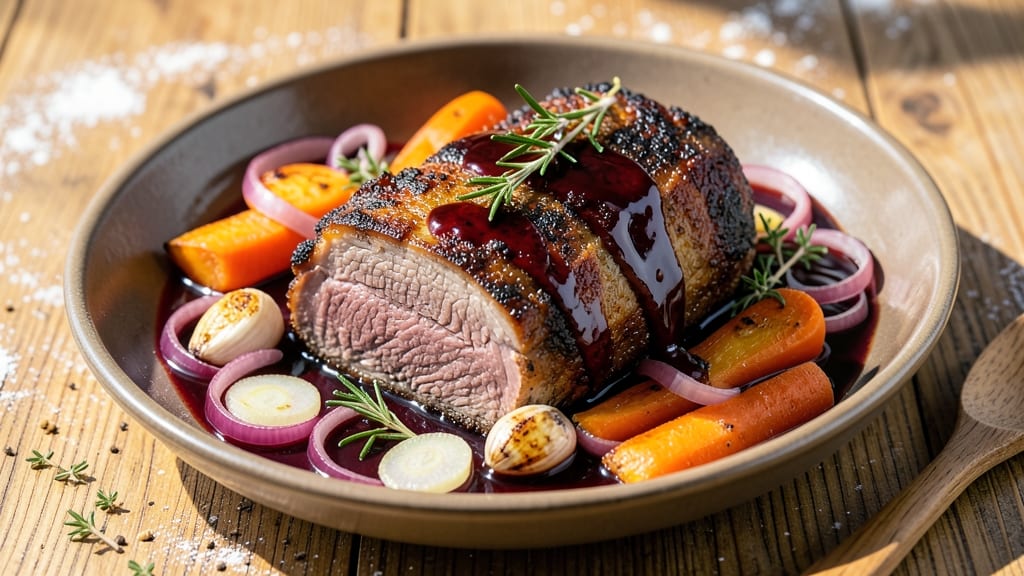
This Angus beef pot roast recipe delivers melt-in-your-mouth tenderness that transforms tough cuts into luxurious, slow-braised perfection. The secret lies in a low-and-slow approach that breaks down collagen-rich meat into fork-tender slices, all while developing deep, caramelized flavors in the braising liquid.
After years of perfecting this technique, I can confidently say this is the closest you'll get to restaurant-quality pot roast at home—without the hours of babysitting.
The process begins with a hot sear to create a flavorful crust, followed by a rich braising liquid (traditional red wine or bold coffee work beautifully) that infuses the meat with layers of savory depth.
What sets this recipe apart is the balance of time and temperature—three hours on low heat ensures the meat becomes so tender it practically falls apart, while the aromatics (carrots, onions, garlic) caramelize into a naturally sweetened sauce.
This isn't just comfort food; it's a showstopper that elevates any Sunday dinner.
By the final hour, your kitchen will smell like a French bistro, and the meat will be so tender it requires no carving—just slice straight from the bone.
The sauce, reduced to a velvety consistency, clings to every bite, delivering rich umami notes that pair perfectly with classic sides like creamy mashed potatoes, buttery carrots, or crusty dinner rolls. The result? A dish that feels indulgent yet comes together with minimal effort—once you've mastered the timing.
Whether you're feeding a hungry family or hosting a dinner party, this pot roast delivers restaurant-quality results with homemade simplicity. The key is patience—the longer it braises, the more tender and flavorful it becomes.
Serve it with your favorite sides and watch it disappear from the plate. Here's how to make it happen.
Ingredients for angus beef pot roast
Sixteen ingredients for restaurant-quality pot roast with minimal effort.
| Ingredient | Amount | Notes |
|---|---|---|
| Angus Beef Chuck Roast 🥩 | 3 lb | Well-marbled, bone-in preferred |
| Yellow Onions 🧅 | 2 whole | Cut into 1-inch chunks |
| Carrots 🥕 | 4 whole | Medium size, peeled and halved |
| Garlic Cloves 🧄 | 6 cloves | Smashed but not minced |
| Dry Red Wine 🍷 | 1 cup | Bold variety like Cabernet Sauvignon |
| Beef Broth 💧 | 2 cups | Low-sodium preferred |
| Tomato Paste 🍅 | 2 tbsp | Smooth, not chunky |
| Fresh Thyme 🌿 | ¼ cup | Leaves only, stems removed |
| Fresh Rosemary 🌿 | ⅛ cup | Needles only, finely chopped |
| Olive Oil 🫒 | 2 tbsp | Extra-virgin for searing |
| Salt 🧂 | 1 ½ tsp | Kosher or sea salt |
| Ground Black Pepper 🌶️ | 1 tsp | Freshly cracked |
| All-Purpose Flour 🌾 | 1 tbsp | For dredging |
| Bay Leaves 🍃 | 2 whole | Dried, standard size |
The Angus chuck roast is non-negotiable here—look for marbling like a ribeye (that white fat between the muscle fibers) at your butcher or Costco's pre-cut roasts. If buying whole, trim excess fat but leave some for flavor. Whole Foods or local butchers often carry the best quality, but the pre-cubed Kroger or Safeway chuck works fine for weeknight cooking. For aromatics, fresh thyme and rosemary make all the difference—Trader Joe's sells them in handy little bags that last weeks in the freezer. The tomato paste should be smooth (none of that chunky stuff), and San Marzano if you want to splurge.
No red wine? Bold coffee or beef broth works in a pinch—just add a splash of balsamic vinegar for depth. Fresh herbs wilt fast, so dried thyme at one-third the amount is fine if needed. The flour is just for dredging—King Arthur or Bob's Red Mill brands work best for even coating. Baby carrots or pre-cut onion chunks save time, but whole veggies caramelize better. For the olive oil, use something with peppery notes—none of that mild grocery store stuff. The bay leaves? Standard dried ones from the spice aisle—no need to pay extra for fancy ones.
This roast reheats like a dream—better the next day as flavors meld. Store leftovers in airtight containers for up to 5 days, or freeze portions for 3 months. I always make a double batch: one for dinner, one for lunches. The braising liquid? Freeze it in ice cube trays for future soups or gravies. Keep the fresh herbs in damp paper towels in a sealed bag for up to a week, and the beef broth stays fresh for 6 months in the fridge if unopened.
Why You'll Love This Recipe
- Here’s what sold me: that deep, savory punch from the red wine cutting through the richness of the beef. The garlic and onions caramelize into a glossy, slightly sweet sauce that clings to every bite—like a fancy steakhouse flavor without the fuss.
- I’ll be real: Angus beef isn’t cheap, but this recipe stretches it into multiple meals, making it feel like a splurge without the weekly grocery shock. Plus, the onions and carrots bulk it up—simple veggies that add heartiness without breaking the bank.
Step-by-step instructions for slow-braised Angus beef pot roast
Here's how to transform a tough cut into melt-in-your-mouth perfection using simple techniques.
Sear the Roast for Maximum Flavor
Pat the 3 lb Angus Beef Chuck Roast completely dry with paper towels—this ensures a proper sear. Heat a large Dutch oven over medium-high heat and add the 2 tbsp Olive Oil. Once shimmering, place the roast in the pot, fat-side down, and sear for 4-5 minutes until deeply golden brown. Flip and sear the other side for another 4-5 minutes. The goal is to create a flavorful crust that will dissolve into the braising liquid.
While the roast browns, prepare the vegetables: Cut the 2 whole Yellow Onions into 1-inch chunks and peel and halve the 4 whole Carrots. Add these to the pot along with the smashed 6 cloves Garlic Cloves. Stir everything together, scraping up any browned bits from the bottom of the pot—this releases all that caramelized flavor. Real talk: Don't skip this step; those bits are pure umami gold.
Build the Braising Liquid
Sprinkle the 1 tbsp All-Purpose Flour over the vegetables and roast, stirring to coat evenly. This helps thicken the braising liquid later. Pour in the 1 cup Dry Red Wine, scraping up any remaining browned bits from the bottom of the pot. Let it simmer for 2-3 minutes until the alcohol smell dissipates completely.
Add the 2 tbsp Tomato Paste, stirring until it dissolves into the wine. Then pour in the 2 cups Beef Broth, making sure to submerge the roast completely. The liquid should come about halfway up the roast. Tuck in the 2 whole Bay Leaves and add the 0.25 cup Fresh Thyme leaves and 0.125 cup Fresh Rosemary needles. Season with the 1.5 tsp Salt and 1 tsp Ground Black Pepper. Here's the thing—this is where all the magic happens. The wine and broth create a complex, flavorful base that tenderizes the meat beautifully.
Braise Until Fork-Tender
Cover the Dutch oven with a tight-fitting lid and transfer it to a preheated 325°F oven. Braise for 3 hours, then carefully flip the roast and add a splash of water if the liquid seems too low. Continue cooking for another 1-2 hours until the roast is fork-tender and pulls apart easily. You'll know it's done when a knife slides in and out like butter with no resistance.
I know it seems like forever, but patience is key here. The slow cooking breaks down the tough muscle fibers, transforming the chuck roast into something so tender it practically melts. The vegetables should also be soft enough to eat with a fork. If you're worried about drying out, don't be—the liquid will thicken beautifully into a rich gravy.
Rest and Serve with Gravy
Once the roast is perfectly tender, remove it from the pot and transfer it to a cutting board. Tent loosely with foil and let it rest for 15-20 minutes. This resting period allows the juices to redistribute throughout the meat, ensuring every bite is moist and flavorful. While it rests, skim any excess fat from the braising liquid and return the pot to the stovetop.
Place the pot over medium heat and simmer the liquid uncovered for 5-7 minutes until it thickens slightly into a luscious gravy. Taste and adjust seasoning if needed—you might want to add a pinch more salt or a splash of red wine to deepen the flavor. Slice the roast against the grain and serve with the gravy spooned over the top, along with the tender vegetables. The result should be a dish so rich and satisfying that everyone at the table will be asking for seconds.
Pro Tips For Making Angus Beef Pot Roast
- SEAR THE ROAST FIRST: I learned this the hard way—skipping the initial sear means flavor gets lost in the sauce. Get that chuck roast screaming hot in a dry pan (cast iron if you’ve got it) for 3-4 minutes per side until it’s deep brown, not just pink. The crust locks in juices and builds a foundation for the wine to cling to later.
- PEEL AND CUT CARROTS UNEVENLY: My grandmother swore by this, and she was right: rough-cut carrots (skin on, ends trimmed) absorb flavors better and stay tender without turning to mush. Cut them into 2-inch chunks with jagged edges—no need for perfect uniformity. The extra surface area soaks up the wine and garlic like a sponge.
- DEGLAZE WITH WINE IMMEDIATELY: After searing the onions and garlic, don’t walk away—pour in that red wine the second the pan cools just a beat. The residual heat will help it reduce faster, and you’ll get a richer, deeper base for your sauce. If you let it sit too long, you’ll end up with a thin, vinegary glaze instead of a glossy, meaty reduction.
- LOW AND SLOW IS NON-NEGOTIABLE: Yes, even if you’re impatient like me. Once the roast is in the pot with veggies and liquid, cover it and cook at 300°F (150°C) for at least 3 hours—4-5 is ideal. The chuck needs time to melt into tender perfection. I used to crank the heat, and the meat came out chewy. Trust the slow cook.
Dietary considerations for this angus beef pot roast
Gluten-Free Adaptations
The good news is this pot roast is naturally gluten-free—just skip the flour dredge! Instead of coating the roast in 1 tbsp all-purpose flour, simply pat it dry and sear it directly in the Dutch oven.
The flavor won't suffer at all, and you'll avoid any cross-contamination concerns. For extra richness, I sometimes brush the roast with 1 tbsp olive oil after searing to help develop that golden crust. 🥩
Low-Carb Options
For a lower-carb version, reduce the carrots to just 2 whole (instead of 4) and skip the tomato paste entirely. The wine and beef broth will still create a deeply flavorful braise. If you're avoiding sugar completely, use a sugar-free beef broth like Imagine or Kettle & Fire brands.
The roast remains the star, and the vegetables provide minimal carbs while still contributing to the dish's overall richness.
Dairy-Free Considerations
This recipe is already dairy-free, but if you're serving it to guests with dairy sensitivities, double-check your beef broth for hidden dairy additives. Some store-bought broths contain whey—opt for Pacific Foods or Swanson organic brands that are certified dairy-free.
The gravy will still thicken beautifully without any dairy components, and the rich beef flavors shine through. 💪
Allergen-Friendly Tips
For nut allergies, this recipe is completely safe as written—just ensure all ingredients are processed in nut-free facilities. If you're concerned about soy cross-contamination, choose a beef broth without soy additives (many store-bought versions contain soy-based thickeners).
For a completely soy-free option, make your own broth using beef bones, water, and aromatics. The result is just as flavorful and completely allergen-friendly.
Protein-Packed Boost
This dish is already packed with high-quality protein, but if you want to make it even more protein-rich, consider adding ½ lb sliced mushrooms to the braising liquid. Mushrooms absorb the flavors beautifully and add an extra 4 grams of protein per ½ cup.
They also help thicken the gravy naturally, reducing the need for flour. For an extra boost, stir in 1 tbsp nutritional yeast at the end for a cheesy, umami depth without any dairy. 💛
Nutrition facts
Frequently asked questions
How do I know when my pot roast is done?
The perfect test is the fork-tenderness method: insert a knife or fork—it should slide in like butter with no resistance. For a 3 lb roast, this typically takes 3-4 hours total braising time. The meat should pull apart easily, and the internal temperature should reach 203°F in the thickest part. Pro tip: If you're unsure, let it cook longer—it's hard to overcook!
Can I use a slow cooker instead of an oven?
Transfer the seared roast and all ingredients to your slow cooker and cook on low for 8-10 hours or high for 5-6 hours. The liquid will be thinner, so reduce it on the stovetop afterward. Just add ½ cup water if it gets too low during cooking. The flavor will be just as rich, though the crust won't be as pronounced.
What's the best way to reheat leftovers?
Slice the roast and reheat portions in a skillet with a splash of beef broth or water over medium-low heat for 5-7 minutes until warmed through. For gravy, reheat it separately and stir in at the end. Microwaving works too—just cover with a damp paper towel for 1-2 minutes. Leftovers taste even better the next day as flavors meld!
Why did my roast turn out tough?
Overcooking or insufficient braising time are the most common culprits. Always cook until fork-tender (3-4 hours minimum) and never rush the process. Another issue could be not enough liquid—aim for ½ inch of liquid covering the roast. If you seared it too quickly, the crust might have sealed in moisture, preventing proper tenderization. Try adding 1 tsp baking soda to the braising liquid next time for extra tenderness.
What sides pair best with this pot roast?
Classic choices include creamy mashed potatoes, buttery roasted carrots, or crusty dinner rolls to soak up the gravy. For a lighter option, try sautéed green beans with garlic or a fresh salad. The rich beef flavors also pair beautifully with polenta or roasted potatoes. Don't forget a glass of Cabernet Sauvignon—it complements the dish perfectly!