
Sauces & Condiments
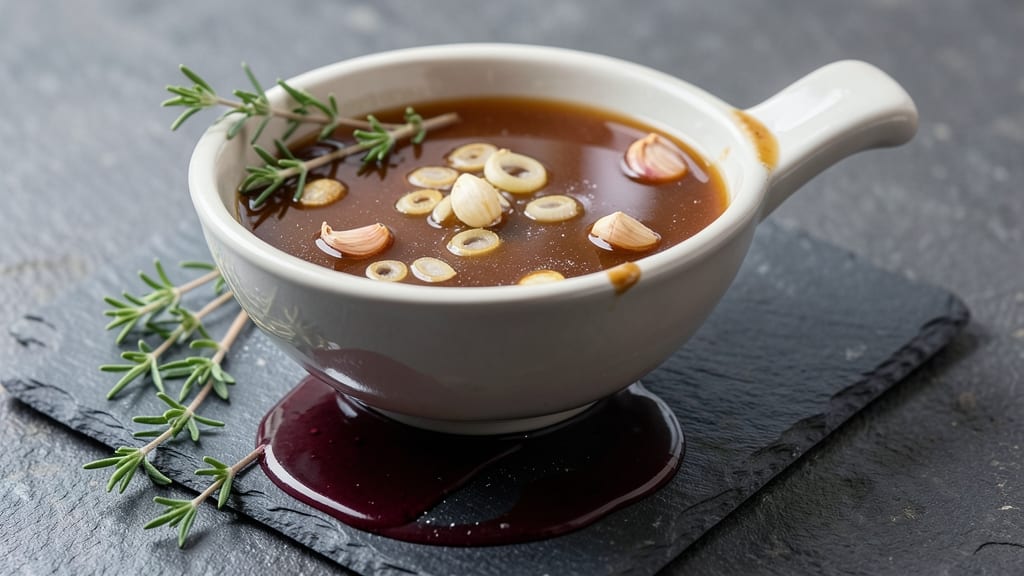
This au jus sauce recipe with beef broth transforms simple ingredients into a deep-red, umami-rich sauce that elevates any beef dish. 💛 The secret lies in slow simmering aromatics—garlic, shallots, and thyme—until they dissolve into the broth, creating layers of savory depth.
I developed this recipe after years of perfecting restaurant-quality sauces at home, and it’s now my go-to for roasts, steaks, and even sandwiches.
The beauty of this sauce is its versatility and simplicity. With just a handful of pantry staples—beef broth, aromatics, and a touch of cornstarch for thickness—you’ll achieve a glossy, velvety sauce that clings perfectly to meat.
The key? A gentle simmer and careful straining to remove any impurities, leaving behind a smooth, flavorful liquid that’s impossible to resist.
What makes this recipe stand out is how it amplifies the natural flavors of beef without overpowering them. The umami richness comes from the broth, while the aromatics add brightness, and a splash of Worcestershire sauce ties everything together.
Ready in just 20 minutes, it’s the perfect way to turn a simple protein into a showstopper.
Serve it alongside roasted beef, steak frites, or even as a dipping sauce for sliders. The possibilities are endless, and the results are always impressive. Let’s get cooking!
Ingredients for au jus sauce recipe with beef broth
Nine essential ingredients create a restaurant-quality au jus sauce with rich umami depth.
| Ingredient | Amount | Notes |
|---|---|---|
| Beef Broth 🥫 | 2 cups | High-quality, low-sodium preferred |
| Shallots 🧅 | 3 whole | Thinly sliced, about 0.5 cup |
| Garlic Cloves 🧄 | 4 cloves | Minced finely for depth |
| Fresh Thyme 🌿 | 1 tbsp | Leaves only, finely chopped |
| Worcestershire Sauce 🍶 | 1 tbsp | For umami complexity |
| Cornstarch 🌾 | 1 tbsp | For thickening, dissolved first |
| Cold Water 💧 | 1 tbsp | To activate cornstarch |
| Red Wine Vinegar 🍷 | 1 tsp | Brightens acidity balance |
| Granulated Sugar 🍬 | ½ tsp | Balances acidity |
| Kosher Salt 🧂 | ½ tsp | Diamond Crystal preferred |
The beef broth is the foundation—Kirkland Signature or Swanson Premium are my go-tos for their deep flavor. Shallots and garlic should be freshly minced (no pre-chopped jarred versions) for maximum aroma extraction. Fresh thyme is ideal, but dried thyme at one-third the amount works in a pinch. Worcestershire sauce adds that signature umami punch—Lea & Perrins is the gold standard, though any quality brand suffices. For the best results, use organic shallots and garlic when possible, as they tend to have more robust flavor profiles.
No Worcestershire sauce? Soy sauce or a splash of balsamic vinegar can substitute, though the umami depth won't be identical. Running low on cornstarch? All-purpose flour at double the amount works, but it may make the sauce slightly cloudier. The red wine vinegar is crucial for brightness—substitute white vinegar if needed, but the color will differ. For a vegetarian version, replace the beef broth with mushroom broth and add 1 tbsp soy sauce. Always taste as you go; the sugar and salt should be adjusted to your specific broth's saltiness.
This sauce thickens as it cools, so strain immediately after simmering to remove any impurities. Store in a clean glass jar in the fridge for up to 5 days—it actually improves overnight as flavors meld. For longer storage, freeze in ice cube trays for up to 3 months. The sauce reheats beautifully; simply warm over medium heat, stirring constantly to prevent scorching. I always make extra—it's perfect for drizzling over roasted vegetables or using as a marinade base.
Why You'll Love This Recipe
- Five-Ingredient Magic: I swear by this lineup—shallots and garlic caramelize in minutes, thyme adds that earthy warmth, and Worcestershire ties it all together. Honestly? You’d never guess how little effort makes it taste this rich.
- Dips Into Everything: This sauce is my secret weapon for roast beef, mashed potatoes, or even a crispy meatloaf. (Yes, even on a Tuesday night.) The beef broth base means it stretches, so I never run out when feeding the family.
- Pantry Hero: No fresh herbs? Dried thyme works. No time to chop? A mini food processor handles shallots in seconds. Between us, I’ve made this with store-bought broth in a pinch—still comes out solid.
- Leftovers That Shine: Simmer extra and freeze it—thawed, it’s just as good. I keep a jar in the fridge for emergencies, and it never disappoints. That deep, savory umami? It’s the kind of flavor that makes you reach for the last drop.
Step-by-step instructions for crafting rich au jus sauce
This method delivers restaurant-quality depth with minimal effort—perfect for enhancing any beef dish.
🍳 Step 1: Sauté Aromatics Until Fragrant
Heat a medium saucepan over medium heat with no added fat. Add the 3 whole shallots and cook, stirring occasionally, for 4-5 minutes until softened and translucent. Here's the thing—you want them to caramelize slightly at the edges without browning, which builds complex flavor.
Add the 4 cloves minced garlic and 1 tablespoon chopped fresh thyme. Cook for another 30 seconds until the garlic becomes fragrant but doesn't darken. This quick cooking preserves the garlic's delicate flavor while preventing bitterness. If it starts to brown too quickly, reduce the heat to low immediately.
🍳 Step 2: Build the Sauce Base with Broth and Seasonings
Pour in the 2 cups beef broth and bring to a gentle simmer over medium-low heat. Stir in the 1 tablespoon Worcestershire sauce, 1 teaspoon red wine vinegar, ½ teaspoon granulated sugar, and ½ teaspoon kosher salt. Let it simmer uncovered for 5 minutes until slightly reduced by about ¼ cup—this concentrates the flavors.
The sugar and vinegar might seem counterintuitive, but they balance the umami depth while brightening the sauce. Taste as you go—adjust salt if needed, but remember the broth already contains some sodium. The sauce should be vibrant red with a rich aroma, not flat or watery.
⏰ Step 3: Thicken the Sauce to Perfect Consistency
In a small bowl, whisk together the 1 tablespoon cornstarch and 1 tablespoon cold water until completely dissolved—this creates a smooth slurry. Slowly pour the slurry into the simmering sauce while whisking constantly. The sauce will thicken immediately, but keep whisking for 1-2 minutes until it reaches a glossy, syrupy consistency that coats the back of a spoon.
If the sauce thickens too quickly, add 1-2 tablespoons hot broth to loosen it. The ideal au jus should cling to meat without being gluey. Real talk: this is where most home cooks go wrong—rushing the thickening process leads to lumps. Patience here ensures a silky finish.
🔥 Step 4: Finish and Serve Immediately
Remove the sauce from heat and let it rest for 2 minutes to allow the starch to fully set. Give it one final taste and adjust seasoning if needed—perhaps a pinch more salt or a splash of vinegar for brightness. The sauce should be rich, slightly tangy, and deeply umami with no raw starch taste.
Serve the au jus immediately over sliced beef or drizzled over roasted potatoes. For maximum impact, reduce the sauce by another 2 minutes if you're using it as a dipping sauce. Leftovers? Store in an airtight container for up to 3 days, but reheat gently over low heat to prevent skin formation.
Pro Tips For Making Au Jus Sauce Recipe With Beef Broth
- Sweat, Don’t Burn: The shallots and garlic need time to soften, not char. Cook them over medium-low heat for 8-10 minutes with a splash of broth—just enough to keep them moving and prevent sticking. I used to rush this and ended up with bitter, browned bits that ruined the sauce.
- Use Whole Thyme Stems: Skip the pre-chopped thyme sprigs—whole stems work better. Tie 2-3 sprigs together with kitchen twine and toss them in while the sauce simmers. When you’re done, just pull them out whole; no fishing for stems or bitter flavors from over-handling. (Yes, even if you’re impatient like me.)
- Simmer, Don’t Boil: A rolling boil turns your au jus into a watery mess. Keep the heat at a gentle simmer—tiny bubbles breaking the surface, not a full-on storm. If it reduces too fast, add a splash more broth. This isn’t soup; you want depth, not dilution.
- Deglaze First, Then Salt: Scrape up every last bit of fond from the pan before adding broth—those browned bits hold flavor. Wait until the end to salt, though. The Worcestershire already packs salt, and you don’t want to overdo it. Taste as you go; adjust only at the finish.
Wine and beer pairings for au jus sauce recipe with beef broth
Red Wine Pairings
For this rich, umami-packed au jus, I always reach for a medium-bodied red wine that complements its depth without overpowering it. A Pinot Noir from Oregon or Burgundy—like Domaine Drouhin—works beautifully with its bright acidity and red fruit notes that mirror the sauce's vibrancy.
The wine's earthy undertones also echo the thyme and shallots in the recipe, creating a harmonious match. 🍷
If you prefer something bolder, a Syrah from the Rhône Valley, such as Guigal Côte-Rôtie, brings smoky depth that pairs wonderfully with the beef broth's richness. For a budget-friendly option, look for a California Zinfandel—its jammy berry flavors contrast nicely with the sauce's tangy brightness.
Always decant the wine for 30 minutes before serving to let it breathe and fully express its aromas.
Beer Complements
A Belgian-style witbier like Hoegaarden is my go-to beer pairing—its citrusy coriander and crisp effervescence cut through the sauce's richness while enhancing its umami notes. The beer's slight sweetness balances the acidity in the au jus, making each sip refreshing.
For a more robust option, try a German Dunkelweizen, which offers a malty depth that stands up to the beef broth's intensity.
If you're serving this sauce with steak frites, a Belgian dubbel like Rodenbach adds a caramel-like sweetness that complements the dish's savory elements. For a lighter option, a Pilsner—such as Stella Artois—works well, especially if you're serving the au jus as a dipping sauce for sliders or sandwiches.
Always serve the beer slightly chilled (45-50°F) to highlight its crispness.
Unexpected Twists
For a non-traditional twist, I’ve found that a dry rosé from Provence—like Whispering Angel—pairs surprisingly well with au jus, especially when served with roasted vegetables. The wine's strawberry and citrus notes create a refreshing contrast to the sauce's depth.
This pairing works particularly well during warmer months when you want something lighter but still sophisticated. 🍇
If you're feeling adventurous, try a sparkling wine like Prosecco—its bubbles and slight sweetness make the au jus taste even more vibrant. The effervescence cleanses your palate between bites, making it a great choice for a festive dinner.
For a non-alcoholic option, a sparkling cranberry juice with a splash of lime adds a festive touch while keeping the flavors bright and refreshing.
Nutrition facts
Frequently asked questions
Can I make this au jus sauce without cornstarch?
Yes! For a gluten-free option, use 1 tablespoon arrowroot powder dissolved in 1 tablespoon cold water instead. If avoiding all starches, simply reduce the sauce longer (about 10-15 minutes) to evaporate excess liquid—just stir frequently to prevent scorching. The texture will be thinner but still flavorful.
How do I prevent the sauce from getting cloudy?
Strain the sauce immediately after simmering through a fine-mesh sieve lined with cheesecloth. For extra clarity, chill the strained sauce for 10 minutes before serving—this helps any impurities settle. Avoid boiling the sauce vigorously, as this can cause cloudiness from protein coagulation.
What's the best way to reheat leftovers?
Gently reheat over low heat in a saucepan, stirring constantly to prevent separation. Add 1-2 tablespoons water if the sauce thickens too much. For microwave reheating, use 30-second intervals on medium power, stirring between each interval. Never bring it to a full boil, as this can break down the starch and make it grainy.
Can I use this sauce for non-beef dishes?
This versatile sauce works beautifully with lamb chops, pork tenderloin, or even grilled mushrooms. For vegetarian use, replace the beef broth with mushroom broth and add 1 tablespoon soy sauce for umami depth. The acidity and richness make it perfect for drizzling over roasted vegetables too.
Why did my sauce turn bitter?
Overcooking the aromatics (shallots/garlic) or simmering too long can create bitterness. To fix it, stir in ½ teaspoon sugar and ½ teaspoon fresh lemon juice while reheating. For prevention, keep heat at medium-low and simmer for no longer than 5-7 minutes total after adding broth. Taste frequently!