
Main Courses
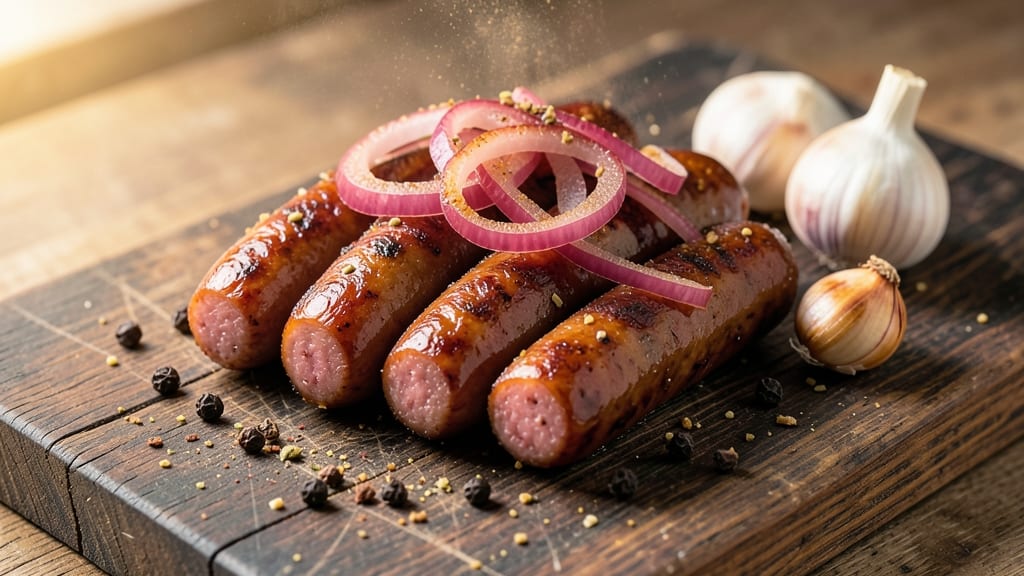
This Australian beef sausage recipe delivers the perfect balance of juicy meat and smoky char that defines classic Aussie snags. 🔥 The secret lies in the right blend of spices—fennel for anise warmth, coriander for brightness, and a touch of cracked black pepper—that transform ordinary ground beef into something unforgettable.
Unlike mass-produced sausages, these are made with quality cuts and traditional seasoning, ensuring every bite is packed with flavor.
The process is straightforward but rewarding: grinding your own meat guarantees tender, flavorful results, while proper casing preparation ensures perfect shape and texture. Whether you grill over wood coals for that authentic smoky flavor or pan-fry for a quick weeknight meal, these sausages are designed to shine.
The key is cooking them just right—medium heat for even browning without drying out the centers.
What sets these apart is the versatility. Serve them on a crusty roll with onions and barbecue sauce for a classic Aussie snag, or grill them up for a backyard barbecue. The rich, meaty flavor pairs perfectly with mustard, relish, or even a simple tomato sauce.
Each sausage is juicy, flavorful, and packed with that satisfying snap you’d expect from a proper Aussie sausage.
Ready to make sausages that taste like they came straight from an Australian pub? This recipe is your ticket to restaurant-quality results at home, with just a few simple steps and the right ingredients. Let’s get cooking!
Ingredients for australian beef sausage
Quality meat and traditional spices create the perfect Aussie sausage experience at home.
| Ingredient | Amount | Notes |
|---|---|---|
| Ground Beef 🥩 | 1 ½ lb | 80% lean, ground fine |
| Fennel Seeds 🌿 | 1 tbsp | Lightly toasted for aroma |
| Ground Coriander 🌿 | 1 tbsp | Freshly ground preferred |
| Cracked Black Peppercorns 🌶️ | 1 tsp | Freshly cracked for intensity |
| Garlic Cloves 🧄 | 4 cloves | Minced for even distribution |
| Onion Powder 🧅 | 1 tbsp | For depth of flavor |
| Salt 🧂 | 1 ½ tsp | Diamond Crystal preferred |
| Beef Casing 🥩 | 1 package | Natural or collagen, soaked |
| Ice Water 💧 | 1 cup | For casing preparation |
| Olive Oil 🫒 | 1 tbsp | For casing lubrication |
| Butcher's Twine 🧵 | 1 package | For tying sausages |
The ground beef is non-negotiable—80% lean gives you that classic Aussie texture, while 85% lean works if that's what you've got. Costco or local butchers often carry the right grind for sausages. Fennel seeds are key; Penzeys Spices sells pre-ground if you're short on time, but toasting whole seeds first amplifies the anise flavor. The casing? Natural or collagen casings from Butcher's Shoppe or Amazon—soak them in ice water for 30 minutes before using. If you're unsure about the casing, practice with a few before committing to the full batch.
No fennel seeds? Anise seeds at half the amount work in a pinch, but the flavor won't be identical. Substituting ground coriander with dried oregano (same quantity) gives a different profile but still delivers brightness. For the casing, plastic sausage casings are easier for beginners—just don't expect that classic snap. The black peppercorns should be freshly cracked (a mortar and pestle works best), but pre-ground will do if that's all you have. If you're making a big batch, double the spices and meat—these sausages freeze beautifully for up to 3 months.
Soaked casings keep in the fridge for up to 2 weeks if stored in a sealed bag with ice water. The spice blend stays potent for 6 months in an airtight container away from light. For best results, grill or pan-fry immediately after stuffing—fresh sausages hold up better than pre-made ones. If you must store, freeze on a tray first to prevent sticking, then transfer to a bag. Reheat gently in a pan or under the broiler for 2-3 minutes per side—no microwave, or you'll lose that juicy texture.
Why You'll Love This Recipe
- Five-Ingredient Magic: I swear by this combo—ground beef, toasted fennel seeds, and coriander—it’s like a flavor bomb with zero fuss. The cracked peppercorns add a subtle bite that makes every bite feel special, even when I’m just tossing them on the grill.
- Grill or Pan? Both Work: Honestly, I make these for everything: weekend barbecues, weeknight stir-fries, or even stuffed into buns for a quick lunch. The same mix adapts—no need to reinvent the wheel.
- Leftovers That Don’t Suck: Between us, most homemade sausages dry out or get rubbery. Not these. The fennel and garlic keep them juicy, so I make a big batch and freeze half. Perfect for lazy nights when I just want flavor without effort.
- Budget-Friendly Protein Power: Ground beef is already affordable, but adding spices like coriander and fennel (both cheap in bulk) stretches the cost further. I’ve fed four people for under $10 with these—no guilt, just good food.
Step-by-step instructions for Australian beef sausages
Here's how to craft perfectly balanced sausages with aromatic spices and tender meat.
👨🍳 Step 1: Toast Spices and Prepare the Meat Mixture
In a dry skillet over medium-low heat, toast the 1 tbsp fennel seeds for 2-3 minutes until fragrant and lightly golden. Transfer to a spice grinder and pulse until finely ground. In a large mixing bowl, combine the toasted fennel seeds with the 1 tbsp ground coriander, 1 tsp cracked black peppercorns, 1 tbsp onion powder, and 1.5 tsp salt.
Add the 1.5 lb ground beef to the bowl and mix thoroughly with your hands, breaking up any large clumps. The mixture should be evenly distributed with no dry spots. I like to press the spices into the meat to ensure maximum flavor penetration. Once combined, cover and refrigerate for 30 minutes—this resting period helps the spices meld with the beef.
🍳 Step 2: Prepare the Beef Casing
Rinse the 1 package beef casing under cold water and soak it in the 1 cup ice water for 15-20 minutes to fully hydrate. The casing should become pliable and easy to handle—you'll know it's ready when it stretches without tearing. Drain and pat dry with paper towels.
Lubricate the casing by running it through your fingers coated with the 1 tbsp olive oil. This prevents sticking and makes stuffing much easier. I like to work with one end of the casing at a time, keeping the rest submerged in cold water to maintain flexibility. If you encounter any small tears, simply trim them off—they won't affect the final product.
🥘 Step 3: Stuff the Sausages
Using a sausage stuffer or a piping bag fitted with a large tip, carefully fill the prepared casing with the spiced meat mixture. Work slowly and steadily to avoid air pockets or uneven filling. I like to hold the casing vertically and fill it about ¾ full—this allows room for expansion during cooking and prevents bursting.
As you stuff, twist the filled casing every 4-5 inches to create individual sausages. Tie each link securely with butcher's twine, leaving about ½ inch between each sausage. This spacing prevents them from sticking together during cooking. Once all sausages are formed, refrigerate them for at least 1 hour before cooking to help them firm up.
🔥 Step 4: Cook to Juicy Perfection
Preheat your grill or grill pan to medium-high heat. Cook the sausages for 10-12 minutes, turning occasionally, until they develop a deep golden brown crust and internal temperature reaches 160°F. The key is to maintain even heat—fluctuations can cause uneven cooking or bursting.
For a smoky char, I like to finish the sausages over direct heat for the last 2 minutes, rotating them to ensure all sides get that signature Australian grill mark. Remove from heat and let rest for 5 minutes before serving—this crucial step allows the juices to redistribute, ensuring each bite stays moist and flavorful.
Pro Tips For Making Australian Beef Sausage
- CRUSH THE FENNEL: Use a mortar and pestle for the fennel seeds—don’t just grind them in a spice grinder. The rough texture from cracking them first releases more aroma and flavor, which is the thing that makes these sausages taste authentically Australian. (Yes, even if you’re impatient like me, take the extra 30 seconds.)
- CHILL THE MEAT: Let the ground beef sit uncovered in the fridge for 20–30 minutes before mixing. Cold meat binds better, and you’ll avoid a greasy, loose sausage that falls apart when cooking. I learned this the hard way after making sausages that turned into meaty puddles on the grill.
- DON’T SKIP THE GARLIC ICE: Freeze the minced garlic in a thin layer on a tray first, then transfer it to a bag. This prevents it from turning bitter and ensures it stays fresh longer—critical for that bright, fresh flavor in every bite. (Your future self will thank you when you’re not tasting raw garlic in your sausages.)
- SEAL THEM TIGHT: Use a sausage stuffer with a 1-inch casing or roll the mixture into logs and wrap them tightly in plastic wrap before twisting. Loose sausages leak filling, and uneven sealing leads to uneven cooking. This isn’t the prettiest method, but it’s the tastiest—trust the process.
Essential equipment for great australian beef sausage
Essential Grinding Tools
For authentic texture, grind your own meat using a meat grinder with a fine plate (like the LEM #12 or STX International 440). These grinders handle 1.5 lbs of beef easily and create that classic Aussie sausage consistency.
If you don’t own one, ask your butcher to grind it for you—they often use the right grind for sausages. For a budget option, a manual crank grinder like the OXO Good Grips works well for small batches. 🥩
Casing Prep Must-Haves
Natural beef casings require proper prep: soak them in ice water for 15-20 minutes to remove excess salt and plump them up. A casing tube (like the Butcher’s Shoppe Casing Tube) helps slide the casing over the stuffer nozzle smoothly.
For beginners, plastic sausage casings (from Amazon or Walmart) are easier to handle but lack the traditional snap. Always keep extra casings on hand—tears happen, and you’ll want spares!
Sausage Stuffer Options
Invest in a sausage stuffer with a large funnel tip (like the Hobart 8520) for even filling. A piping bag with a large round tip works too—just don’t overfill, or you’ll risk bursting.
For small batches, a manual sausage stuffer (like the OXO Good Grips) is affordable and effective. Pro tip: Lubricate the stuffer nozzle with olive oil to prevent sticking during stuffing.
Grilling Gear for Smoky Char
Achieve that iconic Aussie grill mark with a charcoal grill or grill pan (like the Weber Original Kettle). For wood smoke, use hickory or oak chips—they add depth without overpowering the sausage flavor.
A meat thermometer (like the ThermoWorks Smoke) ensures 160°F internal temp without overcooking. If grilling isn’t an option, a cast-iron skillet (like Lodge) works perfectly for pan-frying.
Tying and Resting Tools
Secure your sausages with butcher’s twine (from Amazon or local butcher shops)—it’s stronger than regular string and won’t burn during cooking. For resting, use a wire rack (placed over a baking sheet) to keep sausages elevated and crispy.
A digital timer (like the OXO Good Grips) helps track the 5-minute rest before serving. Trust me, this step makes all the difference for juicy results! ⏱️
Storage Solutions
Store uncooked sausages in an airtight container (like Rubbermaid or Glasslock) in the fridge for up to 3 days or freeze for 3 months. For freezing, lay them flat on a tray first to prevent sticking, then transfer to a freezer bag.
When reheating, avoid the microwave—opt for a skillet over medium heat for even warming. Label everything clearly to avoid freezer burn surprises!
Nutrition facts
Frequently asked questions
Can I use ground beef with a different fat percentage?
For authentic texture, stick with 80% lean ground beef—it delivers that classic Aussie sausage juiciness. If you only have 85% lean, it'll work but may be slightly drier. Never use 90% lean or higher, as the fat content is essential for moisture and flavor.
What if I don't have natural beef casings?
No problem! Use plastic sausage casings for easier handling, though they lack the traditional snap. For a more authentic experience, try collagen casings—they're easier to work with than natural casings but still give a better texture. Just soak them in ice water for 10-15 minutes before using.
How do I fix sausages that burst while cooking?
Bursting usually happens from overfilling or uneven heat. Next time, fill casings only ¾ full and cook on medium heat (not high). If it happens, just scoop the meat back into a pan and make mini sausages—still delicious! For future batches, check your stuffer pressure and avoid twisting sausages too tightly.
Can I make these sausages ahead of time?
Cooked sausages keep well in an airtight container for 3 days in the fridge. For longer storage, freeze them for up to 3 months. To reheat, warm in a skillet over medium heat for 2-3 minutes per side—never microwave, or they'll dry out.
What's the best way to serve these sausages?
Classic Aussie style means serving on toasted buns with sliced onions and barbecue sauce. For a heartier meal, try them with mashed potatoes and gravy, or on a grilled cheese sandwich. They're also perfect for skewers with bell peppers and pineapple for a tropical twist!