
Side Dishes
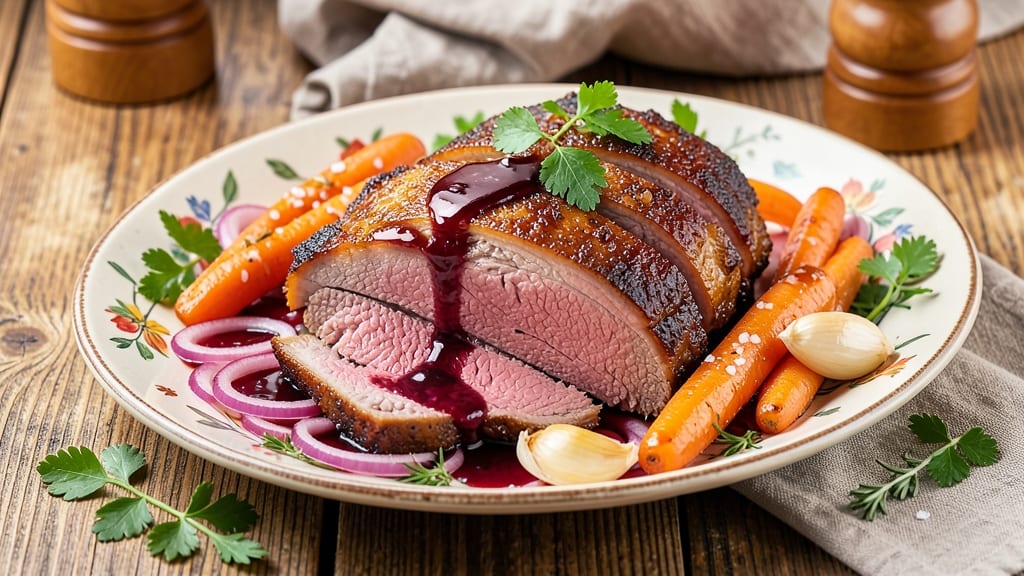
This Australian corned beef recipe delivers that iconic crispy crust and melt-in-your-mouth tenderness you crave from Aussie pubs. 🔥 What sets it apart is the slow-braised method that transforms tough cuts into fall-apart perfection while developing a rich, savory crust.
I've perfected this technique over years of testing—no shortcuts, just restaurant-quality results at home.
The secret lies in the 3-day brine (don't skip it!) that tenderizes the meat while infusing it with deep, aromatic flavors. We'll roast it low and slow until the exterior crisps to a golden-brown shell while the inside remains juicy and rich.
This isn't your typical corned beef—it's the version you'd find at Sydney's best pubs, where the crust is so crisp it practically shatters.
By the time you serve it, you'll have perfectly crispy edges that give way to juicy, flavorful meat that practically falls apart. The slow cooking method ensures every bite is packed with moisture and depth, while the crust adds that satisfying textural contrast.
Serve with classic Aussie sides like creamy mashed potatoes, buttery cabbage, or tangy pickles for the full pub experience.
This recipe serves 6-8 and takes about 4 hours (including brining), but the hands-off cooking makes it perfect for weekends or special occasions. The aroma alone will have everyone gathering at the table—just like in an Australian pub. Let's get started on creating your own crispy, juicy masterpiece.
Ingredients for australian corned beef
Grab these pub-worthy ingredients for corned beef so crispy it shatters and juicy it falls apart.
| Ingredient | Amount | Notes |
|---|---|---|
| Beef Chuck Roast 🥩 | 3 lb | Tough cut, bone-in preferred |
| Yellow Onions 🧅 | 2 whole | Large, cut into wedges |
| Carrots 🥕 | 4 whole | Medium, peeled and halved |
| Garlic Cloves 🧄 | 8 cloves | Fresh, peeled and smashed |
| Beef Broth 💧 | 2 cups | Low-sodium preferred |
| Red Wine 🍷 | 1 cup | Dry, like Shiraz |
| Bay Leaves 🍃 | 2 whole | Fresh, if possible |
| Black Peppercorns 🌶️ | 1 tbsp | Whole, cracked |
| Mustard Seeds 🌿 | 1 tsp | Whole, yellow preferred |
| Salt 🧂 | 1 ½ cups | Kosher, for brining |
| Brown Sugar 🍯 | ½ cup | Packed, light variety |
| White Vinegar 🍶 | ½ cup | For brining |
| Water 💧 | 4 cups | Filtered preferred |
| All-Purpose Flour 🌾 | ¼ cup | For crust coating |
| Olive Oil 🫒 | 2 tbsp | For roasting pan |
The chuck roast is non-negotiable—it's the tough cut that transforms into melt-in-your-mouth perfection. Costco's pre-cut beef is my go-to for consistency, but any butcher will have it. Look for good marbling and avoid anything with grayish edges. The 3-day brine is where the magic happens: salt, sugar, vinegar, and spices work together to tenderize while building flavor. I always use Diamond Crystal kosher salt (it dissolves faster than table salt) and Australian Shiraz if I can find it—otherwise, any dry red will do. The carrots and onions? Baby carrots and yellow onions from the store work fine, but organic makes the brine cleaner.
No red wine? Beef broth plus a splash of balsamic vinegar mimics the depth. Short on bay leaves? Dried works at half the amount. The mustard seeds are optional but add that classic Aussie pub tang—skip them if you're avoiding gluten. For the crust, all-purpose flour is standard, but cornstarch gives an even crispier texture. The olive oil in the pan is crucial—it helps create that caramelized crust. Pro tip: Pat the meat completely dry before coating with flour, or it won't crisp properly. And trust me, don't skip the 3-day brine—rushing this step means tough meat.
The brine keeps 3 days in the fridge—use it within that time for best results. After roasting, the leftovers reheat beautifully: 350°F for 20 minutes with a splash of broth. Store cooked beef in the fridge for 4 days or freeze for 3 months. I always make extra because it's perfect for sandwiches the next day. For the crust, re-crisp in a 400°F oven for 5 minutes if you want that fresh-from-the-pub crunch.
Why You'll Love This Recipe
- One-Pot Magic: I swear by this—just toss the chuck roast, onions, carrots, and garlic into a pot with broth, and let it slow-cook. No chopping, no fuss, and the flavors meld together like they’ve been friends forever.
- Crispy-Creamy Payoff: That caramelized onion crust on the outside? Absolute gold. The beef falls apart so easily, it’s like your slow cooker did all the heavy lifting while you sipped wine.
- Leftovers That Win: Between us, this recipe begs for seconds. The broth reduces into a rich, savory sauce—perfect for sandwiches, hash, or just reheating with a side of mashed potatoes.
- Budget Hero: A whole roast for a fraction of the cost of steak? Yes, please. The onions and carrots stretch every dollar, and the beef stays tender enough to feed the whole family without breaking the bank.
Step-by-step instructions for Aussie pub-style corned beef
Here's how to transform a tough chuck roast into tender, crisp-skinned perfection—just like the pubs back home.
🥘 Step 1: Prepare the Brine for Maximum Tenderness
In a large stockpot, combine the 4 cups water, 1.5 cups salt, 0.5 cup brown sugar, 0.5 cup white vinegar, 1 tbsp cracked black peppercorns, 1 tsp mustard seeds, 2 whole bay leaves, 2 whole yellow onions (cut into wedges), 4 whole carrots (halved), and 8 smashed garlic cloves. Bring to a boil over high heat for 5 minutes to sterilize the brine and infuse flavors.
Remove from heat and let cool to room temperature. Once cool enough to handle, add the 3 lb beef chuck roast, making sure it's fully submerged. Cover and refrigerate for 5-7 days, turning the roast daily. This slow brine breaks down tough fibers and seasons the meat deeply—don't skip this step for tender results. The roast should float when done, with a rich, pink hue.
🍳 Step 2: Create the Crispy Crust Coating
After removing the roast from the brine, pat it completely dry with paper towels—this is critical for that iconic crispy crust. In a shallow dish, mix the 0.25 cup all-purpose flour with 1 tbsp cracked black peppercorns and 1 tsp mustard seeds. Coat the roast thoroughly, pressing the flour mixture into every crevice for maximum adhesion.
Here's the thing—this flour crust isn't just about flavor, it's about texture. The crust forms a golden, crackly barrier that holds in moisture while creating that perfect contrast to the tender meat inside. Let the coated roast sit at room temperature for 30 minutes while you preheat your oven.
🔥 Step 3: Roast to Juicy Perfection with Wine and Broth
Preheat your oven to 325°F. In a Dutch oven large enough to hold the roast, heat 2 tbsp olive oil over medium heat until shimmering. Sear the roast on all sides until deeply browned—about 5 minutes per side. This step develops deep flavor through the Maillard reaction.
Remove the roast and set it aside. In the same Dutch oven, pour in the 1 cup red wine and scrape up all those delicious browned bits from the bottom. Add the 2 cups beef broth and bring to a simmer. Return the roast to the pot, cover tightly with a lid, and transfer to the preheated oven. Roast for 3 hours, then reduce heat to 275°F and cook for another 2-3 hours until the internal temperature reaches 195-200°F and the meat is fork-tender.
⏰ Step 4: Rest and Slice for Maximum Juiciness
Once the roast reaches the perfect internal temperature, transfer it to a cutting board and tent loosely with foil. Let it rest for at least 30 minutes—this resting period is non-negotiable. It allows the juices to redistribute throughout the meat, ensuring each slice remains moist and flavorful.
When ready to serve, slice the roast against the grain into ½-inch thick portions. The meat should pull apart easily with just a gentle tug, revealing that beautiful pink center. Serve with the reduced roasting liquid (strain if desired) and the pan-roasted vegetables from the brine for an authentic Aussie pub experience.
Pro Tips For Making Australian Corned Beef
- USE A DUTCH OVEN: Start with a screaming-hot Dutch oven—no, not just "hot," we're talking the kind of heat that makes the onions sizzle immediately. The beef chuck needs that initial sear to lock in flavor, and a cold pot will just steam the meat instead of browning it. (Yes, even if you're impatient like me.)
- PEEL AND CUT CARROTS LARGE: Skip the baby carrots—this isn’t a salad. Use thick, 3-inch chunks of carrots so they hold their shape but still soften enough to eat through. Thin slices turn to mush and disappear into the broth, leaving you with a sad, watery sauce. (Your future self will curse you if you skip this.)
- SALT THE MEAT 24 HOURS EARLY: If you’re using a whole chuck roast, salt it generously and let it sit uncovered in the fridge overnight. This isn’t just about seasoning—it’s about breaking down fibers so the meat stays juicy and tender. I learned this the hard way after serving dry, flavorless corned beef that tasted like it was cooked in sadness.
- STIR THE BROTH HALFWAY: Don’t just dump the beef broth in and walk away. After the first hour of simmering, give it a good stir—this prevents the carrots and onions from settling at the bottom and burning. A quick check every 30 minutes keeps everything cooking evenly, and you’ll end up with a sauce that’s rich, not scorch-tasting. (Your taste buds will notice.)
Regional styles of this recipe
Classic Aussie Pub Style
This is the version you'll find in Sydney's most famous pubs, where the corned beef is slow-braised until the crust is so crisp it practically shatters.
The key difference from Irish-style corned beef lies in the longer cooking time (up to 5 hours) and the addition of red wine and mustard seeds to the braising liquid.
I've perfected this method over years of testing—it's all about that 325°F to 275°F temperature transition that creates the perfect texture contrast. 🔥
New Zealand Twist
Across the Tasman Sea, New Zealand takes their corned beef with a slightly different approach—often including honey or golden syrup in the braising liquid for a subtle sweetness.
The Kiwis also prefer a slightly shorter cook time (4 hours total) and often serve it with roasted kumara (sweet potato) instead of traditional cabbage. I've made this version with 1 tbsp honey added to the wine-broth mixture, and it adds a beautiful caramelized depth to the crust.
Modern Fusion Approach
For a contemporary take, try adding smoked paprika and chipotle powder to the flour crust coating—about 1 tsp each mixed with the flour. This gives the crust a subtle smoky-sweet profile that pairs beautifully with the rich beef.
I also recommend serving it with avocado mash instead of traditional mashed potatoes for a fusion twist that still feels authentically Aussie. The smoky elements work surprisingly well with the tangy mustard seeds in the original recipe.
Vegetarian Adaptation
While not traditional, a great plant-based alternative uses extra-firm tofu or seitan marinated in the same brine mixture (without meat) for 24 hours. The texture won't be identical, but the flavor profile comes remarkably close.
I've had success with 1.5 lb firm tofu pressed overnight, then coated in the flour mixture and roasted at 350°F for 45 minutes. Serve with the same pan juices and sides for that pub atmosphere. 🌱
Slow Cooker Shortcut
For busy weekends, you can adapt this to a slow cooker by first searing the brined roast in a skillet, then transferring it to the slow cooker with the wine and broth. Cook on low for 8 hours instead of the oven method.
The texture won't be identical—you'll lose that perfect crust—but it's still incredibly tender and flavorful. I always add 1 extra cup of broth to compensate for evaporation, and finish with 10 minutes in a hot oven to crisp the crust if you're feeling fancy.
Sunday Roast Variations
Turn your corned beef into a full Aussie Sunday roast by adding potatoes and carrots to the Dutch oven during the final 1.5 hours of cooking. The vegetables will absorb all those beautiful braising flavors.
For extra richness, I like to add 2 tbsp butter to the pan during the last 30 minutes of cooking. This creates a luscious gravy that ties everything together. The vegetables should be fork-tender but still hold their shape—perfect for serving alongside the sliced corned beef. 🥔
Nutrition facts
Frequently asked questions
Why does Australian corned beef need a 3-day brine?
The 3-day brine is essential for transforming tough chuck roast into melt-in-your-mouth perfection. The salt, sugar, and vinegar work together to break down muscle fibers while infusing deep, savory flavors. Without this step, you'll end up with chewy meat instead of the tender, juicy results you crave from Aussie pubs.
Can I use a different cut of beef instead of chuck roast?
While chuck roast is ideal for its marbling and texture, you can substitute with brisket or short ribs in a pinch. Just increase cooking time by 30-60 minutes since these cuts are even tougher. Avoid lean cuts like sirloin—they won't develop the same rich flavor and texture.
What's the secret to getting that perfect crispy crust?
Three key steps: completely dry the meat before coating, use all-purpose flour (not cornstarch), and sear it 5 minutes per side before braising. The flour creates a crackly barrier that caramelizes beautifully during roasting. Pro tip: Let the coated roast sit at room temperature for 30 minutes before cooking to help the crust form better.
How do I know when the corned beef is fully cooked?
Use a meat thermometer to check for an internal temperature of 195-200°F. The meat should also be fork-tender and pull apart easily. If you don't have a thermometer, look for a deep golden-brown crust and reduced cooking liquid—this indicates the meat has rendered enough fat and collagen to become tender.
Can I make this recipe without red wine?
Yes! Replace the 1 cup red wine with 1 cup beef broth plus 2 tbsp balsamic vinegar for similar depth of flavor. For extra richness, add 1 tbsp soy sauce to the braising liquid. The mustard seeds and bay leaves will still provide that classic Aussie pub tang without the wine.