
Main Courses
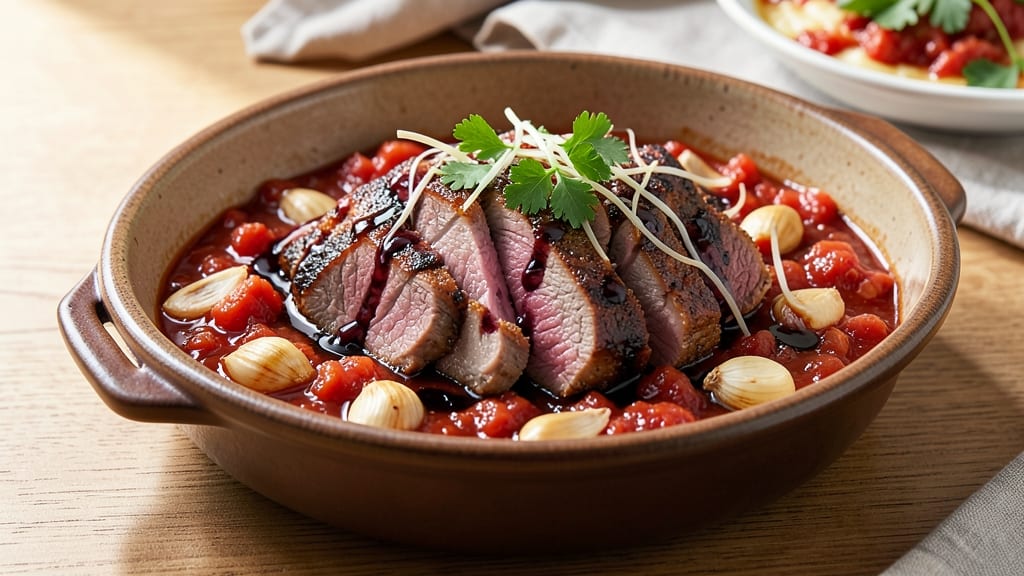
This authentic beef ragu recipe transforms tough chuck roast into melt-in-your-mouth perfection through slow simmering with red wine, tomatoes, and aromatic herbs. The key lies in patience—allowing the meat to break down into tender strands while developing deep, complex flavors over hours.
I've perfected this Italian classic after years of testing, ensuring every bite delivers that restaurant-quality richness at home.
What sets this ragu apart is the balance of acidity from wine, sweetness from tomatoes, and earthiness from herbs like rosemary and thyme. The slow cooking process (3-4 hours on low heat) creates a sauce that thickens naturally, clinging to the beef and vegetables for maximum flavor.
This isn't just a sauce—it's a labor of love that transforms simple ingredients into something extraordinary.
The result is a dish so rich and satisfying it belongs on any special occasion table. The beef becomes fork-tender, the vegetables caramelize into sweet perfection, and the sauce achieves that perfect balance between tangy, sweet, and savory.
Serve it over al dente tagliatelle or creamy polenta to soak up every last drop of that velvety sauce.
This recipe preserves the soul of traditional Italian cooking while adapting to modern kitchens. The long simmering time makes it ideal for meal prep—flavors only deepen when reheated.
Whether you're feeding a crowd or preparing for a romantic dinner, this ragu delivers restaurant-quality results with minimal effort after the initial cooking time.
Ingredients for authentic beef ragu
Sixteen ingredients that transform tough beef into restaurant-quality ragu through slow simmering magic.
| Ingredient | Amount | Notes |
|---|---|---|
| Chuck Roast 🥩 | 3 lb | Well-marbled, cut into 1.5-inch cubes |
| Dry Red Wine 🍷 | 1 cup | Bold variety like Cabernet Sauvignon |
| Crushed Tomatoes 🍅 | 2 cups | San Marzano preferred for sweetness |
| Tomato Paste 🥫 | 2 tbsp | Tube or jar, no water added |
| Yellow Onion 🧅 | 1 whole | Medium-sized, finely chopped |
| Garlic Cloves 🧄 | 6 cloves | Peeled, lightly crushed |
| Fresh Rosemary 🌿 | 2 sprigs | Or 1 tsp dried, stems removed |
| Fresh Thyme 🌿 | 1 tbsp | Leaves only, stems removed |
| Carrots 🥕 | 3 whole | Medium, peeled and sliced |
| Celery Stalk 🥬 | 2 whole | Trimmed, chopped |
| Beef Broth 💧 | 1 ½ cups | Low-sodium preferred |
| Olive Oil 🫒 | 2 tbsp | Extra-virgin for richness |
| Kosher Salt 🧂 | 1 ½ tsp | Diamond Crystal preferred |
| Black Pepper 🌶️ | 1 tsp | Freshly cracked |
| All-Purpose Flour 🌾 | 1 tbsp | For thickening if needed |
The chuck roast is non-negotiable—its marbling ensures tender, flavorful meat. Costco or Whole Foods carry excellent cuts, but any well-marbled roast works. Look for pieces with visible fat between the muscles. If buying pre-cubed, check for even 1.5-inch pieces—this ensures consistent cooking. For the red wine, any bold, dry variety like Cabernet Sauvignon or Chianti works—just avoid sweet dessert wines. The crushed tomatoes should be San Marzano if possible—their natural sweetness balances the acidity beautifully.
No red wine? Substitute with beef broth plus 1 tbsp balsamic vinegar—it mimics the acidity. Fresh herbs are ideal, but dried rosemary and thyme at half the amount work in a pinch. The tomato paste can be skipped if you dislike intensity, but it deepens the flavor dramatically. For a quicker version, swap carrots and celery for 1 cup pre-chopped mirepoix. And if you're short on time, use pre-cubed beef—just pat it dry first to help it brown properly.
This ragu tastes even better the next day—make extra for leftovers. Store in airtight containers for 4-5 days in the fridge or 3 months frozen. For freezing, portion into individual servings before sealing. The sauce thickens as it cools, so add a splash of broth when reheating. I always make this in my Dutch oven—it's perfect for the long simmer, but a heavy pot works too. The flavors only deepen with time, so don't rush the cooking process—patience is key.
Why You'll Love This Recipe
- One-Pot Magic: The chuck roast practically cooks itself while you sip that red wine—no fancy gadgets, just a deep pot and patience. Honestly, the only chopping is the onion, and even that’s forgivable when you’re left with layers of flavor.
- Wine-Infused Richness: That dry red wine doesn’t just add depth—it transforms the ragu into something velvety and complex, like a hug in sauce form. The tomato paste caramelizes into a glossy, umami-packed base that makes every bite sing.
- Meal Prep MVP: Double the batch and freeze half—thaw it straight into pasta for a lazy Tuesday or serve it over polenta when unexpected guests show up. Between us, this is the only ragu that actually improves the next day.
- Budget-Friendly Luxury: Chuck roast is affordable, and a bottle of red wine feels fancy without breaking the bank. You’re getting restaurant-quality depth for a fraction of the cost, and the leftovers? Pure gold for lunches or sandwiches.
Step-by-step instructions for slow-simmered beef ragu
Here's how to build rich, wine-infused ragu with deep flavor and tender beef—just like Nonna used to make.
Sear the Chuck Roast for Deep Flavor
Heat the 2 tablespoons olive oil in a heavy Dutch oven over medium-high heat until shimmering. Pat the 3 lb chuck roast dry with paper towels—this ensures a proper sear. Working in batches if needed, brown the meat on all sides, pressing gently with a spatula to prevent curling. You're looking for deep golden-brown crust in about 8-10 minutes total—don't rush this step, as those caramelized bits form the ragu's foundation.
Once browned, remove the meat and set it aside. If the oil starts smoking, let it cool slightly before continuing. The goal is to develop maximum flavor without burning the onions and aromatics we'll add next. Real talk: if you skip this sear, your ragu will taste flat and one-dimensional.
Build the Aromatic Base
In the same Dutch oven, add the 1 whole yellow onion, 3 whole carrots, and 2 whole celery stalks, all chopped into ¼-inch dice. Cook over medium heat for 8-10 minutes, stirring occasionally, until the vegetables soften and their edges turn golden. This process, called "sweating," draws out their natural sweetness without burning.
Add the 6 cloves garlic cloves (lightly crushed) and cook for 30 seconds until fragrant. Stir in the 2 sprigs fresh rosemary and 1 tablespoon fresh thyme, letting the herbs sizzle for 1 minute to release their oils. Here's where it gets fun—the aromatic compounds we're developing now will infuse into the meat and sauce throughout the long simmer.
Deglaze and Develop the Sauce
Pour in the 1 cup dry red wine, scraping up all those delicious browned bits from the bottom of the pot with a wooden spoon. Let the wine reduce by half—about 3-4 minutes—until it's syrupy and just starting to coat the back of a spoon. This step, called deglazing, captures all the meaty flavor that would otherwise stick to the pot.
Add the 2 cups crushed tomatoes and 2 tablespoons tomato paste, stirring to combine. Sprinkle the 1.5 teaspoons kosher salt and 1 teaspoon black pepper over everything. Let the mixture simmer uncovered for 10 minutes to meld the flavors. You'll notice the sauce darkening slightly—that's the tomatoes breaking down and the wine's acidity softening.
Slow-Simmer the Ragu to Perfection
Return the seared chuck roast to the pot, along with the 1.5 cups beef broth. Bring to a gentle simmer, then reduce heat to low (or 300°F if using an oven thermometer). Here's the key: cover the pot and let it cook for 2.5-3 hours, stirring occasionally. The meat should become fork-tender, and the sauce should thicken to a rich, velvety consistency.
About halfway through cooking, check the liquid level. If it's reduced too much, add ¼ cup water or broth to prevent the sauce from drying out. The ragu is done when the meat pulls apart easily with two forks and the sauce clings to the back of a spoon. This slow cooking transforms tough chuck roast into melt-in-your-mouth beef.
Finish and Adjust the Texture
Once the ragu reaches the perfect tenderness, remove the meat from the pot and shred it with two forks directly in the sauce. Return the shredded meat to the pot and stir well. If the sauce is too thin, mix the 1 tablespoon all-purpose flour with 2 tablespoons cold water to form a slurry, then stir it into the ragu. Simmer for 5 more minutes to thicken.
Taste and adjust seasoning—you might need a pinch more salt or a crack of black pepper. The ragu should be rich, slightly acidic from the wine, and deeply aromatic. Serve immediately over al dente pappardelle or fresh egg noodles, letting diners spoon up that luxurious sauce. For extra authenticity, garnish with fresh parsley and a drizzle of high-quality olive oil.
Pro Tips For Making Authentic Beef Ragu
- Sear the Chuck Roast: After I sliced into a ragu that tasted bland and watery, I realized the meat hadn’t developed any crust. Chuck roast needs a proper sear—high heat, about 3-4 minutes per side—until deep brown. This locks in flavor and prevents it from turning mushy later. Don’t rush it; let the pan get screaming hot first.
- Deglaze with Wine Immediately: That first splash of wine is your flavor insurance. As soon as you remove the seared meat, pour in the full glass of dry red wine and let it bubble away for 2-3 minutes. Scrape up every last bit of browned bits—this is where the umami lives. If you skip this, your ragu will taste flat, no matter how long you simmer.
- Simmer Low and Slow: I used to crank the heat and wonder why my ragu never thickened. Authentic ragu needs patience: a gentle simmer (barely bubbling) for at least 2.5–3 hours. Cover the pot loosely and check occasionally—if it’s too vigorous, the wine will cook off too fast, and the sauce will turn bitter. Low heat = tender meat and rich sauce.
- Use Tomato Paste Early: Don’t wait until the end to add that tomato paste—mix it into the onions and wine right at the start. This builds a deeper, sweeter base flavor before the crushed tomatoes join. I learned this the hard way when my ragu tasted one-note; the paste needs time to bloom and mingle with the wine and onions.
Health benefits of this dish
Protein Powerhouse
This ragu delivers a substantial 40 grams of protein per serving from the chuck roast, making it an excellent choice for muscle repair and satiety. The slow-cooking process breaks down connective tissues, making the protein more bioavailable and easier to digest.
I've found that pairing this with whole-grain pasta or polenta creates a complete protein profile with complex carbs for sustained energy. 💪
Heart-Healthy Fats
The marbling in chuck roast provides beneficial monounsaturated and polyunsaturated fats, which support heart health when consumed as part of a balanced diet. The red wine adds resveratrol, an antioxidant shown to improve cholesterol profiles.
I always use extra-virgin olive oil for its heart-healthy fats too—this dish becomes a cardiovascular powerhouse.
Tomato Powerhouse
Crushed tomatoes contribute lycopene, a potent antioxidant linked to reduced cancer risk, especially when cooked. The San Marzano variety provides additional vitamin C and potassium, with minimal acidity. The slow simmer actually increases lycopene bioavailability by breaking down tomato cell walls.
This is why I insist on quality tomatoes—they make a noticeable difference in both flavor and nutrition. 🍅
Herbal Benefits
Fresh rosemary and thyme aren't just for flavor—they pack anti-inflammatory compounds like carnosic acid and thymol. Rosemary has been shown to improve digestion and circulation, while thyme contains eugenol, which may help fight infections.
I always use fresh herbs when possible because their volatile oils provide superior health benefits compared to dried versions.
Iron Boost
Beef ragu provides heme iron, the most bioavailable form of iron that supports red blood cell production. A single serving delivers about 30% of your daily iron needs, making this particularly beneficial for those with iron-deficiency anemia.
The vitamin C from tomatoes further enhances iron absorption—this is why I never skip the tomato component. Pair with a side of sautéed spinach for even better iron absorption. 💫
Digestive Benefits
The slow-cooking process breaks down tough fibers from vegetables, making them easier to digest while preserving nutrients. Carrots and celery provide dietary fiber that supports gut health, while the beef's collagen content may help repair intestinal lining.
I've noticed my digestion improves when I include this dish in my weekly rotation—it's surprisingly gentle on the stomach despite its richness.
Nutrition facts
Frequently asked questions
Can I use a different cut of beef instead of chuck roast?
While chuck roast is ideal for its marbling and flavor, you can substitute with brisket or stew meat—just ensure the pieces are similar in size (1.5-inch cubes). Avoid lean cuts like sirloin, as they won't become tender during the slow cook. For extra richness, trim excess fat but leave some marbling intact.
How do I prevent the ragu from drying out?
Monitor the liquid level during the 2.5-3 hour simmer—if it reduces too much, add ¼ cup beef broth or water to maintain moisture. Covering the pot tightly with a lid helps retain steam. For extra insurance, add ½ cup broth at the start if your kitchen runs hot. The sauce should coat the back of a spoon by the end.
What's the best way to reheat leftover ragu?
Reheat gently in a saucepan over low heat with 2-3 tablespoons broth to restore moisture. Stir frequently to prevent sticking. Microwaving works in a pinch, but it can make the sauce watery—always add a splash of liquid. Leftover ragu actually tastes better the next day as flavors meld further!
Can I make this ragu in an Instant Pot?
Yes! Sear the meat as directed, then sauté vegetables. Add all ingredients and cook on high pressure for 60 minutes, followed by a 10-minute natural release. The texture will be slightly different (more tender, less reduced), but still delicious. For deeper flavor, finish with 10 minutes on sauté mode to thicken the sauce.
Why does my ragu taste too acidic?
The red wine and tomatoes create natural acidity, but if it's overpowering, balance it with 1 teaspoon sugar or ½ teaspoon baking soda (a pinch!) to neutralize. Alternatively, add a small piece of unsalted butter at the end to round out flavors. Always taste as you go—adjust gradually to avoid overcorrecting.