
Main Courses
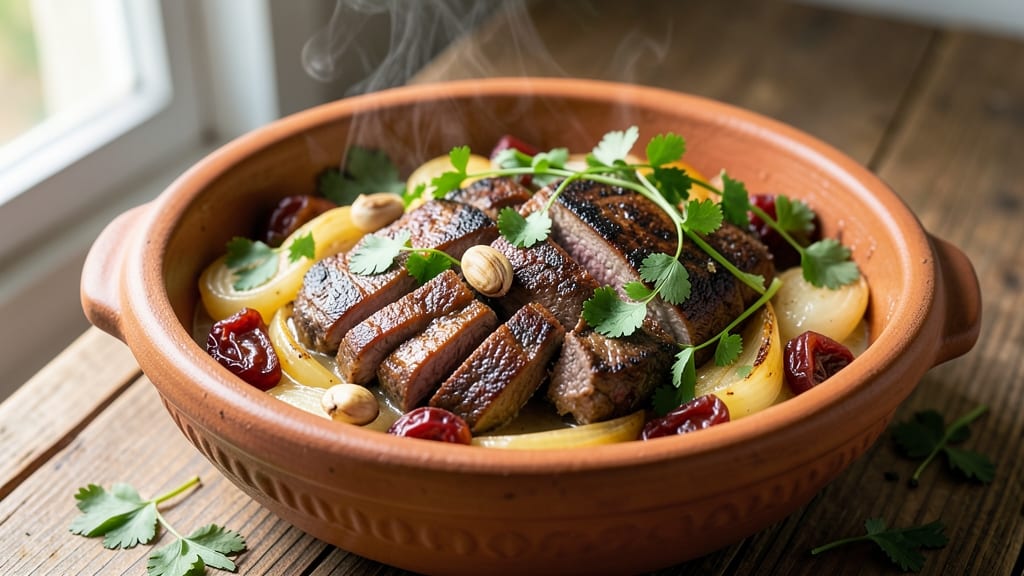
This authentic beef tagine recipe transports you to the bustling souks of Marrakech with every aromatic bite. 🌟 The secret lies in slow-cooked beef infused with warm spices like cinnamon and cumin, balanced by sweet apricots and fragrant saffron—a dish that's as visually stunning as it is flavorful.
What makes this recipe truly special is the traditional technique of marinating the meat overnight, allowing the spices to penetrate deeply and develop complex layers of flavor.
The result is a tender, melt-in-your-mouth beef simmered in a rich, spiced sauce that's both hearty and elegant.
Unlike many Western adaptations, this version stays true to Moroccan roots by using a combination of dried fruits, fresh herbs, and a touch of honey to create a sauce that's sweet, savory, and deeply aromatic.
The slow cooking process transforms tough cuts of beef into fork-tender pieces, making it a dish that's perfect for special occasions or a comforting family meal.
What sets this tagine apart is its versatility—serve it with fluffy couscous, crusty bread, or over rice to soak up every last drop of that fragrant sauce. The dish is also incredibly forgiving, allowing you to adjust the sweetness or spice level to suit your taste.
Whether you're cooking for a dinner party or simply craving a taste of Morocco, this recipe delivers restaurant-quality results with minimal fuss.
Ready to create a dish that's as impressive as it is delicious? The key is patience—let the flavors meld and develop over time, and you'll be rewarded with a tagine that's worth every minute of preparation. Let's get started on this journey to North Africa, one bite at a time.
Ingredients for authentic beef tagine
Six ingredients make this tagine shine—beef, spices, apricots, and saffron transform simple pantry staples into Moroccan magic.
| Ingredient | Amount | Notes |
|---|---|---|
| Beef Chuck Roast 🥩 | 3 lb | Cut into 1.5-inch cubes |
| Yellow Onions 🧅 | 2 whole | Thinly sliced, about 4 cups |
| Garlic Cloves 🧄 | 8 cloves | Minced, about 2 tbsp |
| Fresh Cilantro 🌿 | ½ cup | Chopped, stems removed |
| Fresh Parsley 🌿 | ¼ cup | Chopped, for garnish |
| Dried Apricots 🍑 | 1 cup | Chopped, unsulfured |
| Ground Cumin 🌶️ | 2 tbsp | Toasted for depth |
| Ground Coriander 🌿 | 1 tbsp | Freshly ground preferred |
| Ground Cinnamon 🌶️ | 1 tsp | Sweet, not cassia |
| Ground Ginger 🌶️ | ½ tsp | Freshly ground preferred |
| Turmeric Powder 🌶️ | ½ tsp | Bright yellow color |
| Saffron Threads 💛 | ¼ tsp | High-quality, soaked in 2 tbsp warm water |
| Honey 🍯 | 3 tbsp | Wildflower preferred |
| Vegetable Oil 🫒 | ½ cup | For searing beef |
| Beef Broth 💧 | 2 cups | Low-sodium preferred |
| Tomato Paste 🍅 | 2 tbsp | Smooth, not chunky |
| Salt 🧂 | 1 ½ tsp | Kosher or sea salt |
| Black Pepper 🌶️ | ½ tsp | Freshly ground |
The beef is non-negotiable—chuck roast delivers that melt-in-your-mouth texture. Look for well-marbled cuts at Whole Foods or your local butcher shop; the fat renders beautifully during slow cooking. If you're short on time, pre-cubed beef from Costco works perfectly. For the dried apricots, Trader Joe's has the best unsulfured variety—chewy and naturally sweet. The saffron? Penzeys sells it in tiny vials, and trust me, a little goes a long way. Toast your spices in a dry pan for 30 seconds before adding to the beef—this wakes up their flavors and makes the whole dish sing.
No saffron? Turmeric plus a pinch of paprika mimics its golden hue (though it won’t taste the same). Running low on dried apricots? Dried dates or prunes work in a pinch, but chop them smaller. Fresh cilantro wilting? Dried oregano at half the amount keeps the earthy notes. The tomato paste can be swapped for 1 tbsp tomato sauce if you're avoiding cans—just thin it with a splash of broth. For the honey, agave nectar is a vegan alternative, though it lacks the floral depth. And if you're feeling adventurous, swap half the beef for lamb shoulder—it’s a Moroccan favorite.
This tagine tastes even better the next day—plan ahead! Store leftovers in an airtight container for up to 5 days in the fridge, or freeze portions for 3 months. The sauce thickens as it cools, so add a splash of broth when reheating. For serving, warm the couscous separately—it soaks up the sauce like a dream. Garnish with extra cilantro and a drizzle of olive oil right before eating. The flavors only deepen with time, so don’t rush it.
Why You'll Love This Recipe
- One-Pot Magic: I swear by this—just dump the beef, onions, and spices in the same pot, then let it slow-cook. No chopping mountains of veggies, no juggling multiple pans. The onions caramelize right there, sweet and sticky, while the beef turns fork-tender.
- Moroccan Magic in a Bowl: That slow-simmered beef with garlic and fresh herbs? It’s like a warm hug in food form. The beef chuck roast gets so tender it falls apart, and the cilantro and parsley add that bright, fresh finish that makes every bite feel special.
- Weeknight to Weekend Hero: Make it on a Tuesday for easy lunches all week, or serve it at a dinner party when you want to impress without stress. The flavors only get deeper the longer it sits, and it reheats like a dream—no dry, sad leftovers here.
- Budget-Friendly Feast: A whole beef chuck roast feeds six for less than $20, and the onions and garlic stretch every penny. Honestly, it’s the kind of meal that makes you feel like you’re eating fancy without breaking the bank. Plus, the leftovers? Pure gold.
Step-by-step instructions for authentic beef tagine
Here's how to build this rich, spiced North African masterpiece with layers of flavor.
🔥 Step 1: Sear the Beef for Deep Flavor
Heat the 0.5 cup vegetable oil in a heavy Dutch oven over medium-high heat until shimmering. Working in batches, add the 3 lb beef chuck roast cut into 1.5-inch cubes, letting each piece sear undisturbed for 2-3 minutes until deeply browned on all sides. This step develops the Maillard reaction—what gives tagine its rich, caramelized depth.
As you sear, don't overcrowd the pan or the beef will steam instead of brown. I press down gently on the cubes during the first minute to prevent curling, which ensures even contact with the hot oil. Transfer the browned beef to a plate and set aside—you'll need that space for the onions.
🍳 Step 2: Build the Spice Base
In the same Dutch oven, add the 2 whole yellow onions sliced thinly (about 4 cups) and cook over medium heat for 5-6 minutes until softened and golden. Here's where the magic begins: add the 8 cloves garlic cloves (minced), 2 tbsp ground cumin, 1 tbsp ground coriander, 1 tsp ground cinnamon, 0.5 tsp ground ginger, 0.5 tsp turmeric powder, and 0.5 tsp black pepper.
Stir constantly for 1-2 minutes until the spices release their aromatic oils and the mixture smells like a spice market in Marrakech. This is the foundation of your tagine's complex flavor profile. Don't rush this step—the spices need time to bloom properly in the oil.
🍳 Step 3: Develop the Sauce
Return the seared beef to the pot along with the 2 cups beef broth and 2 tbsp tomato paste. Bring to a gentle simmer, then reduce heat to low. Cover and cook for 1.5 hours, stirring occasionally, until the beef is fork-tender and the sauce has thickened slightly. The key here is patience—low and slow ensures the beef becomes melt-in-your-mouth tender while absorbing all those spices.
About 30 minutes before the beef is done, add the 1 cup dried apricots (chopped) and the 3 tbsp honey. Stir well to distribute the sweetness throughout the dish. The apricots should soften and plump up, adding a beautiful contrast to the rich beef and spices.
🥘 Step 4: Finish with Saffron and Herbs
Remove the lid and increase heat to medium. Stir in the 0.25 tsp saffron threads (previously soaked in 2 tbsp warm water) and the 1.5 tsp salt. Let the sauce simmer uncovered for 10-15 minutes until it thickens to a glossy consistency. You'll see the saffron threads dissolve and turn the sauce a beautiful golden yellow—this is your signal that the tagine is nearly complete.
Finally, stir in the 0.5 cup fresh cilantro (chopped) and adjust seasoning if needed. The cilantro adds a bright, fresh contrast to the rich, spiced beef. Taste and make any final adjustments—perhaps a touch more salt or a drizzle of honey if you prefer it sweeter.
🍽️ Step 5: Serve with Traditional Flair
Transfer the tagine to a serving dish and let it rest for 5 minutes before serving. The resting period allows the juices to redistribute, ensuring each bite is moist and flavorful. Garnish with the 0.25 cup fresh parsley (chopped) just before serving for a pop of color and freshness.
Traditionally, tagine is served with crusty bread to soak up the delicious sauce. I like to serve it with couscous on the side as well—each bite delivers perfectly tender beef, sweet apricots, warm spices, and the luxurious depth of saffron. The contrast of textures and flavors makes this dish truly special.
Pro Tips For Making Authentic Beef Tagine
- Sear the Beef First: Don’t skip the browning—this isn’t just for looks. After slicing the chuck roast into thick strips, hit a screaming-hot tagine or heavy pot with 1 tablespoon of oil and sear the beef in batches until deeply browned (3-4 minutes per side). That crust locks in flavor and keeps the meat from turning dry later. I learned this the hard way after making a tagine that tasted like it was missing something—turns out, it was the Maillard reaction.
- Char the Onions Low: Onions are the backbone, but don’t rush them. After sautéing with garlic, reduce heat to medium-low and let those yellow onions caramelize for 15-20 minutes, stirring occasionally. They’ll go from clear to deep amber, and that sweetness is what makes the dish sing. I used to walk away too soon—now I set a timer and sip tea while they work their magic.
- Deglaze with White Wine: After searing the beef, don’t just toss in the spices. Splash in ½ cup of dry white wine (like Sauvignon Blanc) and let it bubble for 2 minutes to scrape up every last bit of browned goodness. This isn’t just for flavor—it’s how you get that rich, layered taste that separates a good tagine from a great one. Skip it, and you’re missing half the depth.
- Finish with Fresh Herbs: Toss in the chopped cilantro and parsley after the tagine comes off the heat—adding them early will turn them to mush. A handful of each (about ¼ cup total) brightens the dish and cuts through the richness of the beef. I was skeptical until I tried it; now I double the amount if I’m feeling fancy.
Make-ahead tips for this recipe
Marinate Ahead
I swear by marinating the beef overnight—this is where the magic happens.
Place the 3 lb beef chuck roast cubes in a large bowl with 1 tbsp ground cumin, 1 tbsp ground coriander, 1 tsp cinnamon, 0.5 tsp turmeric, 1.5 tsp salt, and 0.5 tsp black pepper. Add 2 tbsp olive oil and mix well.
Cover and refrigerate for 12-24 hours—the longer it marinates, the deeper the flavors penetrate. This step transforms tough beef into tender, flavorful bites. 🌟
Prep Ingredients
Chop all vegetables and fruits the day before to save time. Thinly slice the 2 yellow onions and mince the 8 garlic cloves, storing them in airtight containers. Chop the 1 cup dried apricots and 0.5 cup fresh cilantro separately.
Toast the spices in a dry pan for 30 seconds and let them cool completely before storing in a sealed jar. This prep work makes assembly on cooking day effortless. ✨
Slow Cooker Option
For a hands-off approach, use a 6-quart slow cooker on low for 8 hours. After searing the beef as directed, transfer everything to the slow cooker (including onions, garlic, spices, broth, and tomato paste).
Cook covered, then add apricots and honey during the final 30 minutes. Finish with saffron and cilantro as usual. This method is perfect for busy weeknights—just dump and cook! 💪
Make-Ahead Sauce
The sauce tastes even better the next day, so prepare it ahead if possible. After completing Step 4 (saffron finish), let the tagine cool completely, then refrigerate in an airtight container for up to 3 days.
When ready to serve, reheat gently on the stove with 2 tbsp water or broth to restore moisture. The flavors meld beautifully overnight, creating a richer, more complex dish. 🍲
Freezer-Friendly
Portion the tagine into quart-sized freezer bags, removing excess air to prevent freezer burn. Label with the date and freeze for up to 3 months. To reheat, thaw overnight in the fridge, then warm on the stove over low heat with a splash of broth.
The beef will be just as tender, though the sauce may thicken slightly—adjust with extra liquid if needed. This is my go-to for lazy Sundays! ❄️
Couscous Prep
Cook your couscous ahead of time and store it in a sealed container for up to 2 days. To reheat, simply add 1 cup hot water per 1 cup couscous and let it steam for 5 minutes.
Fluff with a fork and mix in 1 tbsp butter and a pinch of salt. Warm couscous absorbs the tagine sauce beautifully, creating a perfect pairing. Pro tip: Toast the couscous in a dry pan for 2 minutes before adding liquid for extra crunch. 🌾
Nutrition facts
Frequently asked questions
Can I substitute lamb for beef in this tagine?
Lamb shoulder works beautifully and is a common Moroccan variation. Use the same cut size and cooking time, but expect slightly richer flavors. The fat content in lamb makes it extra tender, so you might reduce the cooking time by 15-20 minutes if you prefer it more pink. For authenticity, many Moroccan cooks use a mix of both meats.
What's the secret to getting that perfect golden color from saffron?
Soak the saffron threads in 2 tbsp warm water for 10 minutes before adding to the tagine. This releases the maximum color and flavor. Use high-quality saffron—cheap varieties often contain fillers that won't dissolve properly. Stir the soaked saffron water into the sauce during the final 10 minutes of cooking for vibrant color.
Can I make this tagine in a regular pot instead of a Dutch oven?
Yes, but you'll need to monitor the liquid more carefully. A heavy-bottomed pot works well, but the sauce may require occasional stirring to prevent sticking. For best results, use a pot with a tight-fitting lid and add 2 tbsp extra broth to compensate for evaporation. The key is maintaining a gentle simmer throughout the cooking process.
How do I know when the beef is fully cooked?
The beef should be fork-tender with no pink center when pierced. For 1.5-inch cubes, this typically takes 1.5 hours on low heat. If you're unsure, cut into the largest piece—it should separate easily. The internal temperature should reach 160°F for medium doneness. For extra assurance, use a meat thermometer.
What's the best way to reheat leftovers without drying them out?
Reheat gently on the stove over low heat with 2 tbsp water or broth per serving. Cover and simmer for 5-7 minutes until warmed through. Microwaving is possible but can make the sauce watery—use 30-second intervals on medium power, stirring between each. For best texture, reheat only what you'll serve immediately.