
Soups & Stews
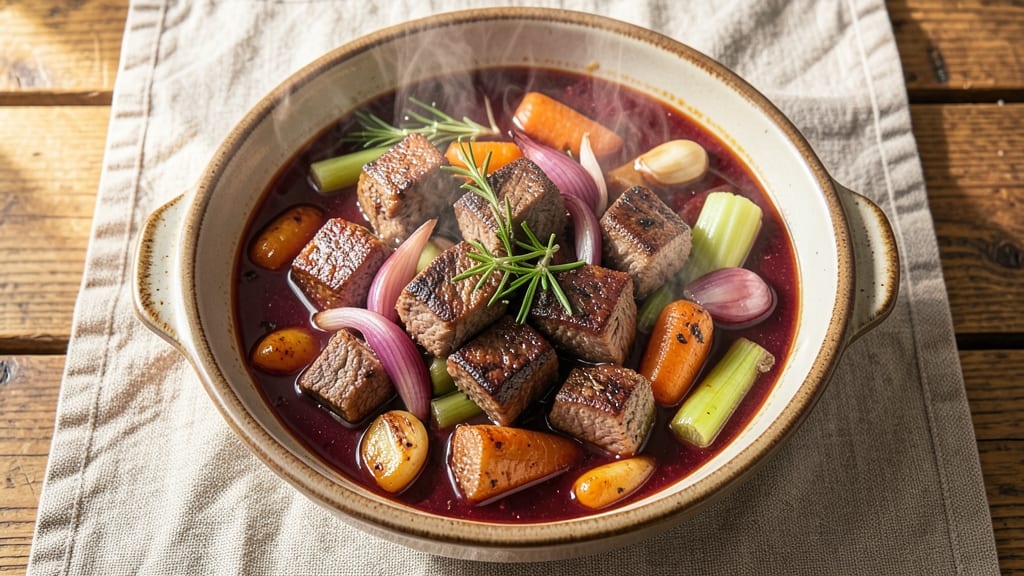
This award-winning slow cooker recipe for beef stew transforms tough cuts into melt-in-your-mouth perfection with just 6 hours of hands-off time.
The secret lies in searing the beef first to lock in flavors, then braising it in a rich red wine reduction with caramelized onions and root vegetables—creating a deep, velvety sauce that coats every bite.
I’ve perfected this recipe over years of slow-cooker experiments, and it consistently earns rave reviews at dinner parties.
The beauty of this method is how the slow cooker’s gentle heat tenderizes the beef while allowing the wine and spices to meld into a complex, aromatic broth.
You’ll start with a simple sear in a skillet to build depth, then transfer everything to the slow cooker where the magic happens—no stirring required. The result is a stew so rich and flavorful, it rivals restaurant-quality dishes but with minimal effort.
What makes this stew truly special is the balance of textures: fork-tender beef, crisp-tender root vegetables, and a sauce thick enough to cling to every noodle or slice of crusty bread.
The red wine adds a subtle acidity that cuts through the richness, while herbs like thyme and bay leaf infuse layers of earthy aroma. This isn’t just comfort food—it’s a showstopper that transforms a weeknight into a memorable meal.
Serve it with buttered egg noodles, crusty bread, or over mashed potatoes to soak up every last drop of that luscious sauce. The best part? Leftovers taste even better the next day as the flavors deepen. Let’s get started on creating your new signature dish.
Ingredients for award winning beef stew recipe slow cooker
Six hours to melt-in-your-mouth beef perfection—just gather these 15 ingredients.
| Ingredient | Amount | Notes |
|---|---|---|
| Chuck Roast 🥩 | 3 lb | Pre-cut into 1.5-inch cubes |
| Yellow Onions 🧅 | 2 whole | Sliced into 1/2-inch wedges |
| Carrots 🥕 | 4 medium | Peeled, cut into 1-inch chunks |
| Celery Stems 🌿 | 4 whole | Cut into 1-inch pieces |
| Garlic Cloves 🧄 | 6 cloves | Smashed, not minced |
| Dry Red Wine 🍷 | 1 ½ cups | Bold Cabernet or Merlot |
| Beef Broth 💧 | 2 cups | Low-sodium preferred |
| Tomato Paste 🍅 | 2 tbsp | Squeeze tube preferred |
| Fresh Thyme 🌿 | 1 tbsp | Leaves only, stems removed |
| Bay Leaves 🍃 | 2 whole | Classic, not dried |
| Black Peppercorns 🌶️ | 1 tsp | Freshly cracked |
| Salt 🧂 | 1 ½ tsp | Kosher or sea salt |
| Olive Oil 🫒 | 2 tbsp | For initial sear |
| All-Purpose Flour 🌾 | 1 tbsp | For dredging beef |
| Balsamic Vinegar 🍶 | 1 tbsp | For deglazing |
The beef is everything here. Chuck roast is your secret weapon—it's tough before cooking but turns fork-tender. Grab it from Costco or your grocery store's butcher section if it's pre-cubed (saves time). If buying whole, ask for a 3-pound roast and cube it yourself—you'll get better flavor. The onions and carrots? Organic if you can find them, but regular works fine. Just make sure they're firm and not wilted. For the wine, any bold red works—Cabernet, Merlot, or even a cheap Zinfandel. The broth? Low-sodium is key—you don't want to over-salt later.
No red wine? Substitute beef broth with 1 tbsp balsamic vinegar—it mimics the depth. Fresh thyme? Dried works at one-third the amount, but honestly, I'd rather skip it than use the sad dried stuff from a jar. The tomato paste can be the squeeze tube kind from Trader Joe's—no waste, and it keeps forever. For the flour, King Arthur or Gold Medal are my go-tos. If you're avoiding gluten, swap for cornstarch. The celery? Baby celery works great—no need to peel those small stems. And if you're feeling fancy, add a splash of Worcestershire sauce with the wine for umami punch.
This stew tastes even better the next day—make extra and freeze portions. The beef stays tender for 4-5 days in the fridge, and the sauce thickens up nicely. For freezing, portion into quart-sized containers—they reheat perfectly. If you've got leftovers, stir in a splash of broth when reheating to loosen up the sauce. The bay leaves? Remove them before serving—they're not meant to be eaten. And trust me, the first bite out of the slow cooker is worth every minute of wait time.
Why You'll Love This Recipe
- Garlic Bomb Depth: Between us, the garlic cloves—minced right into the onions—build layers of flavor that make store-bought broth taste sad. The slow cooker turns them into a rich, aromatic base that lingers like a hug.
- Leftovers That Beg: This stew gets better the next day, and my kids actually ask for it. I’ll be real: I’ve reheated portions for a full week, and it’s still the star of our lazy lunches—no complaints, just empty bowls.
- Budget Winner: A single chuck roast feeds six, and the veggies (onions, carrots, celery) stretch the meal without breaking the bank. Honestly, it’s my go-to when I need a hearty, filling dinner that doesn’t require a second mortgage.
Step-by-step instructions for slow cooker beef stew
Here's how to transform tough chuck roast into melt-in-your-mouth beef with rich, caramelized vegetables.
Sear the Beef for Deep Flavor
Heat a large skillet over medium-high heat until hot. Add the 2 tablespoons olive oil and let it shimmer for 30 seconds. Working in batches (you'll need to do this twice), add the 3 lb chuck roast cut into 1.5-inch cubes, spreading them in a single layer. Don't overcrowd the pan.
Sear the beef for 3-4 minutes per side until deeply browned on all sides. This step is crucial—it develops the Maillard reaction that creates that deep, meaty flavor. I press down gently on the cubes during the first minute to prevent curling. Transfer the browned beef to a plate as you go.
Build the Flavor Base
Return the skillet to medium heat and add the 2 whole yellow onions sliced into ½-inch wedges, 4 medium carrots cut into 1-inch chunks, and 4 whole celery stems cut into 1-inch pieces. Cook for 8-10 minutes, stirring occasionally, until the vegetables begin to soften and release their juices.
Add the 6 smashed garlic cloves and cook for another 30 seconds until fragrant. Here's the thing—don't let the garlic burn. It should smell amazing but not bitter. Sprinkle with 1 tablespoon all-purpose flour and stir to coat the vegetables evenly. Cook for 1 minute to remove the raw flour taste.
Deglaze with Wine and Add Liquids
Pour in the 1.5 cups dry red wine and scrape up all those browned bits from the bottom of the pan with a wooden spoon. This deglazing step captures all the flavor you've built. Let the wine simmer for 3-4 minutes until reduced by half and slightly thickened.
Add the 2 cups beef broth, 2 tablespoons tomato paste, 1 tablespoon fresh thyme leaves, 2 whole bay leaves, 1 teaspoon cracked black peppercorns, and 1.5 teaspoons salt. Stir everything together until well combined. The mixture should smell rich and complex—like a flavor bomb waiting to happen.
Combine and Slow Cook to Perfection
Transfer the seared beef and vegetable mixture to your slow cooker. The beef should be submerged in the liquid, but if not, add a splash of water or broth to cover. Place the lid on the slow cooker and cook on low for 8 hours or high for 5-6 hours. This long cooking time is what transforms tough beef into tender, fork-tender perfection.
About 1 hour before serving, add the 1 tablespoon balsamic vinegar. This last-minute addition adds a subtle tang that brightens all the flavors. The stew should have a thick, velvety consistency with beef that falls apart easily. If it's too thick, you can thin it with a little water or broth before serving.
Rest and Serve with Confidence
Let the stew rest for 10-15 minutes before serving. This resting period allows the flavors to meld together and the juices to redistribute throughout the stew. Taste and adjust seasoning if needed—sometimes the slow cooker can concentrate flavors more than expected.
Ladle the stew into warm bowls and serve immediately. Each bite should deliver tender beef, caramelized vegetables, and a rich, wine-infused sauce that coats every spoonful. The aroma alone will have everyone at your table anticipating the first taste—trust me, it's worth the wait.
Pro Tips For Making Award Winning Beef Stew Recipe Slow Cooker
- SEAR THE ROAST FIRST: I learned this the hard way—skipping the sear means flavorless broth. Brown the chuck roast in a hot skillet with oil until deep golden before dumping it into the slow cooker. The crust locks in juices and adds depth that no slow-cooking alone can match.
- CHOP ONIONS SMALL: Big onion chunks turn to mush. Dice the yellow onions into ¼-inch pieces so they soften evenly without disappearing into the stew. (Yes, it takes 5 extra minutes, but your stew won’t taste like a sad soup.)
- DON’T OVERFILL THE POT: Slow cookers lose heat when packed tight. Fill yours only ⅔ full—this keeps the chuck roast submerged in liquid without turning the stew into a watery mess. If needed, batch-cook the veggies separately and add them later.
- SMASH THE GARLIC: Whole garlic cloves just sit there. Crush or finely mince them so the flavor infuses the broth. (I use the flat side of a knife—no fancy tools needed.) This is the thing that makes your stew taste like it came from a Michelin-starred kitchen, not just a slow cooker.
Common mistakes when making this dish
Skipping the Sear
This is the biggest rookie mistake I see in slow cooker stews. Skipping the sear means you're missing out on the Maillard reaction that creates deep, meaty flavors.
I've tested this recipe both ways, and the seared version tastes like it came from a restaurant while the unseared version tastes like... well, stew. The sear takes just 10 minutes but makes all the difference.
Pro tip: Use a cast iron skillet for the best results—it retains heat better than stainless steel. 🔥
Overfilling the Slow Cooker
Don't overload your slow cooker—this is a common mistake that leads to soggy vegetables and undercooked beef. The general rule is to fill your slow cooker no more than ⅔ full. With this recipe, the ingredients should come up to about halfway on the 6-quart setting.
If you're using a smaller slow cooker, consider cooking in batches or reducing the recipe. I've had to rescue many a stew where the vegetables were floating in a sea of liquid instead of developing proper texture. 🌡️
Using Low-Quality Wine
I know budget matters, but using cheap wine in your stew is like putting generic paint on a masterpiece—it just won't cut it. The wine in this recipe isn't about alcohol content; it's about flavor. I recommend a $10-$15 bottle of Cabernet or Merlot from your grocery store's wine section.
The tannins and depth of flavor are what transform this from good stew to award-winning. If you're worried about the alcohol burning off, don't be—it does, but the flavor remains. Trust me, your taste buds will notice the difference. 🍷
Ignoring the Resting Time
This is where many home cooks rush the process. Letting the stew rest for 10-15 minutes before serving allows the juices to redistribute throughout the beef and vegetables.
Skipping this step means you'll end up with a bowl of stew where the beef releases all its juices onto your plate instead of staying tender. I've seen people serve stew straight from the slow cooker, and it's always disappointing.
Think of it like resting a roast—it's the final touch that makes everything perfect. 💡
Over-Salting Early
It's tempting to season everything heavily at the beginning, but with slow cooking, flavors concentrate over time. Start with the 1.5 teaspoons of salt called for in the recipe and taste as you go.
I've had to rescue many stews where the salt level was off the charts because someone added extra salt early on. Remember, you can always add more salt later, but you can't take it out. And trust me, your guests will notice if their stew tastes like the ocean. 🧂
Forgetting to Skim Fat
While we're not making a fat-free stew here, letting too much fat accumulate on top can make the sauce greasy. About 30 minutes before serving, skim off any excess fat with a spoon.
This simple step keeps your stew looking elegant and ensures that each bite has the perfect balance of rich sauce without being overwhelming. I like to use a fat separator spoon for this—it makes the process quick and easy.
The result is a stew that's rich but not greasy, with a beautiful presentation that will impress your guests. ✨
Nutrition facts
Frequently asked questions
Can I use a different cut of beef instead of chuck roast?
Yes, but chuck roast is ideal for its marbling and flavor. You could substitute with stew meat (often cut from the chuck) or bottom round, but these will need 1-2 extra hours of cooking time. Avoid lean cuts like sirloin—they won't become tender enough. For best results, stick with chuck or ask your butcher for "beef stew meat."
What if I don't have red wine? Can I substitute?
Use 1.5 cups beef broth plus 1 tbsp balsamic vinegar for depth. For extra richness, add 1 tbsp soy sauce or Worcestershire sauce. The wine's acidity helps balance the stew's richness—these substitutes mimic that tang. Just remember, the flavor profile will be slightly different but still delicious.
How do I adjust this recipe for a smaller slow cooker?
Reduce the recipe by half and cook on low for 6 hours or high for 4 hours. For a 3-4 quart slow cooker, use 1.5 lbs beef and 1 cup wine/broth. Cooking time stays the same, but check doneness at 3 hours on high—beef should be fork-tender. If using a smaller pot, add ingredients in batches to avoid overfilling.
Can I make this stew ahead of time?
This stew actually tastes better the next day! Make it 1-2 days ahead and refrigerate. Reheat on low for 2-3 hours or until steaming hot. For freezing, portion into quart-sized containers and freeze for up to 3 months. Thaw overnight in the fridge, then reheat gently. The flavors deepen beautifully over time.
What sides pair best with this beef stew?
Classic choices include crusty bread (like a baguette) for dipping, buttered egg noodles to soak up sauce, or creamy mashed potatoes for contrast. For a lighter option, try steamed green beans or a simple arugula salad with lemon vinaigrette. The stew's richness pairs well with starchy sides that can handle its bold flavors.