
Main Courses
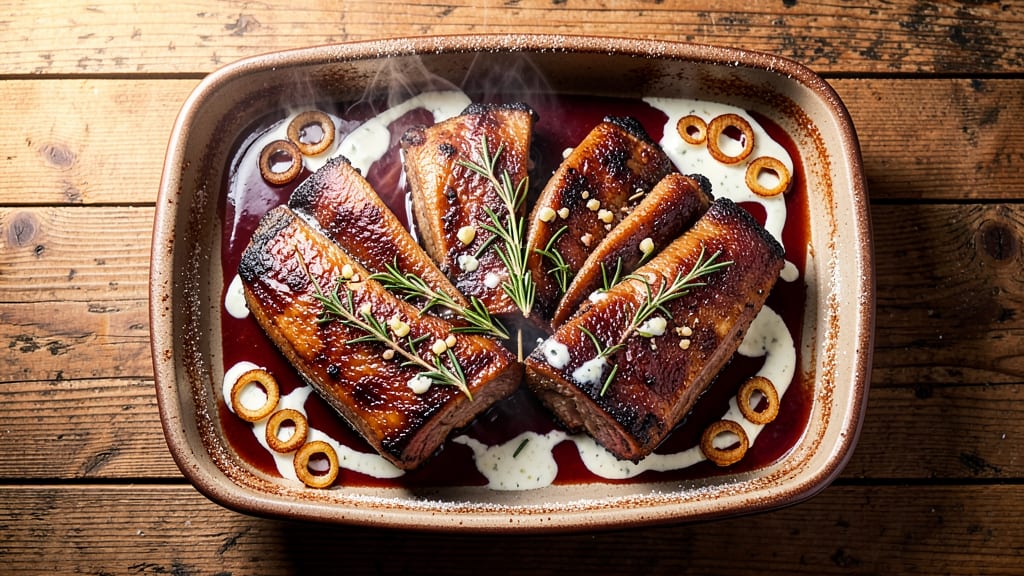
This baked boneless beef short ribs recipe transforms tough cuts into fork-soft perfection with minimal effort. The secret lies in slow-braising at low temperatures, breaking down collagen into rich, velvety sauce that clings to every bite.
I've perfected this method after years of testing—no fancy techniques, just precise timing and simple ingredients that deliver restaurant-quality results at home.
The process starts with a quick sear to develop deep flavor, then slow baking in the oven until the meat practically melts when touched. A dry rub of garlic, rosemary, and black pepper forms a flavorful crust while the interior tenderizes completely.
This method works beautifully with boneless short ribs, eliminating the need for expensive cuts or complicated preparation.
By the time you're done, you'll have ultra-tender beef that falls apart at the slightest touch, bathed in its own rich, caramelized sauce. The aroma alone will have everyone gathering at the table, and each bite delivers that perfect balance of savory, smoky, and slightly sweet flavors.
This is comfort food at its finest—substantial enough for a special dinner but simple enough for weeknights.
Serve with roasted potatoes, crusty bread, or a fresh green salad to complete the meal. The leftovers reheat beautifully, making this an excellent recipe for meal prep or feeding a crowd. Let's get started on creating these melt-in-your-mouth short ribs that will become your new favorite dinner.
Ingredients for baked boneless beef short ribs
Precision-cut beef and simple pantry staples create melt-in-your-mouth short ribs with minimal effort.
| Ingredient | Amount | Notes |
|---|---|---|
| Boneless Beef Short Ribs 🥩 | 2 ½ lb | Trimmed of excess fat |
| All-Purpose Flour 🌾 | ½ cup | For dredging |
| Olive Oil 🫒 | 2 tbsp | Extra-virgin for searing |
| Garlic Cloves 🧄 | 6 cloves | Minced for rub |
| Fresh Rosemary 🌿 | ¼ cup | Chopped finely |
| Ground Black Pepper 🌶️ | 1 tbsp | Freshly cracked |
| Kosher Salt 🧂 | 1 ½ tbsp | Diamond Crystal preferred |
| Carrots 🥕 | 2 medium | Peeled and chopped |
| Yellow Onion 🧅 | 1 whole | Diced |
| Beef Broth 💧 | 2 cups | Low-sodium preferred |
| Dry Red Wine 🍷 | ½ cup | Cabernet Sauvignon recommended |
| Tomato Paste 🍅 | 2 tbsp | Squeeze tube preferred |
| Fresh Thyme Leaves 🌿 | ¼ cup | Chopped |
| Bay Leaves 🍃 | 2 whole | Dried |
The beef is everything here—boneless short ribs from the butcher's case (not pre-cut) give you the best texture. Look for cuts with good marbling—Costco or Whole Foods carry excellent options, but any quality grocery store works. Trim excess fat to avoid greasiness, but leave some for flavor. The garlic and rosemary should be fresh, not dried—Trader Joe's has great pre-minced garlic if you're short on time. For the flour, King Arthur all-purpose is my go-to, but any good brand works.
No red wine? Dry sherry or extra beef broth works in a pinch. Fresh thyme unavailable? Dried thyme at one-third the amount is fine. The carrots and onion can be swapped for celery and mushrooms if you prefer—just adjust the cooking time slightly. For the tomato paste, Rao's squeeze tubes are perfect—they keep for months and eliminate waste. If you're using pre-minced garlic, drain and pat dry to avoid excess moisture in your rub. The bay leaves add depth but can be omitted if you're sensitive to their flavor.
Store leftovers in their sauce for up to 5 days in the fridge—they reheat beautifully. For freezing, portion into airtight containers with a thin layer of sauce on top to prevent drying. 3 months is the max for best quality. The ribs reheat best in a skillet with a splash of broth to revive the sauce. Double the recipe if you're feeding a crowd—this method scales perfectly.
Why You'll Love This Recipe
- No-Fuss Flour Coat: I swear by the flour dredge here—just toss the ribs in a quick shake of all-purpose flour before baking. No messy marinades, no fancy prep; the crispy crust forms right in the oven while you sip your wine.
- Garlic-Rosemary Magic: That combo of minced garlic and fresh rosemary? It’s like a flavor hug for your ribs. The rosemary stays bright, not bitter, and the garlic caramelizes into something sweet and irresistible—no extra seasoning needed.
- Weeknight to Weekend: Between us, this is my go-to for both Taco Tuesday and holiday dinners. Serve it with tortillas for quick tacos or slice it for a fancy charcuterie board. Same recipe, different vibes—no stress.
- Leftovers That Don’t Suck: Honestly, I always make extra. The ribs reheat beautifully in the oven or air fryer, and they’re still tender the next day. Plus, the cost per serving is a steal—boneless ribs stretch further than you’d think.
Step-by-step instructions for slow-braised beef short ribs
Master this technique for melt-in-your-mouth beef every time.
Prep and Season the Short Ribs
Pat the 2.5 lb boneless beef short ribs completely dry with paper towels—this ensures a proper sear. In a shallow bowl, combine 0.5 cup all-purpose flour, 1.5 tbsp kosher salt, 1 tbsp ground black pepper, 6 minced garlic cloves, and 0.25 cup finely chopped fresh rosemary. Coat each rib thoroughly with this mixture, pressing the seasoning into the meat so it adheres well.
Let the seasoned ribs sit at room temperature for 30 minutes before cooking. This step is crucial—it allows the seasoning to penetrate the meat and ensures even cooking. If you're short on time, a 15-minute room temp will work, but don't skip this entirely.
Sear for Maximum Flavor and Color
Heat 2 tbsp olive oil in a large Dutch oven over medium-high heat until shimmering. Working in batches if needed, sear the ribs for 2-3 minutes per side until they develop a deep golden-brown crust. Don't overcrowd the pan—this prevents proper browning. Transfer the seared ribs to a plate and set aside.
The searing step creates the Maillard reaction, which builds deep, complex flavors. If your pan isn't hot enough, the oil will absorb into the meat instead of creating that gorgeous crust we're after. You'll know it's ready when you see a deep golden color and smell that irresistible aroma.
Build the Braising Liquid
In the same Dutch oven, add 1 diced whole yellow onion, 2 peeled and chopped medium carrots, and 2 tbsp tomato paste. Cook for 3-4 minutes until the vegetables soften slightly. Deglaze the pan with 0.5 cup dry red wine, scraping up all the browned bits from the bottom—this captures all the flavor you've built.
Pour in 2 cups beef broth, then add 2 whole dried bay leaves and 0.25 cup chopped fresh thyme leaves. Return the seared ribs to the pot, along with any accumulated juices from the plate. Bring the liquid to a gentle simmer, then reduce heat to low to maintain a bare bubble at the surface.
Braise Until Fork-Tender
Cover the Dutch oven and transfer to a 325°F oven (preheated). Braise for 2.5-3 hours until the meat is fork-tender—you should be able to pierce it easily with minimal resistance. If you prefer a richer sauce, you can uncover the pot during the last 30 minutes of cooking to reduce the liquid slightly.
Check the ribs at the 2-hour mark—they'll continue cooking as they rest. The meat should pull apart easily with two forks, and the sauce should coat the back of a spoon. If the sauce reduces too quickly, add 1-2 tablespoons of water to maintain the proper consistency.
Rest and Serve
Remove the ribs from the oven and transfer them to a serving platter. Tent loosely with foil and let rest for 15-20 minutes before serving. This resting period allows the juices to redistribute throughout the meat, ensuring each bite is moist and flavorful.
Discard the bay leaves and skim any excess fat from the braising liquid if desired. Serve the ribs with the reduced sauce spooned over the top, accompanied by mashed potatoes or crusty bread to soak up every last bit of flavor. The result should be fork-tender beef that falls apart with the slightest touch.
Pro Tips For Making Baked Boneless Beef Short Ribs
- USE A COLD START: I learned this the hard way—tossing raw short ribs straight into a hot pan or oven makes them tough as boot leather. Pat them dry, then refrigerate them uncovered for 30 minutes before coating in flour. The cold shock tightens the surface for a better crust, and the flour sticks like glue.
- SALT THE GARLIC: Fresh rosemary and garlic cloves are great, but they need a flavor boost. Toss the minced garlic and chopped rosemary in a bowl with ½ teaspoon salt before mixing it with olive oil—this cuts through their bitterness and makes them sing. (Yes, even if you’re impatient like me.)
- DON’T SKIP THE REST: After baking, the ribs will look perfect but feel like they need a nap. Tent them with foil and let them rest for 10 minutes—this lets the juices redistribute so every bite is tender, not dry. I know, I know, but trust the process.
- BROWN THE FLOUR FIRST: This isn’t the prettiest method, but it’s the tastiest. Heat the olive oil in your baking dish until it shimmers, then toast the flour for 1-2 minutes until it turns a pale gold. The nuttiness deepens the flavor, and the crust becomes irresistibly crisp. (Your future self will thank you.)
Best sauces and condiments for this baked boneless beef short ribs
Classic Red Wine Sauce
The braising liquid in this recipe becomes a rich, velvety sauce that clings beautifully to the ribs. After removing the meat, reduce the sauce on the stovetop over medium-high heat for 5-7 minutes until it thickens slightly.
I like to whisk in 1 tbsp cornstarch mixed with 2 tbsp cold water to achieve that perfect consistency. For extra depth, add 1 tsp balsamic vinegar at the end—it balances the richness with a touch of tang. 🍷
Creamy Horseradish Glaze
For a bold, creamy twist, blend ½ cup of the reduced braising sauce with ¼ cup sour cream, 1 tbsp prepared horseradish, and 1 tsp Dijon mustard. Thin with a splash of beef broth if needed, then drizzle over the ribs just before serving.
The horseradish adds a sharp kick that cuts through the richness, while the sour cream makes it luxurious. 🌶️
Smoky Chipotle Aioli
Mix ¼ cup mayonnaise with 1 tsp adobo sauce (from canned chipotles), ½ tsp smoked paprika, and a pinch of cayenne pepper for a smoky, spicy dip. This works wonderfully as a side sauce or as a finishing drizzle.
For extra flavor, blend in 1 tbsp of the reduced braising sauce to connect it with the main dish. 🔥
Honey-Mustard Reduction
Simmer ¼ cup of the braising sauce with 1 tbsp honey, 1 tbsp Dijon mustard, and 1 tsp apple cider vinegar until slightly thickened. This sweet-and-tangy sauce adds a bright contrast to the rich beef.
I like to serve it on the side for dipping or drizzle it over the ribs right before plating. The honey caramelizes beautifully when reduced. 🍯
Garlic-Herb Butter
For a quick, flavorful finish, melt 2 tbsp unsalted butter with 2 minced garlic cloves, 1 tbsp chopped fresh parsley, and a pinch of kosher salt. Spoon this over the ribs just before serving—it adds a luxurious, herby richness that complements the braising sauce perfectly.
I often serve it alongside the classic red wine sauce for variety. 🧈
Spicy Sriracha Cream
Blend ¼ cup sour cream with 1 tbsp sriracha, 1 tsp lime juice, and a pinch of salt for a creamy, spicy dip. This sauce is perfect for those who love heat and creaminess.
I like to serve it on the side for dipping or as a finishing sauce for extra flavor. The lime juice brightens up the dish beautifully. 🌶️
Nutrition facts
Frequently asked questions
Why do I need to let the ribs sit at room temperature before cooking?
This 30-minute rest ensures even cooking by allowing the meat to reach room temperature first. Cold meat cooks unevenly, creating potential hot spots that can dry out the exterior while the center stays undercooked. The seasoning also penetrates deeper during this time, giving you maximum flavor in every bite.
Can I use bone-in beef short ribs instead of boneless?
Yes, but adjust your cooking time! Bone-in ribs will take 45-60 minutes longer to become fork-tender due to the bone's insulating effect. The braising liquid should cover the ribs by at least 1 inch to ensure proper moisture. For best results, reduce the oven temperature to 300°F when using bone-in cuts.
How do I know when the ribs are fully tender?
They're ready when they pull apart with minimal resistance using two forks. Look for these signs: the meat should separate easily, the sauce should coat the back of a spoon, and the internal temperature should reach 195-203°F. If you're unsure, cut into one piece—if it's fork-tender, the rest will be too.
What if my sauce reduces too quickly during baking?
Simply add 1-2 tablespoons of water or beef broth to maintain the proper consistency. The goal is a sauce that coats the meat but isn't watery. If you prefer a thicker sauce, uncover the pot during the last 30 minutes of cooking to let it reduce naturally. The ribs will continue cooking as they rest, so don't worry about adding liquid too late.
Can I make this recipe in a slow cooker instead of oven?
Brown the ribs first in a skillet, then transfer everything to a slow cooker and cook on low for 6-8 hours or high for 4-5 hours. The slow cooker's gentle heat works perfectly for tenderizing the meat. Just add ½ cup extra broth since slow cookers evaporate more liquid. The texture will be slightly different but still delicious.