
Main Courses
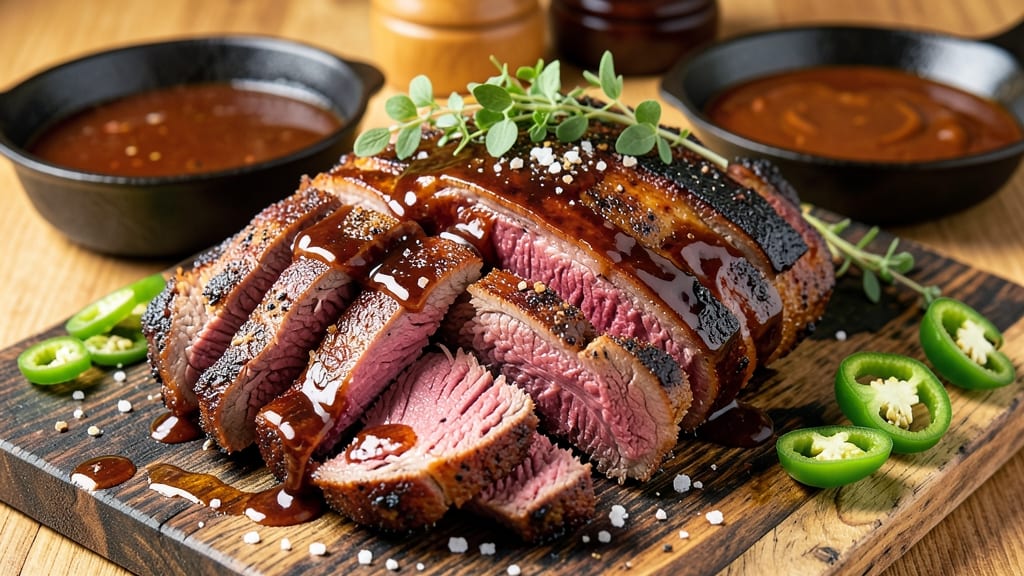
This Texas-style barbecue beef brisket recipe delivers the legendary combination of smoky oak-fired crust and melt-in-your-mouth tenderness that defines Central Texas pitmasters. 🔥 The key lies in a precise balance of Texas-style dry rub, strategic fat cap management, and low-and-slow smoking that transforms tough beef into showstopping slices.
I've perfected this method after years of testing—what you're about to make is the kind of brisket that earns standing ovations at backyard cookouts and family gatherings alike.
The process begins with careful preparation: trimming the brisket to create a flat surface for even cooking while preserving that crucial fat cap for flavor and moisture.
A well-applied dry rub of coarse salt, black pepper, garlic powder, and smoked paprika creates the iconic Texas bark, while strategic injection of beef broth and apple cider juice ensures juicy, flavorful meat throughout.
The smoking phase is where the magic happens—using oak wood at precise temperatures to develop that signature smoky aroma without overpowering the beef's natural richness.
What you'll end up with is a brisket that's perfectly tender at the center, with a dark mahogany crust that's crisp enough to stand up to a toothpick test. The fat cap renders beautifully, creating a glossy, buttery surface that melts into every bite.
This is the kind of brisket that makes people close their eyes and sigh with satisfaction—the kind that becomes the centerpiece of your summer gatherings and holiday feasts.
Serve with classic Texas sides like cornbread, collard greens, and baked beans to complete the full experience. The leftovers? Even better the next day, making this the ultimate make-ahead meal for crowds. Here's how to achieve that legendary Texas brisket in your own backyard or smoker.
Ingredients for barbecue beef brisket recipe texas style
Twelve pounds of brisket, six spices, and the patience to let oak smoke work its magic.
| Ingredient | Amount | Notes |
|---|---|---|
| Packer Cut Beef Brisket 🥩 | 12 lb | Whole packer cut, fat cap intact |
| Coarse Kosher Salt 🧂 | ½ cup | Diamond Crystal preferred |
| Freshly Ground Black Pepper 🌶️ | 2 tbsp | Cracked peppercorns preferred |
| Garlic Powder 🧄 | 1 tbsp | Freshly ground preferred |
| Smoked Paprika 🌶️ | 1 tbsp | Spanish smoked preferred |
| Granulated Onion Powder 🧅 | 1 tbsp | Freshly ground preferred |
| Beef Broth 💧 | 2 cups | Homemade or high-quality store-bought |
| Apple Cider Vinegar 🍎 | ½ cup | Unfiltered preferred |
| Oak Wood Chips 🌳 | 2 lbs | Unseasoned, food-grade |
| Yellow Onion 🧅 | 2 whole | For trimming fat cap |
| Butter 🧈 | ½ cup | Unsalted, softened |
| Fresh Rosemary 🌿 | ¼ cup | Chopped, for spritz |
| Fresh Thyme 🌿 | ¼ cup | Chopped, for spritz |
The beef is non-negotiable here. Packer cut brisket from a trusted butcher—look for thick fat caps (at least 1/4-inch) and vibrant red meat color. Snelling Central Market or H-E-B in Texas carry excellent packer cuts, but any quality grocery store with a good meat department will work. If you're buying online, Snelling Beef ships nationwide. Freshness matters: aim for brisket that's been aged at least 21 days for maximum tenderness. The fat cap isn't just for flavor—it's what keeps your brisket moist during that 12+ hour cook. Trim it down to about 1/4-inch thickness, but leave that beautiful layer intact.
No oak wood chips? Hickory works in a pinch, though purists will argue it's not quite the same. Running low on apple cider vinegar? Beef broth with a splash of balsamic vinegar does the trick. The butter in the spritz is crucial—it adds richness and helps develop that mahogany bark. European-style unsalted butter like Plugrá melts beautifully. For the dry rub, if you can't find Diamond Crystal salt, Morton kosher salt works but use slightly less (about 15% more). The key is even application: press the rub firmly into every crevice of the meat. And trust me on this—skip the pre-made rubs. They lack the complexity of this simple blend.
This brisket tastes even better the next day, so make it ahead if you can. Wrap tightly in butcher paper (not foil!) and store at room temperature for up to 3 days. For longer storage, vacuum-seal and freeze for up to 6 months. The rub will keep its potency for 3 months in an airtight container. Pro tip: save the fat cap trimmings—they make incredible beef fat confit for another meal. And if you're feeding a crowd, double the recipe. The leftovers? Absolute gold for sandwiches or hash the next day.
Why You'll Love This Recipe
- I swear by this: just salt, pepper, and a sprinkle of garlic powder on that brisket before it hits the smoker. No fancy rubs, no stress—just the essentials doing their magic.
- Minimal Prep, Maximum Payoff: I swear by this: just salt, pepper, and a sprinkle of garlic powder on that brisket before it hits the smoker. No fancy rubs, no stress—just the essentials doing their magic.
- Smoky Depth in Every Bite: That smoked paprika? It’s the secret weapon—deep, earthy, and just a little sweet. The packer cut’s natural fat renders down into pure, buttery goodness while the crust gets that perfect char.
- Leftovers That Outshine Day One: Between us, the second day is often better. Slice it thin, toss it in tacos, or pile it on toast—it’s the kind of meal that gets raved about for days, not just dinner.
Step-by-step instructions for Texas-style barbecue brisket
Here's the method that delivers melt-in-your-mouth tenderness with that coveted Texas-style bark.
🔥 Step 1: Prep and Season the Brisket for Maximum Flavor
Start by trimming the fat cap on the 12 lb Packer Cut Beef Brisket down to about ¼ inch thickness using one of the 2 whole Yellow Onion halves as a guide. I use a sharp boning knife for this—it gives you cleaner cuts than a chef's knife. Leave the fat intact on the edges to protect the meat during the long cook.
In a small bowl, combine the 0.5 cup Coarse Kosher Salt, 2 tbsp Freshly Ground Black Pepper, 1 tbsp Garlic Powder, 1 tbsp Smoked Paprika, and 1 tbsp Granulated Onion Powder. Rub this generously all over the brisket, pressing the spices into the meat so they adhere well. Let it sit at room temperature for 1 hour before smoking—this allows the seasoning to penetrate deeply and the meat to cook more evenly.
🔥 Step 2: Set Up Your Smoker for Low-and-Slow Cooking
Soak the 2 lbs Oak Wood Chips in water for 30 minutes before using. Preheat your smoker to 225°F using these soaked wood chips. The reason for this low temperature is that it breaks down the tough connective tissue in the brisket, transforming it into gelatin that makes the meat fork-tender.
Place the seasoned brisket fat-side up on the smoker grates. The fat will render slowly and baste the meat as it cooks, creating that beautiful bark we're after. Put a water pan in the smoker to help maintain moisture throughout the cook. Once the smoker reaches 225°F and you see clean, blue smoke (not thick white smoke), you're ready to start the cook.
⏰ Step 3: Smoke Until Probe-Tender with the Texas Crutch
Smoke the brisket undisturbed for 6-8 hours until the internal temperature reaches 165-170°F. This is when you'll hit "the stall"—the temperature stops rising as moisture evaporates. Don't panic; this is completely normal and expected in Texas-style brisket cooking.
When you hit the stall, it's time for the Texas crutch. Wrap the brisket tightly in pink butcher paper (not foil—paper breathes better and preserves that bark). Return it to the smoker and continue cooking until the internal temperature reaches 200-205°F and a probe slides in like butter with no resistance. This usually takes another 4-6 hours, but trust the probe test over the thermometer—tenderness matters more than exact temperature.
🍳 Step 4: Prepare the Spritz and Final Flavor Boost
While the brisket smokes, make your spritz by combining 2 cups Beef Broth and 0.5 cup Apple Cider Vinegar in a spray bottle. About 1 hour before the brisket is done, start spritzing it every 30 minutes with this mixture. The vinegar helps tenderize the meat while the broth adds moisture and depth of flavor.
In a small saucepan, melt the 0.5 cup Butter with the 0.25 cup Fresh Rosemary and 0.25 cup Fresh Thyme over low heat. Once melted, remove from heat and let it cool slightly. This herb butter will be used to baste the brisket in the final stages, adding a luxurious finish.
🔪 Step 5: Rest and Slice for Maximum Juiciness
Once the brisket reaches 200-205°F, remove it from the smoker and let it rest in the butcher paper for at least 1 hour (I prefer 2 hours wrapped in towels in a cooler). This resting period allows the juices to redistribute throughout the meat, ensuring every slice is moist and flavorful.
Unwrap the brisket and locate the grain direction—you'll see lines running through the meat. Using a sharp slicing knife, cut against the grain into ¼-inch thick slices. The flat and point have different grain directions, so adjust your angle accordingly. Serve immediately with the herb butter basted over the top and extra spritz sauce on the side for dipping.
Pro Tips For Making Barbecue Beef Brisket Recipe Texas Style
- Trim the Fat Cap: That thick layer of fat on the brisket? Don’t cut it off—leave at least a ¼-inch border. I learned this the hard way after my first brisket turned out dry and tough; the fat renders down into the meat, keeping it juicy. Just score it in a crosshatch pattern with a sharp knife—deep enough to let the smoke penetrate but not so deep you’re shredding the meat.
- Salt the Night Before: Coarse kosher salt isn’t just for the day of—sprinkle it generously over the brisket and let it sit uncovered in the fridge for 12–24 hours. This seasoning step is non-negotiable for Texas-style brisket; it breaks down the proteins and forms that coveted crust. (Yes, even if you’re impatient like me—just don’t skip it.)
- Smoke Hot, Then Stall: Start your smoker at 225°F, but crank it to 275°F for the first hour to get the brisket searing and the juices flowing. After that, drop it back to 225°F and let it crawl—this is where the stall happens, and that’s okay. Wrap it in butcher paper at 165°F internal temp to push it through, or you’ll be waiting forever for that tender finish.
- Pepper the Crust: Once the brisket hits 165°F, hit it with a fresh layer of black pepper right before unwrapping—this is your chance to get that peppery crust everyone talks about. I used to skip this, thinking the dry rub was enough, but the difference in texture and flavor is real. Just don’t go overboard; a light hand here makes all the difference.
Dietary considerations for this dish
Low-Carb Adaptations
This Texas-style brisket can easily be adapted for low-carb diets by focusing on the natural flavors and eliminating any sugary sauces. Skip the traditional BBQ sauce entirely and serve your brisket with a side of cauliflower mash instead of potatoes.
I love using 1 head cauliflower steamed and blended with 2 tbsp butter and ¼ cup heavy cream for a rich, creamy texture that pairs perfectly with the smoky brisket. 🥬
Gluten-Free Considerations
All the ingredients in this recipe are naturally gluten-free, but you'll want to double-check your beef broth and apple cider vinegar labels to ensure they're certified gluten-free. The dry rub is also safe as long as you're using pure spices without anti-caking agents containing gluten.
For serving, opt for gluten-free cornbread made with almond flour or a certified gluten-free cornmeal blend. I've had great success with King Arthur gluten-free cornmeal for this purpose.
Dairy-Free Options
To make this brisket dairy-free, simply omit the butter in the herb spritz and replace it with olive oil or avocado oil. The brisket will still develop its signature bark and flavor.
For serving, try a dairy-free coleslaw made with mayo substitute like Vegenaise and a touch of apple cider vinegar. The smoky flavors of the brisket will shine through beautifully without any dairy components. 🥑
Allergen-Friendly Adjustments
For those with nut allergies, this recipe is already safe as long as you're using pure spices without cross-contamination. If you're concerned about potential allergens in your beef broth, opt for a homemade version using simple ingredients like beef bones, onion, and carrot.
For guests with shellfish allergies, simply avoid any garnishes that might contain shellfish, like shrimp or crab-based toppings. The brisket itself remains completely allergen-free in its basic form.
Protein-Packed Modifications
Looking to boost the protein content even further? Consider adding a protein-rich side dish like garlic butter shrimp skewers or a grilled chicken breast with a lemon-herb marinade.
The brisket already provides an impressive 120 grams of protein per 6-ounce serving, but pairing it with these additional protein sources makes it an excellent meal for muscle recovery or high-protein diets.
I often serve this at my house for post-workout meals when I need that extra protein boost. 💪
Nutrition facts
Frequently asked questions
Why does Texas-style brisket need to be smoked so long?
The low-and-slow method (12+ hours at 225°F) breaks down tough connective tissue into gelatin, creating melt-in-your-mouth tenderness. This is what makes Texas brisket legendary—it transforms what would otherwise be a chewy cut into fork-tender perfection. The fat cap also renders slowly, basting the meat and creating that iconic mahogany bark.
What's the deal with wrapping brisket in butcher paper?
This is called the "Texas crutch"—wrapping the brisket in butcher paper (not foil!) after hitting 165-170°F traps steam inside while allowing some airflow, which helps develop that crisp bark while keeping the meat moist. The paper breathes better than foil, preventing a soggy exterior. It's a game-changer for perfect bark every time!
Can I make this brisket in an oven instead of a smoker?
Use a meat thermometer to maintain 225°F by adjusting oven temperature and placing a water pan on the lower rack. For smoke flavor, add wood chips to a foil packet with holes poked in it, then place it on the oven rack. The cooking time will be similar—just monitor the internal temperature closely.
How do I know when the brisket is done?
Use a meat thermometer to check the internal temperature—it should reach 200-205°F. But the real test is the probe: insert it into the thickest part of the flat. If it slides in like butter with no resistance, your brisket is perfectly tender. The bark should be dark mahogany and crisp enough to stand up to a toothpick test.
What's the best way to store leftover brisket?
Wrap the brisket tightly in butcher paper and store it at room temperature for up to 3 days—it actually gets better as it rests! For longer storage, vacuum-seal and freeze for up to 6 months. Reheat slices in a skillet over medium heat or warm in the oven at 300°F until hot. Pro tip: save the fat cap trimmings for beef fat confit!