
Main Courses
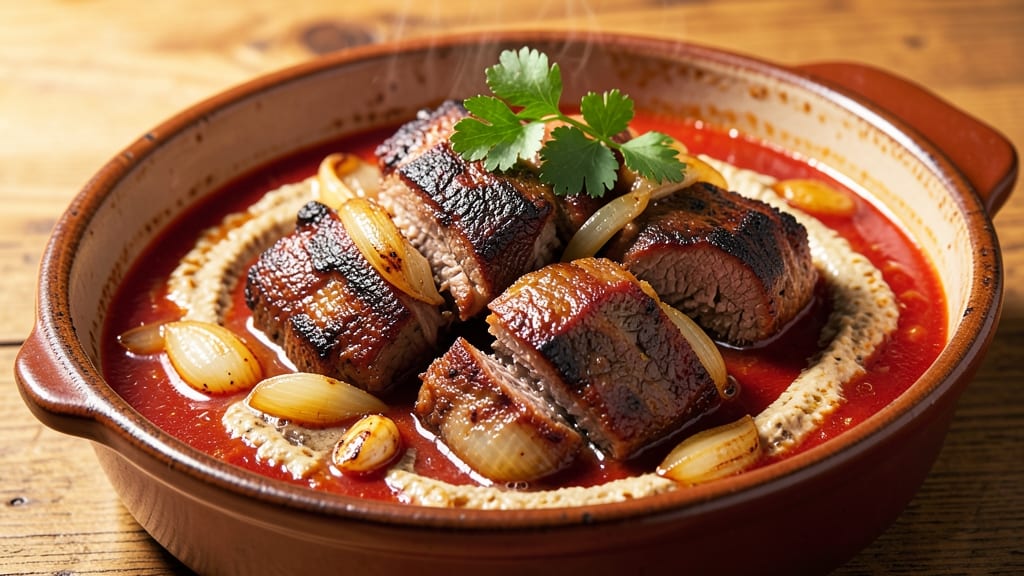
This Batangas beef caldereta recipe brings the rich, tangy flavors of Filipino comfort food to your kitchen with its signature smoky vinegar braise. The dish transforms tough beef into tender, melt-in-your-mouth pieces, all while developing a deep, complex sauce that balances sweet, sour, and smoky notes.
What sets this version apart is the authentic Batangas technique of slow-cooking the beef with just the right amount of vinegar and liver spread for that unmistakable depth of flavor.
The recipe begins with searing beef chunks to develop a rich crust before simmering them in a tomato-based sauce infused with vinegar, garlic, and onions. Eggplant and potatoes join later, absorbing the flavorful liquid until they're tender and perfectly cooked.
The result is a hearty, satisfying dish that's perfect for family gatherings or special occasions, where every bite delivers layers of smoky, tangy goodness.
What makes this caldereta truly special is the balance of textures—tender beef, creamy eggplant, and firm potatoes—all bathed in a sauce that's just thick enough to coat each ingredient. The dish improves with time as the flavors meld together, making it ideal for preparing ahead and letting it sit overnight.
This is the kind of recipe that transforms a simple weeknight dinner into a memorable, restaurant-quality experience.
Serve it with steamed rice to soak up every last drop of that flavorful sauce, and you'll understand why this dish holds a special place in Filipino cuisine.
The combination of vinegar, liver spread, and slow cooking creates a depth of flavor that's hard to replicate, making this caldereta a must-try for anyone who appreciates bold, comforting flavors.
Ingredients for batangas beef caldereta
Authentic Batangas flavors start with these 13 essential ingredients—rich beef, tangy vinegar, and smoky liver spread.
| Ingredient | Amount | Notes |
|---|---|---|
| Beef Chuck Roast 🥩 | 3 lb | Cut into 2-inch chunks, trimmed of fat |
| Yellow Onions 🧅 | 3 whole | Sliced into half-moons |
| Garlic Cloves 🧄 | 8 cloves | Minced for depth of flavor |
| Canned Tomato Sauce 🍅 | 2 cups | San Marzano preferred for sweetness |
| White Vinegar 💧 | ½ cup | Distilled for tangy brightness |
| Liver Spread 🥩 | ¼ cup | Filipino-style for authentic flavor |
| Eggplant 🍆 | 2 lb | Peeled, cut into 1-inch cubes |
| Russet Potatoes 🥔 | 2 lb | Peeled, cut into 1-inch chunks |
| Bay Leaves 🌿 | 2 whole | For aromatic depth |
| Black Peppercorns 🌶️ | 1 tsp | Freshly cracked for heat |
| Salt 🧂 | 1 ½ tsp | Diamond Crystal preferred |
| Olive Oil 🫒 | ¼ cup | Extra-virgin for searing |
| Sugar 🍚 | 1 tbsp | Balances acidity |
The beef is non-negotiable—chuck roast delivers that signature melt-in-your-mouth texture after slow cooking. Look for well-marbled cuts at local butchers or the meat department of Whole Foods for optimal quality. Liver spread is the secret weapon here; Filipino brands like La Choy or Datu Puti are widely available at Asian markets. For the vinegar, distilled white vinegar ensures consistent tanginess without overpowering. The eggplant and potatoes should be firm—avoid any with soft spots, as they won't hold up during the long braise.
No liver spread? Substitute with 2 tbsp soy sauce plus 1 tbsp fish sauce for umami depth, though it won't be identical. Running short on tomatoes? Canned crushed tomatoes work at double the amount. The sugar balances the vinegar's acidity—brown sugar adds molasses notes if you prefer. For the bay leaves, dried works fine, but fresh adds a brighter aroma. If you're using pre-minced garlic, toast it first in olive oil to deepen its flavor. The potatoes can be Yukon Golds if you prefer creamier texture, but Russets hold their shape better in the long cook.
This dish tastes even better the next day as flavors meld. Store in the fridge for up to 5 days—the sauce thickens beautifully overnight. For freezing, portion into airtight containers with 1-inch headspace and thaw in the fridge. The liver spread can be refrigerated for 3 months once opened, while vinegar lasts indefinitely. The eggplant and potatoes should be prepped and refrigerated separately for 2 days max before cooking to maintain texture.
Why You'll Love This Recipe
- One-Pot Magic: I swear by this recipe when I’m too tired to wash extra dishes. Brown the beef chuck, toss in onions and garlic, then let the tomato sauce and vinegar work their flavor while you sip your coffee—no stirring required after the first 10 minutes.
- Garlic-Vinegar Bomb: That tangy kick from the white vinegar cuts through the richness of the beef, while the garlic cloves (smashed, not chopped) release layers of aroma. Honestly, the first bite makes me wonder why I ever skipped this shortcut—it’s that good.
- Leftovers That Beg: The sauce thickens beautifully overnight, so the next day’s lunch is even richer. I’ll be real: my kids actually ask for it, and my husband finishes the container before I can pack it for work. (Yes, even on a Tuesday night.)
- Budget Beef Stretch: A single beef chuck roast feeds six for dinner and still leaves enough for lunches. Between us, this is my secret weapon for stretching grocery money—no fancy cuts, just deep, satisfying flavor that makes it feel like a splurge.
Step-by-step instructions for Batangas beef caldereta
Master this Filipino comfort classic through precise technique and layered flavors.
Sear the Beef for Deep Flavor
Heat the olive oil in a large Dutch oven over medium-high heat until shimmering. Add the beef chuck roast in batches, working in two rounds to avoid overcrowding. Sear each piece for 3-4 minutes per side until developing a deep brown crust. This step is non-negotiable—it builds the rich, caramelized foundation for the braise.
As you sear, remove the beef and set aside on a plate. Don't clean the Dutch oven; those browned bits (fond) are packed with flavor that will dissolve into the sauce. I like to work in batches to maintain proper heat control—overcrowding steams the meat instead of searing it.
Build the Aromatic Base
In the same Dutch oven, add the sliced yellow onions and cook over medium heat for 5-6 minutes until softened and beginning to caramelize. Add the minced garlic cloves and cook for an additional 30 seconds until fragrant—this prevents burning while extracting maximum flavor from the aromatics.
Stir in the liver spread and cook for 1 minute until it begins to sizzle and meld with the onions. Here's where the authentic Filipino flavor emerges—this step creates the umami backbone that distinguishes Batangas Caldereta. Don't skip this; it's what makes this dish truly special.
Develop the Vinegar-Braised Sauce
Pour in the white vinegar and canned tomato sauce, scraping up any browned bits from the bottom of the pot. Add the bay leaves, cracked black peppercorns, and sugar. Bring to a gentle simmer over medium-low heat, then reduce to the lowest setting possible while maintaining a steady bubble. This simmering process will take 20-25 minutes and creates the signature tangy, slightly sweet sauce.
I maintain a very low simmer to prevent the vinegar from evaporating too quickly. The sugar helps balance the acidity while the bay leaves infuse subtle earthy notes. This is where patience pays off—the longer you simmer, the more complex the flavors become.
Add Vegetables and Complete the Braise
Return the seared beef to the Dutch oven along with the peeled, cubed eggplant and potatoes. The vegetables should be mostly submerged in the sauce. Bring to a gentle simmer, then cover with a tight-fitting lid. Cook for 1 hour 15 minutes, stirring occasionally, until the beef is fork-tender and the potatoes are easily pierced with a fork.
This cooking time ensures the vegetables absorb the rich, tangy sauce while the beef becomes melt-in-your-mouth tender. The lid traps steam that cooks the vegetables gently. If the sauce reduces too much before the beef is tender, add small amounts of water as needed—just enough to maintain a light simmer.
Adjust Seasoning and Serve
Remove the bay leaves and adjust seasoning with the salt. Taste and add more if needed—the vinegar can be quite potent, so balance is key. The final dish should have a harmonious blend of tangy, sweet, and savory notes with the vegetables absorbing the rich sauce.
Serve immediately with steamed white rice to soak up every last drop of that flavorful braising liquid. The beef should be fork-tender with a slightly crisp exterior, the eggplant perfectly tender with a slight bite, and the potatoes creamy yet holding their shape. This dish tastes even better the next day as the flavors continue to meld.
Pro Tips For Making Batangas Beef Caldereta
- SEAR THE BEEF LONG ENOUGH: I learned this the hard way—rushing the beef sear means flavor gets stuck in the pan instead of the stew. Cook the chuck roast in 2-inch chunks until deep brown, even if it takes 8-10 minutes total. The crust locks in juices during the long simmer, and that Maillard reaction is what makes Batangas-style caldereta taste like it came from a family kitchen.
- CHOP ONIONS UNIFORMLY: Uneven onion pieces mean uneven cooking—some mushy, some raw. Cut the yellow onions into ½-inch dice, not slices or rough chunks. They’ll soften at the same rate as the garlic and beef, blending into the sauce smoothly without turning to mush or leaving crunchy bits. (Yes, even if you’re impatient like me.)
- ADD VINEGAR GRADUALLY: Dumping all the white vinegar at once makes the stew taste harsh. Start with half the amount called for, taste after 20 minutes of simmering, then add more slowly. The goal is tangy, not sour—think bright, not puckery. I was skeptical until I tried it; the flavor builds better this way.
- SIMMER LOW AND COVERED: This isn’t the prettiest method, but it’s the tastiest. After the initial sear and tomato sauce addition, reduce heat to medium-low, cover the pot, and let it bubble gently. The steam keeps the beef tender without drying it out, and the sauce thickens naturally. Skipping the lid = tough meat and a thinner sauce. Trust the process—your future self will thank you.
Serving suggestions for leftovers
Steamed Rice Pairing
This dish is a match made in Filipino comfort food heaven with steamed white rice. The tender beef and rich, tangy sauce soak into each grain, creating the perfect balance. I recommend using jasmine rice for its fragrant aroma that complements the dish beautifully.
For an extra touch, serve the rice in a banana leaf-lined bowl—it adds an authentic presentation and subtle aroma that enhances the overall experience. 🍚
Crispy Garlic Fried Rice
For a heartier side, try crispy garlic fried rice that contrasts the soft textures of the caldereta. Sauté 2 cups day-old rice with 3 tbsp olive oil, 4 minced garlic cloves, and 1 tsp soy sauce until golden and crispy.
Finish with a sprinkle of green onions and a pinch of white pepper. The garlic adds a punchy flavor that cuts through the richness of the beef sauce. 🧄
Fresh Vegetable Salad
A light mixed greens salad with a calamansi vinaigrette refreshes the palate between bites of caldereta. Toss 4 cups baby spinach and 1 cup shredded cabbage with 2 tbsp olive oil, 1 tbsp calamansi juice, 1 tsp honey, and 1 minced shallot.
The citrusy tang balances the dish's smoky depth while adding a crisp texture. 🥗
Warm Crusty Bread
For those who prefer bread over rice, crusty sourdough or Filipino pandesal works wonderfully. The bread's chewy texture contrasts the tender beef, and you can use it to soak up any remaining sauce.
Toast the bread lightly to enhance its flavor before serving. A sprinkle of flaky sea salt adds an extra layer of complexity. 🍞
Spicy Calamansi Drink
No Filipino meal is complete without a refreshing drink. Serve calamansi soda—mix ½ cup calamansi juice, 1 cup sparkling water, and 1 tbsp sugar in a pitcher.
Add a slice of lime and a pinch of chili flakes for a spicy-sweet kick. The citrusy, effervescent drink cleanses the palate and complements the dish's rich flavors. 🍹
Garnishes for Extra Flavor
Elevate your presentation with simple garnishes. Sprinkle freshly chopped cilantro or green onions over the caldereta for a pop of color and freshness. A drizzle of extra-virgin olive oil adds richness, while crushed red pepper flakes give heat lovers an extra kick.
These finishing touches make the dish look and taste even more restaurant-worthy. 🌿
Nutrition facts
Frequently asked questions
What makes Batangas beef caldereta different from regular caldereta?
Batangas beef caldereta stands out for its signature vinegar braise and use of liver spread—key ingredients that create a uniquely tangy, umami-rich flavor. Unlike traditional caldereta, it uses a longer simmering time (about 1 hour 15 minutes) to tenderize the beef while developing a deeper sauce. The dish also often includes eggplant and potatoes for texture contrast.
Can I substitute liver spread if I can't find it?
Yes! For a close substitute, mix 2 tablespoons soy sauce with 1 tablespoon fish sauce to mimic the umami depth. While it won't be identical, this combo adds savory richness. Avoid using just soy sauce—it lacks the complexity of liver spread. For a vegetarian option, try mushroom powder or nutritional yeast for earthy notes.
Why does my caldereta sauce turn out too acidic?
Too much vinegar or insufficient sugar can make the sauce overly tangy. Balance it by adding 1-2 teaspoons of sugar or ½ teaspoon of baking soda (just a pinch!) to neutralize the acidity. For future batches, reduce vinegar to ¼ cup or use apple cider vinegar, which is milder. Taste as you go—adjust gradually.
How do I make this dish ahead of time?
Caldereta tastes even better the next day! Cook it fully, then refrigerate in an airtight container for up to 5 days. The flavors deepen as the sauce reduces. Reheat gently on the stove with 1-2 tablespoons of water to prevent drying. For freezing, portion into containers with 1-inch headspace—thaw overnight in the fridge.
What's the best way to serve leftover caldereta?
Transform leftovers into caldereta fried rice or caldereta pasta! Sauté 2 cups day-old rice with leftover beef, veggies, and a splash of sauce. For pasta, toss with fettuccine and a drizzle of olive oil. Garnish with green onions or crushed peanuts for crunch. The rich flavors work perfectly in these dishes!