
Soups & Stews
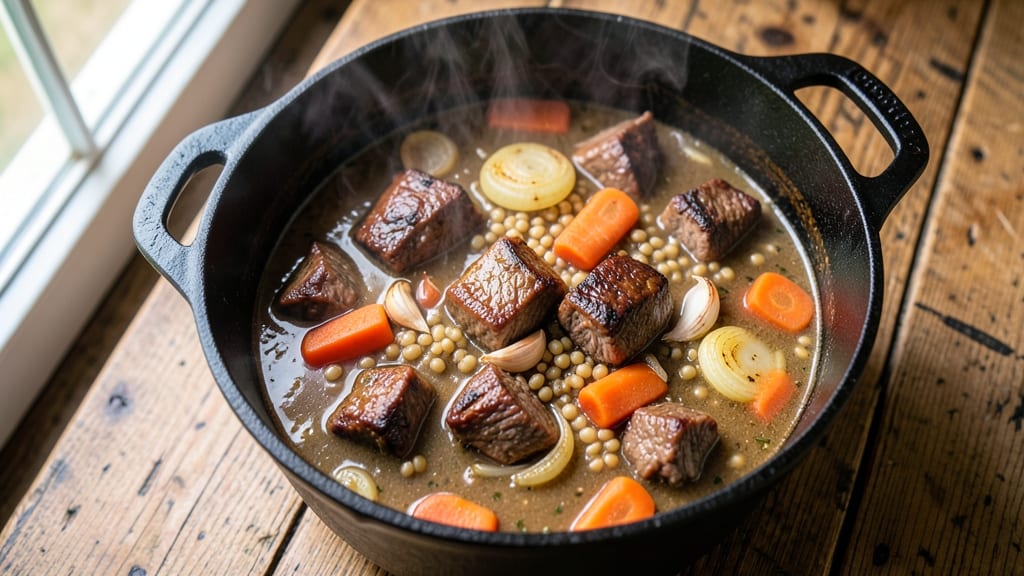
This stove-top beef and barley stew delivers restaurant-quality depth with minimal effort—just one pot, 30 minutes of active prep, and 2 hours of hands-off simmering. The secret lies in browning the beef thoroughly and letting the barley absorb rich flavors until tender and nutty.
I perfected this recipe during winter months when hearty meals feel essential, and it never fails to warm both body and soul.
The beauty of this stew is its simplicity: tough cuts of beef transform into fork-tender pieces while barley develops that signature chewy texture and earthy sweetness. A slow simmer builds layers of flavor without requiring specialized equipment—just a heavy pot and patience.
The result is a deeply aromatic stew with a sauce so rich it coats every spoonful.
What makes this recipe stand out is the balance—meaty yet comforting, substantial yet approachable. The barley adds satisfying bite, while the beef provides robust protein, making it perfect for chilly evenings or meal prep. Serve with crusty bread to soak up every last drop of that flavorful broth.
This one-pot wonder requires no fancy techniques, just attentive cooking during the initial stages. The long simmer does most of the work, allowing flavors to meld beautifully. Whether you're feeding a family or prepping for the week, this stew delivers consistent, comforting results every time.
Ingredients for beef and barley stew recipe stove top
Six hearty ingredients transform into a deeply flavorful stew with nutty barley and tender beef.
| Ingredient | Amount | Notes |
|---|---|---|
| Chuck Roast Beef 🥩 | 2 lb | Cut into 1-inch cubes |
| Pearl Barley 🌾 | 1 cup | Uncooked, rinsed well |
| Yellow Onion 🧅 | 1 whole | Diced, medium size |
| Carrots 🥕 | 4 medium | Peeled, cut into chunks |
| Garlic Cloves 🧄 | 4 cloves | Minced, fresh preferred |
| Beef Broth 💧 | 4 cups | Low-sodium preferred |
| Red Wine 🍷 | 1 cup | Bold dry variety |
| Tomato Paste 🍅 | 2 tbsp | Smooth, no sugar added |
| Fresh Thyme 🌿 | 2 sprigs | Or 1 tsp dried thyme |
| Fresh Rosemary 🍃 | 1 sprig | Woody stems removed |
| Bay Leaves 🍃 | 2 whole | Dried, standard size |
| Olive Oil 🫒 | 2 tbsp | Extra-virgin preferred |
| Kosher Salt 🧂 | 1 ½ tsp | Diamond Crystal preferred |
| Freshly Ground Black Pepper 🌶️ | 1 tsp | Coarse grind preferred |
The chuck roast is non-negotiable for this recipe—its marbled fat renders beautifully during browning, creating rich sauce and tenderizing the meat. Look for cuts with visible marbling at your local butcher or Whole Foods meat counter. If you're using pre-cubed beef, pat the pieces dry before searing to achieve that perfect crust. The pearl barley should be rinsed thoroughly to remove any dust or debris that could make the stew cloudy. Bob's Red Mill brand is my go-to for consistent texture, but any high-quality pearl barley will work. Fresh herbs elevate the dish significantly—farmers' markets often have more vibrant thyme and rosemary than grocery stores, but the dried versions in spice aisles are perfectly adequate when fresh isn't available.
No red wine on hand? Substitute with additional beef broth plus 1 tbsp balsamic vinegar for similar depth. The tomato paste can be omitted entirely if you prefer, but it adds that concentrated umami punch that balances the stew's earthy notes. For the carrots, baby carrots work beautifully if you're short on time, but whole carrots develop more complex flavors during the long simmer. If you're using dried herbs, reduce the amount to one-third of what's listed—dried thyme and rosemary are potent. The olive oil should be high-quality; avoid the cheap bottled varieties that can turn bitter when heated. For salt, Diamond Crystal kosher salt dissolves more easily than Morton's, which is crucial for even seasoning in stews.
This stew tastes even better the next day as flavors meld further. Store leftovers in an airtight container in the refrigerator for up to 5 days, or freeze portions for 3 months. The barley continues to absorb liquid as it cools, so you may need to add a splash of broth when reheating. For meal prep, I recommend doubling the recipe and freezing half—just thaw overnight in the fridge before reheating. The stew reheats beautifully on the stovetop over medium heat, stirring occasionally to prevent sticking. If you're serving with bread, toast it fresh before adding to the stew to maintain crispness.
Why You'll Love This Recipe
- One-Pot Magic: I swear by this—just dump everything in one pot, walk away, and come back to rich, tender beef that falls apart. No fancy techniques, no stress.
- Garlic-Onion Bomb: Those two ingredients? They’re the secret weapon. The onions caramelize into sweetness while the garlic deep-fries into savory perfection—every bite tastes like a hug from your grandma’s kitchen.
- Leftovers That Shine: Between us, this stew improves the next day. The barley softens, the flavors meld, and suddenly you’ve got a freezer-friendly meal that costs pennies per serving.
- Weeknight Workhorse: Rainy Tuesday? Last-minute dinner? This stew handles it all. Feed a crowd, pack lunches, or just reheat a bowl—it’s the kind of dish that actually makes life easier.
Step-by-step instructions for beef and barley stew on the stovetop
This hearty stew delivers deep, nutty barley flavor and tender beef through precise timing and layering.
Sear the Beef for Rich Flavor Foundation
Heat the 2 tablespoons olive oil in a heavy-bottomed Dutch oven over medium-high heat. Working in batches to avoid crowding, add the 2 lb chuck roast beef cut into 1-inch cubes, letting each piece sear undisturbed for 2-3 minutes until deeply browned on all sides. This caramelization builds the stew's depth of flavor.
Transfer the browned beef to a plate as you work. If the oil appears overloaded with fat, carefully remove excess with a paper towel before continuing. The goal is to develop a rich, flavorful crust on each piece without steaming the meat.
Sauté Aromatics Until Fragrant
In the same Dutch oven, add the 1 whole yellow onion diced and 4 medium carrots cut into chunks. Cook for 5 minutes until the onions soften and begin to caramelize slightly. Add the 4 cloves garlic cloves minced and cook for an additional 30 seconds until fragrant.
This step transforms the vegetables from raw to flavorful. The onions should release their natural sweetness while the carrots soften just enough to form a flavorful base. If the vegetables begin to stick before caramelizing, add 1 tablespoon beef broth to deglaze and prevent burning.
Build the Stew Base
Stir in the 2 tablespoons tomato paste and cook for 1 minute until it darkens slightly. Add the 1 cup red wine, scraping up any browned bits from the bottom of the pot. Let it simmer for 3-4 minutes until the wine reduces by half and its alcohol notes cook off.
This reduction process concentrates the wine's flavor, creating a rich foundation for the stew. The tomato paste adds depth while helping to bind the ingredients together. If the mixture appears too thick, add ½ cup beef broth to maintain proper consistency.
Simmer with Barley and Herbs
Return the beef to the pot. Add the 1 cup pearl barley (rinsed well), 4 cups beef broth, 2 sprigs fresh thyme, 1 sprig fresh rosemary, and 2 whole bay leaves. Bring to a gentle boil, then reduce heat to low and cover partially. Simmer for 1 hour 15 minutes, stirring occasionally.
The barley needs time to absorb the broth and develop its nutty flavor. Check the stew after 45 minutes—if it appears too thin, reduce heat further to prevent boiling over. The barley should be tender but still hold its shape, with the beef becoming fork-tender.
Season and Finish
Remove the thyme sprigs, rosemary sprig, and bay leaves. Stir in the 1.5 teaspoons kosher salt and 1 teaspoon freshly ground black pepper. Taste and adjust seasoning if needed, adding more salt or pepper as necessary. Let the stew simmer uncovered for an additional 10 minutes to thicken slightly.
The final seasoning should be balanced—salty enough to complement the richness of the beef and barley, with a peppery kick to cut through the fat. The stew should coat the back of a spoon with a velvety texture, and each bite should deliver tender beef, nutty barley, and layers of herbal depth.
Pro Tips For Making Beef And Barley Stew Recipe Stove Top
- Brown the Beef Properly: Chuck roast won’t tenderize if it’s just simmering—you need a deep, dark crust. Sear it in batches over medium-high heat for 3-4 minutes per side until it’s nearly black in spots. I used to rush this, and the stew always tasted dull. Trust me, the extra 10 minutes now saves you hours of tough meat later.
- Soak the Barley First: Pearl barley swells but never quite breaks down in stews if you skip this. Rinse it, then soak for 30 minutes in warm water before adding to the pot. This cuts cooking time by 20 minutes and prevents that annoying grainy texture. (Yes, even if you’re impatient like me.)
- Don’t Overcrowd the Pot: Dumping everything in at once steams instead of browns. Sauté onions and carrots until soft, then remove half before adding the beef. That way, the meat gets a proper sear, and the veggies caramelize instead of turning to mush. I learned this the hard way—my first stew looked like a sad soup.
- Use a Splatter Screen: Garlic and onions will fight for dominance in your kitchen if you skip this. A cheap wire screen over the pot catches 90% of the splatter while letting steam escape. Sounds weird, but it works: cleaner stove, better flavor, and no burnt garlic smell clinging to your cabinets. (Your future self will thank you.)
Make-ahead tips for beef and barley stew recipe stove top
Prep Ahead for Flavor
Start by prepping all ingredients the night before—dice onions, chop carrots, and measure spices. Store them in airtight containers in the fridge. This saves 30 minutes of active prep time on stew day. I keep everything in separate containers so flavors don't bleed between ingredients. 🌟
Barley Soaking Shortcut
Soak the 1 cup pearl barley in 4 cups cold water overnight. Drain before adding to the stew—this reduces cooking time by 20 minutes while enhancing its nutty flavor. I use a fine-mesh strainer to drain it completely, preventing a watery stew.
Beef Browning in Advance
Brown the beef up to 2 days ahead and refrigerate in an airtight container. Reheat gently in the stew pot before adding other ingredients. This step is crucial for building deep flavor without rushing. Just
Freezer-Friendly Components
Freeze the cooked beef separately in a single layer before assembling the stew. This lets you thaw it directly in the pot while other ingredients cook. I use heavy-duty freezer bags and flatten them to save space. Just add the thawed beef to the simmering pot during the final 30 minutes of cooking.
Broth Reduction Hack
Reduce the 4 cups beef broth by half in a saucepan before adding to the stew. This intensifies the flavor and reduces overall cooking time. I like to do this while the beef browns, so everything's ready when it's time to assemble.
The concentrated broth adds incredible depth to the final dish.
Herb Prep Strategy
Wash and dry all herbs thoroughly, then store them in small containers with paper towels to absorb moisture. Fresh thyme and rosemary can be chopped ahead and stored in the fridge for up to 3 days.
This keeps them vibrant and ready to add at the perfect moment during cooking. 🌿
Nutrition facts
Frequently asked questions
Can I substitute pearl barley with another grain?
Yes! For a quicker cook, use 1 cup instant barley (cuts cooking time by 20 minutes). Or try 1 cup brown rice for a slightly nuttier flavor, though it may need 10 extra minutes of simmering. Avoid steel-cut oats—they won't soften enough in the same time frame.
Why does my stew taste bland after simmering?
Bland flavor usually means insufficient browning or seasoning. Always sear the beef until deeply browned, and taste the broth before adding barley—adjust with salt, pepper, or a splash of Worcestershire sauce. The wine and tomato paste should provide depth, but don't skip them! Simmer uncovered for the last 10 minutes to let flavors concentrate.
How do I make this stew in a regular pot instead of a Dutch oven?
Use a heavy pot with a tight-fitting lid—cast iron or stainless steel work best. Brown the beef in batches if needed, then proceed normally. The key is maintaining a gentle simmer (low heat). If your pot boils over easily, reduce heat further or simmer uncovered for the last 15 minutes to thicken the sauce.
Can I add potatoes to this recipe?
Add 1 lb baby potatoes (halved) with the barley. They'll absorb flavor beautifully and add heartiness. For best results, use waxy varieties like Yukon Golds—they hold their shape better than russets. Add them when the stew has 30 minutes left to cook to prevent overcooking.
What's the best way to reheat leftovers?
Gently reheat over low heat on the stovetop, stirring occasionally. Add 1-2 tbsp beef broth if the stew appears too thick. Never microwave directly—it can make the barley mushy. For best texture, reheat just until warm, then let it sit covered for 5 minutes before serving. The flavors actually improve after resting!