
Soups & Stews
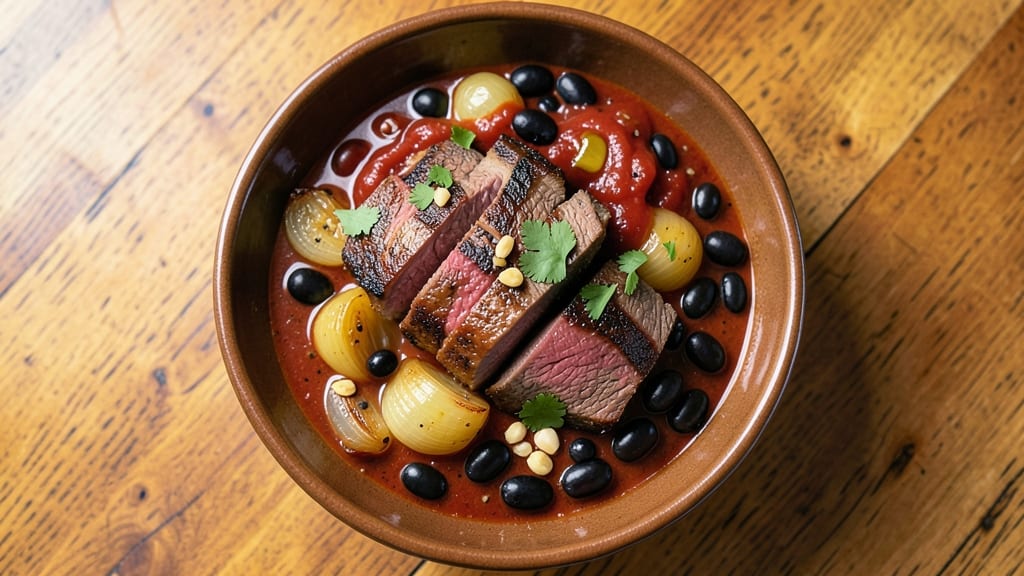
This beef and black bean stew recipe transforms tough cuts of beef into melt-in-your-mouth tenderness while delivering deep, complex flavors through slow braising. The caramelized onions and aromatic spices create a rich, umami-packed base that perfectly complements the hearty black beans and tender beef.
I developed this recipe after years of perfecting the balance between texture and depth, ensuring every spoonful delivers restaurant-quality satisfaction.
The secret lies in the braising technique—slow cooking at low temperatures allows the beef to become fork-tender while developing layers of flavor in the broth. Caramelizing the onions first adds natural sweetness and depth, while a blend of cumin, smoked paprika, and bay leaves creates that signature stew aroma.
This method works equally well in a Dutch oven on the stovetop or in a slow cooker for hands-off convenience.
By the time you serve this stew, you'll have perfectly tender beef chunks, creamy black beans, and a velvety broth infused with caramelized onion and warm spices.
The texture is what makes it special—each bite offers a satisfying contrast between the tender beef, the slightly firm beans, and the rich, flavorful sauce. It's the kind of hearty, comforting meal that feels like a hug on a cold day.
Serve with crusty bread for soaking up every last drop of that flavorful broth, or alongside steamed rice to stretch the meal further. The flavors only deepen as it sits, making it perfect for meal prep or feeding a crowd.
Let's get cooking—this stew is worth every minute of the wait.
Ingredients for beef and black bean stew
Slow-cooked beef, caramelized onions, and aromatic spices create this hearty, umami-rich stew.
| Ingredient | Amount | Notes |
|---|---|---|
| Chuck Roast 🥩 | 2 lb | Cut into 1.5-inch cubes |
| Yellow Onions 🧅 | 2 whole | Peeled and sliced into 1/4-inch pieces |
| Garlic Cloves 🧄 | 6 cloves | Peeled and smashed |
| Black Beans 🫘 | 2 cups | Drained and rinsed, cooked or canned |
| Tomato Paste 🍅 | ½ cup | Smooth texture preferred |
| Beef Broth 💧 | 4 cups | Low-sodium preferred |
| Red Wine 🍷 | 1 cup | Dry, bold variety |
| Smoked Paprika 🌶️ | 1 tbsp | For deep smoky flavor |
| Ground Cumin 🌿 | 1 tsp | Toasted for deeper flavor |
| Bay Leaves 🍃 | 2 whole | Fresh preferred |
| Olive Oil 🫒 | 2 tbsp | Extra-virgin for richness |
| Salt 🧂 | 1 ½ tsp | Kosher or sea salt |
| Black Pepper 🌶️ | ½ tsp | Freshly ground preferred |
| Fresh Thyme 🌿 | 1 tbsp | Leaves only, chopped |
| Cumin Seeds 🌿 | ½ tsp | Toasted for aroma |
The chuck roast is the star here—look for well-marbled cuts at Whole Foods or your local butcher for the best texture. Pre-cubing saves time, but if you're buying a whole roast, ask for it to be cut into 1.5-inch chunks. Yellow onions should be sweet, not bitter—Vidalia or Maui onions caramelize beautifully. Garlic cloves should be plump and firm; avoid any with green sprouts. For the black beans, canned low-sodium varieties are a time-saver, but homemade or dried beans work too if you soak them overnight. The tomato paste? San Marzano is ideal, but any smooth paste will do.
No red wine? Substitute with beef broth plus 1 tbsp balsamic vinegar—it mimics the acidity. Fresh thyme unavailable? Dried works at one-third the amount. The smoked paprika is non-negotiable for that deep, smoky flavor, but if you're out, regular paprika plus a pinch of liquid smoke gets you close. For the cumin seeds, toast them in a dry pan for 30 seconds before adding to the pot—this releases their aroma. The bay leaves can be removed before serving, but don't skip them—they're essential for that classic stew depth.
This stew tastes even better the next day as flavors meld. Store in an airtight container in the fridge for up to 5 days, or freeze portions for 3 months. I double the recipe and freeze half—perfect for lazy weeknights. To reheat, warm on the stovetop over medium-low heat, stirring occasionally. The onions and spices will caramelize further, deepening the flavor. Serve with crusty bread or over rice to soak up every last drop of that rich, umami-packed broth.
Why You'll Love This Recipe
- Slow-Cooker Simplicity: I swear by this for lazy Sundays—just dump the chuck roast, onions, and garlic into my slow cooker, add the tomato paste, and walk away. No chopping, no stirring, no stress. The black beans soak up all the flavor while you’re out living your life.
- Deep, Smoky Richness: That tomato paste? It’s the secret weapon—caramelizes into a glossy, slightly sweet base that clings to every bite. The chuck roast gets fork-tender, and the black beans add just enough earthy bite to cut through the richness. It’s the kind of stew that makes you want to lick the spoon.
- Leftovers That Beg for More: This recipe actually tastes better the next day. I double it on Sundays because by Wednesday, I’m reheating it straight from the fridge—still hearty, still packed with flavor. Honestly, my freezer is full of these containers, and I don’t even mind.
- Budget Meal for Busy Nights: A pound of chuck roast and a can of beans stretch into four servings without breaking the bank. Between us, this is my go-to when I’m feeding the family but don’t want to spend hours in the kitchen. Plus, the leftovers turn into next-day tacos—because why not?
Step-by-step instructions for beef and black bean stew
This method builds rich umami flavor through slow caramelization and layered spices.
Sear the Chuck Roast for Deep Flavor
Heat the 2 tablespoons olive oil in a heavy Dutch oven over medium-high heat. Pat the 2 lb chuck roast dry with paper towels and season generously with 1.5 teaspoons salt and 0.5 teaspoon black pepper. Working in batches if needed, sear the beef for 3-4 minutes per side until deeply browned and developing a crust.
This searing step creates the Maillard reaction, which forms complex flavors that will infuse the entire stew. Don't rush this—browned meat equals flavor-packed stew. Once all pieces are seared, transfer them to a plate and set aside.
Caramelize Onions and Toast Spices
In the same Dutch oven, reduce heat to medium and add the 2 whole yellow onions, sliced into ¼-inch pieces. Cook for 10-12 minutes, stirring occasionally, until the onions turn deep golden brown and sweet. This caramelization adds natural sweetness that balances the stew's richness.
Add the 6 cloves garlic cloves (peeled and smashed) and the 0.5 teaspoon cumin seeds. Toast for 30 seconds until fragrant—this releases their essential oils. Immediately add the 1 tablespoon smoked paprika, 1 teaspoon ground cumin, and 1 tablespoon fresh thyme, stirring constantly for 20 seconds to toast the spices and deepen their flavor profiles. 3
Build the Umami Base
Stir in the 0.5 cup tomato paste and cook for 1 minute until it loses its raw taste. Pour in the 1 cup red wine and scrape up any browned bits from the bottom of the pot—this deglazing captures all the meaty flavors. Let the wine simmer for 2-3 minutes until reduced by half.
Add the 4 cups beef broth and return the seared beef to the pot. Bring to a gentle simmer, then add the 2 cups black beans, 2 whole bay leaves, and any accumulated juices from the plate. The liquid should come about ¾ of the way up the beef pieces—if not, add ½ cup water to maintain proper braising liquid.Step 4: Braise Until Tender
Cover the Dutch oven and transfer to a preheated
Real talk: Don't lift the lid during cooking—every time you do, you lose valuable heat and moisture. If you must check, use a thermometer to verify the internal temperature of the beef reaches 200°F at its thickest point.Step 5: Adjust Seasoning and Serve
Remove the stew from the oven and discard the bay leaves. Taste and adjust seasoning—you may need to add more salt, especially if using low-sodium broth. Let the stew rest for
This stew delivers deep, complex flavors through careful layering: the caramelized onions provide sweetness, the smoked paprika adds depth, and the slow braising develops the beef's natural tenderness. Serve with crusty bread to soak up every last spoonful of that rich, umami-packed sauce.
Pro Tips For Making Beef And Black Bean Stew
- SEAR THE CHUCK FIRST: Chuck roast won’t brown like a steak, but a 5-minute sear in a hot Dutch oven with 1 tablespoon of oil—until deep brown crusts form—locks in flavor better than slow cooking alone. I used to skip this, and the stew always tasted like it needed more salt.
- SOAK BEANS 30 MINUTES: Drain and rinse canned black beans, then soak them in warm water for 30 minutes before adding to the stew. This cuts gummy texture and lets them absorb flavors faster—no need to simmer them forever. (Yes, even if you’re impatient like me.)
- SWEAT ONIONS LOW AND SLOW: Cook onions at medium-low heat for 10 minutes until translucent, not browned. Rushed onions burn and turn bitter, and that bitter note ruins the whole dish. Sounds boring, but it works every time.
- STIR IN TOMATO PASTE LAST: Add tomato paste when the meat’s halfway done, not at the start. This prevents it from burning and lets it bloom into a rich, caramelized base instead of a charred mess. (Your future self will notice.)
Common mistakes when making this recipe
Overcooking the Beef
One of the biggest mistakes is letting the beef become mushy instead of tender. Chuck roast needs patience—it should reach 200°F internal temperature but not fall apart completely. I've seen many cooks walk away from the oven too early, resulting in dry, stringy meat.
Use a meat thermometer to track progress, and resist the urge to peek under the lid. Every time you lift it, you lose heat and moisture, extending cooking time.
Skipping the Sear
Many home cooks rush through the searing step, but this is where the magic happens. A proper 3-4 minute sear on each side creates the Maillard reaction, which develops deep, meaty flavors that infuse the entire stew.
I've tested this recipe with and without searing, and the difference is night and day. Use a heavy Dutch oven and don't crowd the pan—work in batches if needed to get that beautiful crust on every piece.
Underseasoning the Broth
The broth is the soul of this stew, and many cooks hold back on salt until the end. But by then, it's too late—the flavors won't meld properly. I recommend adding 1.5 teaspoons salt during searing, then tasting and adjusting after braising.
Remember, low-sodium broth means you'll need to add more salt than usual. Taste as you go—this is the only way to ensure perfect seasoning. The goal is a broth that's rich but not salty, with all the spices harmonizing beautifully.
Ignoring Caramelization Time
Rushing the onion caramelization is a common mistake that affects the stew's depth of flavor. Those 10-12 minutes of slow cooking transform the onions from sweet to rich and complex.
I've had stews where impatient cooks pulled the onions out too early, resulting in a broth that lacked that essential sweetness. Keep stirring occasionally to prevent burning, and don't be afraid to let them get deeply golden brown—they'll continue caramelizing as the stew cooks.
Adding Beans Too Early
Black beans need time to absorb flavors, so adding them at the beginning means they'll turn mushy and lose their texture. I wait until the beef has been braising for at least 1 hour before adding the beans. This ensures they stay firm yet creamy, providing that perfect texture contrast.
If you add them too soon, you'll end up with a stew that's too uniform in texture—we want that satisfying bite from the beans alongside the tender beef.
Not Resting the Stew
Many cooks can't wait to serve this rich stew, but letting it rest for 10 minutes off the heat makes a world of difference. This allows the juices to redistribute throughout the beef and beans, ensuring every bite is moist and flavorful.
I've seen stews where impatient cooks served it immediately, resulting in juices pooling at the bottom and dry meat. Trust the process—those final minutes of resting are crucial for the best texture and flavor distribution. 💫
Nutrition facts
Frequently asked questions
Can I make this stew in a slow cooker?
Brown the beef first in a skillet, then transfer everything to your slow cooker. Cook on low for 7-8 hours or high for 4-5 hours. The slow cooker method is perfect for hands-off cooking and delivers the same tender beef and flavorful broth. Just skip the oven step and let the slow cooker do the work!
What's the best way to reheat leftovers?
Reheat gently on the stovetop over medium-low heat, stirring occasionally, until warmed through. Avoid microwaving as it can make the beef tough. For best results, reheat only what you need and keep the rest refrigerated. This stew actually tastes better the next day as flavors meld further!
Can I substitute other beans? Yes! You can use kidney beans, pinto beans, or even lentils. For best texture, stick with 1 cup cooked beans per serving. Black beans provide a classic flavor, but kidney beans add a slightly earthier taste. Just
How do I make this vegetarian?
Replace the beef with 2 cups portobello mushrooms or 1 lb extra-firm tofu (pressed and cubed). Sauté the mushrooms first to develop their umami flavors, then proceed with the recipe as written. The caramelized onions and spices will still create a rich, satisfying base. For extra protein, add 1 cup cooked quinoa at the end.
What's the secret to perfectly tender beef?
The key is patience and proper technique! Use a meat thermometer to ensure the beef reaches 200°F internal temperature. Don't lift the lid while braising—this releases heat and moisture. Also, sear the beef thoroughly first to create a flavorful crust. The slow cooking time is what transforms tough chuck roast into melt-in-your-mouth perfection.