
Soups & Stews
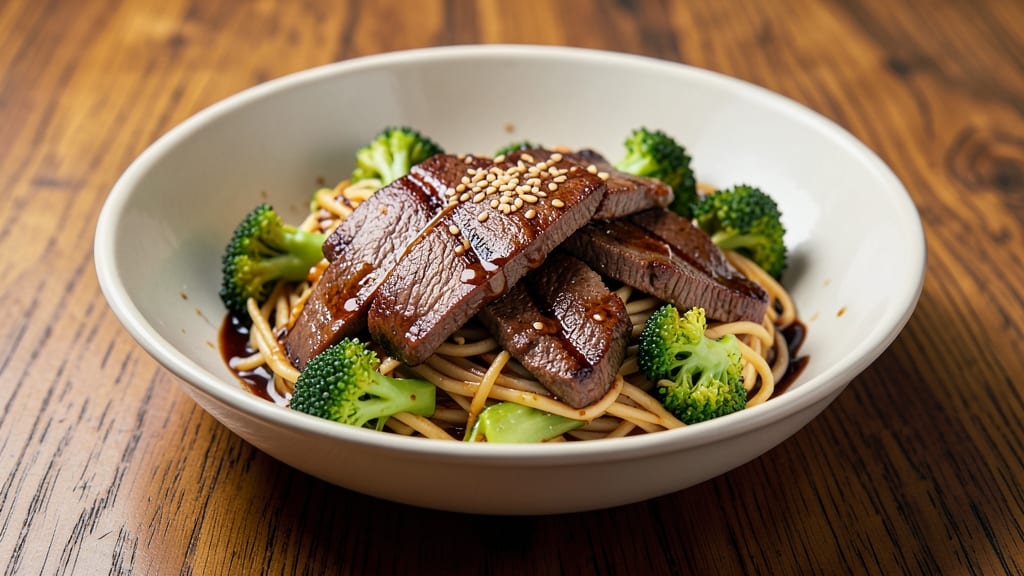
This beef and broccoli chow mein recipe delivers the perfect balance of wok-fired crunch and silky soy sauce that makes every bite irresistible. The secret lies in high-heat stir-frying—achieving that signature caramelized wok hei in just 10 minutes—while keeping the beef tender and broccoli vibrant.
I’ve refined this technique over years of testing, ensuring the sauce clings to every strand of noodle without overwhelming the fresh ingredients.
The foundation starts with a homemade soy-ginger sauce that’s richer than restaurant versions, thanks to a touch of honey and sesame oil. Thinly sliced flank steak cooks quickly over high heat, developing a deep mahogany crust while staying fork-tender inside.
The broccoli florets are blanched first to preserve their bright green color, then tossed in at the end to maintain crisp-tender texture—no soggy bites here.
What sets this recipe apart is the two-stage wok technique: first searing the beef and aromatics, then adding the noodles and sauce in a rapid, high-heat finish. The result is a dish where each component—crispy noodles, savory beef, and fresh broccoli—shines in perfect harmony.
The sauce coats everything evenly, creating that signature silky glaze that’s both tangy and slightly sweet.
Serve immediately over a bed of steamed chow mein noodles for maximum crunch, or toss everything together for a more casual presentation. This recipe scales effortlessly for weeknight dinners or crowd-pleasing gatherings—just double the sauce and beef if needed. Let’s get cooking!
Ingredients for beef and broccoli chow mein
High-heat stir-frying meets silky sauce in this wok-fired chow mein with tender beef and vibrant broccoli.
| Ingredient | Amount | Notes |
|---|---|---|
| Flank Steak 🥩 | 1 lb | Thinly sliced against grain |
| Chow Mein Noodles 🍜 | 8 oz | Fresh or dried, cooked al dente |
| Broccoli Florets 🥦 | 3 cups | Fresh, cut into bite-sized pieces |
| Sesame Oil 🫒 | 1 tbsp | For aroma, not cooking |
| Light Soy Sauce 🍶 | ½ cup | High-quality, low-sodium preferred |
| Dark Soy Sauce 🍶 | 1 tbsp | For color depth |
| Honey 🍯 | 1 tbsp | Pure, for sauce balance |
| Fresh Ginger 🌿 | 1 tbsp | Finely grated, aromatic |
| Garlic Cloves 🧄 | 4 cloves | Minced, for aromatic base |
| Green Onions 🧅 | ¼ cup | Sliced, for garnish |
| Vegetable Oil 🫒 | 2 tbsp | High smoke point for wok |
| Cornstarch 🌾 | 1 tbsp | For sauce thickening |
| Sesame Seeds 🌰 | 1 tsp | Toasted, for garnish |
| Salt 🧂 | ½ tsp | Adjust to taste |
| Black Pepper 🌶️ | ¼ tsp | Freshly ground |
The flank steak is non-negotiable here—its lean yet tender texture holds up perfectly to the high-heat sear. Look for center-cut slices at your butcher or grocery store's meat counter, where the grain runs parallel to the cut for easy slicing. Kroger's or Whole Foods typically carry pre-sliced versions, but if you're slicing yourself, use a sharp knife and slice against the grain for maximum tenderness. The broccoli should be bright green and firm—avoid any florets with yellowing stems or wilted leaves, as they'll turn mushy during stir-frying. Trader Joe's often has pre-cut broccoli florets that work perfectly for this recipe.
No sesame oil? Toasted peanut oil works in a pinch, though it lacks that signature aroma. Substituting dark soy sauce with an extra tablespoon of regular soy sauce plus a dash of molasses can mimic the depth, though the color won't be as rich. For the ginger, fresh is essential—dried ginger lacks the bright, zesty punch needed here. If you're short on time, blanched frozen broccoli (thawed and drained well) can replace fresh florets, though texture will be slightly softer. The chow mein noodles should be fresh or high-quality dried—brands like King Noodle or Martini deliver the best texture, but any egg noodle will work in a pinch.
Blanch the broccoli for 30 seconds before stir-frying to preserve its vibrant color—don't skip this step. The sauce can be made a day ahead and stored in an airtight container in the fridge for up to 5 days, though it's best used fresh for maximum flavor. Reheat gently over low heat, adding a splash of water if it thickens too much. The steak slices will keep in the fridge for 3 days when stored in a sealed container, while the noodles should be cooked and tossed with a bit of oil to prevent sticking—use within 2 days for best texture. Freeze any leftovers in a single layer before transferring to a container for up to 3 months.
Why You'll Love This Recipe
- One-Pan Magic: I swear by this recipe—just toss everything in one wok or skillet, and you’re done. No dirty dishes piling up while you cook, no switching between pots. The sesame oil infuses the beef and broccoli in minutes, and those noodles absorb all the savory goodness without extra fuss.
- Umami Bomb: That light soy sauce and sesame oil combo? It’s the secret weapon here. The beef stays tender but gets this irresistible caramelized crust, while the broccoli stays crisp-tender—no mushy bits. Honestly, the first bite makes me question why I ever ordered takeout.
- Lunchbox Hero: Between us, this is my go-to for meal prep. Pack the leftovers cold or reheat them—either way, they’re a hit. My kids grab it for school lunches, and my husband takes it to work. (Yes, even on a Tuesday night.) The noodles hold up, and the flavors only get better the next day.
- Budget Win: Flank steak stretches far, and chow mein noodles are cheaper than you’d think. Broccoli’s a versatile veggie that’s always on sale, and a little sesame oil goes a long way. I make this twice a month, and it never feels like I’m breaking the bank—just solid, satisfying meals.
Step-by-step instructions for wok-fired beef and broccoli chow mein
Master this classic stir-fry technique for restaurant-quality texture and flavor balance.
👨🍳 Step 1: Prepare the Flank Steak and Broccoli
Slice the 1 lb flank steak thinly against the grain into ¼-inch strips. This ensures tender bites—thick slices will stay chewy. Pat the meat dry with paper towels to promote a good sear.
Cut the 3 cups broccoli florets into even bite-sized pieces. Blanch them in boiling water for 30 seconds, then immediately plunge into ice water to halt cooking. This preserves vibrant color and crisp texture. Drain well before using.
🍳 Step 2: Cook the Chow Mein Noodles
Cook the 8 oz chow mein noodles according to package instructions until al dente—they should be tender but still slightly firm. Drain and rinse briefly with cold water to stop cooking. Toss with 1 tbsp sesame oil to prevent sticking and add subtle aroma.
Keep the noodles covered while you prepare the beef and sauce. Overcooked noodles will turn mushy when stir-fried later—this is the moment that matters.
🔥 Step 3: Sear the Beef and Aromatics
Heat 2 tbsp vegetable oil in a wok or large skillet over high heat until shimmering. Add the flank steak strips in a single layer and sear for 1-2 minutes until deep golden brown on all sides. Remove and set aside.
In the same wok, add 4 minced garlic cloves and 1 tbsp finely grated fresh ginger. Stir-fry for 20 seconds until fragrant—don't let them burn. Add the 3 cups blanched broccoli florets and toss for 1 minute until bright green and heated through.
🥘 Step 4: Build the Silky Soy Sauce
Return the beef to the wok. Add 0.5 cup light soy sauce, 1 tbsp dark soy sauce, and 1 tbsp honey. Stir well to coat everything evenly. Let the sauce simmer for 1 minute until slightly reduced.
In a small bowl, whisk together 1 tbsp cornstarch with 2 tablespoons water until smooth. Pour this slurry into the wok while stirring constantly. The sauce should thicken to a glossy, coatable consistency in 30-45 seconds. If too thick, add 1 tablespoon hot water to adjust.
🍽️ Step 5: Combine and Finish
Add the cooked noodles to the wok and toss everything together for 1-2 minutes until well combined. The noodles should be evenly coated with sauce and heated through.
Remove from heat and stir in 0.25 cup sliced green onions and 1 tsp toasted sesame seeds. Adjust seasoning with 0.5 tsp salt and 0.25 tsp black pepper if needed. Serve immediately while hot and crisp.
Pro Tips For Making Beef And Broccoli Chow Mein
- Slice Against the Grain: Flank steak’s tough fibers need a knife, not a cleaver. Cut thin strips perpendicular to the grain—this turns chewy meat into tender, fork-friendly bites that won’t fight you when you eat it. (Yes, even if you’re impatient like me, don’t skip this.)
- Blanch Broccoli First: Toss raw florets in boiling water for 30 seconds, then ice bath. This keeps them vibrant and crisp-tender when stir-fried later. I learned this the hard way—overcooked broccoli in chow mein is sad, and no one wants sad broccoli.
- Use Two Woks: Start the beef in a dry pan over maximum heat until seared—this builds flavor. Then move it to the wok with noodles and veggies to finish cooking. The beef won’t steam out, and your kitchen won’t smell like a fire hazard. (Your future self will thank you.)
- Toss Noodles Dry: Damp noodles turn to glue. Rinse cooked chow mein noodles just until they’re no longer sticky, then toss with a tiny bit of sesame oil before adding to the wok. This guarantees they crisp up instead of turning into a soggy mess. (Does it look weird? Yes. Does it work? Every single time.)
Essential equipment for this dish
Wok Essentials
A carbon steel wok is my top recommendation for authentic chow mein—it heats up quickly and retains high temperatures perfectly. Brands like Mauviel or De Buyer offer professional-grade options, but a $30 carbon steel wok from Amazon works just as well with proper seasoning.
For electric stovetops, I use a stainless steel wok like Made In—it's durable and heats evenly. 🔥
High-Heat Tools
You'll need a long-handled spatula (I swear by OXO Good Grips) and tongs for tossing ingredients without overcrowding the wok. A wire whisk helps emulsify the sauce quickly, while a small ladle comes in handy for adjusting sauce consistency.
Keep a heat-resistant spatula nearby for scraping up any stuck bits during stir-frying.
Blanching Setup
For perfect broccoli texture, a small pot with a colander is essential for blanching. I use a stainless steel colander that fits snugly in my pot to avoid spills. A timer (even your phone works) ensures you blanch for exactly 30 seconds—no more, no less.
For ice baths, a large bowl filled with water and ice cubes keeps the florets crisp.
Sauce Thickening Tools
A small mixing bowl and whisk are perfect for creating the cornstarch slurry. I like to use a glass measuring cup for combining the slurry ingredients precisely.
A small ladle helps pour the slurry into the wok gradually while stirring constantly. For adjusting thickness, keep a spray bottle with water nearby for quick fixes.
Garnish Station
Set up a small prep area with green onions, sesame seeds, and a small knife for quick slicing. A toasted sesame seed container (store-bought or homemade) adds that final nutty crunch.
I keep a small bowl of sliced green onions ready to sprinkle at the end—this makes plating effortless. A pinch of salt and pepper in small shakers ensures easy seasoning adjustments.
Nutrition facts
Frequently asked questions
Can I use regular soy sauce instead of light and dark soy sauce?
You can substitute with ½ cup light soy sauce plus 1 tablespoon molasses to mimic the depth of dark soy sauce, but the color won't be as rich. For best results, use ½ cup light soy sauce + 1 tbsp dark soy sauce—the dark sauce adds that signature mahogany hue and slightly deeper umami flavor that balances the dish.
What if I don't have a wok? Can I make this in a regular pan?
Use a 12-inch cast-iron skillet or large stainless steel pan over high heat. The key is maintaining high heat and working in batches if needed. A wok distributes heat more evenly, but a good skillet will still give you that wok-fired crunch with proper technique.
How do I prevent the noodles from getting soggy?
Cook them al dente (1 minute less than package instructions), rinse with cold water, and toss immediately with 1 tbsp sesame oil before stir-frying. The oil creates a barrier that prevents moisture absorption. Also, add noodles last and toss for just 1-2 minutes—overcrowding the pan causes steaming.
Can I make this recipe ahead of time?
The sauce can be made 1 day ahead and stored in an airtight container. The beef can be pre-cooked and refrigerated for 3 days, but the noodles should be cooked fresh and stir-fried immediately for best texture. Reheat sauce separately and combine everything just before serving to maintain crispness.
Why did my beef turn out chewy instead of tender?
This usually happens when slices are too thick or not sliced against the grain. Use ¼-inch strips cut perpendicular to the muscle fibers, and sear for only 1-2 minutes over high heat. Overcooking or crowded pans cause uneven cooking—work in batches if needed.