
Soups & Stews
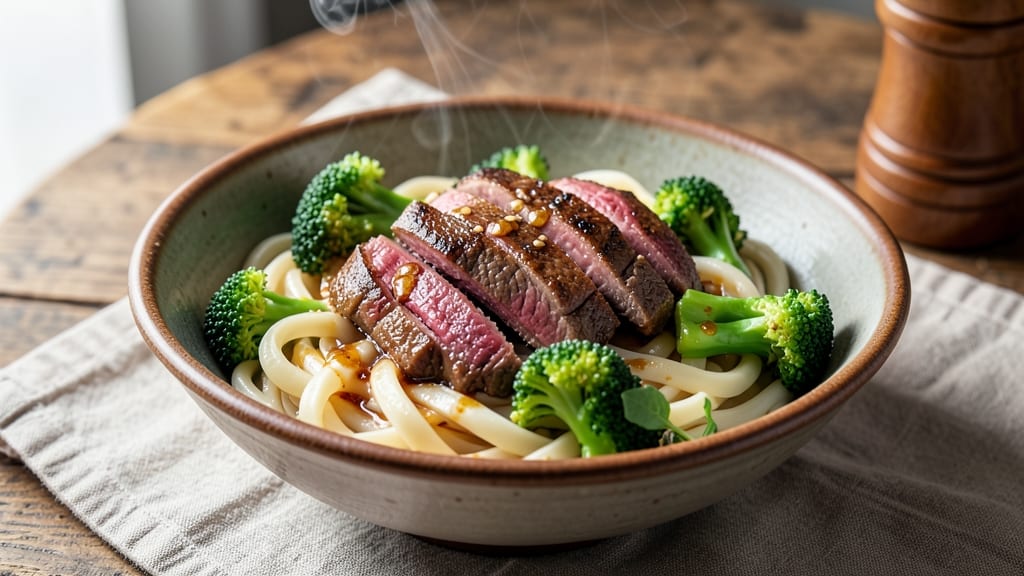
This beef and broccoli udon recipe delivers restaurant-quality flavors with silky noodles and charred beef bites that practically melt in your mouth. The secret lies in properly marinating the beef for maximum tenderness and stir-frying it at high heat to create those coveted caramelized edges.
I developed this recipe after years of testing different techniques, and it consistently delivers the perfect balance of savory, umami, and subtle sweetness.
The dish begins with thinly sliced beef that's marinated in a simple soy-ginger mixture, then quickly seared to maintain moisture while developing rich flavors. Fresh broccoli florets are stir-fried just until crisp-tender, preserving their vibrant color and satisfying crunch.
The udon noodles are prepared al dente, then tossed with a homemade sauce that combines soy sauce, sesame oil, and a touch of honey for depth.
What you'll end up with is a bowl of perfectly balanced udon—silky noodles coated in savory sauce, tender beef bites with charred edges, and crisp-tender broccoli that adds freshness to every bite.
The dish is hearty enough to satisfy as a main course but light enough to enjoy as a comforting meal. The aroma alone will have everyone asking for seconds.
Serve with optional garnishes like toasted sesame seeds, thinly sliced scallions, or a drizzle of chili oil for added heat. This recipe scales beautifully for feeding a crowd or meal prepping for the week. Let's create this satisfying udon dish that brings restaurant-quality results to your home kitchen.
Ingredients for beef and broccoli udon
Fresh udon, tender beef, and crisp broccoli—just eight key ingredients for restaurant-style udon.
| Ingredient | Amount | Notes |
|---|---|---|
| Udon Noodles 🍜 | 8 oz | Fresh or dried, al dente preferred |
| Flank Steak 🥩 | 1 lb | Thinly sliced against grain |
| Fresh Broccoli 🥦 | 2 cups | Florets cut into bite-sized pieces |
| Soy Sauce 🍶 | ½ cup | High-quality, preferably Japanese |
| Sesame Oil 🫒 | 1 tbsp | Toasted for authentic flavor |
| Ginger 🌿 | 1 tbsp | Freshly grated, aromatic |
| Garlic Cloves 🧄 | 4 cloves | Minced, fresh preferred |
| Honey 🍯 | 1 tbsp | For subtle sweetness |
| Vegetable Oil 🫒 | 2 tbsp | High smoke point for stir-frying |
| Toasted Sesame Seeds 🌰 | 1 tbsp | For garnish, optional |
| Scallions 🧅 | 2 whole | Thinly sliced, for garnish |
| Salt 🧂 | 1 tsp | Kosher or sea salt |
| Black Pepper 🌶️ | ½ tsp | Freshly ground |
| Chili Oil 🌶️ | 1 tbsp | For garnish, optional |
The beef is everything here. Flank steak slices thinly against the grain for maximum tenderness—ask your butcher to slice it if they won't do it for you. Costco or Whole Foods usually have pre-sliced versions, but if not, grab a sharp knife and freeze the meat for 20 minutes first. Fresh broccoli should be bright green with tight florets—Trader Joe's or local markets have the best quality. Udon noodles? Fresh is ideal (find in the Asian aisle), but dried works in a pinch—just boil for 2 minutes less than package instructions.
No soy sauce? Coconut aminos works in a pinch, though it's sweeter. Fresh ginger? Dried works at half the amount, but toast it first for better flavor. Sesame oil separates—shake the bottle before using. The honey adds depth, but maple syrup is a decent swap if you're avoiding it. For extra umami, add a dash of fish sauce (skip if vegetarian). And if you can't find toasted sesame seeds, regular sesame seeds toasted in a dry pan work just fine.
Prep ahead like a pro: marinate the beef up to 4 hours ahead for deeper flavor. Broccoli keeps 3 days in the fridge, but best used fresh. Udon noodles? Freeze extras in a sealed bag for up to 3 months. The sauce components (soy, sesame oil, honey) can be mixed ahead and stored for 1 week. This dish reheats beautifully—just add a splash of water to the pan and stir-fry for 2 minutes.
Why You'll Love This Recipe
- No Fuss, Big Payoff: I swear by this one—just slice the flank steak thin, toss it in soy sauce and a splash of sesame oil, and let the pan do the work. The broccoli cooks in minutes while the udon boils, and honestly? That’s all it takes for something that feels like a restaurant dish.
- Umami Bomb: The combo of tender beef, crisp-tender broccoli, and that deep soy-sesame sauce is ridiculously good. Between us, the first bite makes you question why you’ve never done this before—it’s rich, savory, and has this satisfying chew from the udon that just works.
- Lunchbox Hero: Here’s what sold me—this reheats like a dream. Pack half the batch for work or school, and it’s still solid the next day. The udon stays soft, the beef stays juicy, and the broccoli? Still bright. No sad, mushy leftovers here.
- Budget Power Move: Flank steak stretches far when sliced thin, and udon’s cheap in bulk. Fresh broccoli’s the only splurge, but it’s worth it. I make this twice a month, feed four people, and still have cash left for takeout—because sometimes you need that.
Step-by-step instructions for silky udon with charred beef
Here's how to balance tender beef, silky noodles, and crisp broccoli in one perfect bowl.
Prep the Beef and Broccoli for Maximum Flavor
Slice the 1 lb flank steak thinly against the grain into ¼-inch strips—this ensures tender bites. Pat dry with paper towels and season immediately with 1 tsp salt and ½ tsp black pepper. Let it sit at room temperature for 15 minutes while you prep the rest.
Cut the 2 cups fresh broccoli into 1-inch florets and separate into bite-sized pieces. Trim the 2 whole scallions, reserving 1 for garnish and thinly slicing the other. Grate the 1 tbsp ginger and mince the 4 cloves garlic. Keep all prepped ingredients within easy reach—this dish moves fast once you start cooking.
Cook the Udon Noodles to Al Dente Perfection
Bring a large pot of water to a rolling boil and add 8 oz udon noodles. Cook according to package directions until just al dente—they should have a slight bite but be tender enough to eat. Drain immediately and rinse briefly under cold water to stop cooking, then toss with 1 tbsp sesame oil to prevent sticking. Keep the noodles covered while you cook the beef.
This quick rinse prevents a gummy texture, but don't overdo it—just a 5-second splash is enough. The sesame oil also adds that authentic umami depth right from the start. Divide the cooked noodles among bowls and set aside—we'll assemble everything at the end.
Stir-Fry the Beef Until Caramelized
Heat a wok or large skillet over high heat until smoking, then add 2 tbsp vegetable oil. Swirl to coat the pan, then add the beef in a single layer. Let it sear undisturbed for 1-2 minutes until deeply browned on one side—this creates those beautiful charred edges we want. Stir and repeat until all beef is caramelized.
Don't crowd the pan or the beef will steam instead of sear. Work in batches if needed, but keep the heat high. Remove the beef and set aside—it'll stay warm while you cook the vegetables. The beef should be dark brown with crisp edges and still slightly pink inside.
Sauté the Broccoli and Aromatics
In the same pan, add a bit more oil if needed, then toss in the broccoli florets. Stir-fry for 2-3 minutes until bright green and just tender-crisp—you want them to hold their shape but be slightly softened. Add the minced garlic and grated ginger, cooking for 30 seconds until fragrant.
Here's where the magic happens: pour in the ½ cup soy sauce and 1 tbsp honey, stirring constantly. Let it simmer for 1 minute until slightly reduced and glossy. The sauce should coat the broccoli lightly—this balances the sweetness with umami. Return the beef to the pan and toss everything together.
Assemble and Finish with Flavor Boosters
Divide the beef and broccoli mixture evenly among the prepared udon bowls. Drizzle each serving with 1 tsp sesame oil and a generous drizzle of 1 tbsp chili oil. Sprinkle with 1 tbsp toasted sesame seeds and the reserved sliced scallions for freshness and crunch.
Garnish with an extra pinch of black pepper if desired. Serve immediately while the noodles are still warm and the beef is juicy. Each bite should deliver that perfect balance of tender beef, crisp broccoli, silky noodles, and a complex sauce with just the right amount of heat.
Pro Tips For Making Beef And Broccoli Udon
- Slice Steak Thin: Flank steak fights back when it’s thick—after burning three batches, I finally figured out that ⅛-inch slices (about 3mm) cook fast and stay tender. Use a sharp knife or butcher block, and work against the grain. If your knife isn’t up to it, freeze the meat for 20 minutes first—it makes all the difference.
- Blanch Broccoli First: Skip the sad, limp florets by plunging broccoli into boiling water for 30 seconds before stir-frying. Drain, shock in ice water, then toss with a pinch of salt—this keeps it bright green and crisp. I learned this the hard way when my broccoli turned into mush mid-stir-fry.
- Salt the Udon Water: The broth for udon isn’t just water—add 1 tablespoon salt per 4 cups of liquid. Fresh udon soaks up flavor like a sponge, and this step guarantees it doesn’t taste bland. (Yes, even if you’re impatient like me, don’t skip it.)
- Finish with Sesame Oil: Drizzle sesame oil at the very end, right over the noodles, not the wok. Heat kills its nutty aroma, so save it for the final toss. A splash of extra soy sauce (just ½ teaspoon) while it’s hot ties everything together—trust the process.
Flavor customization for this beef and broccoli udon
Sweet & Savory Balance
Adjust the sauce sweetness by tweaking the honey amount—start with 1 tbsp for classic balance, but reduce to ½ tbsp if you prefer less sweetness. For extra depth, add ½ tsp rice vinegar to brighten the flavors.
I often swap honey for maple syrup (same amount) when avoiding refined sugar, though the flavor profile shifts slightly toward caramel notes. 🍯
Spicy Kick Options
For heat lovers, add ½ tsp gochujang (Korean chili paste) directly to the sauce for smoky spice. Alternatively, stir in 1 tsp sriracha at the end for a tangy kick.
If you enjoy chili oil, drizzle an extra ½ tbsp over each serving—just be sure to serve immediately so the oil doesn’t pool at the bottom. 🌶️
Umami Boosts
Enhance the savory depth by adding 1 tsp fish sauce (skip if vegetarian) or ½ tsp miso paste to the sauce. For a richer flavor without soy, use 1 tbsp coconut aminos instead of half the soy sauce.
I also love adding 1 tsp oyster sauce (vegan oyster sauce works too) for a luxurious touch that pairs perfectly with the beef. 🥢
Herb & Freshness Variations
Swap scallions for thinly sliced cilantro or basil for a brighter finish. Add ½ tsp grated lime zest to the sauce for a citrusy twist. For a more aromatic experience, toss in 1 tsp fresh thyme leaves when cooking the broccoli—it adds an unexpected but delicious earthiness. 🌿
Protein Swaps
Replace beef with thinly sliced mushrooms (shiitake or oyster) for a vegetarian version—just marinate them in soy sauce and sesame oil. For seafood lovers, use shrimp or scallops instead of beef, cooking them just until opaque.
If you prefer poultry, chicken thigh strips work well but cook faster—remove them when just done to avoid drying out. 🍤
Texture Contrasts
Add crispy fried shallots (store-bought or homemade) for extra crunch. For a creamy element, stir in 1 tbsp silken tofu or ½ cup bean sprouts (blanched for 30 seconds) to the final dish.
I also love adding quick-pickled red onions (slice thin, soak in rice vinegar + sugar for 10 minutes) for a tangy bite that cuts through the richness. 🥕
Nutrition facts
Frequently asked questions
Can I use dried udon noodles instead of fresh?
Dried udon works perfectly—just cook it for 2 minutes less than package instructions to keep it al dente. Rinse briefly with cold water after draining to stop cooking, then toss with 1 tbsp sesame oil to prevent sticking. The texture will be slightly firmer than fresh, but it still delivers that satisfying chew.
How do I prevent the beef from getting tough?
Slice the beef thinly against the grain (¼-inch strips) and marinate for at least 30 minutes in soy sauce and ginger. Pat it completely dry before cooking and use a hot, dry pan—this creates a quick sear that locks in juices. Cook in a single layer without crowding to ensure even browning.
What's the best way to store leftovers?
Store in an airtight container with parchment paper between layers to prevent sticking. Leftovers keep well in the fridge for 3 days or up to 3 months in the freezer. Reheat in a skillet with a splash of water for 2-3 minutes until warmed through—this restores the sauce's glossy texture.
Can I make this dish ahead of time?
Prep everything except the noodles up to 2 days ahead: marinate the beef, chop the broccoli, and mix the sauce. Cook the udon fresh before serving—it's best enjoyed immediately after assembly. For a shortcut, cook the beef and broccoli mixture ahead, then reheat and toss with freshly cooked noodles.
What if I don't have sesame oil?
Use neutral oil (like vegetable or avocado) for cooking, but skip the sesame oil in the sauce. Boost umami with an extra ½ tsp fish sauce or 1 tsp oyster sauce instead. The dish will still be delicious—just slightly less aromatic. For garnish, toast regular sesame seeds in a dry pan until golden.