
Soups & Stews
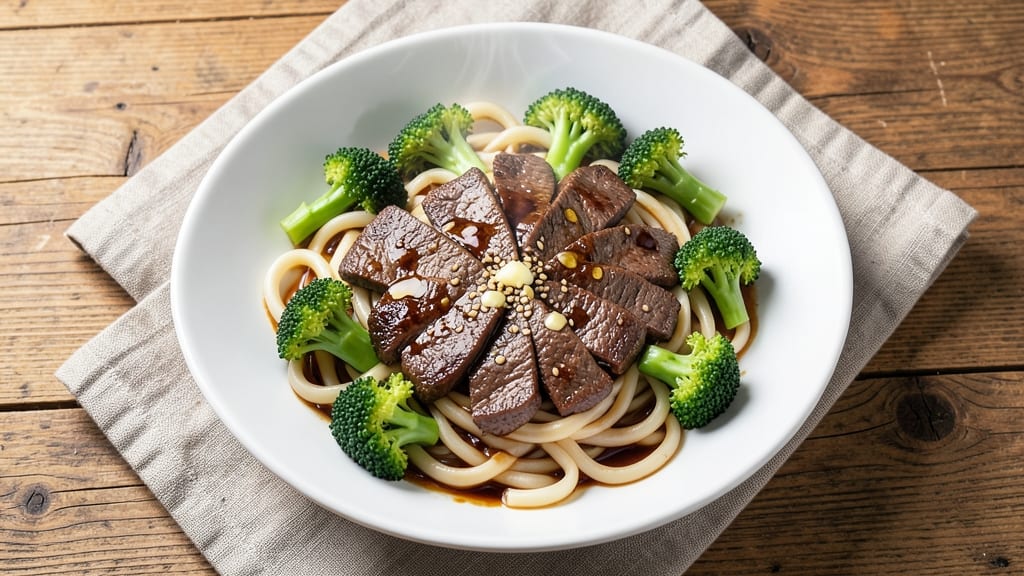
This beef and broccoli udon stir fry delivers restaurant-quality flavors with tender beef, crisp broccoli, and chewy noodles—all coated in a rich soy butter glaze. The secret lies in high-heat stir-frying to lock in juices while maintaining the perfect texture contrast.
I've refined this recipe over countless weeknight dinners, and it never fails to impress even when made with basic pantry staples.
The process begins with marinating thinly sliced beef in soy sauce and cornstarch, creating a flavorful crust that sears beautifully in the wok. Broccoli florets are blanched just until vibrant green, ensuring they stay crisp-tender rather than soggy.
Meanwhile, the udon noodles cook to that signature chewy texture that makes this dish so satisfying.
What sets this recipe apart is the soy butter glaze—a perfect balance of savory soy, sweet butter, and aromatic garlic. The sauce caramelizes slightly as it coats the beef and vegetables, adding depth without overpowering the natural flavors.
Every bite delivers that satisfying combination of textures and flavors that makes this stir fry a weeknight favorite.
The dish comes together in under 30 minutes, making it ideal for busy evenings while still feeling special enough for company. Serve immediately with steamed rice to soak up every last bit of that flavorful sauce. Here's how to make it perfectly every time.
Ingredients for beef and broccoli udon stir fry
Restaurant-quality beef and broccoli stir fry relies on these 15 essential ingredients for maximum flavor and texture.
| Ingredient | Amount | Notes |
|---|---|---|
| Flank Steak 🥩 | 1 lb | Thinly sliced against the grain |
| Udon Noodles 🍜 | 8 oz | Fresh or dried, cut into 4-inch pieces |
| Broccoli Florets 🥦 | 4 cups | Medium-sized, stems trimmed |
| Soy Sauce 🥄 | ½ cup | High-quality, like Kikkoman |
| Cornstarch 🌾 | 2 tbsp | For marinade and sauce |
| Unsalted Butter 🧈 | 3 tbsp | Full-fat for richness |
| Garlic Cloves 🧄 | 4 cloves | Minced finely for glaze |
| Sesame Oil 🫒 | 1 tbsp | Toasted, for aroma |
| Neutral Oil 🫒 | 2 tbsp | Like vegetable or canola |
| Green Onions 🧅 | 3 whole | Sliced thin for garnish |
| Sesame Seeds 🌱 | 1 tbsp | Toasted for crunch |
| Salt 🧂 | 1 tsp | Kosher or sea salt |
| Black Pepper 🌶️ | ½ tsp | Freshly ground |
| White Pepper 🌶️ | ¼ tsp | For subtle heat |
| Rice Vinegar 🍶 | 1 tbsp | For brightness |
The flank steak is non-negotiable—its lean texture sears perfectly when sliced thin against the grain. Costco or Whole Foods carry high-quality cuts, but any well-marbled flank steak works. For the udon noodles, fresh is ideal (check the refrigerated section), but dried works too—just soak for 5 minutes in hot water. Broccoli should be vibrant green; Trader Joe's often has pre-cut florets for convenience. The soy sauce makes the difference—Kikkoman or Japanese-style brands add depth that generic brands miss.
No flank steak? Sirloin or ribeye sliced thinly will work, but avoid round steak—it stays tough. Substitute sesame oil with a pinch of toasted peanut oil if needed, though the flavor won’t be identical. For the glaze, if you’re out of rice vinegar, lime juice at half the amount adds brightness. The cornstarch is crucial for both the marinade and sauce—it creates that signature chewy texture. Skip it, and you’ll miss the restaurant-quality finish. For extra richness, add a splash of oyster sauce (vegetarian version if needed), but it’s optional.
Prep the broccoli first—blanch it for 30 seconds in boiling water, then shock in ice water to keep it crisp. The udon noodles can be prepped ahead and stored in the fridge for up to 2 days, but they’re best fresh. The beef marinade keeps for 4 hours in the fridge, making this a great make-ahead dish. Leftovers reheat beautifully—just add a splash of water to prevent drying. Store in an airtight container for 3 days or freeze for 2 months. Garnish with sesame seeds right before serving for maximum crunch.
Why You'll Love This Recipe
- One-Pan Magic: I swear by this recipe because it’s that easy—just sear the flank steak in one pan, toss in the broccoli and udon, and let the soy sauce work its magic. No chopping boards, no extra pots, just a single pan that handles everything. (And yes, even my toddler can "help" stir the broccoli.)
- Umami Bomb: That cornstarch-coated steak? It stays juicy but gets this perfect caramelized crust—like a mini steakhouse bite in every forkful. The soy sauce cuts through the richness, and the broccoli adds that fresh crunch. Honestly, it’s the kind of flavor that makes you pause mid-bite and go, "Wait, why haven’t I made this sooner?"
- Lunchbox Hero: Between us, this is my go-to for meal prep because it reheats brilliantly—no soggy noodles, no dry beef. Pack it in containers, and it’s a hearty lunch for work or school. I’ll be real: my husband’s been asking for leftovers three days in a row, and I’m not complaining.
- Budget Steakhouse Feel: Flank steak on sale? This is how you stretch it into a full meal without sacrificing taste. The udon soaks up the sauce, the broccoli adds volume, and suddenly, you’ve got a restaurant-worthy dish for half the price. Plus, it’s ready in 25 minutes—so you’re not just saving money, you’re saving time. Win-win.
Step-by-step instructions for beef and broccoli udon stir fry
This method delivers perfectly seared beef, chewy udon, and a rich soy butter glaze every time.
Prepare the Flank Steak and Marinade
Slice the 1 lb flank steak thinly against the grain into ¼-inch thick strips. Place the steak in a bowl and combine with 2 tbsp cornstarch, ½ cup soy sauce, 1 tbsp rice vinegar, ½ tsp black pepper, and ¼ tsp white pepper. Mix thoroughly until the steak is evenly coated and the marinade clings to the surface. Let it sit for 15 minutes at room temperature while you prep the remaining ingredients.
This marinade creates a tenderizing effect while building layers of flavor. The cornstarch helps develop a crispy exterior when seared. Don't skip the resting time—it ensures even cooking and prevents tough meat.
Cook the Udon Noodles
Bring a pot of water to a rolling boil and cook the 8 oz udon noodles according to package instructions until al dente (usually 4-5 minutes for dried). Drain immediately and rinse under cold water for 10 seconds to stop the cooking process. Toss the noodles with 1 tbsp sesame oil and set aside. The noodles should be hot but not mushy—this prevents them from becoming soggy when stir-fried later.
I like to keep the noodles separate until the very end to maintain their chewy texture. Overcooking them now will result in a mushy final dish. Keep them covered with a damp towel to prevent drying out while you prepare the remaining components.
Stir-Fry the Broccoli and Garlic Glaze
Heat 2 tbsp neutral oil in a large wok or skillet over high heat until shimmering. Add the 4 cups broccoli florets and stir-fry for 3-4 minutes until the edges turn bright green and slightly blistered. Remove the broccoli and set aside. In the same pan, add the 4 minced garlic cloves and cook for 30 seconds until fragrant but not browned.
Reduce heat to medium and add 3 tbsp unsalted butter, allowing it to melt completely. The butter should foam slightly but not brown. This creates the rich base for your sauce while keeping the garlic flavor delicate. If the butter starts to brown too quickly, reduce the heat slightly to prevent burning.
Sear the Beef and Combine Everything
Increase heat to high and add the marinated steak in a single layer. Let it sear undisturbed for 1-2 minutes until deeply browned on one side. Flip the beef and cook for another 1-2 minutes until fully cooked through. Remove the beef and set aside with the broccoli.
Return the pan to medium heat and pour in ½ cup soy sauce. Add the cooked udon noodles and toss everything together for 1-2 minutes until the noodles are well-coated and heated through. The sauce should be glossy and cling to the beef and vegetables. If the sauce is too thick, add 1-2 tablespoons of water to loosen it.
Finish and Garnish
Transfer the stir-fry to serving plates and drizzle with any remaining sauce from the pan. Garnish with sliced green onions and 1 tbsp toasted sesame seeds. The dish should have vibrant green broccoli, tender beef strips, and chewy udon noodles all coated in a rich, savory glaze.
Serve immediately while hot. The combination of the crispy beef, tender vegetables, and chewy noodles creates a perfect balance of textures. Each bite should deliver a harmonious blend of umami from the soy sauce, richness from the butter, and a touch of brightness from the rice vinegar.
Pro Tips For Making Beef And Broccoli Udon Stir Fry
- CUT STEAK AGAINST GRAIN: Flank steak’s fibers run long—slicing perpendicular to them prevents chewy bites. Freeze the meat for 20 minutes first; it tightens the fibers so they slice cleaner. (Yes, even if you’re impatient like me.)
- BLANCH BROCCOLI FIRST: Toss broccoli florets in boiling water for 30 seconds before stir-frying—it softens them faster and keeps them vibrant. Drain well, or your wok will steam instead of sear. I learned this the hard way after soggy broccoli ruined a batch.
- USE COLD NOODLES: Cook udon, rinse in cold water, and shock with ice for 10 seconds. Cold noodles absorb sauce better and won’t turn mushy when tossed. (Your future self will thank you when they’re al dente, not gluey.)
- SEAR STEAK IN BATCHES: Overcrowding the pan drops the temperature and steams the beef instead of searing it. Cook half the steak first, then remove—this guarantees a caramelized crust. Skip the crowding, or you’ll end up with bland, sticky meat.
Troubleshooting this dish
Beef Overcooked
If your beef turns out chewy or tough, it likely didn't rest long enough after marinating. Let the marinated steak sit for the full 15 minutes at room temperature before cooking—this ensures even cooking.
Also, slice the steak ¼-inch thick against the grain and sear over high heat for no more than 2 minutes per side. Overcrowding the pan will steam the beef instead of searing it. 🔥
Broccoli Too Soft
Broccoli loses its crisp-tender texture when overcooked. Blanch it for exactly 30 seconds in boiling water, then shock in ice water immediately. For stir-frying, cook it over high heat for just 3-4 minutes—any longer and it'll turn mushy.
Remove it promptly once bright green and slightly blistered. I like to set it aside on a plate while I finish the sauce to keep it from wilting.
Sauce Too Thin
A runny sauce usually means too much liquid was added. The soy butter glaze should be thick enough to coat the beef and noodles without pooling. If needed, reduce the sauce by simmering it uncovered for 1-2 minutes over medium-high heat until slightly thickened.
For extra richness, add 1 tsp cornstarch mixed with 1 tbsp water and stir until glossy. The sauce should cling to the ingredients like a glossy coating. 💛
Noodles Mushy
Udon noodles lose their chewy texture when overcooked or reheated improperly. Cook them until al dente (about 4-5 minutes for dried), then rinse in cold water for 10 seconds to stop cooking.
When reheating, use medium heat with just enough water to prevent sticking—never high heat, which turns them gummy. Keep them separate until the very end to maintain texture.
Uneven Cooking
If some beef or broccoli is undercooked while other pieces are overdone, your pan temperature fluctuated. Use a wok or skillet with a heavy base and maintain high heat throughout.
Work in batches if needed—don't overcrowd the pan. I recommend using a thermometer to monitor pan temperature around 400-450°F. Uneven cooking often happens when heat isn't distributed properly. ✨
Sauce Too Salty
If the sauce tastes overly salty, it's usually from the soy sauce or marinade. Balance it with 1 tbsp rice vinegar or a pinch of sugar to cut the saltiness. For future attempts, reduce the soy sauce to ¼ cup instead of ½ cup in the glaze.
Taste as you go—adding a splash of water or a drizzle of sesame oil can also help dilute the salt while enhancing flavor. The sauce should complement, not overpower, the beef's natural taste.
Nutrition facts
Frequently asked questions
Can I substitute udon noodles for another type?
If you can't find udon, try rice noodles or soba noodles—both work well. For a chewier texture like udon, look for thick wheat noodles like chow mein or even fettuccine in a pinch. Just adjust cooking times—udon is typically 4-5 minutes for dried, while rice noodles cook in 2-3 minutes. The key is achieving that satisfying chewiness before combining with the stir-fry.
How do I make this recipe vegetarian?
Swap the beef for extra-firm tofu or mushrooms like shiitake or oyster. Press tofu to remove excess water, then cut into strips and marinate in the same soy sauce mixture (add 1 tsp cornstarch to help it crisp). For mushrooms, slice them thinly and sear until golden brown. The soy butter glaze will still coat beautifully, giving that rich umami flavor without meat.
Can I prepare this dish ahead of time?
Yes, but with a few adjustments. Marinate the beef up to 4 hours ahead and store in the fridge. Cook the udon noodles and broccoli separately, then refrigerate in airtight containers for 2 days. Reheat everything in the wok over medium-high heat with a splash of water to revive the sauce. For best texture, add fresh sesame seeds and green onions when serving. The beef may dry out slightly, so plan to sear it fresh if possible.
What's the secret to getting crispy broccoli?
High heat and quick cooking are key! Blanch the broccoli for exactly 30 seconds, then shock in ice water to stop cooking. When stir-frying, use high heat and cook for only 3-4 minutes until bright green with slightly blistered edges. Crowding the pan steams the broccoli instead of crisping it. Work in batches if needed, and remove it as soon as it's done—overcooking turns it mushy.
Can I make this dish spicier?
Add ½ tsp red pepper flakes or 1 tbsp sriracha to the sauce for heat. For a smoky kick, stir in ½ tsp smoked paprika with the garlic. If you love fresh chili, mince 1-2 Thai bird's eye chilies and sauté them with the garlic. Always taste as you go—start with less and adjust to your preference. The soy butter glaze balances spice beautifully.