
Side Dishes
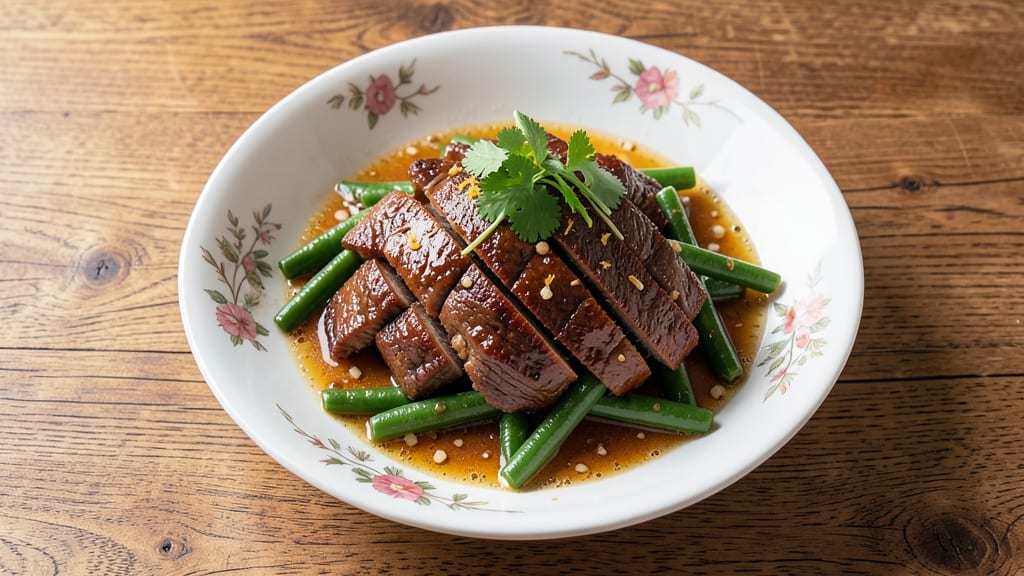
This beef and green beans Chinese recipe delivers the perfect balance of tender beef and crisp-tender green beans in a silky-savory sauce, all achieved through the wok-hei technique.
The secret lies in velveting the beef for maximum tenderness while preserving that signature smoky wok aroma—no pressure cooker or fancy equipment required. I've refined this recipe over countless weeknight dinners, and it consistently delivers restaurant-quality results at home.
The process starts with marinating the beef in a cornstarch slurry to create a velvety texture, then stir-frying at high heat to lock in juices. Fresh green beans get a quick blanch to maintain their crispness while absorbing the rich, umami-packed sauce.
What makes this dish truly special is how the flavors develop—sweet, salty, and slightly tangy—all while keeping the vegetables vibrant and the beef impossibly tender.
By the time you plate it, you'll have a dish that looks as impressive as it tastes: golden-brown beef pieces nestled among bright green beans, all coated in that glossy, savory sauce.
The wok-hei technique ensures every bite carries that signature smoky aroma, while the sauce's balance of soy, sugar, and aromatics keeps it complex without being overpowering. This is the kind of recipe that transforms a simple weeknight dinner into something memorable.
Serve it over steamed jasmine rice or noodles to soak up every last bit of that flavorful sauce. The leftovers reheat beautifully, making it perfect for meal prep. Here's how to make it—step by step—for that authentic Chinese restaurant experience at home.
Ingredients for beef and green beans chinese
Restaurant-quality wok-hei technique starts with these 14 ingredients—simple but precise.
| Ingredient | Amount | Notes |
|---|---|---|
| Flank Steak 🥩 | 1 ½ lb | Thinly sliced against grain |
| Fresh Green Beans 🥕 | 1 ½ lb | Trimmed, cut into 2-inch pieces |
| Cornstarch 🌾 | ½ cup | For velveting beef |
| Soy Sauce 🥄 | ½ cup | High-quality, light soy preferred |
| Oyster Sauce 🍜 | ¼ cup | Kikkoman brand recommended |
| Shaoxing Wine 🍷 | 2 tbsp | Substitute with dry sherry |
| Fresh Ginger 🌿 | 2 tbsp | Finely minced, peeled |
| Garlic Cloves 🧄 | 6 cloves | Minced, fresh preferred |
| Sesame Oil 🫒 | 1 tbsp | Toasted for aroma |
| Brown Sugar 🍯 | 2 tbsp | Light or dark works |
| Vegetable Oil 🫒 | ¼ cup | High smoke point |
| Green Onions 🧅 | 4 whole | Sliced, white and green parts |
| Salt 🧂 | 1 tsp | Diamond Crystal preferred |
| White Pepper 🌶️ | ½ tsp | Freshly ground |
The flank steak is non-negotiable here—it's lean enough to velvet perfectly while staying tender. Ask your butcher to slice it thinly against the grain (about 1/8-inch thick) if you're not doing it yourself. For the green beans, fresh is essential—frozen works in a pinch, but they won't have that same crisp-tender bite. The Kikkoman oyster sauce is the gold standard, but Lee Kum Kee is a solid backup. Shaoxing wine can be tricky to find, so dry sherry in a pinch—just reduce the amount slightly. Ginger and garlic should be freshly minced for that bright, aromatic punch.
No Shaoxing wine? Dry sherry at half the amount works surprisingly well. Substituting cornstarch? Arrowroot powder at the same quantity gives similar results. The sesame oil is for aroma—use the toasted variety if you want that nutty depth. For the green beans, baby snap peas or snow peas can replace half the amount. The brown sugar balances the soy's saltiness—don't skip it. And if you're short on time, pre-sliced flank steak from the Asian market section saves prep work.
Velvet the beef immediately after slicing—it won't wait. Use a fine-mesh strainer for the cornstarch slurry to avoid lumps. The sauce keeps for 5 days refrigerated and freezes beautifully for 3 months. I always make extra sauce—it's perfect over rice or noodles the next day. Store the cooked beef and green beans separately in airtight containers to maintain texture. Reheat gently over low heat with a splash of water to restore moisture.
Why You'll Love This Recipe
- One-Pan Magic: I swear by this recipe—just toss the flank steak and green beans into a hot pan, add the sauce, and walk away. The cornstarch gives those green beans a satisfying crunch without any extra bowls or pans.
- Umami Bomb: That combo of soy and oyster sauce? It’s the secret weapon here. The steak stays tender but packs a punch, while the green beans soak up just enough flavor to make every bite feel like a little celebration.
- Lunchbox Hero: Between us, this is my go-to for meal prep. Slice the steak thin, stir-fry it with the green beans, and portion it out—it reheats like a dream and keeps for days. Honestly, my kids ask for it more than takeout.
- Budget Wins: Flank steak is affordable, and a single pound stretches across multiple meals. The green beans are cheap but feel fancy, and a little cornstarch stretches the flavor further. Not the prettiest, but the taste makes up for it—and my wallet thanks me.
Step-by-step instructions for wok-fired beef and green beans
Master this Chinese wok technique for tender beef and crisp-tender green beans bathed in a glossy umami sauce.
Prepare the Flank Steak for Velveting
Slice the 1.5 lb flank steak thinly against the grain into ¼-inch thick strips. Place the sliced beef in a mixing bowl and add the 0.5 cup cornstarch, 0.5 cup soy sauce, 0.25 cup oyster sauce, 2 tbsp Shaoxing wine, 2 tbsp minced fresh ginger, 6 minced garlic cloves, 2 tbsp brown sugar, 1 tsp salt, and 0.5 tsp white pepper. Using clean hands or a silicone spatula, coat the beef evenly with the marinade.
Let the beef marinate at room temperature for 15 minutes while you prepare the green beans. This velveting process creates a silky texture when cooked. The cornstarch helps form a protective barrier that prevents the beef from drying out during the high-heat wok cooking. Don't skip this step—it's what transforms tough flank steak into tender, restaurant-quality beef.
Blanch and Shock the Green Beans
Bring a large pot of water to a rolling boil and add 1.5 lb trimmed green beans. Cook for exactly 2 minutes until they turn bright green and just begin to soften. Immediately drain and transfer the green beans to a bowl of ice water to stop the cooking process. This blanching ensures the green beans remain crisp-tender rather than turning mushy during the stir-fry.
Drain the shocked green beans thoroughly and toss them with 1 tbsp toasted sesame oil to enhance their natural flavor. The ice water bath is crucial—it preserves their vibrant color and firm texture. If you're concerned about overcooking, test one bean by biting into it. It should offer slight resistance but still be tender enough to cook through in the wok.
Stir-Fry the Beef to Perfect Doneness
Heat a wok or large skillet over high heat until it's smoking hot. Add 0.25 cup vegetable oil and swirl to coat the bottom evenly. Working in batches if needed, add the marinated beef strips and stir-fry for 1-2 minutes until they turn light brown on the outside but remain slightly undercooked inside. The high heat is essential—it creates a caramelized crust while keeping the interior tender.
Remove the beef from the wok and set it aside on a plate. Don't overcrowd the pan, or the beef will steam instead of sear. You want to see a beautiful caramelized sheen on each piece, indicating proper doneness. If the beef releases easily from the wok and looks slightly underdone in the center, it's ready. The residual heat will finish cooking it when you combine everything at the end.
Finish the Green Beans and Combine
In the same wok, add a bit more vegetable oil if needed and stir-fry the green beans for 2-3 minutes until they're bright green and slightly blistered but still crisp. Add the 4 sliced green onions and cook for an additional 30 seconds to infuse their flavor.
Return the beef to the wok and toss everything together for 1-2 minutes until the beef is fully cooked through and coated in the sauce. The combination of the residual heat and the natural juices from the beef will create a glossy, umami-rich sauce that clings beautifully to both the beef and green beans. Taste and adjust seasoning if needed—you might want to add a splash more soy sauce or a pinch of salt to balance the flavors.
Plate and Serve Immediately
Transfer the beef and green beans to a serving platter and garnish with additional sliced green onions for freshness and color contrast. Serve immediately while everything is hot and the sauce is still glossy. This dish is best enjoyed straight from the wok, where the textures and flavors are at their peak.
Each bite should deliver a perfect balance of tender, slightly sweet beef with crisp-tender green beans and a rich, savory sauce. The contrast between the silky beef, crisp green beans, and glossy sauce is what makes this dish so satisfying. For an extra touch, serve with steamed jasmine rice to soak up every last bit of that delicious sauce.
Pro Tips For Making Beef And Green Beans Chinese
- Slice Against the Grain: Flank steak’s tough fibers run lengthwise—cut it perpendicular to those lines for tender bites. I used to ignore this and ended up with chewy, disappointing mouthfuls. Trust me, the extra 2 minutes with a sharp knife pays off.
- Blanch Beans First: Toss green beans in boiling water for 30 seconds, then ice bath. This softens them just enough to absorb flavor without turning mushy. Skipping this step means your beans will either stay crunchy or turn to mush—neither is ideal.
- Cornstarch Slurry, Not Dry Dust: Mix cornstarch with cold water (1 tbsp slurry to 2 tbsp water) and toss it with the beef after searing. Dry dusting burns easily and clumps—this way, it coats evenly and creates that glossy, sticky finish without sticking to your wok.
- Deglaze with Soy Sauce Early: Right after searing the beef, splash in 1/4 cup soy sauce and let it bubble for 30 seconds. This locks in the Maillard crust’s flavor before adding oyster sauce. I learned this after tasting bland beef—don’t wait until the end.
Flavor customization for these flavors
Spicy Sichuan Twist
For a fiery kick, add 1 tbsp Sichuan peppercorns toasted and ground to the beef marinade along with 1 tsp chili crisp (like Lao Gan Ma). The peppercorns add a numbing, citrusy heat that pairs perfectly with the sweet-savory sauce.
I like to finish with ½ tsp ground Sichuan pepper sprinkled over the dish right before serving for maximum impact. 🌶️
Sweet and Tangy Fusion
Balance the umami with a bright, tangy twist by adding 1 tbsp rice vinegar and 1 tbsp honey to the sauce. For extra depth, stir in 1 tsp grated fresh ginger and 1 minced garlic clove during the final toss.
This variation works especially well with baby snap peas instead of green beans for a sweeter vegetable. The acidity cuts through the richness beautifully.
Smoky BBQ Glaze
Swap out the Shaoxing wine for 2 tbsp BBQ sauce (I recommend Sweet Baby Ray's) and add 1 tbsp smoked paprika to the beef marinade. After stir-frying, finish with a drizzle of 1 tbsp molasses and a sprinkle of crushed red pepper flakes.
This fusion version delivers a smoky, slightly sweet profile that’s perfect for serving with cornbread or crusty bread.
Herb-Infused Brightness
Add fresh herbs for a lighter, more vibrant flavor by tossing in 2 tbsp chopped cilantro and 1 tbsp chopped Thai basil during the final stir-fry. For extra aroma, infuse the oil with 1 tsp toasted coriander seeds before cooking.
This variation is especially refreshing when served with cucumber salad or steamed bok choy on the side.
Creamy Mushroom Addition
For a richer texture, stir-fry 1 cup sliced shiitake mushrooms with the green beans until they release their natural juices. Add 1 tbsp oyster mushrooms (or cremini mushrooms) for extra umami depth.
Finish with a splash of 1 tsp coconut aminos to enhance the savory notes. This version feels heartier and works wonderfully with jasmine rice or udon noodles.
Garlic-Butter Finish
For a luxurious touch, finish the dish with 1 tbsp butter and 2 minced garlic cloves during the last 30 seconds of cooking. The butter adds richness while the garlic infuses a fragrant aroma.
Garnish with extra toasted sesame seeds for texture. This variation is ideal for special occasions or when you want to impress guests with a restaurant-worthy finish. 💛
Nutrition facts
Frequently asked questions
Why does the recipe call for velveting the beef?
The velveting process creates silky-tender beef by using cornstarch and marinade to form a protective barrier. This prevents the beef from drying out during high-heat stir-frying while keeping it incredibly tender. Without velveting, flank steak can turn tough—this technique transforms it into that signature restaurant-quality texture.
Can I use frozen green beans instead of fresh?
Fresh green beans are ideal for their crisp-tender texture, but frozen works in a pinch. If using frozen, skip the blanching step and simply thaw them first. For best results, add them to the wok 1 minute before combining with the beef to prevent overcooking. The texture won't be identical, but it'll still taste delicious.
What's the best way to reheat leftovers?
Reheat gently in a skillet over low-medium heat with 1 tbsp water or broth to restore moisture. Stir frequently to prevent sticking. For extra flavor, add ½ tsp toasted sesame oil during reheating. Never microwave—it ruins the wok-hei aroma and makes the green beans soggy.
How do I substitute Shaoxing wine?
Use dry sherry at half the amount (1 tbsp instead of 2). For a non-alcoholic option, try rice vinegar + ½ tsp sugar. The key is the wine's depth of flavor—substitutes should be dry and slightly sweet. If using sherry, reduce by 50% to match the alcohol content difference.
Can I make this dish in a regular skillet?
Yes, but you'll need to work in batches to maintain high heat. Use a 12-inch skillet and avoid overcrowding the beef. The wok-hei aroma comes from intense, dry heat—if your skillet isn't hot enough, the beef may steam instead of sear. For best results, preheat your skillet for 5 minutes before cooking.