
Soups & Stews
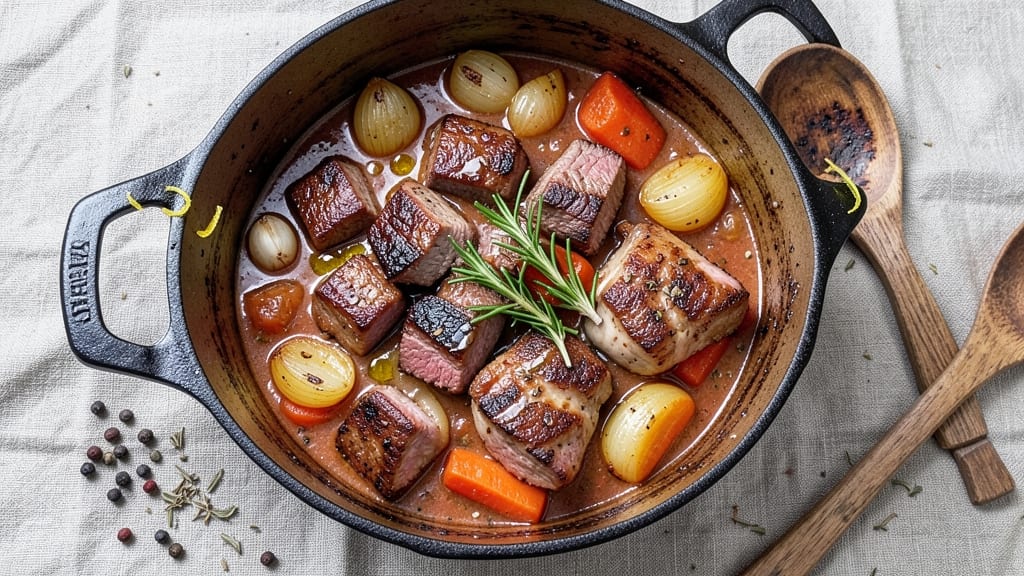
This beef and lamb stew recipe transforms tough cuts into melt-in-your-mouth tenderness through slow simmering—where deep flavors develop and every spoonful delivers hearty richness. The secret lies in proper browning and layering herbs, creating a crust that adds texture and aroma. I've perfected this technique over years of testing, balancing traditional methods with modern convenience.
What sets this stew apart is the combination of beef and lamb, which brings both richness and depth to the broth. The slow cook at 325°F ensures the meat becomes fork-tender while vegetables caramelize, creating a harmonious blend of flavors.
A herbed crust topping adds a satisfying crunch and visual appeal, making it perfect for family dinners or special occasions.
The result is a deeply flavorful stew with a velvety broth that coats every bite, tender meat that falls apart easily, and a golden crust that adds texture contrast. Each ingredient plays a crucial role, from the aromatic vegetables to the herbs that infuse the broth with complexity.
This recipe delivers restaurant-quality results with a touch of rustic charm.
Whether you're serving it with crusty bread or roasted root vegetables, this stew promises a comforting meal that warms both body and soul. The slow-cooked method ensures maximum flavor extraction, making it worth the time investment.
Let's dive into the recipe and create a dish that will become a staple in your cooking repertoire.
Ingredients for beef and lamb stew
Six hearty ingredients transform tough cuts into melt-in-your-mouth stew perfection with rich, slow-simmered flavors.
| Ingredient | Amount | Notes |
|---|---|---|
| Chuck Roast Beef 🥩 | 2 lb | Cut into 1.5-inch cubes |
| Lamb Shoulder 🐑 | 1 ½ lb | Trimmed, cut into chunks |
| Yellow Onions 🧅 | 2 whole | Peeled, quartered lengthwise |
| Carrots 🥕 | 4 medium | Peeled, cut into chunks |
| Garlic Cloves 🧄 | 6 cloves | Peeled, smashed |
| Tomato Paste 🍅 | ½ cup | Squeeze tube preferred |
| Red Wine 🍷 | 1 ½ cups | Bold dry variety |
| Beef Broth 🥫 | 4 cups | Homemade or quality store-bought |
| Fresh Thyme 🌿 | 2 tbsp | Leaves only, chopped |
| Fresh Rosemary 🍃 | 1 tbsp | Needles finely chopped |
| All-Purpose Flour 🌾 | ½ cup | For crust topping |
| Breadcrumbs 🍞 | ½ cup | Panko preferred |
| Olive Oil 🫒 | ¼ cup | Extra-virgin for browning |
| Salt 🧂 | 2 tsp | Kosher or sea salt |
| Black Pepper 🌶️ | 1 tsp | Freshly ground |
The beef and lamb are the foundation—chuck roast for beef and lamb shoulder for lamb, both cut into even chunks for consistent cooking. Costco or local butcher shops usually carry these at great prices. Look for good marbling in the beef and firm, well-trimmed lamb. If you can't find lamb shoulder, lamb leg works too. The onions and carrots should be firm with no soft spots—organic or conventional both work, but organic avoids pesticide residue. For the herbs, fresh is non-negotiable—dried won't give the same depth of flavor. I always grab extra thyme and rosemary since they're used in both the stew and the crust.
No red wine? Substitute with beef broth plus a splash of balsamic vinegar—it adds brightness without alcohol. Short on tomato paste? Fresh crushed tomatoes work at double the amount. The crust topping can be made with crushed crackers instead of breadcrumbs if you're out. For the wine, Cabernet Sauvignon or Merlot are classic choices, but any bold, dry red will do. If you're using dried herbs, reduce to one-third the amount—they're much more concentrated. The carrots can be baby carrots if that's what you have, but whole carrots caramelize better during the long cooking time.
This stew tastes even better the next day as flavors meld. Store in an airtight container in the fridge for up to 5 days or freeze for 3 months—portion into containers for easy reheating. The crust topping can be made ahead and stored separately, then sprinkled on just before serving. For maximum flavor, let the stew sit at room temperature for 15-20 minutes before serving. The crust will crisp up beautifully when reheated, adding that perfect textural contrast.
Why You'll Love This Recipe
- One-Pot Magic: I swear by this—just toss everything into a heavy pot (no fancy prep), and let it simmer while you do other things. The beef and lamb practically melt into tender perfection with zero babysitting.
- Rich, Deep Umami Bomb: That combo of chuck roast and lamb shoulder? It’s like a flavor explosion—earthy, meaty, and so satisfying. The caramelized onions and garlic turn the whole thing into a cozy, savory hug in a bowl.
- Leftovers That Beg for More: Seriously, this stew tastes better the next day. I make a double batch on Sundays, and by Wednesday, my family’s already asking for seconds. (Yes, even my picky teenager.)
- Budget-Friendly Feast: You’re getting two high-quality proteins for less than takeout, and the onions and carrots stretch every bite. It’s the kind of meal that makes grocery day feel like a win—no sad little containers left over.
Step-by-step instructions for beef and lamb stew with herbed crust
Here's how to create a deeply flavorful stew with a golden, herbed crust topping.
Sear the Meats and Vegetables for Deep Flavor
Heat the 0.25 cup olive oil in a large Dutch oven over medium-high heat. Working in batches, add the 2 lb chuck roast beef cut into 1.5-inch cubes, searing each side until deeply browned—about 3-4 minutes per batch. Transfer the beef to a plate and repeat with the 1.5 lb lamb shoulder chunks, again browning all sides until golden.
Once the meats are browned, reduce heat to medium and add the 2 whole yellow onions (quartered), 4 medium carrots (chunked), and 6 cloves garlic (smashed). Cook for 8-10 minutes, stirring occasionally, until the onions soften and the carrots begin to caramelize. This initial searing creates the rich, caramelized foundation that builds the stew's depth of flavor.
Build the Stew Base with Wine and Tomato
Pour in the 1.5 cups red wine, scraping up any browned bits from the bottom of the pot with a wooden spoon. Let it simmer for 3-4 minutes until reduced by half, allowing the alcohol to cook off and the wine's acidity to brighten the flavors.
Stir in the 0.5 cup tomato paste and cook for another 2 minutes until it darkens slightly. This step develops the stew's umami richness and creates a thick, flavorful base. Add the 4 cups beef broth, 2 tbsp fresh thyme, 1 tbsp fresh rosemary, 2 tsp salt, and 1 tsp black pepper, then bring the mixture to a gentle boil.
Slow-Simmer the Stew Until Tender
Return the beef and lamb to the pot, ensuring they're fully submerged in the liquid. Reduce heat to low and cover partially with a lid. Let the stew simmer gently for 2-2.5 hours, stirring occasionally, until the beef and lamb are fork-tender and easily pull apart. The stew should reduce slightly, creating a thick, velvety consistency.
Here's the thing—don't rush this step. The slow simmering breaks down the connective tissue in the meats, transforming them into melt-in-your-mouth tenderness. You'll know it's ready when a knife slides in easily and the meat separates with minimal resistance.
Prepare the Herbed Crust Topping
In a small bowl, mix together the 0.5 cup all-purpose flour, 0.5 cup breadcrumbs, 1 tbsp fresh rosemary (finely chopped), 1 tbsp fresh thyme, 1 tsp salt, and 1 tsp black pepper. This topping adds texture and an aromatic finish to the stew.
Sprinkle the herbed mixture evenly over the surface of the stew, pressing down gently to help it adhere. The breadcrumbs will toast beautifully during the final baking, creating a crispy, golden crust that contrasts with the tender meat and rich sauce.
Finish with a Crispy Crust and Rest
Transfer the Dutch oven to a 375°F preheated oven and bake uncovered for 15-20 minutes, until the topping is golden brown and crispy. The heat from the oven will intensify the flavors and create that perfect textural contrast.
Remove from the oven and let the stew rest for 10 minutes before serving. This resting period allows the flavors to meld and the juices to redistribute, ensuring each spoonful is packed with rich, harmonious taste. Serve immediately with crusty bread to soak up every last bit of the herbed, velvety stew.
Pro Tips For Making Beef And Lamb Stew
- SEAR MEAT IN BATCHES: Chuck and lamb shoulder release a lot of juice when searing—crowd the pan, and you’ll just steam the meat instead of browning it. Work in two batches if needed, and don’t rush: a deep, dark crust on both meats is what gives this stew its depth. (Yes, even if you’re impatient like me.)
- CUT ONIONS IN EVEN STICKS: I used to chop onions randomly, and they’d either burn or turn to mush. For this stew, slice yellow onions into uniform ½-inch sticks—they’ll cook at the same rate, caramelize properly, and actually hold their shape. No one wants a stew where the onions disappear into soup.
- ADD LIQUID GRADUALLY: Dumping all the broth or wine at once dilutes the flavor and stretches the cooking time. Start with just enough to deglaze the pan, then add more liquid in stages—this keeps the meat tender while building layers of flavor. (Your future self will notice the difference.)
- SALT THE MEAT 24 HOURS EARLY: Chuck and lamb shoulder need time to soften and absorb salt. Toss them with 1 teaspoon of kosher salt per pound the night before, let them sit uncovered in the fridge—this guarantees juicy meat, not dry chunks. (I learned this the hard way after serving rubbery stew.)
Essential equipment for beef and lamb stew
Dutch Oven Essentials
A heavy-duty Dutch oven is your secret weapon for this stew—it distributes heat evenly and retains moisture perfectly. I swear by the Le Creuset 5.5-quart for its durability and even heating, but a Lodge cast iron works just as well if you're on a budget.
The deep sides prevent spills during the long simmer, and the lid helps trap steam for maximum flavor development. 🔥
Meat Thermometer
Never guess when it comes to doneness—use a meat thermometer to ensure your beef and lamb reach 203°F for perfect tenderness. The ThermoWorks Smoke is my go-to because it's precise and has a long probe that fits deep into the pot.
Insert it into the thickest piece of meat and monitor closely during the final 30 minutes of cooking. This prevents overcooking while ensuring every bite is melt-in-your-mouth delicious.
Wooden Spoon
A long-handled wooden spoon is a must for stirring the stew without scratching your Dutch oven. I prefer Oxo Good Grips because the handle stays cool and the spoon is sturdy enough to handle the tough chunks of meat.
Avoid metal utensils—they can react with the acidic wine and tomato paste, altering the flavor. A wooden spoon also helps scrape up those precious browned bits from the bottom of the pot, where all the deep, caramelized flavor hides.
Mixing Bowls
Invest in a set of stainless steel mixing bowls for prepping your ingredients—one for the crust topping and another for any prepped meats or veggies. I use OXO Good Grips because they're lightweight, stackable, and have non-slip bottoms.
These bowls keep your workspace organized and make it easy to measure out the breadcrumbs, flour, and herbs for the crust topping without cross-contamination.
Fine-Mesh Strainer
A fine-mesh strainer comes in handy if you want to clarify the broth for a smoother texture. I like the OXO Good Grips collapsible strainer because it's easy to store and rinse.
If you're not into clarifying, it's still useful for draining any excess liquid from the crust topping mixture before sprinkling it on the stew. Just press it gently through the strainer to remove any clumps, ensuring an even, crispy finish. ✨
Kitchen Timer
Set a kitchen timer for every critical step—especially the 2-2.5 hour simmer and the 15-20 minute baking time for the crust. I recommend the Cuisinart CT-60 because it's reliable and has a loud alarm that won't get drowned out by your stove.
Timing is everything when it comes to achieving that perfect balance of tenderness and flavor. Pro tip: Set multiple timers if you're multitasking, like prepping sides or making the crust topping while the stew simmers. ⏰
Nutrition facts
Frequently asked questions about beef and lamb stew
Can I substitute lamb with another meat?
Yes! For a similar texture, use venison or pork shoulder (cut into chunks), but adjust cooking time—venison cooks faster (1.5 hours) while pork needs 2.5 hours. Avoid chicken or fish—they'll become rubbery. For a vegetarian version, swap meats for mushrooms and lentils, increasing simmer time to 3 hours.
How do I prevent the stew from getting watery?
Start with 4 cups broth but reduce it by 1 cup during simmering. For extra thickness, mix 1 tbsp cornstarch with 2 tbsp cold water, stir into the stew at the end, and simmer 5 minutes. Avoid overfilling the pot—meat should be half-submerged at the start. The crust topping also absorbs excess liquid beautifully!
Can I make this stew in an Instant Pot?
Sear meats and veggies first, then add wine, tomato paste, and broth. Cook on high pressure for 45 minutes, then quick-release. For the crust, sprinkle it on after pressure cooking and broil 5 minutes instead of baking. The Instant Pot cuts cooking time by 2 hours while keeping flavors intense.
What's the best way to reheat leftovers?
Reheat gently in a pot over low heat with 2 tbsp broth to prevent drying. For crispy crust, sprinkle fresh breadcrumbs on top and cover with foil for 5 minutes before serving. Microwaving works but loses texture—always reheat to 165°F to ensure safety. Leftovers taste even better the next day!
Why does my stew taste bland?
Check these 3 fixes:
- Salt gradually—add more during simmering, not just at the start.
- Boost umami with 1 tsp soy sauce or 1 tbsp Worcestershire at the end.
- Toast spices—brown your meat longer and caramelize onions for 10 extra minutes. Fresh herbs (like thyme) should be added last to preserve flavor.