
Soups & Stews
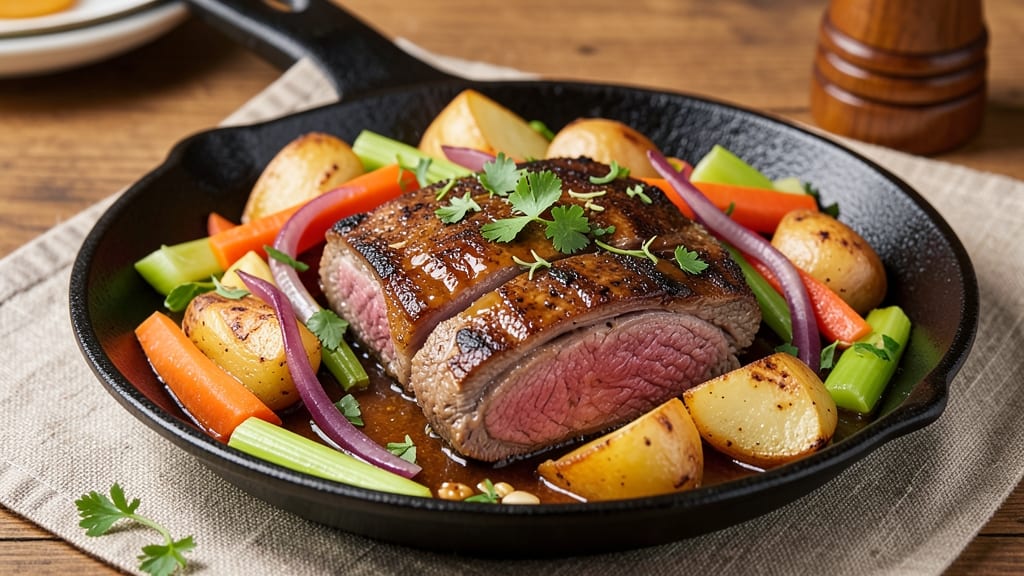
This one-pot beef and mixed vegetables recipe transforms simple ingredients into a deeply satisfying meal with caramelized edges and tender textures. The secret lies in searing the beef first—creating a rich, flavorful crust that forms the foundation for the dish—before adding vegetables that roast to perfect tenderness.
It’s the kind of recipe that delivers restaurant-quality heartiness without requiring multiple pots or pans.
The beauty of this method is its balance: beef that stays juicy and flavorful while vegetables caramelize into sweet, bite-sized perfection. You’ll start with a quick sear to develop depth, then add root vegetables and greens that cook down slowly in the same pot, absorbing all the savory juices.
The result is a dish that’s rich, satisfying, and effortlessly elegant—ideal for weeknight dinners or meal prep.
By the time you’re done, you’ll have a one-pot masterpiece with beef that’s tender yet robust, vegetables that are caramelized and slightly crisp at the edges, and a sauce thickened by the natural juices.
The flavors meld together beautifully, creating a cohesive meal that’s both comforting and impressive. Serve it over rice or crusty bread to soak up every last drop.
This recipe is designed to be flexible—swap in seasonal vegetables or adjust the beef cut based on what’s available. The key is patience: letting the dish simmer until everything is perfectly tender ensures every bite is packed with flavor. Let’s get cooking!
Ingredients for beef and mixed vegetables
Transform simple pantry staples into a restaurant-quality one-pot beef dish with caramelized vegetables.
| Ingredient | Amount | Notes |
|---|---|---|
| Chuck Roast 🥩 | 1 ½ lb | Trimmed of excess fat |
| Yellow Onion 🧅 | 1 whole | Chopped into 1-inch pieces |
| Carrots 🥕 | 1 ½ lb | Cut into 1-inch chunks |
| Russet Potatoes 🥔 | 1 ½ lb | Cut into 1.5-inch cubes |
| Celery Stalks 🧅 | 3 whole | Chopped into 1-inch pieces |
| Garlic Cloves 🧄 | 6 cloves | Minced for depth |
| Dry Red Wine 🍷 | 1 cup | Bold variety preferred |
| Beef Broth 💧 | 2 cups | Low-sodium preferred |
| Tomato Paste 🍅 | 2 tbsp | For rich color |
| Fresh Thyme 🌿 | 1 tbsp | Leaves only, chopped |
| Fresh Rosemary 🌿 | 1 tbsp | Chopped, stems removed |
| Olive Oil 🫒 | 2 tbsp | Extra-virgin for richness |
| Salt 🧂 | 1 ½ tsp | Diamond Crystal preferred |
| Black Pepper 🌶️ | 1 tsp | Freshly ground for heat |
The chuck roast is non-negotiable here—its fat content renders down beautifully, creating a rich sauce. Costco or Whole Foods carry high-quality cuts with good marbling, which is key for flavor. If you're buying a whole roast, trim excess fat but leave some for moisture. For vegetables, Trader Joe's often has pre-cut carrots and potatoes in convenient bags, saving time. The celery should be crisp—avoid any with brown spots or wilted stalks. Garlic matters too: freshly minced releases more flavor than pre-minced jarred garlic.
No red wine? Substitute beef broth with 1 tbsp balsamic vinegar for depth. Fresh thyme and rosemary can be swapped for 1 tsp dried each, but the flavor will be more muted. Pre-cut frozen vegetables work in a pinch, but fresh caramelizes better. The tomato paste can be replaced with 1 cup crushed tomatoes if you prefer a chunkier texture. For extra richness, add 1 tbsp Worcestershire sauce—just ensure it's vegetarian if needed. The olive oil should be extra-virgin; cheaper varieties can taste bitter when heated.
This dish tastes even better the next day as flavors meld. Store leftovers in an airtight container in the fridge for up to 5 days. For longer storage, freeze portions in single-serving containers for up to 3 months. Reheat gently on the stove with a splash of broth to restore moisture. The vegetables will soften further, but the beef remains tender. For meal prep, double the recipe and freeze half immediately—perfect for busy weeknights.
Why You'll Love This Recipe
- One-Pot Wonder: I swear by this recipe because it’s literally one pan—chuck roast, potatoes, carrots, and celery all simmer together. No chopping chaos, no extra dishes, just dump-and-go simplicity that still feels like a home-cooked meal.
- Deep, Savory Magic: That chuck roast? It gets tender and rich, almost melting in your mouth, while the onions caramelize just enough to add this sweet, umami punch. The potatoes stay fluffy instead of mushy—honestly, it’s the kind of balance that makes you want to take seconds.
- Lunchbox Hero: Between us, this is my go-to for meal prep. The leftovers reheat beautifully, and I’ll pack it in containers all week—no sad desk lunches here. (Yes, even on a Tuesday night when you’re exhausted.)
- Budget Powerhouse: A chuck roast stretches forever, and the veggies? They’re the affordable kind you can grab in bulk. I’ve fed six people for under $15 with this—no fancy cuts, no waste, just pure, filling goodness that doesn’t break the bank.
Step-by-step instructions for one-pot beef and mixed vegetables
This method delivers deep caramelization and rich flavors in a single pot—no transfers, no mess.
Sear the Chuck Roast for Maximum Flavor
Heat a large Dutch oven over medium-high heat until hot. Add the 2 tablespoons olive oil and swirl to coat the bottom evenly. Place the 1.5 lb chuck roast in the pot, fat-side down, and sear undisturbed for 4-5 minutes until a deep golden crust forms. This initial sear locks in juices and builds the foundation for caramelized flavors.
Flip the roast and sear the other side for another 3-4 minutes until equally browned. Remove the roast and set it aside on a plate. The goal here is to develop maximum color and texture—don't rush this step. The browned bits left in the pot will become the flavor base for your entire dish.
Build the Vegetable Base with Aromatics
In the same Dutch oven, add the 1 whole yellow onion, 1.5 lb carrots, 1.5 lb russet potatoes, and 3 whole celery stalks all at once. Stir to combine with the rendered fat and browned bits from the roast. Cook for 5-6 minutes until the vegetables begin to soften and develop color.
Add the 6 cloves minced garlic, 1 tablespoon chopped fresh thyme, and 1 tablespoon chopped fresh rosemary. Stir well and cook for another 1-2 minutes until the garlic becomes fragrant—this releases its full flavor potential. The vegetables should be tender enough to pierce with a fork but still hold their shape. This step ensures your vegetables develop their own caramelized depth before the long braising.
Deglaze and Develop the Sauce
Pour in the 1 cup dry red wine and scrape up all the browned bits from the bottom of the pot using a wooden spoon. This deglazing step captures all the concentrated flavors that would otherwise burn. Let the wine simmer for 2-3 minutes until reduced by half, allowing the alcohol to cook off and the wine's natural sweetness to concentrate.
Add the 2 tablespoons tomato paste and stir to combine. The tomato paste will deepen the color and add a subtle sweetness that balances the dish. Pour in the 2 cups beef broth and bring the mixture to a gentle simmer. Return the seared chuck roast to the pot, placing it on top of the vegetables. Sprinkle with the 1.5 teaspoons salt and 1 teaspoon black pepper.
Braise Until Tender and Flavorful
Cover the Dutch oven and transfer it to a preheated 325°F oven. Braise for 2.5-3 hours until the chuck roast is fork-tender and the vegetables are completely soft. The roast should easily pull apart with minimal resistance, and the vegetables should collapse slightly under gentle pressure from a fork.
About 30 minutes before the roast is done, remove the lid and increase the oven temperature to 400°F to allow the surface to develop a caramelized crust. This final step intensifies the flavors and gives the dish a restaurant-quality finish. The vegetables should be tender but still hold their shape, with a rich, caramelized appearance.
Rest and Serve with Pan Sauce
Remove the dish from the oven and let it rest for 10-15 minutes before serving. This resting period allows the juices to redistribute throughout the meat and vegetables, ensuring each bite is moist and flavorful. The roast should be perfectly tender, with a rich, caramelized exterior that contrasts beautifully with the soft interior.
Spoon the vegetables and any accumulated juices over the chuck roast before serving. The sauce should be thick and rich, with a deep, complex flavor profile that combines the caramelized vegetables, red wine, and beef broth. Serve immediately, as this dish tastes best while still warm and the flavors are at their peak.
Pro Tips For Making Beef And Mixed Vegetables
- SEAR THE ROAST FIRST: Chuck roast is forgiving, but a quick 3-4 minute sear in a screaming-hot pot with 1 tablespoon of oil—before adding liquids—builds flavor that slow cooking alone won’t. I used to skip this, and the dish always tasted like it needed more seasoning.
- CUT POTATOES UNIFORM: Russets release starch unevenly, so slice them into 1-inch chunks (same size as carrots and onions). If you leave them lumpy, some will turn to mush while others stay raw—no one wants a mushy potato in their beef stew.
- ADD CELERY LAST: Celery stalks take forever to soften, so toss them in only during the final 20 minutes of cooking. I learned this after serving a batch where the celery was still crunchy—like eating a salad in a stew.
- USE COLD WATER FOR POTATOES: Soak cut potatoes in cold water for 10 minutes before cooking to wash off excess starch. This keeps them from turning gluey and makes the broth clearer—trust me, it’s a game-changer for texture.
Essential equipment for perfect results
Dutch Oven Essentials
A heavy-duty Dutch oven is non-negotiable for this recipe—it retains heat evenly and handles the sear-to-braise transition flawlessly. I swear by the Le Creuset Signature Dutch Oven (5.5-quart) for its durable enamel coating, but All-Clad Stainless Steel is my backup for high-heat searing.
Avoid thin, flimsy pots—they won’t distribute heat properly, leading to uneven cooking. A lid with a tight seal is critical for braising. 🔥
Searing Tools
For that golden crust on the chuck roast, you’ll need a wooden spoon (I use Oxo Good Grips) to deglaze and a tongs (like Mercer Culinary) to flip the meat safely. A meat thermometer (I recommend Thermoworks Smoke) ensures perfect doneness—aim for 203°F for fork-tender beef.
Pro tip: Invest in a cast-iron skillet if you don’t have a Dutch oven; it sears just as well.
Knife and Cutting
Precision cutting is key for even cooking. A sharp chef’s knife (like Wüsthof Ikon) and a cutting board (I prefer Teakha bamboo) make chopping onions, carrots, and potatoes a breeze.
For the 1-inch chunks, use a mandoline (like OXO Good Grips) for consistency if you’re prepping in bulk. A vegetable peeler helps remove potato skins quickly.
Oven Thermometer
Your oven’s temperature gauge is often off—10-20°F higher or lower than advertised. A bimetallic oven thermometer (I trust Thermopro TP19) ensures your 325°F and 400°F settings are accurate. This prevents undercooked beef or over-browned vegetables. Place it near the Dutch oven while braising for real-time adjustments. 🌡️
Storage Containers
Leftovers deserve proper storage. Use glass Pyrex containers (like Pyrex Simply Store) for fridge storage—they’re microwave-safe and won’t absorb odors. For freezing, quart-sized Ziploc freezer bags (with excess air squeezed out) preserve texture for up to 3 months.
Label with dates to track freshness. A vacuum sealer (like FoodSaver) is a game-changer for long-term storage.
Nutrition facts
Frequently asked questions
Can I substitute chuck roast with another beef cut?
Yes! For a quicker cook time, use sirloin or ribeye (reduce braising time to 1.5-2 hours). For budget-friendly options, chuck shoulder or stew meat work well—they just need the full 2.5-3 hours to tenderize. Avoid lean cuts like filet mignon; they dry out during braising.
How do I adjust this for a slow cooker?
Transfer the seared beef and vegetables to a 6-quart slow cooker after deglazing. Add the wine, broth, and seasonings, then cook on low for 6-7 hours or high for 3-4 hours. The texture will be more tender but less caramelized—add 1 tbsp cornstarch mixed with water at the end to thicken the sauce.
Why did my beef turn out dry?
Overcooking is the most common cause. Use a meat thermometer—beef should reach 203°F for perfect tenderness. If using a leaner cut, add 2 tbsp olive oil to the pot during braising. Always rest the meat for 15 minutes before slicing to retain juices.
What vegetables can I swap in?
Root vegetables like parsnips or turnips work beautifully. For greens, add 1 cup frozen peas or spinach in the last 15 minutes of cooking. Avoid delicate veggies like zucchini or bell peppers—they’ll turn mushy. Stick to 1-2 swaps to maintain balance.
Can I make this in an Instant Pot?
Yes! Sear the beef first, then add all ingredients and cook on high pressure for 30 minutes (natural release). For extra richness, add 1 tbsp butter at the end. The Instant Pot version cooks 50% faster but loses some of the deep caramelization. Serve with a sprinkle of fresh parsley for brightness.