
Soups & Stews
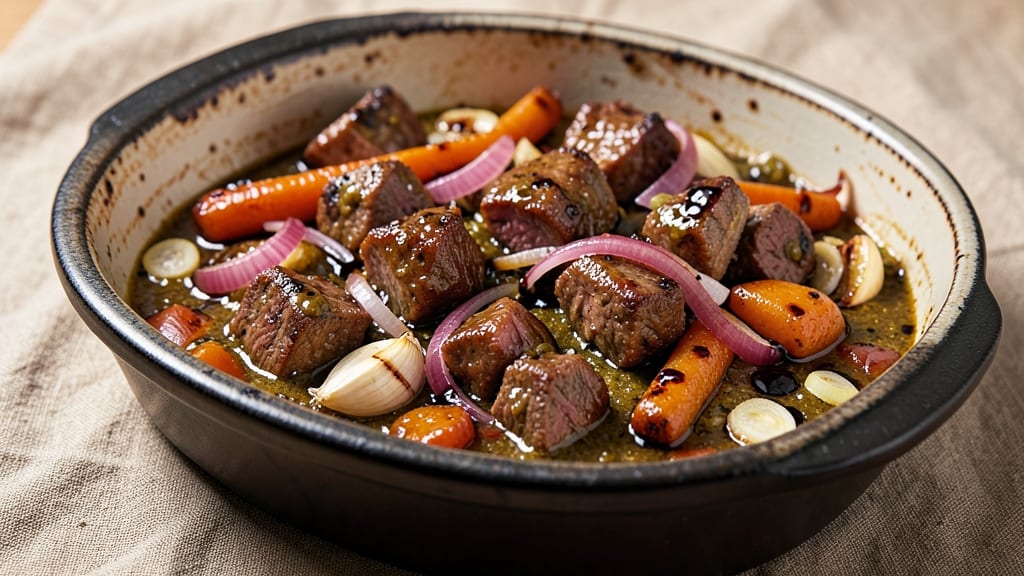
This beef and mustard stew recipe transforms tough cuts into melt-in-your-mouth tenderness with a rich, tangy-sweet sauce that balances deep umami and bright herb notes. The secret lies in slow-braising beef until fork-tender while building layers of flavor through a mustard-infused reduction.
I developed this recipe after years of perfecting braising techniques that deliver restaurant-quality results at home—no fancy equipment required, just patience and proper technique.
The process begins with a deep sear to create a flavorful crust on the beef, followed by a mustard-deglazed pan that forms the base of the sauce.
As the stew simmers, the mustard's sharpness mellows into complexity, blending seamlessly with thyme, bay leaves, and a touch of sweetness from onions and carrots.
What you'll end up with is a deeply satisfying stew with tender beef that practically falls apart and a sauce that's rich yet balanced—perfect for chilly evenings or hearty family dinners.
This recipe delivers on both flavor and texture, with beef that's perfectly tender and a sauce that clings to every bite. The mustard adds a sophisticated tang that elevates simple beef into something extraordinary, while the herbs provide freshness that cuts through the richness.
The result is a complete meal that pairs beautifully with crusty bread, roasted potatoes, or a simple green salad to round out the plate.
What makes this stew truly special is its versatility—it reheats beautifully for leftovers, freezes well for future meals, and can be customized with different mustard varieties (Dijon, whole grain, or even honey mustard) to suit your taste.
The technique ensures foolproof results every time, making it ideal for both weeknight dinners and special occasions where you want to impress without spending hours in the kitchen.
Ingredients for beef and mustard
Fourteen ingredients crafting restaurant-quality beef and mustard stew with deep umami and bright herb notes.
| Ingredient | Amount | Notes |
|---|---|---|
| Beef Chuck Roast 🥩 | 2 lb | 2-inch cubes, trimmed of fat |
| Yellow Onions 🧅 | 1 ½ lb | Peeled, cut into 1-inch chunks |
| Carrots 🥕 | 1 ½ lb | Peeled, cut into 2-inch chunks |
| Garlic Cloves 🧄 | 8 cloves | Peeled, smashed |
| Dijon Mustard 🍯 | ½ cup | High-quality, smooth variety |
| Dry Red Wine 🍷 | 1 cup | Bold Cabernet Sauvignon preferred |
| Beef Broth 💧 | 4 cups | Low-sodium preferred |
| Fresh Thyme 🌿 | ¼ cup | Stems removed, chopped |
| Fresh Rosemary 🌿 | ⅛ cup | Needles finely chopped |
| Bay Leaves 🍃 | 2 whole | Dried, standard size |
| Tomato Paste 🍅 | 2 tbsp | Smooth, no sugar added |
| All-Purpose Flour 🌾 | 2 tbsp | For thickening sauce |
| Olive Oil 🫒 | ¼ cup | Extra-virgin, for searing |
| Kosher Salt 🧂 | 2 tbsp | Diamond Crystal preferred |
| Ground Black Pepper 🌶️ | 1 tbsp | Freshly ground |
The beef chuck roast is non-negotiable—its marbling delivers that melt-in-your-mouth texture when braised properly. Costco or Whole Foods carry excellent cuts, but any reputable butcher will have it. Look for pieces with visible fat marbling, not lean cuts. For the mustard, Maille or Whole Foods brand Dijon are ideal—their smooth texture blends seamlessly without graininess. Fresh thyme and rosemary from local farmers markets elevate the dish, but high-quality dried herbs work in a pinch. The tomato paste should be San Marzano brand if possible—its sweetness complements the mustard beautifully.
No beef chuck? Chuck short ribs or bottom round work equally well, though cooking times may vary. Substituting red wine with extra beef broth plus 1 tbsp balsamic vinegar maintains depth. For mustard alternatives, whole grain mustard thinned with broth adds texture, while honey mustard introduces subtle sweetness. Fresh herbs unavailable? Dried thyme at one-third the amount suffices, but skip the rosemary substitution—its piney aroma is unique. The tomato paste can be omitted entirely if you dislike its intensity, though it adds body to the sauce.
This stew improves overnight as flavors meld. Store in an airtight container for up to 5 days in the fridge, or freeze for 3 months for future meals. The sauce thickens upon reheating—add a splash of broth if needed. For meal prep, portion into individual containers with a side of crusty bread. The beef can be fully cooked ahead and reheated in the sauce, saving time on busy days. Always taste and adjust seasoning before serving—this is where the magic happens.
Why You'll Love This Recipe
- Here’s what sold me: the Dijon mustard. It’s not too sharp, not too sweet—just that perfect tang that cuts through the beef’s richness while still letting the garlic shine. The carrots caramelize right in the pot, adding this deep, natural sweetness that makes every bite feel like a hug.
- One-Pot Magic: I swear by this—just toss the beef, onions, carrots, and garlic into a Dutch oven with the mustard, add some broth, and let it simmer. No chopping boards to clear, no extra pans to wash. That rich mustard sauce clings to everything like it’s been best friends forever.
- Mustard Love: Here’s what sold me: the Dijon mustard. It’s not too sharp, not too sweet—just that perfect tang that cuts through the beef’s richness while still letting the garlic shine. The carrots caramelize right in the pot, adding this deep, natural sweetness that makes every bite feel like a hug.
- Weeknight to Weekend: Between us, this recipe works for everything. Too tired to plan? Throw it together on a Tuesday. Hosting a crowd? It scales up without breaking a sweat. My daughter even drags it to school for lunch—yes, even on a Tuesday.
Step-by-step instructions for beef and mustard stew
A rich, deeply savory braise where tender beef meets bold mustard and aromatic herbs.
Sear the Beef Chuck Roast for Depth of Flavor
Heat the 0.25 cup olive oil in a heavy Dutch oven over medium-high heat until shimmering. Working in batches to avoid crowding, add the 2 lb beef chuck roast cut into 2-inch cubes and sear for 2-3 minutes per side until deeply browned. This caramelization builds the foundation for your stew's complex flavor profile.
Resist the urge to move the beef around—let it develop that golden crust. Once all pieces are seared to a rich mahogany color, transfer them to a plate and set aside. You'll notice the oil will darken and become fragrant as the meat releases its juices into the pan.
Build the Aromatic Base with Vegetables and Herbs
In the same Dutch oven, add the 1.5 lb yellow onions and 1.5 lb carrots cut into 1-2 inch chunks. Cook over medium heat for 8-10 minutes until the onions soften and begin to caramelize, creating sweet depth. Add the 8 cloves garlic cloves and cook for another 30 seconds until fragrant.
Stir in the 0.25 cup fresh thyme, 0.125 cup fresh rosemary, and 2 whole bay leaves, allowing the herbs to release their essential oils. This aromatic blend will infuse the stew with layers of earthy, piney notes that complement the mustard's tang.
Develop the Mustard-Wine Sauce
Reduce heat to medium-low and add the 0.5 cup Dijon mustard and 2 tbsp tomato paste. Stir vigorously to combine, scraping up any browned bits from the bottom of the pot—these contain concentrated flavor. Pour in the 1 cup dry red wine and let it simmer for 3-4 minutes until reduced by half, deepening its intensity.
Sprinkle the 2 tbsp all-purpose flour over the mixture and stir for 1 minute to create a light roux that will help thicken the stew. This step ensures your sauce will coat the beef beautifully without becoming gluey.
Braise Until Tender and Flavor-Infused
Return the seared beef to the Dutch oven along with any accumulated juices. Pour in the 4 cups beef broth and bring the mixture to a gentle simmer. Season with the 2 tbsp kosher salt and 1 tbsp ground black pepper, then cover and transfer to a 325°F oven.
Braise for 2.5-3 hours until the beef is fork-tender and easily pulls apart. The stew should reduce slightly, creating a rich, velvety consistency. Check occasionally to ensure there's always liquid present—if it gets too dry, add a splash of water or broth.
Adjust Consistency and Serve Warm
Remove the stew from the oven and uncover. If the sauce is too thick, add a small amount of water or broth to reach your desired consistency. Taste and adjust seasoning—you may need to add a pinch more salt or pepper to balance the flavors.
Let the stew rest for 10 minutes before serving to allow the flavors to meld completely. Ladle into bowls and garnish with fresh herbs if desired. Each spoonful should deliver tender beef, sweet caramelized vegetables, and a perfect balance of mustard's tang and wine's richness.
Pro Tips For Making Beef And Mustard
- SEAR THE ROAST FIRST: After trimming excess fat, pat the chuck roast bone-dry with paper towels—this isn’t just about flavor, it’s about getting a proper crust. Hit it with high heat for 3-4 minutes per side until deep brown, then pull it off the pan. I used to skip this, and the mustard sauce would just cling instead of caramelizing into a glossy, sticky glaze.
- SWEAT THE ONIONS LOW: Don’t rush the onions—cut them into even ½-inch slices and cook them on medium-low for 8-10 minutes until they’re translucent but not colored. Higher heat turns them bitter, and bitter onions ruin the mustard’s bright tang. Add the carrots and garlic after the onions soften, so they don’t burn while you’re distracted.
- DEGLAZE WITH MUSTARD AND BROTH: Right after searing the beef, scrape up every last bit of browned bits from the pan with a wooden spoon. Then, pour in just 2 tablespoons of Dijon mustard and 1 cup of beef broth—let it bubble for 30 seconds before adding the rest. This thickens the sauce faster and cuts through the richness of the chuck, so it’s not just a watery glaze.
- REST THE MEAT UNDER FOIL: Once the beef reaches 195°F (yes, it’s tough at first), transfer it to a plate, tent loosely with foil, and let it sit for 20 minutes. I know you’re eager, but skipping this makes the slices dry out when you cut against the grain. The residual heat keeps it juicy, and the mustard sauce gets a chance to soak in properly.
Essential equipment for great beef and mustard
Dutch Oven Essentials
Your Dutch oven is the workhorse of this recipe—it needs to be 5-7 quarts with a tight-fitting lid. I swear by Lodge's pre-seasoned cast iron—it distributes heat evenly and develops a natural nonstick surface over time.
For nonstick alternatives, All-Clad's stainless steel Dutch oven works beautifully but requires more attention to avoid sticking. Preheat your oven and Dutch oven together for 15 minutes before searing to ensure even cooking. 🔥
Searing Tools
Invest in a long-handled spoon (like OXO's Good Grips) and tongs to avoid burning yourself while searing. A meat thermometer is non-negotiable—I use ThermoWorks' Smoke to monitor internal temps.
For cutting the beef, a sharp 8-inch chef's knife (like Wüsthof's Classic) makes quick work of the 2-inch cubes. Keep a small plate nearby to transfer seared beef safely. 🥩
Mustard & Wine Prep
Use a whisk (I prefer Macalla's stainless steel) to blend your Dijon mustard and tomato paste smoothly before adding wine. A fine-mesh strainer helps remove any herb stems after braising.
For wine reduction, a small saucepan works if you're not using the Dutch oven. Measure your red wine in a liquid measuring cup for precision—this is where the magic happens! 🍷
Braising Accessories
Line your oven rack with a baking sheet to catch any drips from the Dutch oven. A kitchen timer ensures you don't overbraise—set it for 2.5 hours and check at 2 hours.
For serving, deep soup bowls (like Corelle's stoneware) hold the stew beautifully. Keep extra beef broth nearby in case you need to thin the sauce later. ⏳
Storage Solutions
Transfer leftovers to glass storage containers (I love Pyrex) with tight-sealing lids. Label with dates using a permanent marker—this stew tastes even better the next day!
For freezing, use quart-sized freezer bags with 1 inch headspace to prevent expansion cracks. A fine-mesh colander helps drain excess liquid if you're reheating. 💫
Nutrition facts
Frequently asked questions
Can I substitute whole grain mustard for Dijon in this recipe?
Yes, but with adjustments! Whole grain mustard adds texture and a slightly grainier bite. Use 1/4 cup whole grain mustard plus 1/4 cup broth to thin it out, as it's thicker than Dijon. For best results, blend it first to break up the seeds before adding to the sauce.
How do I know when the beef is fully tender?
The beef is done when it easily pulls apart with a fork and reaches an internal temperature of 203-205°F. For extra assurance, cut into a small piece—if it's fork-tender with no resistance, it's perfect. Undercooked beef will feel firm and chewy.
Can I make this stew on the stovetop instead of the oven?
but it'll take longer! Simmer uncovered on low heat for 3-4 hours, stirring occasionally to prevent sticking. Keep the liquid level high (add broth as needed) and check the beef's tenderness at the 3-hour mark. The flavor will be just as rich!
What's the best way to reheat leftovers?
Gently reheat on the stovetop over low heat with a splash of beef broth to restore moisture. Avoid microwaving—it can make the sauce watery. For even better results, reheat in the oven at 300°F for 20-30 minutes covered with foil.
Can I use a different cut of beef?
Yes, but choose wisely! Chuck short ribs or bottom round work well, though cooking times may vary. Avoid lean cuts like sirloin—they won't become tender. For tougher cuts, increase braising time by 30-60 minutes and add 1/2 cup extra broth to compensate for moisture loss.