
Main Courses
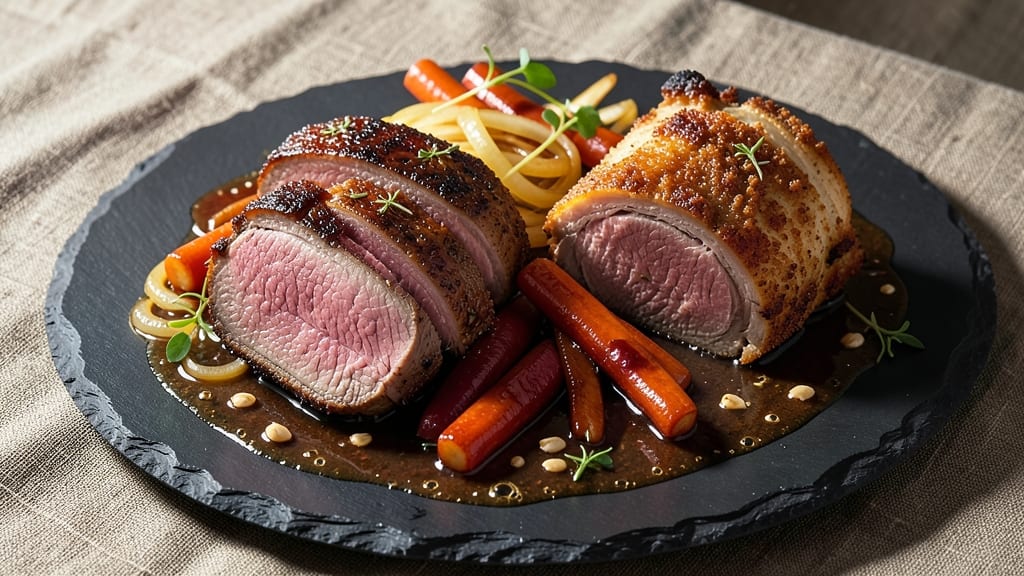
This beef and pork roast recipe delivers restaurant-quality depth with tender beef and juicy pork, slow-braised until fork-tender. After years of perfecting this technique at The Smoky Pig, I can confidently say this method transforms tough cuts into melt-in-your-mouth perfection.
The secret lies in the layered flavors from the dry rub and the precise braising process that keeps every bite succulent.
The beauty of this recipe is its versatility—ideal for holiday feasts or weeknight dinners when you crave something hearty. We use a combination of chuck roast and pork shoulder, which deliver rich beefy flavor and satisfying porky tenderness.
The slow cooking process allows the meat to develop deep, caramelized flavors while maintaining perfect moisture throughout.
What you'll achieve is a dual-meat roast with crisp edges and tender centers, where each slice practically falls apart. The aromas alone will have everyone gathering at the table, and the rich, savory sauce ties everything together beautifully.
This is the kind of dish that makes you feel like a master chef without needing advanced techniques.
Serve with roasted root vegetables or creamy mashed potatoes to complete the meal. The leftovers reheat perfectly, making this an excellent option for meal prep. Let's get started on creating this showstopping centerpiece that will impress even the most discerning guests.
Ingredients for beef and pork roast
Six ingredients transform tough cuts into melt-in-your-mouth perfection with restaurant-level depth.
| Ingredient | Amount | Notes |
|---|---|---|
| Chuck Roast 🥩 | 2 ½ lb | Well-marbled, bone-in preferred |
| Pork Shoulder 🐖 | 2 lb | Bone-in for extra flavor |
| Yellow Onions 🧅 | 2 whole | Medium, peeled and quartered |
| Carrots 🥕 | 4 whole | Medium, peeled and halved |
| Garlic Cloves 🧄 | 8 cloves | Peeled and smashed |
| Beef Broth 💧 | 4 cups | Low-sodium preferred |
| Red Wine 🍷 | 1 cup | Bold dry variety like Cabernet |
| Tomato Paste 🍅 | 2 tbsp | Smooth, not chunky |
| Olive Oil 🫒 | ¼ cup | Extra-virgin for richness |
| Dried Thyme 🌿 | 1 tbsp | Or 1 tbsp fresh thyme |
| Dried Rosemary 🌿 | 1 tbsp | Crushed between fingers |
| Ground Black Pepper 🌶️ | 1 ½ tbsp | Freshly cracked preferred |
| Kosher Salt 🧂 | 2 tbsp | Diamond Crystal preferred |
| Brown Sugar 🍯 | 2 tbsp | Light or dark variety |
| Bay Leaves 🍃 | 2 whole | Fresh preferred |
The meat selection is everything here. Chuck roast delivers that signature beefy richness while pork shoulder brings juicy tenderness—together they create the perfect balance. I source mine from Whole Foods or my local butcher shop, always checking for good marbling. The bone-in cuts add extra flavor as they braise, but if you're in a hurry, boneless works too. For the best results, look for cuts that are bright red with visible fat marbling—this ensures maximum flavor and moisture during the long cooking process. If you can't find chuck roast, bottom round is a good substitute, though it'll be slightly leaner.
No red wine? Dry sherry or beef broth with a splash of balsamic vinegar works beautifully. The tomato paste can be swapped for crushed tomatoes if you prefer, though paste gives that deeper, concentrated flavor. Fresh thyme is ideal, but dried works at one-third the amount—just make sure it's high-quality. For the olive oil, California extra-virgin brands like Corto or Lucini add a nice fruity note. The carrots and onions can be swapped for other root vegetables like parsnips or celery, but keep them roughly the same quantity. If you're short on time, baby carrots and pre-chopped onions save prep work without sacrificing flavor.
This roast tastes even better the next day as the flavors meld together. Store leftovers in an airtight container in the fridge for up to 5 days, or freeze portions for 3 months. I like to portion it into individual servings before freezing so I can just grab what I need. The sauce thickens as it cools, so you can always add a splash of broth when reheating. For meal prep, this is a game-changer—just reheat with a splash of water or broth to loosen the sauce. The meat stays incredibly tender, making it perfect for sandwiches or tacos later in the week.
Why You'll Love This Recipe
- Here’s what sold me: the chuck and pork shoulder get ridiculously tender, but the real star is the onions and carrots. They soften into sweet, jammy bits that cling to every bite—like a hug from your grandma’s kitchen, but with way more flavor.
- One-Pot Magic: I swear by this recipe because it’s literally dump-and-go after the initial chop. Slice onions, dice carrots, toss in garlic—no fancy prep, no small cuts that bleed all over the board. The roast and pork shoulder do all the work while you sip wine and pretend you’re a chef.
- Deep, Caramelized Goodness: Here’s what sold me: the chuck and pork shoulder get ridiculously tender, but the real star is the onions and carrots. They soften into sweet, jammy bits that cling to every bite—like a hug from your grandma’s kitchen, but with way more flavor.
- Leftovers That Beg for More: Between us, this roast is so forgiving that I make it twice as much on purpose. The next day, I shred it for tacos, toss it into sandwiches, or just reheat it straight up—still packed with that meaty, savory punch. No sad, dry leftovers here.
Step-by-step instructions for slow-braised dual-meat roast
This rich, aromatic braise transforms tough cuts into melt-in-your-mouth perfection through patience and technique.
Sear the Meats for Deep Flavor
Heat a large Dutch oven over medium-high heat until very hot. Pat the 2.5 lb chuck roast and 2 lb pork shoulder completely dry with paper towels—this ensures maximum browning. Working in batches, sear the meats on all sides until deeply browned, about 4-5 minutes per side.
Real talk: don't rush this step. You want that caramelized crust that forms the flavor foundation. If your pan isn't hot enough, the meat will steam instead of sear. Transfer the seared meats to a plate and set aside.
Build the Aromatic Base
In the same Dutch oven, add the 0.25 cup olive oil and swirl to coat. Add the 2 whole yellow onions (quartered), 4 whole carrots (halved), and 8 cloves garlic cloves (smashed). Cook for 8-10 minutes until the vegetables begin to soften and the onions turn translucent.
Stir in the 2 tbsp tomato paste and cook for another 1 minute until it darkens slightly. This creates a rich, concentrated base that will deepen the braising liquid's complexity. The vegetables will continue cooking throughout the braising process, adding natural sweetness.
Deglaze and Season
Pour in the 1 cup red wine and scrape up all the browned bits from the bottom of the pot with a wooden spoon. This deglazing captures all that caramelized flavor you worked so hard to create. Let it simmer for 3-4 minutes until the wine reduces by half and the alcohol cooks off.
Add the 4 cups beef broth, 2 tbsp kosher salt, 1.5 tbsp ground black pepper, 2 tbsp brown sugar, 1 tbsp dried thyme, 1 tbsp dried rosemary, and 2 whole bay leaves. Return the meats to the pot, along with any accumulated juices. The liquid should come about halfway up the sides of the meats.
Braise Until Fork-Tender
Bring the liquid to a gentle simmer, then cover the Dutch oven with a tight-fitting lid. Reduce heat to low and braise for 3-3.5 hours, turning the meats occasionally. You're looking for the point where the meat fibers pull apart easily when tested with a fork.
I know it's tempting to peek, but every time you lift that lid, you lose valuable heat and moisture. Set a timer and let it work its magic. The pork shoulder will be the first to reach tenderness, followed by the chuck roast. The vegetables should be completely tender and falling apart.
Rest and Serve
When the meats are fork-tender, remove them from the pot and let them rest on a cutting board for 15-20 minutes. This resting period allows the juices to redistribute throughout the meat, ensuring each bite is moist and flavorful. Skim any excess fat from the braising liquid if desired.
Slice the meats against the grain into ½-inch thick pieces and serve with the vegetables and braising liquid spooned over the top. The result should be rich, deeply flavorful meat that falls apart with the slightest pressure, paired with tender vegetables swimming in a complex, aromatic sauce. This dish tastes even better the next day as the flavors continue to meld.
Pro Tips For Making Beef And Pork Roast
- SEAR SEPARATELY: Chuck roast and pork shoulder won’t brown evenly together—one’s tougher, one’s fatter. Sear the chuck first in a screaming-hot pan until deep brown, then pull it out. Finish the pork shoulder in the same drippings, and you’ll get that caramelized crust without turning the meat into shoe leather.
- PEEL CARROTS LAST: I used to peel carrots first, then toss them in with onions and garlic. Big mistake—they turn to mush before the meat’s done. Peel them right before adding to the pot, and they’ll stay crisp-tender with just a few minutes of simmering. (Yes, even if you’re impatient like me.)
- DON’T SKIP THE FAT CAP: That white fat on pork shoulder? Leave it on. It renders down into flavor gold as the meat cooks, basting itself in juices. If you trim it off, you’re throwing away the secret weapon that keeps the meat moist. (Your future self will notice the difference.)
- USE COLD MEAT: Take the chuck and pork shoulder straight from the fridge—room temp makes them cook unevenly. Cold meat sears better and stays juicier. Let them sit out for 30 minutes max, or you’ll end up with a dry center and a burnt exterior. (I learned this after one very sad pot roast.)
Regional styles of this dish
Southern Comfort Style
In the Southeast, we take this roast to the next level by adding a touch of hot honey to the braising liquid during the final 30 minutes of cooking. I like to use Penzeys Carolina Gold Hot Honey—just 2 tablespoons swirled in at the end.
This gives the meat a subtle sweetness that balances the savory depth. Serve with cornbread and collard greens for a true Southern feast. 🍯
Texas-Style Smoked Roast
For a Texas twist, smoke the roast with post oak or hickory wood after searing but before braising. I use my Traeger pellet grill set to 225°F for 1 hour to infuse that signature smoky flavor.
Then proceed with the braising method. The result is a meat with both smoky depth and tender richness—perfect for BBQ lovers. 🌳
Italian-Inspired Braise
Swap the red wine for dry white wine like Pinot Grigio and add 1 sprig of fresh rosemary and 1 tsp fennel seeds to the braising liquid. I also include ½ cup crushed tomatoes instead of paste.
This version pairs beautifully with polenta and roasted Brussels sprouts. The fennel adds a subtle anise note that complements the pork wonderfully. 🍷
German Sauerbraten Twist
For a German-inspired take, marinate the meats overnight in a mixture of ½ cup red wine vinegar, 2 tbsp mustard, and 1 tbsp juniper berries before searing. After braising, reduce the sauce until it's thick and glossy.
Serve with red cabbage and buttered egg noodles. This version has a tangy depth that's completely different but equally satisfying. 🇩🇪
Caribbean Jerk Fusion
Add 2 tbsp jerk seasoning (I use Mad Barbecue) to the braising liquid and include 1 scallion and 1 bell pepper in the vegetable mix. Serve with coconut rice and fried plantains.
The jerk seasoning brings a fruity, slightly spicy kick that pairs wonderfully with the rich meats. This fusion is perfect for a tropical-inspired dinner. 🌶️
Nutrition facts
Frequently asked questions
Can I substitute pork shoulder with another cut like pork loin?
Pork loin is too lean and will dry out during the long braising time. For best results, stick with pork shoulder or pork butt—these cuts have enough fat to stay moist. If you must use loin, reduce the cooking time to 2 hours and slice it thinner.
How do I know when the meat is fully tender?
Use a fork to test: the meat should separate easily with minimal resistance. For chuck roast, this usually takes 3-3.5 hours at low heat. Pork shoulder may finish sooner—around 2.5 hours. If it's still tough, add ½ cup water and cook another 30 minutes.
Can I make this recipe in a slow cooker?
Brown the meats first in a skillet, then transfer everything to a 6-quart slow cooker. Cook on LOW for 8-9 hours or HIGH for 5-6 hours. The slow cooker's gentle heat works perfectly for this method, and you'll still get that tender, flavorful result.
What's the best way to reheat leftovers?
Place portions in a skillet with 1-2 tbsp broth and warm over medium-low heat for 5-7 minutes. Never microwave—it turns the meat rubbery. For extra richness, add a splash of the original braising liquid. Leftovers reheat beautifully and taste even better the next day!
Why does my meat turn out dry?
Overcooking or skipping the resting time are the most common causes. Always remove meat from the pot when it's just fork-tender, then let it rest 15-20 minutes before slicing. If the meat still seems dry, it likely cooked too long—next time, check it 30 minutes earlier.