
Soups & Stews
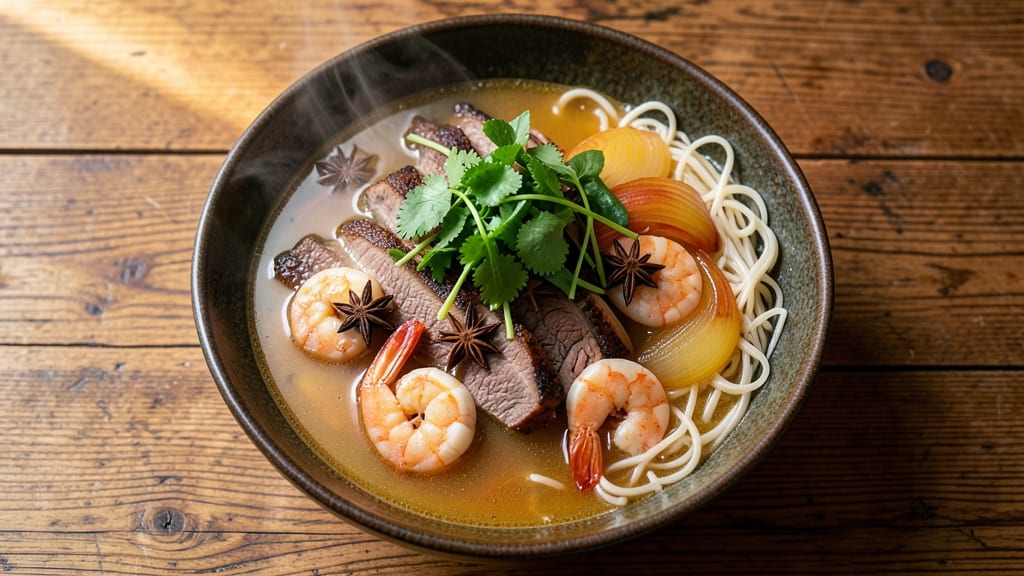
This beef and shrimp pho recipe brings the soul-warming essence of Vietnam straight to your kitchen with its fragrant star anise and cinnamon broth that simmers for hours.
The secret lies in layering spices—cardamom, cloves, and coriander—with beef bones and aromatics to create a depth of flavor that transforms simple ingredients into something extraordinary.
What starts as a humble pot of broth becomes a symphony of savory, spicy, and umami notes that will have everyone at the table reaching for seconds.
The beauty of this recipe is in its balance—rich, dark broth meets tender slices of beef and plump shrimp, all served over delicate rice noodles.
Each component plays a role: the beef simmers until fork-tender, the shrimp cooks just enough to stay firm, and the garnishes of fresh herbs, lime, and bean sprouts add brightness and texture.
No shortcuts here; this is the kind of dish that rewards patience with restaurant-quality results you’ll crave long after the last spoonful.
What makes this pho truly special is how it comes together—hot broth poured over noodles, followed by beef and shrimp, then a cascade of garnishes that transform each bowl into a customizable masterpiece. The broth’s complexity is the star, but the harmony of textures and temperatures makes every bite unforgettable.
Whether you're feeding a crowd or treating yourself to a comforting solo meal, this recipe delivers the perfect balance of tradition and approachability.
Ready to elevate your soup game? This pho isn’t just a recipe—it’s an experience that starts with simmering spices and ends with a steaming bowl of pure satisfaction. Let’s get started on creating something that tastes like home, even if you’re miles away.
Ingredients for beef and shrimp pho
Six hours of simmering transforms these 17 ingredients into fragrant, restaurant-quality beef and shrimp pho.
| Ingredient | Amount | Notes |
|---|---|---|
| Beef Bones 🥩 | 3 lb | Marrow bones preferred for richness |
| Shrimp 🦐 | 1 ½ lb | Large, peeled, deveined, tail-on |
| Fresh Ginger 🧄 | ½ cup | Julienned, skin removed |
| Yellow Onions 🧅 | 2 whole | Cut into 1-inch thick slices |
| Star Anise Pods 🌶️ | 4 whole | Whole, not ground |
| Cinnamon Sticks 🌿 | 2 whole | 2-inch pieces |
| Cardamom Pods 🌿 | 6 whole | Lightly crushed |
| Cloves 🌶️ | 4 whole | Whole, not ground |
| Garlic Cloves 🧄 | 8 cloves | Crushed, not minced |
| Fish Sauce 🍶 | ¼ cup | Red Boat preferred |
| Rice Noodles 🍜 | 1 lb | Flat, medium-width |
| Fresh Thai Basil 🌿 | ½ cup | Chopped, stems removed |
| Fresh Cilantro 🌿 | ¼ cup | Chopped, for garnish |
| Lime Wedges 🍋 | 4 whole | Fresh, for serving |
| Bean Sprouts 🌱 | 2 cups | Fresh, rinsed |
| Jalapeño Slices 🌶️ | 2 whole | Thinly sliced, optional |
| Salt 🧂 | 1 ½ tsp | Diamond Crystal preferred |
The bones and aromatics are non-negotiable for authentic flavor. Marrow bones from the butcher section add richness, while Whole Foods or local Asian markets carry the best star anise, cinnamon, and cardamom—look for vibrant color and no signs of dampness. Shrimp should be fresh or previously frozen, with a sweet, oceanic scent. For the ginger, organic is ideal—it peels cleaner and has more punch. The fish sauce is where you can splurge: Red Boat is the gold standard, but any reputable brand with no added sugar works.
No star anise? 1 tsp ground anise is a pinch substitute, but you'll lose some depth. Running low on cardamom? Allspice berries at half the amount mimic the warmth. Shrimp too expensive? Substitute with firm white fish like cod, but reduce cooking time by half. The rice noodles must be fresh—dried noodles lose texture when soaked. For the garnishes, Thai basil is essential, but regular basil in a pinch works if you add a pinch of fish sauce to the water when blanching. Jalapeños can be swapped for serrano peppers for more heat.
Broth keeps 3 days refrigerated or 3 months frozen—portion into containers before freezing. Noodles should be soaked in hot water for 10-15 minutes, then drained and tossed with a little oil to prevent sticking. The shrimp and beef can be prepped ahead: slice the beef thinly and store in the fridge for up to 2 days. For a shortcut, make a double batch of broth and freeze it—just thaw and reheat when ready to serve. Garnishes stay fresh 5 days wrapped in damp paper towels in the fridge.
Why You'll Love This Recipe
- I’ll be real: beef bones might seem pricey, but they stretch into so much broth. Add shrimp later, and suddenly you’ve got a dish that feels fancy without breaking the bank. Leftovers? Even better—they taste just as good reheated, so you’re basically getting two meals for the price of one.
- One-Pot Magic: I swear by this recipe when I’m too tired to juggle multiple pans. The beef bones and star anise simmer together until the broth is rich and fragrant—no straining, no fuss. Just dump everything in, let it work its magic, and you’ve got a restaurant-quality base without the cleanup.
- Umami Bomb: That first sip of broth—wow. The beef bones melt into a deep, savory base, while the shrimp add a briny sweetness that’s impossible to resist. Fresh ginger and onions round it out with a bright, aromatic punch that makes every spoonful feel like a hug in a bowl.
- Weeknight to Dinner Party: Honestly, this recipe works for anything. Need a quick weeknight dinner? Done. Hosting a crowd? Double the batch. The shrimp cooks fast, so it’s perfect for last-minute guests, and the broth keeps well for days—meaning you can prep ahead and still impress.
Step-by-step instructions for beef and shrimp pho
Master this aromatic broth and you'll create the perfect balance of savory, spicy, and herbal notes.
Prepare the Beef Bones and Aromatics
Rinse the 3 lb beef bones thoroughly under cold water to remove any impurities. Place them in a large stockpot and cover with cold water by about 2 inches. Add the 2 whole yellow onions, 0.5 cup fresh ginger, 4 whole star anise pods, 2 whole cinnamon sticks, 6 whole cardamom pods, 4 whole cloves, and 8 cloves garlic. This aromatic bundle forms the flavor foundation of your pho.
Bring the mixture to a boil over high heat, then immediately reduce to medium-low heat. Skim off any foam or impurities that rise to the surface during the first 10 minutes of cooking. This ensures a clear, clean broth. The beef should simmer gently—never boil vigorously, as this can make the broth cloudy and bitter.
Simmer the Broth for Deep Flavor
Continue simmering the broth uncovered for 3-4 hours, maintaining a gentle simmer. The beef should become fork-tender, and the broth should develop a rich, amber color with a fragrant aroma of star anise, cinnamon, and ginger. If the liquid level gets too low, add hot water as needed to keep the bones submerged.
After 3 hours, remove the beef bones and set them aside to cool slightly. Strain the broth through a fine-mesh sieve into a clean pot, discarding the solids. The strained broth should be clear and deeply aromatic. Taste and adjust seasoning with 1.5 tsp salt and 0.25 cup fish sauce, adding them gradually until the broth has a balanced, savory depth. Return the broth to medium heat and keep it warm.
Cook the Shrimp and Prepare Noodles
While the broth simmers, prepare the 1.5 lb shrimp by deveining and patting them dry. Bring a separate pot of water to a boil and add the shrimp for 1-2 minutes until they turn pink and opaque. Remove them with a slotted spoon and set aside. The shrimp should be fully cooked but still tender—overcooking will make them rubbery.
Rinse the 1 lb rice noodles under cold water to remove any excess starch. Soak them in a bowl of warm water for 10-15 minutes until pliable but still slightly firm. Drain and set aside, ready to assemble into bowls. The noodles should be soft enough to eat but not mushy, as they'll continue cooking in the hot broth.
Assemble the Pho Bowls
Divide the drained rice noodles among 6 bowls. Ladle the warm broth over the noodles, filling each bowl about ¾ full. Add 2 cups bean sprouts, 2 whole jalapeño slices, and a few pieces of the cooked shrimp to each bowl. The shrimp should be distributed evenly so every serving has a perfect balance of protein and flavor.
Garnish each bowl generously with 0.5 cup fresh Thai basil and 0.25 cup fresh cilantro, then serve with 4 lime wedges on the side. The basil and cilantro add a bright, herbal contrast to the rich broth, while the lime wedges provide a tangy finish. Serve immediately while the broth is steaming hot and the noodles are tender.
Customize and Serve
Encourage your guests to customize their bowls by adding extra jalapeño for heat, bean sprouts for crunch, or a splash of lime for brightness. The pho should be aromatic, with a deep umami flavor from the broth, a subtle spice from the jalapeño, and a fresh herbal note from the basil and cilantro. Each bite should deliver a harmonious blend of textures and flavors.
For the best experience, serve the pho immediately after assembly. The noodles will continue to soften in the hot broth, and the shrimp will stay tender. Leftovers can be refrigerated for up to 3 days, but the broth may need reheating to restore its full aroma and depth of flavor.
Pro Tips For Making Beef And Shrimp Pho
- BLANCH BONES FIRST: Skip the slow charring—toss beef bones in boiling water for 2 minutes first to loosen dirt and impurities. I learned this the hard way after my broth turned cloudy from dried-on grime. Rinse them well afterward, then proceed with your aromatic build.
- CHAR ON MEDIUM-HIGH: That sear on beef bones and onions needs heat, but not a wildfire. Medium-high keeps them caramelizing without burning—watch the color, not the clock. Burnt aromatics taste bitter, and no amount of star anise can fix that.
- PEEL SHRIMP LAST: Save the shrimp shells for the broth, but peel them after cooking—just before serving. The flesh stays tender, and the shells release more flavor into the hot broth. (Yes, even if you’re impatient like me.)
- SIMMER LOW AND LONG: Pho broth isn’t done in 30 minutes—it’s a 2-hour commitment. Keep it at a bare simmer (tiny bubbles, not rolling) to extract collagen from the bones. I used to rush it, and the broth was always thin. Patience here makes the difference.
Creative variations of this dish
Spicy Thai-Inspired
Transform your pho into a Thai-inspired bowl by adding 1 tbsp Thai chili paste (like Maesri) to the broth while simmering. Boost the heat with 2 extra jalapeños and garnish with Thai basil and crushed peanuts for texture. Serve with sweet chili sauce on the side for dipping. 🌶️
Creamy Coconut Twist
For a creamy variation, stir ½ cup coconut milk into the finished broth just before serving. Top with sliced mango, toasted coconut flakes, and a drizzle of hoisin sauce. This tropical fusion works especially well with the shrimp’s natural sweetness. 🥥
Herb-Forward Vietnamese
Double down on fresh herbs by adding ½ cup chopped mint and ¼ cup chopped Vietnamese coriander to the garnish. For extra depth, infuse the broth with 1 tsp lemongrass paste (or 2 stalks, bruised) during the final 30 minutes of simmering.
The bright citrus notes complement the beef beautifully. 🌿
Smoky Chipotle
Infuse smoky depth by adding 2 chipotle peppers in adobo sauce to the broth during the last 15 minutes of simmering. Garnish with crumbled cotija cheese and avocado slices for a Mexican-inspired twist. The smoky heat pairs surprisingly well with the aromatic spices. 🔥
Light Summer Pho
For a lighter version, replace half the beef with chicken breast and use ginger beer (like Feather) instead of fish sauce for brightness. Garnish with cucumber ribbons and lime zest for a refreshing, palate-cleansing dish perfect for warm weather. ✨
Spiced Rum Infusion
Add warmth and complexity by simmering 1 oz dark spiced rum (like Captain Morgan) with the aromatics. The caramel and spice notes enhance the broth’s depth without overpowering it. Perfect for a cozy dinner with a hint of indulgence. 🍹
Nutrition facts
Frequently asked questions
Can I make this beef and shrimp pho recipe with dried shrimp instead of fresh?
Yes, but adjust the cooking time and preparation. Soak ½ cup dried shrimp in warm water for 20 minutes to rehydrate, then pat dry before adding to the hot broth. They'll cook much faster than fresh shrimp—just 30-60 seconds in the broth. The flavor will be more concentrated, so reduce fish sauce by 1 tablespoon to balance the saltiness.
How do I adjust the spice level for picky eaters?
Start by reducing the jalapeños to 1 slice per bowl and serve the extra on the side. For milder heat, omit the chipotle peppers entirely and use ½ teaspoon sugar in the broth to balance any residual spice. Always let guests customize their bowls—this keeps everyone happy!
What's the best way to reheat leftover pho broth?
Reheat gently on the stove over low heat—never microwave, as it dulls the aromatic spices. Add 1 tablespoon fish sauce and a pinch of salt to restore depth. For extra richness, stir in 1 teaspoon butter or ½ cup coconut milk before serving. The noodles should be soaked again in hot water for 5 minutes before reassembling.
Can I substitute beef with another protein?
For a lighter option, use chicken thighs (simmer for 45 minutes) or pork shoulder (simmer for 2 hours). For seafood-only, replace beef with firm white fish like cod (cook for 8-10 minutes in broth) or mussels (steam in broth for 5 minutes). The broth's flavor will adapt, but adjust fish sauce to ¼ cup for non-meat proteins.
Why does my pho broth look cloudy?
Cloudiness usually means the broth boiled too vigorously or wasn't skimmed properly. For a clearer broth, strain it through a cheesecloth-lined sieve after simmering. If the cloudiness persists, reduce the broth by 25% uncovered to evaporate impurities. Never boil vigorously—maintain a gentle simmer at all times to preserve clarity and depth of flavor.