
Soups & Stews
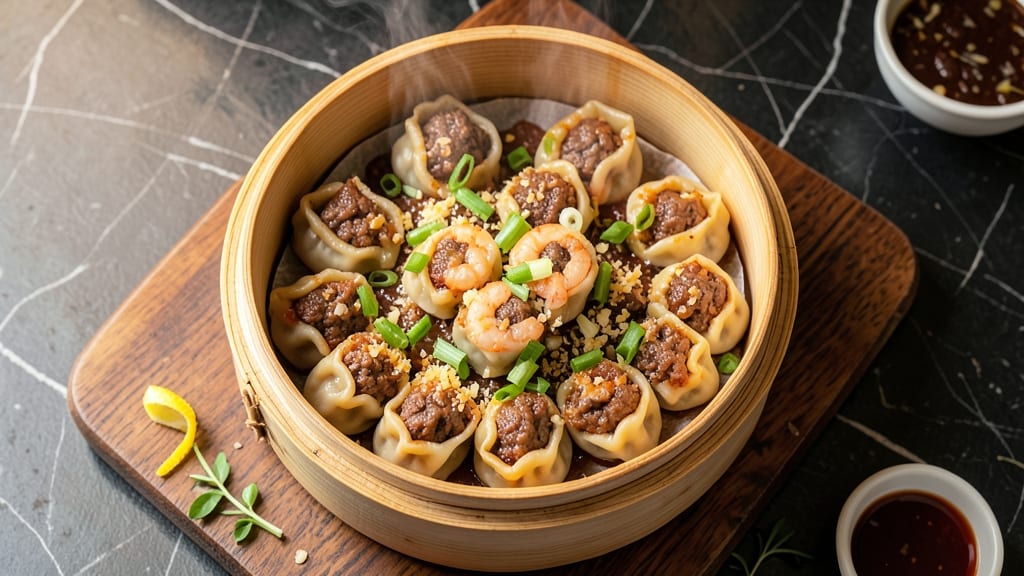
This beef and shrimp siomai recipe delivers restaurant-quality steamed dumplings with a perfect balance of savory pork and sweet shrimp filling. The traditional technique of wrapping delicate dumpling skins around flavorful fillings creates bite-sized parcels that steam into tender, juicy perfection.
What makes these siomai special is the harmonious blend of textures and flavors—crispy edges, tender filling, and a subtle sweetness that makes every bite irresistible.
The process begins with preparing the filling, where ground beef and shrimp combine with aromatics like garlic, ginger, and scallions, creating a savory base that's enhanced with a touch of sugar and soy sauce.
The dumpling skins, typically made from wheat flour, require careful handling to achieve that signature pleated wrap. Once filled and sealed, they steam to golden perfection in just 10-12 minutes, releasing an aroma that transforms any kitchen into a bustling Asian eatery.
What you'll achieve is a plate of beautifully steamed siomai with crispy, caramelized edges and tender, flavorful fillings that burst with each bite. The dumplings can be served with a simple soy-vinegar dipping sauce or paired with a side of pickled vegetables for a complete meal.
This recipe strikes the perfect balance between traditional techniques and modern convenience, making it accessible for home cooks while delivering professional results.
Whether you're serving these as appetizers for a gathering or preparing a comforting meal for your family, these beef and shrimp siomai are sure to impress.
The combination of textures and flavors creates a dish that's both satisfying and elegant, perfect for any occasion. Let's get started on making these delicious dumplings!
Ingredients for beef and shrimp siomai
Restaurant-quality siomai starts with these 16 ingredients—where savory beef meets sweet shrimp in perfect harmony.
| Ingredient | Amount | Notes |
|---|---|---|
| Ground Beef 🥩 | 1 ½ lb | Lean, finely ground for even texture |
| Large Shrimp 🦐 | 1 lb | Peeled, deveined, chopped finely |
| Garlic Cloves 🧄 | 8 cloves | Minced into fine paste |
| Fresh Ginger 🌿 | 2 tbsp | Finely grated, aromatic |
| Green Onions 🧅 | 4 whole | Thinly sliced, white and green parts |
| Light Soy Sauce 🍶 | ½ cup | Kikkoman preferred for balance |
| Dark Soy Sauce 🍶 | 1 tbsp | For deep umami richness |
| Sesame Oil 🫒 | 1 tbsp | Toasted for nutty aroma |
| Granulated Sugar 🍚 | 1 tbsp | Balances savory flavors |
| Shaoxing Wine 🍷 | 2 tbsp | Or dry sherry substitute |
| Cornstarch 🌾 | 1 tbsp | For binding filling |
| Siomai Wrappers 🍡 | 40 pieces | Square dumpling skins |
| Vegetable Oil 🫒 | 1 tbsp | For pleating edges |
| Water 💧 | ½ cup | For steaming |
| Salt 🧂 | ½ tsp | Fine sea salt |
| White Pepper 🌶️ | ¼ tsp | Freshly ground |
The ground beef is non-negotiable—lean cuts from the butcher counter ensure tender filling. Costco or Trader Joe's carry pre-ground chuck perfect for this. Shrimp should be freshly chopped (not pre-cooked) for that delicate texture. Look for wild-caught shrimp at Whole Foods if budget allows, but frozen works too—just thaw and pat dry. The Shaoxing wine is the secret weapon here—Trader Joe's carries it affordably, or any dry sherry in a pinch. For the wrappers, Kohinoor brand is my go-to (available at Asian markets), but square dumpling skins from any brand work if you can't find them.
No Shaoxing wine? Dry sherry or even white wine works—just reduce the amount slightly. Swapping beef for ground pork is traditional, but the shrimp keeps this dish light. The sesame oil should be toasted—heat it gently in a pan until fragrant, then cool. Pre-minced garlic from jars is fine, but fresh is always better. For the wrappers, if you can't find siomai-specific ones, square wonton wrappers work in a bind. The cornstarch is crucial—it binds the filling so it doesn't leak during steaming. And yes, salt the filling lightly—the soy sauces already pack enough umami.
Store uncooked filling in an airtight container for up to 3 days in the fridge. Wrappers keep best in the freezer—separate sheets with parchment to prevent sticking. Once steamed, these reheat beautifully—microwave 30 seconds with a damp paper towel for crispy edges. Freeze cooked siomai for up to 3 months by steaming them first, then freezing on a tray before bagging. Portion into single servings for easy reheating—trust me, you'll want seconds.
Why You'll Love This Recipe
- No Fuss Filling: I swear by this combo—ground beef and shrimp together? The texture contrast is chef’s kiss. No fancy prep, just mix, stuff, steam. My lazy Sundays now have a hero.
- Garlic-Ginger Magic: That minced garlic and fresh ginger? They turn this into something ridiculously flavorful without overpowering. The shrimp stays tender, the beef stays juicy, and the aroma? Instant mood booster.
- Steam-and-Go Meal: Make a batch on Sunday, freeze half—boil or steam when you need it. Perfect for potlucks, office lunches, or when you’re too wiped to cook. (Yes, even on a Tuesday night.)
- Budget-Friendly Luxe: Ground beef stretches far, shrimp adds that "special occasion" touch without breaking the bank. Leftovers reheat like a dream, so you’re feeding your family well without stressing your wallet.
Step-by-step instructions for beef and shrimp siomai
Here's how to craft these delicate dumplings with a perfect balance of savory beef and sweet shrimp filling.
Prepare the Filling with Perfect Texture
In a large mixing bowl, combine the 1.5 lb ground beef and 1 lb finely chopped shrimp. Using your hands, gently break up any large chunks of meat while keeping the shrimp pieces intact for texture contrast. This creates a filling with both tender beef and distinct shrimp bites in every dumpling.
Add the 8 cloves minced garlic cloves, 2 tbsp finely grated fresh ginger, and 4 whole thinly sliced green onions (white and green parts separated). Mix thoroughly until the aromatics are evenly distributed throughout the meat mixture. The garlic and ginger should be completely incorporated, releasing their oils that will infuse the filling with deep flavor.
In a small bowl, whisk together the 0.5 cup light soy sauce, 1 tbsp dark soy sauce, 1 tbsp sesame oil, 1 tbsp granulated sugar, 2 tbsp shaoxing wine, 1 tbsp cornstarch, 0.5 tsp salt, and 0.25 tsp white pepper. Pour this sauce mixture over the meat and shrimp, then gently fold everything together with your hands until completely combined. The filling should be moist but not sticky, with the cornstarch binding everything while maintaining distinct textures.
Assemble Dumplings with Precision Pleating
Set up your work station with 40 siomai wrappers arranged in a fan pattern for easy access. Place a small spoonful of filling (about 1 teaspoon) in the center of each wrapper. Don't overfill - you want room for pleating while maintaining a generous bite.
Here's the key technique: dip your finger in 1 tablespoon vegetable oil and gently wet the edges of the wrapper around the filling. This prevents sticking during steaming. Then, using your thumbs and index fingers, pleat the wrapper edges inward in a circular motion, creating the classic siomai pattern. The oil helps the pleats hold their shape while steaming.
As you work, keep a damp paper towel nearby. If the wrappers start to dry out, lightly mist them with water to maintain pliability. Arrange the assembled dumplings on a plate or tray, leaving about 1 inch between each one to prevent sticking during steaming.
Steam to Perfect Doneness
Set up a steamer basket over a pot of boiling water. The water should come to a rolling boil before adding the dumplings - this ensures even cooking from the start. Add 0.5 cup water to the pot after bringing to a boil to create steam.
Carefully place the assembled siomai in the steamer basket in a single layer, leaving space between each dumpling. Cover with a clean kitchen towel or lid, then steam for 8-10 minutes until the wrappers become translucent and the filling reaches 165°F internally. The dumplings are done when they float slightly in the steamer and the filling is fully cooked through with no pink remaining.
Remove the dumplings and let them cool for 2-3 minutes before serving. This resting period allows the filling to set slightly, preventing any potential filling leakage when you cut into them. Serve immediately with a dipping sauce of your choice - the classic combination is light soy sauce mixed with a touch of vinegar and chili oil.
Pro Tips For Making Beef And Shrimp Siomai
- STEAM AT 90% DONENESS: Siomai wrappers look delicate, but they’re tougher than they appear—stop when the filling’s almost done. I learned this the hard way after oversteaming and ending up with dry, crumbly centers. Pull them at 90% (about 8-10 minutes), then finish in the pan for that caramelized crust.
- CHOP SHRIMP SMALLER THAN YOU THINK: Large shrimp chunks? No. Dice them into ¼-inch pieces—same size as the ground beef. I used to leave them whole, and they’d stay rubbery while the beef turned mushy. Uniform bits cook evenly and blend into the filling like they’re supposed to.
- SALT THE WRAPPERS BEFORE FILLING: Brush the wrappers with water, sprinkle a pinch of salt, then let them sit 5 minutes. This trick keeps them from curling when steamed and adds a subtle savoriness. (Yes, even if you’re impatient like me—just don’t skip it.)
- MIX COLD SHRIMP INTO HOT BEEF: Cook the ground beef first, then fold in the shrimp while it’s still sizzling. The cold protein hits the hot pan and cooks faster, locking in juices. I was skeptical until I tried it—now my filling stays moist and doesn’t turn greasy.
Regional styles of this recipe
Filipino Siopao
In the Philippines, siomai are often called siopao and are commonly served as street food or in local eateries. The Filipino version typically includes pork and shrimp (like our recipe) but sometimes adds hard-boiled eggs for extra richness.
I love how they're often paired with garlic vinegar dipping sauce—simply mix ¼ cup rice vinegar, 1 tbsp soy sauce, 1 tbsp minced garlic, and a pinch of sugar. The sauce cuts through the richness beautifully. 🍜
Chinese Steamed Buns
In China, siomai are called shuijiao (水饺) and are a staple in dim sum culture. The Chinese version often uses pork and shrimp but sometimes includes wood ear mushrooms for texture. The wrappers are slightly thicker, and the pleating technique creates a more intricate pattern.
For an authentic touch, serve with light soy sauce and black vinegar—the tangy contrast is unforgettable. I've found that adding 1 tbsp grated daikon radish to the filling enhances the traditional flavor profile.
Taiwanese Pan-Fried Siomai
Taiwan has its own twist on siomai called guotie (过铁), which are pan-fried instead of steamed. After steaming, Taiwanese cooks pan-fry the siomai in oil until the wrappers turn golden brown and crispy. This creates a delightful contrast between the soft filling and crunchy exterior.
I recommend using 2 tbsp neutral oil (like vegetable or canola) for frying, and keep the heat at medium-low to prevent burning. Serve with chili oil for a spicy kick that balances the richness.
Malaysian Steamed Siomai
In Malaysia, siomai are often called siomai or chow chow and are a popular snack or appetizer. The Malaysian version frequently includes chili paste in the filling for a spicy kick, and the wrappers are sometimes pleated in a slightly different pattern.
For a Malaysian-inspired twist, add 1 tsp sambal oelek to the filling and serve with a dipping sauce made from ½ cup coconut milk, 1 tbsp lime juice, and a pinch of chili flakes. The tropical flavors elevate the dish beautifully. 🌶️
Japanese Gyoza Adaptation
While not exactly the same, Japanese gyoza share similarities with siomai and can be adapted with this filling. The key difference is the pleating technique—gyoza use a half-moon shape with a crimped edge, while siomai use a pleated circular pattern.
For a fusion approach, use siomai wrappers but pleat them into gyoza-style half-moons. Serve with Japanese ponzu sauce** (a mix of citrus, soy, and dashi) for a refreshing contrast to the savory filling.
Nutrition facts
Frequently asked questions
Can I make siomai without shrimp?
Swap the shrimp for an extra 0.5 lb of ground beef or 1 lb ground pork for a classic version. The filling will still be flavorful—just reduce the cornstarch to 0.5 tbsp since shrimp adds natural moisture. For texture, add 2 tbsp finely chopped water chestnuts to mimic shrimp's bite.
Why are my siomai wrappers sticking together?
This happens when wrappers dry out or lack oil. Keep them covered with a damp towel while working, and always wet the edges with vegetable oil before pleating. If they stick after steaming, reheat them in a dry pan for 30 seconds to crisp up the edges. Pro tip: Store wrappers in the fridge between damp paper towels to maintain pliability.
How do I get crispy edges on my siomai?
Steaming alone won't crisp them—try pan-frying after steaming! After cooking, heat 1 tbsp oil in a pan over medium-high heat and sear the siomai for 1-2 minutes per side until golden. For extra crunch, brush with a mix of 1 tbsp oil + 1 tsp cornstarch before frying. Alternatively, broil for 2 minutes in the oven.
Can I freeze cooked siomai?
Yes! Let them cool completely, then freeze in a single layer on a tray before transferring to an airtight container. Reheat from frozen by steaming for 5 minutes or microwaving with a damp paper towel for 1-2 minutes. For best texture, freeze uncooked siomai (assembled but unsteamed) and steam straight from frozen—add 2 extra minutes to cooking time.
What's the best dipping sauce for these siomai?
Classic soy-vinegar sauce works best: mix 3 tbsp soy sauce, 1 tbsp rice vinegar, 1 tsp sugar, and ½ tsp chili oil. For extra depth, add ½ tsp grated ginger or a dash of sesame oil. Filipino-style sauce swaps vinegar for 1 tbsp garlic paste—both complement the shrimp and beef beautifully.