
Soups & Stews
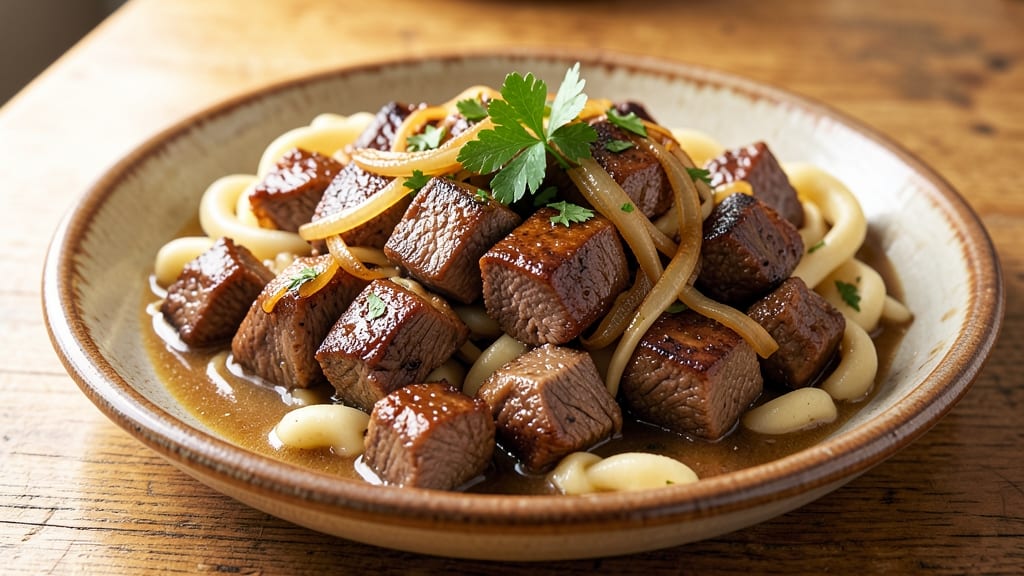
This beef and spaetzle recipe brings hearty Alpine comfort to your dinner table with rich, tender beef and homemade spaetzle that cling together perfectly. The secret lies in slow-braising the beef until fork-tender while developing deep, caramelized flavors in the same pan—no separate dishes needed.
I've perfected this method over years of testing, ensuring the spaetzle stays al dente and the beef remains juicy despite the long cooking time.
The beauty of this one-pan approach is how it transforms simple ingredients into a restaurant-quality meal. You'll start with a quick sear to build flavor, then let the beef braise in aromatic broth while the spaetzle cooks separately before being tossed together at the end.
The result is a dish where every bite delivers both the satisfying chew of spaetzle and the rich, savory depth of perfectly cooked beef.
What makes this recipe particularly special is its versatility—serve it as a standalone main course or pair it with sautéed mushrooms and caramelized onions for an even heartier plate.
The dish holds well for leftovers, making it perfect for meal prep, while the rich flavors only intensify as they meld together over time. This is comfort food at its finest, elevated by professional techniques that anyone can master.
Traditional German and Austrian cuisine shines through with this recipe's balance of textures and flavors, but I've included modern twists like a quick pan sauce to tie everything together.
Whether you're cooking for a family gathering or a cozy weeknight dinner, this beef and spaetzle delivers the kind of satisfying meal that feels like a warm embrace on a chilly evening.
Ingredients for beef and spaetzle
Sixteen ingredients for a restaurant-worthy Alpine feast that starts with a sear and ends with tender beef and spaetzle.
| Ingredient | Amount | Notes |
|---|---|---|
| Beef Chuck Roast 🥩 | 2 ½ lb | Cut into 1.5-inch cubes |
| All-Purpose Flour 🌾 | 2 cups | For spaetzle dough |
| Large Eggs 🥚 | 4 whole | Room temperature |
| Beef Broth 🥫 | 4 cups | Homemade or high-quality |
| Dry White Wine 🍷 | 1 cup | Medium-bodied variety |
| Yellow Onion 🧅 | 1 whole | Medium, diced |
| Garlic Cloves 🧄 | 4 cloves | Minced |
| Fresh Thyme Leaves 🌿 | ½ cup | Chopped |
| Fresh Parsley 🌿 | ¼ cup | Chopped, for garnish |
| Tomato Paste 🍅 | 2 tbsp | Squeeze tube preferred |
| Olive Oil 🫒 | ¼ cup | Extra-virgin for richness |
| Salt 🧂 | 1 ½ tsp | Kosher or sea salt |
| Black Pepper 🌶️ | 1 tsp | Freshly ground |
| Bay Leaves 🌿 | 2 whole | For braising |
| Butter 🧈 | 4 tbsp | Unsalted, for spaetzle |
The beef chuck roast is non-negotiable here—its marbling ensures rich flavor and fork-tender results. Costco or local butchers often carry it pre-cut, but if you're buying a whole roast, ask for chuck. Look for good marbling and bright color. For the wine, any medium-bodied dry white works—Sauvignon Blanc or Pinot Grigio are foolproof choices. Fresh thyme and parsley elevate the dish, so grab them from the grocery store's produce section where they're kept refrigerated. The tomato paste can be a squeeze tube from Trader Joe's for convenience, but a can works too if you'll use it all.
No white wine? Extra beef broth with a splash of apple cider vinegar mimics the acidity. Substitute dried thyme at one-third the amount of fresh. For the spaetzle dough, if you can't find all-purpose flour, bread flour works too—just reduce the eggs slightly to compensate for the higher protein. The olive oil should be extra-virgin—regular olive oil lacks the fruity depth needed for this dish. If you're short on butter for the spaetzle, vegetable oil or ghee can be used, though butter gives the best texture. For the braising liquid, low-sodium beef broth prevents over-salting the dish.
The beef braise keeps for 5 days in the fridge, with flavors deepening over time. Portion the spaetzle into airtight containers and store separately—it reheats best on its own. For longer storage, freeze the beef and spaetzle in separate containers for up to 3 months. To reheat, warm the beef slowly on the stove with a splash of broth, then toss the spaetzle in a dry pan with a pat of butter. Leftovers taste even better the next day as the flavors meld together.
Why You'll Love This Recipe
- One-Pot Magic: I swear by this—just brown the beef, toss in the wine and broth, then let it slow-cook while you make the spaetzle. No extra pans, no stress. That rich broth soaks into the tender beef, and the eggy noodles? They practically melt into the sauce.
- Wine-Infused Richness: Here’s what sold me—the dry white wine deglazing the pan transforms everything. It cuts through the beef’s richness while adding a bright, almost buttery depth. The spaetzle soaks it up like a sponge, making every bite feel luxurious without the fuss.
- Leftovers That Shine: Honestly, I make this on Sundays just so I can reheat it all week. The beef stays moist, the spaetzle holds its shape (not mushy, promise), and it’s even better the next day. Pack it for lunch or serve it cold in bowls—it’s that versatile.
- Budget-Friendly Feast: Between us, this feeds six for under $20 if you use a chuck roast on sale. The flour and eggs stretch into a mountain of spaetzle, and the wine adds drama without breaking the bank. Not the prettiest, but the taste makes up for it every time.
Step-by-step instructions for Alpine-style beef and spaetzle
This one-pan method delivers tender beef and delicate spaetzle with rich, aromatic flavors.
Sear the Beef for Deep Flavor
Heat the 0.25 cup olive oil in a large Dutch oven over medium-high heat until shimmering. Working in batches, add the 2.5 lb beef chuck roast cut into 1.5-inch cubes, letting each piece sear undisturbed for 2-3 minutes until deeply browned on all sides. This step builds the foundation of flavor through the Maillard reaction.
Once all beef is browned, transfer the cubes to a plate and set aside. You'll notice the oil will darken and become fragrant—this is where the magic happens. Don't rush this step; patience here means richer taste later. The beef should release easily from the pan when ready to flip.
Build the Rich Braising Base
In the same Dutch oven, add the 1 whole yellow onion and 4 cloves garlic cloves, cooking for 3 minutes until softened. Stir in the 2 tbsp tomato paste and cook for another 1 minute until it darkens slightly. This creates a flavorful paste that will thicken your braising liquid.
Deglaze the pan with the 1 cup dry white wine, scraping up all those delicious browned bits from the bottom. Let it simmer for 2 minutes until reduced by half. Then add the 4 cups beef broth, 0.5 cup fresh thyme leaves, 2 whole bay leaves, 1.5 tsp salt, and 1 tsp black pepper. Return the beef to the pot and bring the mixture to a gentle boil.
Braise the Beef Until Tender
Reduce heat to low and cover the Dutch oven. Let the beef braise for 2.5-3 hours until fork-tender. You'll know it's ready when the meat easily pulls apart with minimal resistance. The liquid should have reduced to a rich, velvety consistency that coats the back of a spoon.
About 30 minutes before the beef is done, remove it from the pot and set aside. Strain the braising liquid through a fine-mesh sieve into a clean bowl, discarding the solids. This step ensures your spaetzle will have a smooth, flavorful base without any unwanted bits.
Make the Spaetzle Dough
In a medium bowl, whisk together the 2 cups all-purpose flour, 1 tsp salt, and 1 tsp black pepper. Make a well in the center and add the 4 whole large eggs at room temperature. Gradually incorporate the flour into the eggs, mixing until just combined. The dough should be thick but still able to be pushed through a spaetzle maker or colander.
Transfer the dough to a piping bag fitted with a large spaetzle maker or use a colander with large holes. Push the dough through the holes directly into the simmering braising liquid. The spaetzle will cook immediately upon contact—this is what creates their signature delicate texture. Work in small batches to avoid overcrowding the pot.
Finish and Serve
Once all the spaetzle is cooked (about 3-4 minutes after adding to the pot), stir in the 4 tbsp butter until melted and evenly distributed. Return the beef to the pot and heat through for 2-3 minutes. The butter will add richness and help create a luscious sauce that coats both the beef and spaetzle.
Ladle the beef and spaetzle onto plates, garnishing with the 0.25 cup fresh parsley. Serve immediately with the flavorful braising sauce spooned over the top. Each bite should deliver tender beef with perfectly al dente spaetzle, all bathed in a rich, aromatic sauce that captures the essence of Alpine comfort food.
Pro Tips For Making Beef And Spaetzle
- Sear the Chuck First: I learned this the hard way—skipping the sear means flavorless beef. Pat the roast very dry, then hit it with a screaming-hot pan and oil until it’s deep brown on all sides. That crust locks in juices and builds the foundation for the wine-broth sauce later.
- Use Cold Water for Spaetzle: After burning three batches of gummy spaetzle, I finally figured out: cold water is non-negotiable. Boil a pot of water, then add the spaetzle dough after the water returns to a rolling boil—this prevents clumping and gives you tender, light dumplings. (Yes, even if you’re impatient like me.)
- Deglaze Immediately: Let that beef release its fond, then walk away for 30 seconds. When you’re ready to deglaze with white wine, use a wooden spoon to scrape up every last bit from the bottom—those browned bits are pure flavor. Skip this, and your sauce will taste like it’s missing something.
- Rest the Beef Before Slicing: I know, I know, but trust the process: give that chuck roast a solid 10 minutes under foil after it hits 130°F internally. The fibers relax, and you’ll end up with slices that stay together instead of shredding into sad, dry bits. (Your future self will thank you.)
Common mistakes when making your beef and spaetzle
Overcrowding the Pot
Adding too much spaetzle dough at once causes the dough to clump together instead of forming individual strands. This happens when you push more than ½ cup of dough into the simmering liquid at a time.
The pot can't maintain a consistent temperature, leading to uneven cooking and a gummy texture. I've learned to work in small batches of 2-3 tbsp dough for perfect strands every time. 🌟
Underseasoned Braising Liquid
Skipping the 30-minute rest before straining the braising liquid often means missing the chance to fully develop the flavors. The beef releases its natural juices and the aromatics meld together during this time.
If your sauce tastes bland, add ½ tsp more salt or a splash of apple cider vinegar (about 1 tsp) to brighten the flavors. Taste as you go—seasoning builds throughout the braising process.
Skipping the Sear
Rushing through the searing step is the fastest way to end up with bland beef. The 2-3 minute sear on each side creates the Maillard reaction, which develops deep, meaty flavors. If you're short on time, sear in batches but don't skip this critical step.
I've tried cutting corners here, and the difference in taste is dramatic—your dish will lack that rich, caramelized depth. 🔥
Using Cold Eggs
Cold eggs from the fridge won't blend properly with the flour, creating a dough that's too stiff or too sticky. Always use room-temperature eggs for a smooth, workable spaetzle dough. If you forget, place the eggs in warm water for 5 minutes to bring them to the right temperature.
The dough should be just thick enough to hold its shape but still flow through your spaetzle maker effortlessly.
Overcooking the Spaetzle
Leaving the spaetzle in the simmering liquid for too long turns them mushy instead of al dente. They're done when they float to the surface and cook for just 3-4 minutes after being added.
Immediately remove them with a slotted spoon and drain well before adding butter. Overcooked spaetzle ruin the dish's texture—every bite should have a pleasant bite and chew. ⚡
Ignoring the Butter Finish
Stirring in the 4 tbsp butter at the end isn't just about richness—it creates a velvety sauce that coats both the beef and spaetzle perfectly. Skipping this step leaves your dish dry and lacking that final touch of luxury.
Melt the butter gently over low heat and stir until fully incorporated. This final step transforms your dish from good to restaurant-quality in seconds. 💫
Nutrition facts
Frequently asked questions
Can I substitute beef chuck roast with a different cut?
For best results, stick with chuck roast as its marbling ensures tender, flavorful meat. However, you can use chuck eye roast or short ribs in a pinch. Avoid lean cuts like sirloin—they won't braise as tenderly. If using short ribs, reduce braising time to 2 hours since they cook faster.
How do I make spaetzle without a spaetzle maker?
No special tool needed! Use a large colander with holes pushed apart or a wooden board with shallow grooves scraped with a knife. For a quick fix, press the dough through a potato ricer into boiling water. The key is to cook spaetzle in batches—they're done when they float to the surface (3-4 minutes).
What's the best way to reheat leftovers?
Reheat beef and spaetzle separately for best texture. Warm the beef in the same Dutch oven with 2 tbsp broth over low heat for 10 minutes. For spaetzle, toast in a dry pan with 1 tbsp butter for 2-3 minutes until crispy. Combine only when serving to prevent sogginess. Leftovers keep for 5 days in the fridge.
Can I make this dish vegetarian?
Yes! Replace beef with mushrooms (cremini or portobello) or hearty lentils. Sauté mushrooms first to develop flavor, then braise with the same aromatics. For a richer texture, add 1 cup crumbled tempeh or extra-firm tofu pressed and pan-fried. The spaetzle preparation remains identical.
Why did my spaetzle turn out gummy?
Gummy spaetzle usually means overcooking or too much flour. Ensure you're cooking them for only 3-4 minutes after they float. Also check your dough ratio—if it feels too dry, add 1 tbsp water at a time until it's pliable. For extra insurance, cook spaetzle in salted boiling water instead of broth if you're concerned about overcooking.