
Main Courses
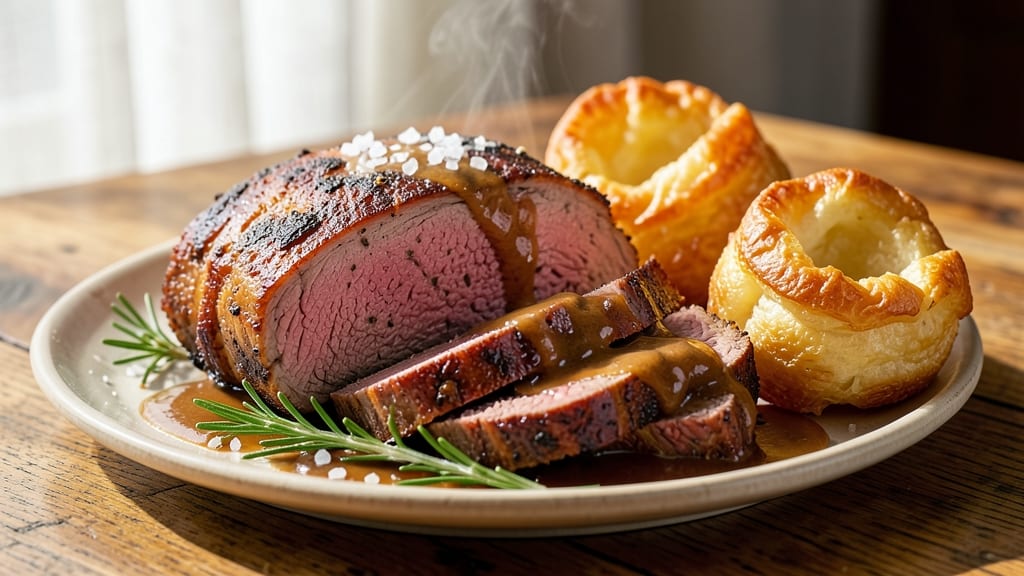
This beef and Yorkshire pudding recipe delivers the quintessential Sunday roast experience—tender, juicy beef paired with golden, crispy Yorkshire puddings that soak up every last drop of flavor. The secret lies in precise timing: resting the beef while the puddings bake, ensuring both components reach perfection simultaneously.
I’ve perfected this dish over years of hosting family dinners, where the aroma alone transforms a simple meal into a centerpiece.
Start with a well-marbled beef joint, seasoned simply with salt and pepper, then roasted to medium-rare for maximum tenderness. Meanwhile, the Yorkshire pudding batter—just eggs, flour, and milk—bakes in hot oil until puffed and golden, creating a textural contrast that elevates the dish.
The key is a 425°F oven for the beef and puddings, ensuring both cook efficiently without drying out.
What makes this recipe special is the harmony of textures: the crispy puddings crack under gentle pressure, revealing a soft, airy interior, while the beef remains juicy and caramelized at the edges.
Serve with a rich red wine gravy, roasted root vegetables, and buttery mashed potatoes for the full Sunday roast experience. Every bite is a balance of rich, savory, and crispy perfection.
This dish is ideal for special occasions or when you want to impress—it’s the kind of meal that makes guests feel like they’ve stepped into a classic British pub. The process is straightforward, but the results are restaurant-quality. Let’s get started on creating a meal that feels like a celebration.
Ingredients for beef and yorkshire pudding
Six core ingredients deliver the quintessential British Sunday roast experience—juicy beef and crispy Yorkshire puddings.
| Ingredient | Amount | Notes |
|---|---|---|
| Beef Top Round Roast 🥩 | 3 lb | Well-marbled, 1.5-inch thickness |
| Large Eggs 🥚 | 4 whole | Room temperature preferred |
| All-Purpose Flour 🌾 | 1 ½ cups | Sifted for smooth batter |
| Whole Milk 🥛 | 1 ½ cups | Full-fat for best texture |
| Vegetable Oil 🫒 | ½ cup | High smoke point preferred |
| Diamond Crystal Kosher Salt 🧂 | 1 ½ tbsp | Coarse grain recommended |
| Freshly Ground Black Pepper 🌶️ | 1 tsp | Cracked peppercorns preferred |
| Unsalted Butter 🧈 | ½ cup | Cold, cubed for gravy |
| Beef Stock 🥫 | 2 cups | Homemade or high-quality store |
| Red Wine 🍷 | ½ cup | Bold, dry variety like Cabernet |
| All-Purpose Flour 🌾 | ¼ cup | For gravy thickening |
| Fresh Parsley 🌿 | ¼ cup | Chopped, for garnish |
| Fresh Rosemary 🌿 | 2 sprigs | For beef seasoning |
| Garlic Cloves 🧄 | 4 cloves | Smashed for beef rub |
The beef selection is critical—top round roast with visible marbling delivers that melt-in-your-mouth texture. Look for cuts with 1.5-inch thickness for even cooking. Most butchers will trim it to your preferred size. For the Yorkshire puddings, Diamond Crystal kosher salt dissolves more evenly than table salt, creating that perfect balance of savory and crispy. The eggs should be large and room temperature—cold eggs can cause uneven batter. If using store-bought beef stock, Kitchen Basics or Pacific Foods brands are reliable for depth of flavor. The red wine should be bold and dry—Cabernet Sauvignon or Merlot work perfectly, but whatever you have open will suffice.
No top round roast? Bottom round or chuck roast works equally well—just increase cooking time slightly. Substituting milk with half-and-half adds richness, though the puddings may be slightly denser. For the oil, vegetable or canola is ideal, but peanut oil works beautifully too (just avoid nut allergies). The gravy requires beef stock and red wine, but if you're avoiding alcohol, beef broth with balsamic vinegar mimics the depth. Fresh herbs like rosemary and parsley elevate the dish, but dried equivalents at one-third the amount work in a pinch. The flour for the puddings must be all-purpose—bread flour creates a denser texture.
The beef should rest for 15-20 minutes before slicing—this ensures juices redistribute. Yorkshire pudding batter keeps for up to 24 hours in the fridge, covered tightly. For the gravy, make it 1-2 hours ahead—the flavors deepen over time. Store leftovers in airtight containers for 3-4 days in the fridge, or freeze portions for up to 3 months. The puddings reheat beautifully in a 350°F oven for 10-12 minutes, covered loosely with foil. Gravy reheats well on the stovetop, just stir occasionally to prevent sticking.
Why You'll Love This Recipe
- No-Fuss Roast: The beef top round is forgiving—no fancy prep, just a quick sear and slow cook. Honestly, I’ve made this while chatting on the phone; the key is letting the oven do the work while you sip tea.
- Golden Crisp Magic: That Yorkshire pudding? The eggy, floury batter baked in hot oil turns into puffed, crackling clouds. Between us, it’s the one thing that makes a simple roast feel like a Sunday dinner—no fancy sides needed.
- Leftovers Reinvented: Cold beef and pudding reheat beautifully in a pan with gravy or straight from the fridge. I’ll be real: my kids ask for this combo more than the original meal, and it’s still packed with flavor.
- Budget Sunday Feast: Top round is affordable, and you’re feeding a crowd for less than takeout. Plus, the pudding batter uses basic pantry staples—no specialty ingredients, just pure satisfaction in every bite.
Step-by-step instructions for beef top round roast with Yorkshire pudding
Master this classic Sunday roast technique for perfectly tender beef and golden Yorkshire puddings.
Prepare the Beef for Even Cooking
Remove the 3 lb beef top round roast from the refrigerator and let it sit at room temperature for 1 hour before cooking. This ensures even cooking throughout the thickest part of the roast. Pat the meat dry with paper towels, then rub it generously with the 1.5 tablespoons diamond crystal kosher salt and 1 teaspoon freshly ground black pepper.
Next, create a simple herb rub by combining the 2 sprigs fresh rosemary (finely chopped) and the 4 smashed garlic cloves (minced) with an additional ½ teaspoon salt and ¼ teaspoon pepper. Press this mixture firmly into the meat, focusing on the fat cap and any scoring marks. The rosemary and garlic will infuse flavor deep into the beef during the long cook.
Roast the Beef to Perfect Medium-Rare
Preheat your oven to 325°F with a rack positioned in the center. Place the seasoned beef top round roast fat-side up on a wire rack set inside a roasting pan. This elevation allows hot air to circulate around the meat, promoting even cooking and crispy skin. Roast for 2 to 2.5 hours until the internal temperature reaches 130°F for medium-rare.
Here's where patience pays off: avoid opening the oven door during cooking. Each time you peek, you lose 25°F of heat and add 10-15 minutes to your cooking time. When the beef reaches 130°F, remove it from the oven and tent loosely with aluminum foil. Let it rest for 20-30 minutes before slicing—this resting period allows the juices to redistribute throughout the meat, ensuring each slice remains succulent.
Make the Yorkshire Pudding Batter
While the beef roasts, prepare the Yorkshire pudding batter by whisking together the 1.5 cups all-purpose flour (sifted), 1.5 cups whole milk, 4 whole large eggs, and 1.5 tablespoons diamond crystal kosher salt in a medium bowl. The batter should be smooth and slightly thicker than heavy cream—if it's too thin, let it rest for 10 minutes before using.
Heat 0.5 cup vegetable oil in a 12-inch cast iron skillet or muffin tin until it reaches 375°F—the oil should shimmer but not smoke. Divide the batter evenly among the muffin cups (or pour into the skillet) and bake immediately. The key to perfect Yorkshire puddings is timing: they should bake for 20-25 minutes until puffed and deep golden brown, with crispy exteriors and tender interiors.
Prepare the Red Wine Gravy
After removing the beef from the oven, place the roasting pan on the stovetop over medium heat. Add the 0.5 cup red wine and scrape up all the browned bits from the bottom of the pan using a wooden spoon. These fond bits are packed with flavor and will form the base of your gravy. Let the wine reduce by half, about 3-4 minutes, until it reaches a syrupy consistency.
Stir in the 2 cups beef stock and bring to a gentle simmer. Whisk in the 0.5 cup unsalted butter (cubed) and 0.25 cup all-purpose flour to create a roux. Cook for 5-7 minutes until the gravy thickens enough to coat the back of a spoon. Season with additional salt and pepper to taste, then strain through a fine-mesh sieve to remove any impurities. Keep the gravy warm until ready to serve.
Assemble and Serve
Slice the rested beef top round roast against the grain into ¼-inch thick slices. Arrange the slices on a platter, fanning them slightly to showcase their juicy interior. Serve the Yorkshire puddings alongside, their crispy tops contrasting beautifully with the tender beef. Spoon the rich red wine gravy generously over the meat and puddings, and garnish with the 0.25 cup chopped fresh parsley for a pop of color and freshness.
This classic combination delivers the perfect balance of textures and flavors: crispy Yorkshire puddings, juicy medium-rare beef, and a velvety red wine gravy that ties everything together. The rosemary and garlic rub on the beef adds depth, while the parsley garnish brightens the plate. Serve immediately for the ultimate Sunday roast experience.
Pro Tips For Making Beef And Yorkshire Pudding
- Sear the Beef Hard: Don’t just brown the top round—get it deep golden and caramelized on all sides first. I used to skip this, and the beef stayed tough and bland; now I sear it in batches until the edges crisp, then finish in the oven. That crust locks in flavor and keeps the meat juicy.
- Whisk the Batter Like Mad: Yorkshire puddings rise or fall on the batter’s consistency—whisk the eggs, flour, and milk until it’s smoother than a fresh latte, with no lumps. I learned this the hard way after making flat, sad puddings; a fine screen strainer helps if you’re impatient like me.
- Skip the Overcrowding: Pour the batter into the hot pan just before the beef goes in, and use a spoon to spread it thin—no more than 1/4-inch deep. I once crowded the pan and ended up with dense, doughy puddings instead of crispy clouds. Trust the process; it works.
- Use Cold Milk, Not Warm: Chill the whole milk in the fridge for 30 minutes before mixing it with the eggs and flour. Warm milk makes the batter cook too fast, leading to flat puddings. Sounds weird, but it works—my grandmother swore by it, and she was right.
Common mistakes when making perfect results
Overcooking the Beef
One of the biggest mistakes is letting the beef overcook while the Yorkshire puddings bake. Since both components require oven time, I’ve learned to prioritize the beef’s 130°F internal temperature for medium-rare.
Use a meat thermometer—I recommend the ThermoWorks Smoke—to avoid guesswork. If you pull the beef too early, it’ll dry out while the puddings finish baking. 🌡️
Skipping the Rest
I can’t stress this enough: never skip the 20-30 minute rest after roasting. This step lets the beef’s juices redistribute, or you’ll end up with dry slices. Place the beef on a cutting board, loosely tent it with foil, and let it rest while you finish the puddings and gravy.
Trust me, the wait is worth it for juicy perfection.
Underheating the Pudding Oil
The oil for Yorkshire puddings must be 375°F—any cooler, and they’ll absorb oil instead of puffing. Use a deep-fry thermometer to monitor the temperature. If the oil isn’t hot enough, the batter will cook slowly, resulting in dense, greasy puddings.
I’ve ruined batches by rushing this step, so take your time here.
Using Cold Ingredients
Cold eggs or milk can cause the Yorkshire pudding batter to curdle or separate. Let all ingredients—especially eggs—sit at room temperature for 30 minutes before mixing. I’ve seen recipes where cold batter didn’t rise properly, leading to flat, sad puddings.
A quick fix is to whisk the batter gently over warm (not hot) water for 5 minutes if you’re in a hurry.
Opening the Oven Too Soon
Every time you open the oven during the beef’s 2-2.5 hour roast, you lose 25°F of heat and add 10-15 minutes to cooking time. I used to peek constantly, but now I set a timer and resist the urge.
The puddings can bake separately in a 425°F oven while the beef rests, so don’t let oven door anxiety ruin your roast.
Overmixing the Batter
Whisk the Yorkshire pudding batter just until smooth—overmixing introduces too much air, causing the puddings to collapse. Stir with a spatula or whisk for 30 seconds, then let it rest for 10 minutes before using.
I’ve seen recipes where overmixed batter resulted in dense, flat puddings. The batter should be thick but pourable, like heavy cream.
Nutrition facts
Frequently asked questions
Can I make Yorkshire puddings ahead of time?
Fresh is best, but you can prepare the batter up to 24 hours ahead and store it in the fridge. For the best results, bake them immediately before serving. If reheating, pop them in a 350°F oven for 10-12 minutes with a splash of water in the pan to restore crispiness. The beef should always be cooked fresh to maintain juiciness.
What cut of beef works best for this recipe?
Top round roast is ideal for its marbling and tenderness, but bottom round or chuck roast work well too. For chuck, increase cooking time by 30-45 minutes to ensure tenderness. Always aim for a 1.5-inch thickness and let the beef rest at room temperature for 1 hour before roasting for even cooking.
How do I keep Yorkshire puddings crispy?
Use 375°F oil—any cooler and they’ll absorb grease instead of puffing. Bake them in a 425°F oven until deep golden brown, then serve immediately. For extra crispiness, place them on a wire rack for 5 minutes before serving. Never cover them with foil while hot, as this steams and softens them.
Can I substitute red wine in the gravy?
Yes! Use ½ cup beef broth with 1 tablespoon balsamic vinegar for a non-alcoholic version. For depth, add 1 teaspoon soy sauce or ½ teaspoon Worcestershire sauce. The key is balancing acidity and umami—red wine provides both, but these alternatives work beautifully. Always reduce the liquid by half before adding stock to concentrate flavors.
Why did my Yorkshire puddings collapse?
This usually happens from overmixing the batter (introduces too much air) or underheated oil (below 375°F). Whisk just until smooth (30 seconds) and let the batter rest for 10 minutes before using. Also, ensure your oven is fully preheated and the batter is at room temperature. Cold ingredients or opening the oven too soon can also cause collapse.