
Soups & Stews
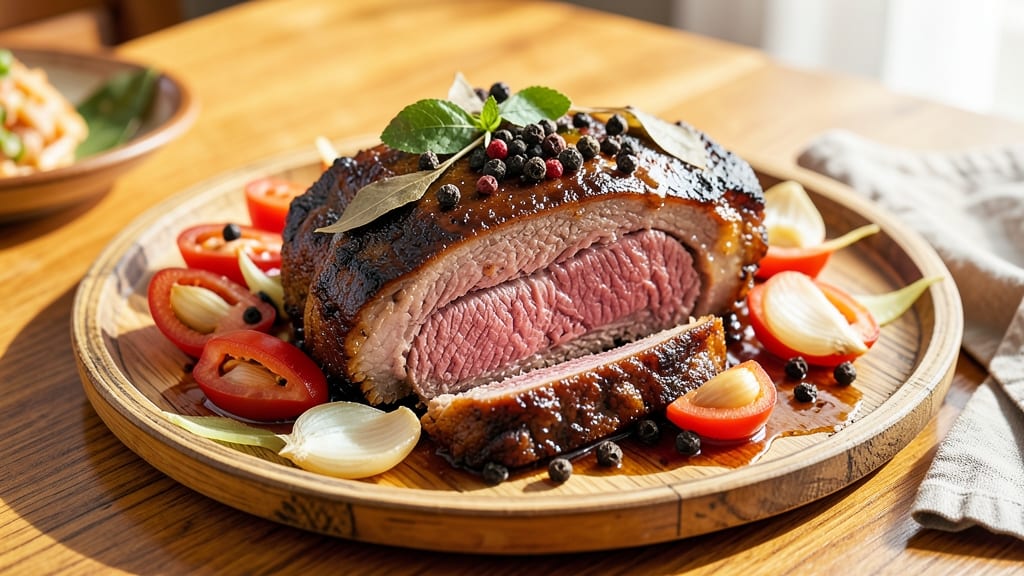
This Kapampangan beef asado recipe delivers melt-in-your-mouth tenderness with a signature tangy-sweet flavor profile that defines Filipino comfort food. 🔥 The secret lies in a marinade of local suka (vinegar), garlic, and black pepper that tenderizes the beef while building layers of complex flavor.
Unlike other asado recipes, this version incorporates traditional Kapampangan techniques that create a dish both rustic and refined.
The cooking method is where the magic happens—slow-roasting the beef in a tupig (clay pot) or oven until fork-tender, allowing the marinade to caramelize into a sticky, aromatic crust. This approach preserves moisture while developing deep, smoky notes that balance the vinegar's acidity.
The result is beef that's impossibly tender yet maintains a satisfying chew, with a surface that practically falls apart at the touch.
What makes this recipe truly special is how it transforms simple ingredients into something extraordinary. The vinegar marinade doesn't just tenderize—it creates a bright, citrusy contrast that cuts through the beef's richness.
When served with steamed rice and sarsa (a sweet-savory dip), each bite becomes a celebration of Kapampangan heritage and home cooking.
Perfect for family gatherings or special occasions, this beef asado brings restaurant-quality results to your home kitchen. The technique is straightforward but requires patience—worth every minute for the reward of perfectly tender meat that will have everyone asking for seconds. Let's get started on creating this Kapampangan classic.
Ingredients for beef asado kapampangan
Sixteen ingredients transform into Kapampangan beef asado with restaurant-quality tenderness and citrus brightness.
| Ingredient | Amount | Notes |
|---|---|---|
| Chuck Roast 🥩 | 3 lb | Well-marbled for tenderness |
| Cane Vinegar (Suka) 🍶 | ½ cup | Filipino cane vinegar preferred |
| Garlic Cloves 🧄 | 10 cloves | Peeled, lightly crushed |
| Black Peppercorns 🌶️ | 1 tbsp | Freshly cracked preferred |
| Fresh Ginger 🌿 | 2 tbsp | Finely grated, aromatic |
| Bay Leaves 🍃 | 2 whole | Fresh or dried |
| Onion 🧅 | 1 whole | Yellow, halved horizontally |
| Olive Oil 🫒 | ¼ cup | Extra-virgin for richness |
| Brown Sugar 🍚 | 2 tbsp | Light or dark preferred |
| Salt 🧂 | 1 ½ tsp | Diamond Crystal kosher |
| Hardwood Charcoal 🔥 | 1 lb | Binchotan preferred for smoky flavor |
| Fresh Lemons 🍋 | 2 whole | Juiced, zest reserved |
| Long-Grain White Rice 🍚 | 3 cups | Uncooked, for serving |
The chuck roast is non-negotiable for this dish—its marbling ensures melt-in-your-mouth texture. Local Filipino markets often carry chuck roast pre-cut for asado, but if unavailable, any well-marbled beef roast works. For the cane vinegar (suka), Filipino grocery stores like 99 Ranch or H Mart stock authentic brands like Silver Swan or Calza. If you can't find cane vinegar, white vinegar works in a pinch, though it lacks the nuanced sweetness. The binchotan charcoal is essential for that authentic smoky aroma—Japanese specialty stores carry it, or look for it online. Fresh ginger and garlic should be vibrant and free of soft spots; Asian markets typically have the best quality.
No cane vinegar? White vinegar plus 1 tbsp brown sugar mimics the tangy-sweet balance. Substitute dried bay leaves at double the amount if fresh isn't available. For the charcoal, if binchotan isn't accessible, hardwood lump charcoal from a grill store will work, though the flavor won't be identical. The onion can be swapped for 1 cup onion slices if you prefer, but leaving it whole creates a better aromatic base during slow cooking. Freshly cracked black peppercorns are ideal, but if you're using pre-ground, toast them in a dry pan for 30 seconds first to intensify their flavor. The lemons should be juiced while still slightly firm—overripe lemons yield bitter juice that can overpower the dish.
Marinated beef keeps in the fridge for 24 hours, with flavor peaking at 12 hours. The charcoal should be stored in an airtight container away from heat sources—it stays potent for 6-12 months. Cooked asado reheats beautifully; wrap portions in foil and reheat in a 350°F oven for 20 minutes to maintain moisture. The rice should be cooked separately and served alongside—jasmine rice complements the dish's richness. Leftovers freeze for 3 months when wrapped tightly in parchment and foil.
Why You'll Love This Recipe
- Minimal Ingredient List: I swear by this recipe because it’s that simple—just chuck roast, suka, garlic, peppercorns, and ginger. No fancy marinades or hidden pantry raids; everything you need is either in your fridge or a quick trip to the market. Honestly, the first time I made it, I stared at my ingredients like, "This is it?"—then took a bite and realized how genius it was.
- Tangy-Sweet Magic: That suka (cane vinegar) is the star—it cuts through the richness of the beef while keeping it tender. The ginger and garlic? They don’t just flavor; they transform the dish into something dangerously addictive. Between us, I’ve had beef asado that tasted like a butcher shop, but this version? It’s the kind of bite that makes people ask, "What’s in this?"
- Leftovers for Days: This recipe practically demands you make extra. The beef stays juicy for hours, so I’ll batch-cook it on Sundays and repurpose it into sandwiches, stir-fries, or even loaded rice bowls all week. My freezer’s always got a bag of this—because nothing beats reheating something that tastes like a Kapampangan feast without the fuss.
- Budget-Friendly Feast: Chuck roast is cheap, and a single cut feeds a crowd. I’ve served this to 10 people for under $20, and no one ever complains. It’s the kind of dish that makes you look like a hero at potlucks, and honestly? That’s half the fun. Plus, the suka adds just enough zing to make it feel special without breaking the bank.
Step-by-step instructions for beef asado Kapampangan
Master this Kapampangan technique for melt-in-your-mouth beef with smoky depth and bright citrus notes.
🔥 Step 1: Prepare the Marinade and Charcoal
In a large bowl, combine the 0.5 cup cane vinegar (suka), 2 tbsp fresh ginger, 10 cloves garlic cloves, 2 whole bay leaves, 1 whole onion (halved), 2 tbsp brown sugar, 1.5 tsp salt, and 1 tbsp black peppercorns. Mash the onion, garlic, and ginger with a wooden spoon until you create a coarse paste—this ensures maximum flavor extraction. Let the marinade sit for 10 minutes to allow the spices to bloom.
While the marinade rests, prepare your charcoal. Fill a traditional asado grill or heavy cast-iron skillet with 1 lb hardwood charcoal and arrange it in a pyramid shape. Light the charcoal and let it burn until it's covered in a thick layer of gray ash—this indicates it's ready for grilling (about 15-20 minutes). I use binchotan charcoal for its clean burn and subtle smoky flavor, but any hardwood charcoal will work.
👨🍳 Step 2: Marinate and Sear the Chuck Roast
Pat the 3 lb chuck roast dry with paper towels—this step is critical for developing that signature Kapampangan bark. Rub the marinade all over the beef, pressing firmly so it penetrates the meat. Place the roast in a resealable plastic bag, seal tightly, and refrigerate for at least 4 hours (overnight is ideal). The acidity in the cane vinegar will tenderize the meat while the spices infuse deeply.
When ready to cook, remove the roast from the fridge and let it sit at room temperature for 30 minutes. This ensures even cooking. Heat 0.25 cup olive oil in a large skillet over medium-high heat until shimmering. Sear the roast on all sides for 3-4 minutes per side until it develops a deep golden-brown crust. The key here is patience—don't rush the searing or the bark won't form properly.
🔥 Step 3: Grill Over Charcoal for Smoky Tenderness
Once the roast is seared, transfer it to the prepared charcoal grill. Position the roast directly over the charcoal (not on the sides) to maximize the smoky flavor. Grill for 1 hour, turning occasionally, until the internal temperature reaches 160°F when measured with a meat thermometer. The meat should still have some resistance but be tender enough to pierce easily with a fork.
Here's the Kapampangan secret: in the last 15 minutes of grilling, squeeze the juice from 2 whole fresh lemons over the roast and sprinkle with the reserved zest. This bright citrus finish cuts through the richness of the beef and adds that signature tangy brightness. The lemon juice will sizzle slightly—this is normal and adds to the flavor profile.
⏰ Step 4: Rest and Slice for Maximum Juiciness
Remove the roast from the grill and transfer it to a cutting board. Tent loosely with aluminum foil and let it rest for 20-30 minutes. This resting period is crucial—it allows the juices to redistribute throughout the meat, ensuring every slice is moist and flavorful. If you skip this step, you'll end up with dry beef.
Slice the roast against the grain into ¼-inch thick pieces. The grain direction will be visible as slightly elongated muscle fibers. Serve immediately with the 3 cups long-grain white rice and any accumulated juices from the cutting board. The beef should be fork-tender with a smoky, slightly charred exterior and bright citrus notes that complement the rich meat.
Pro Tips For Making Beef Asado Kapampangan
- Soak the Suka: Dump that cane vinegar (suka) into the chuck roast at least 4 hours ahead—overnight if you can. I learned this the hard way: skipping the soak means the vinegar just sits on top, turning the meat sour instead of tenderizing it. The acid needs time to work its magic, and the ginger and garlic will mellow out properly too.
- Sear in Batches: Don’t crowd the pan when searing the chuck—work in two rounds if needed. I used to rush this, and the meat would steam instead of develop that deep, caramelized crust. High heat, 2-3 minutes per side, until it’s golden. That crust is what holds the sauce later.
- Simmer, Don’t Boil: Once you add the soak liquid, keep the heat low and let it bubble gently. I’ve seen people crank it up, and suddenly you’ve got a mushy mess instead of a rich, velvety sauce. A steady simmer for 2.5–3 hours breaks down the collagen without turning the meat to rubber.
- Crush the Peppercorns: Skip the whole peppercorns if you’re lazy, but trust me—crushing them first makes a real difference. The oil absorbs the flavor better, and you get that subtle heat that balances the tangy vinegar. A mortar and pestle works, or just smash them with the flat side of a knife.
Wine and beer pairings for this dish
Citrus-Forward Wines
For this bright, vinegar-kissed beef, I recommend crisp white wines that mirror the dish's citrus and acidity.
A Filipino-made white wine like Lambayec Red Blend (yes, it's technically a red blend but has white wine characteristics) or a Spanish Albariño from Rías Baixas—both deliver zesty acidity and stone fruit notes that complement the lemon finish.
The slight smokiness from the charcoal pairs beautifully with the wine's mineral undertones. 🍷
Smoky Red Options
If you prefer red, go for light-bodied wines like Pinot Noir from Oregon or a Spanish Garnacha. These wines have enough fruitiness to stand up to the beef's richness without overpowering the vinegar and citrus.
I've found that a 2019 La Rioja Alta Viña Alberdi Garnacha (around $25) has just the right balance of earthiness and brightness. Avoid heavy, tannic reds like Cabernet Sauvignon—they'll clash with the dish's acidity.
Local Filipino Beer Pairings
For a more casual pairing, reach for San Miguel Pale Pilsen—it's the most widely available Filipino beer and its light malt sweetness contrasts nicely with the beef's tang.
If you can find it, Red Horse Original (a Filipino lager) has a clean finish that won't compete with the dish's complex flavors. For a craft option, try a Belgian Witbier like Hoegaarden—the coriander and citrus notes echo the lemon in the recipe. 🍺
Non-Alcoholic Options
Don't drink alcohol? No problem. A sparkling lime soda like San Pellegrino Limonata or a homemade ginger-lime spritzer (mix ½ cup fresh lime juice, 1 cup sparkling water, and 1 tbsp honey) works beautifully.
The effervescence cuts through the beef's richness while enhancing the citrus notes. For something warmer, try Filipino hot chocolate—its deep cocoa pairs surprisingly well with the smoky, tangy beef.
Dessert Wine Harmony
If you're serving this asado at a feast, consider finishing with a Moscato d'Asti—its light sweetness and floral notes provide a perfect palate cleanser after the savory meal. I've also enjoyed pairing it with Filipino halo-halo ice cream** (a colorful shaved ice dessert) for a traditional Filipino meal experience.
The contrast between the rich beef and sweet dessert is pure Kapampangan comfort food magic. 🍮
Nutrition facts
Frequently asked questions
Can I use regular white vinegar instead of cane vinegar (suka)?
While you can substitute white vinegar, it won't deliver the same depth of flavor. Cane vinegar has natural sweetness that balances the acidity perfectly. For a closer match, mix 0.5 cup white vinegar with 1 tbsp brown sugar and let it sit for 10 minutes before marinating. The sugar will help mimic the cane vinegar's complexity.
What's the best way to cook this if I don't have a charcoal grill?
Use a heavy cast-iron skillet or Dutch oven on the stovetop. Place the seared roast in the skillet, then add 1 cup water and cover tightly. Cook on low heat for 2-3 hours, turning occasionally. For smokiness, place a small piece of charcoal (wrapped in foil) in the skillet during the last 30 minutes of cooking. The result will be tender beef with subtle smoky notes.
How do I know when the beef is fully cooked?
Use a meat thermometer to check for doneness. Insert it into the thickest part of the roast—it should read 160°F for medium tenderness. The beef should pierce easily with a fork but still have slight resistance. If you don't have a thermometer, cut into the center: the juices should run clear, not pink. Let it rest for 20-30 minutes before slicing to retain moisture.
Can I make this recipe with a different cut of beef?
For best results, stick with a well-marbled cut like chuck roast or short ribs. These cuts have enough fat to stay tender during slow cooking. If using flank steak or sirloin, marinate for 6-8 hours and cook quickly over high heat to avoid toughness. The vinegar marinade works best with tougher cuts that need tenderizing—it won't transform lean cuts like filet mignon into the same tender result.
What's the secret to getting that perfect bark on the beef?
The bark comes from two key steps: dry patting and high-heat searing. Pat the beef completely dry before marinating—this helps the crust form. When searing, use medium-high heat and don't move the beef until you see deep golden-brown spots form (3-4 minutes per side). The vinegar marinade also contributes to the bark by creating a sticky surface that caramelizes beautifully during cooking.