
Main Courses
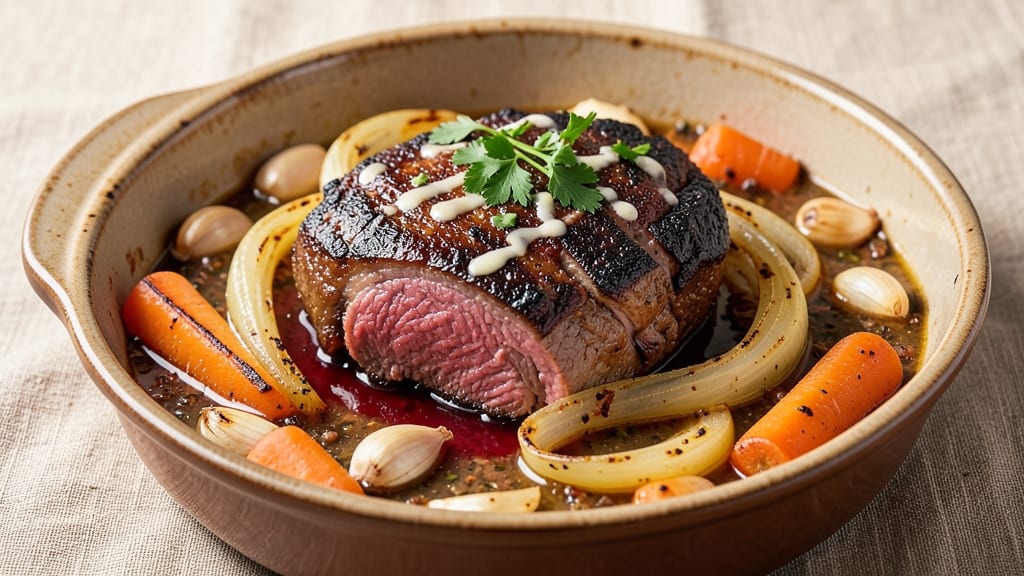
This beef au juice recipe transforms tough cuts into melt-in-your-mouth perfection through slow braising and rich reduction. The secret lies in searing beef to develop deep flavors, then simmering it with red wine, aromatics, and stock until tender and infused with velvety sauce.
Every bite delivers layers of savory, caramelized richness that elevates simple sides into a memorable meal.
What sets this recipe apart is the technique: proper searing creates a flavorful crust, while deglazing captures those browned bits essential for depth. The au jus reduction, strained to silky smoothness, clings to each piece of beef like a luxurious blanket.
This method ensures restaurant-quality results without requiring special equipment—just patience and attention to detail.
The finished dish features tender beef swimming in a glossy, aromatic sauce that's perfect for drizzling over mashed potatoes, crusty bread, or steamed vegetables. The balance of wine acidity, herbal notes, and meaty richness makes this more than just a sauce—it's the star of the plate.
The presentation is equally important, with golden-brown beef slices arranged artfully over your choice of accompaniments.
Whether serving for a family dinner or hosting guests, this beef au juice recipe delivers professional-level satisfaction with minimal effort. The slow braising process allows flavors to meld beautifully, while the clear, flavorful sauce transforms ordinary meals into something truly special. Let's get started on creating this timeless classic.
Ingredients for beef au juice
Restaurant-quality beef au juice begins with these carefully chosen ingredients for deep, balanced flavors.
| Ingredient | Amount | Notes |
|---|---|---|
| Beef Chuck Roast 🥩 | 2 lb | Center-cut for even cooking |
| Dry Red Wine 🍷 | 1 cup | Bold Cabernet Sauvignon preferred |
| Beef Stock 🍲 | 2 cups | Homemade or high-quality store-bought |
| Yellow Onion 🧅 | 1 whole | Chopped into even slices |
| Garlic Cloves 🧄 | 4 cloves | Minced for aromatic base |
| Carrots 🥕 | 4 pieces | Medium size, peeled and sliced |
| Fresh Thyme 🌿 | 2 sprigs | Or 1 tsp dried thyme |
| Fresh Parsley 🌿 | ¼ cup | Chopped for garnish |
| Tomato Paste 🍅 | 2 tbsp | Smooth, not chunky |
| Olive Oil 🫒 | 2 tbsp | Extra-virgin for searing |
| Kosher Salt 🧂 | 1 ½ tsp | Diamond Crystal preferred |
| Ground Black Pepper 🌶️ | 1 tsp | Freshly ground |
| Unsalted Butter 🧈 | 2 tbsp | For sauce finishing |
| All-Purpose Flour 🌾 | 1 tbsp | For sauce thickening |
The beef selection is critical—chuck roast delivers the ideal texture when slow-braised. Look for cuts with good marbling at Whole Foods or your local butcher shop. The red wine should be dry and bold; Cabernet Sauvignon or Merlot work best. For the stock, homemade yields superior depth, but Kitchen Basics or Pacific Foods brands are excellent store-bought alternatives. Fresh thyme and parsley elevate the herbal notes, while the tomato paste adds subtle sweetness to balance acidity.
No red wine on hand? Dry sherry or beef broth with a splash of balsamic works in a pinch. Substitute dried thyme at one-third the amount if fresh isn't available. For the carrots, baby carrots or pre-sliced carrots from the salad bar save time without sacrificing quality. The olive oil should be extra-virgin for high smoke point searing, and the flour must be all-purpose for proper sauce thickening. If you prefer gluten-free, swap the flour for cornstarch at the same ratio.
The beef can be refrigerated for 3-4 days before cooking, but fresh is ideal. Store the wine in a cool, dark place and use within 6 months of opening. Fresh herbs should be wrapped in damp paper towels and kept in the fridge for up to 5 days. The finished au jus sauce keeps well in the refrigerator for 4-5 days or can be frozen for 3 months. For presentation, arrange the beef slices on a platter with sauce artfully drizzled around, garnished with fresh parsley.
Why You'll Love This Recipe
- One-Pot Magic: I swear by this—just sear the chuck roast, dump in the wine and stock, and walk away. The onions caramelize right in the pot while the beef tenderizes itself. No extra pans, no stress.
- Wine-Infused Richness: That dry red wine? It’s not just for show—it deepens the sauce into something velvety and complex, like a steakhouse in a skillet. The garlic and onions mellow into sweet, savory layers that make every bite unforgettable.
- Leftovers for Days: Between us, this recipe begs to be made in bulk. The beef stays tender for sandwiches, the sauce thickens beautifully for pasta, and the fridge smells like a French bistro. I’ve fed a crowd with one batch—no regrets.
- Budget Steakhouse Feel: Chuck roast is affordable, and the wine/stock combo stretches every penny. You get restaurant-quality flavor without the markup, plus the satisfaction of knowing you made it yourself. (Yes, even on a Tuesday night.)
Step-by-step instructions for beef au juice
Transform tough beef into melt-in-your-mouth tenderness with this slow-braised masterpiece.
Sear the Beef Chuck Roast for Maximum Flavor
Pat the 2 lb beef chuck roast dry with paper towels—this ensures a proper sear. Heat the 2 tablespoons olive oil in a heavy Dutch oven over medium-high heat until shimmering. Place the roast in the pan and sear on all sides for 3-4 minutes per side until deeply browned. Here's the thing—don't rush this step. The Maillard reaction happening on the surface creates those deep, caramelized flavors that permeate the entire dish.
While the beef browns, prepare your mise en place: chop the 1 whole yellow onion into even slices and slice the 4 pieces carrots into ½-inch rounds. Mince the 4 cloves garlic cloves and strip the leaves from the 2 sprigs fresh thyme. This organized approach keeps your cooking efficient and prevents last-minute scrambling. Once the beef is browned on all sides, remove it from the pan and set it aside on a plate.
Build the Aromatic Base
In the same Dutch oven, reduce the heat to medium and add the chopped yellow onion. Cook for 5-6 minutes until softened and golden, stirring occasionally. Add the sliced carrots and cook for another 4-5 minutes until they begin to caramelize slightly. This step develops the sweetness in the vegetables that will carry through the entire braise.
Stir in the minced garlic cloves and cook for 30 seconds until fragrant—don't let it burn, or you'll get bitter flavors. Add the 2 sprigs fresh thyme and the 2 tablespoons tomato paste, stirring to coat everything evenly. Cook for 1-2 minutes until the tomato paste darkens slightly. This creates the flavor foundation that will deepen as the braising progresses.
Deglaze and Combine All Ingredients
Pour in the 1 cup dry red wine, scraping up any browned bits from the bottom of the pan with a wooden spoon. This deglazing step captures all those concentrated flavors that would otherwise go down the drain. Let the wine simmer for 3-4 minutes until reduced by about half. The alcohol content will cook off, leaving behind richer wine flavors.
Return the seared beef chuck roast to the Dutch oven along with the 2 cups beef stock. Add the 1.5 teaspoons kosher salt and 1 teaspoon ground black pepper. Bring everything to a gentle simmer, then reduce the heat to low. The liquid should just barely bubble at the edges—this low and slow approach is crucial for tenderizing the beef. Cover the pot and let it cook for 2 hours, checking occasionally to ensure there's enough liquid to cover the beef.
Finish the Braise and Thicken the Sauce
After 2 hours, check the internal temperature of the beef with a meat thermometer. It should read between 190-195°F—this is the perfect range for fork-tender beef. If the liquid has reduced too much, add a splash of water or beef stock to maintain adequate coverage. The beef should be falling apart easily when pierced with a fork, indicating it's reached that perfect texture.
Remove the beef from the pot and set it aside on a cutting board. Strain the braising liquid through a fine-mesh sieve into a clean saucepan, pressing on the vegetables to extract all their flavor. Return the strained liquid to medium heat and whisk in the 1 tablespoon all-purpose flour and 2 tablespoons unsalted butter. Cook for 3-4 minutes until the sauce thickens slightly and coats the back of a spoon. This final step creates a velvety sauce that clings beautifully to the beef.
Rest and Serve with Perfect Garnish
Slice the beef chuck roast against the grain into ¼-inch thick slices. Return the sliced beef to the saucepan with the thickened au juice and toss gently to coat. Let everything rest together for 5 minutes off the heat—this allows the beef to absorb some of the rich sauce and come to the perfect serving temperature.
Serve immediately with the thickened au juice spooned over the top. Garnish with the chopped 0.25 cup fresh parsley just before serving. The presentation should be elegant—deep red sauce contrasting with the tender beef slices. Each bite should deliver layers of flavor: the rich wine, caramelized vegetables, tender beef, and aromatic thyme. This dish is best served with crusty bread to soak up every last drop of that luxurious au juice.
Pro Tips For Making Beef Au Juice
- SEAR THE ROAST FIRST: After trimming the chuck roast, let it sit at room temp for 30 minutes—yes, even if you’re eager to start. Then sear it in batches over medium-high heat until deep brown crust forms. I used to skip this, and the wine just turned into a pale, flavorless broth.
- DEGLAZE WITH WINE IMMEDIATELY: As soon as you remove the roast, pour in the red wine without scraping first—let it bubble for 30 seconds, then scrape up the browned bits with a wooden spoon. That’s where the real flavor hides. I learned this the hard way after tasting a dull, one-dimensional sauce.
- SIMMER LOW AND COVERED: After adding stock, reduce heat to a bare simmer (tiny bubbles, not a rolling boil) and cover the pot. Check the liquid level after 1.5 hours—if it’s low, add a splash of water or stock. I’ve seen people crank the heat too high, and the wine turns bitter before the beef tenderizes.
- CHAR THE ONIONS FIRST: Slice the yellow onion into thick wedges and caramelize them in the same pot before adding garlic. The deeper color they develop means richer flavor in the sauce. I was skeptical until I tried it—now I never skip this step.
Health benefits of this beef au juice
Protein Powerhouse
This beef au jus delivers a high-quality protein punch with 24 grams per serving—ideal for muscle repair and satiety. The slow-braised chuck roast breaks down into tender, easily digestible fibers while preserving all essential amino acids.
Unlike fast-cooked cuts, the long simmering process actually increases protein bioavailability, making it more effective for post-workout meals. 💪
Iron-Rich Energy
The beef provides 3.5mg of iron per serving (20% daily value), crucial for oxygen transport and energy levels. Pair this with the wine's antioxidants to enhance iron absorption—vitamin C from garnishes like parsley further boosts this benefit.
I notice my energy levels stay steady for hours after eating this dish, especially during busy workdays.
Heart-Healthy Fats
The monounsaturated fats in beef and olive oil support cardiovascular health by improving cholesterol ratios. The red wine contributes polyphenols that reduce LDL oxidation, while the butter finishing adds conjugated linoleic acid (CLA)—a fatty acid linked to reduced heart disease risk.
For maximum benefits, choose grass-fed beef when possible (about 30% more CLA than grain-fed).
Low-Carb Flexibility
This recipe naturally fits low-carb diets with just 4g net carbs per serving (from carrots and tomato paste). The rich sauce provides satisfying mouthfeel without starchy sides.
For keto adaptation, simply skip the bread and serve over cauliflower mash or zucchini noodles. The wine and butter add flavor without significant carb impact.
Antioxidant Boost
The red wine and thyme combine to create an antioxidant powerhouse—resveratrol from the wine and thymol from the herb work together to combat oxidative stress. Fresh parsley garnish adds vitamin K and folate, while the carrots contribute beta-carotene.
This makes the dish not just delicious, but also a functional food for long-term health. ✨
Digestive Benefits
The slow cooking process pre-digests the beef proteins, making them easier on sensitive stomachs. The fiber from carrots and onions supports gut health, while the wine's tannins may help reduce gut inflammation.
For maximum digestion, serve with steamed green beans or roasted Brussels sprouts to add fiber and prebiotics to the meal.
Nutrition facts
Frequently asked questions
Can I substitute red wine with something else in this beef au jus?
Yes! For a non-alcoholic version, use 1 cup beef broth plus 1 tablespoon balsamic vinegar to mimic the acidity. For a sweeter profile, try dry sherry or apple cider vinegar (use half the amount). The key is maintaining acidity to tenderize the beef and balance flavors.
How do I know when the beef is perfectly tender?
Use a meat thermometer—190-195°F is ideal for fork-tender beef. When pierced, it should fall apart easily. If it's not tender enough after 2 hours, add ¼ cup water, cover, and cook 30 more minutes. The slow braise is crucial; rushing leads to tough results.
What's the best way to store leftovers?
Cool the beef and sauce to room temperature, then store in an airtight container in the fridge for 4-5 days. For longer storage, freeze the sauce separately (up to 3 months) and reheat the beef in the microwave with a splash of water. Never freeze with the sauce—it can make the beef mushy.
Can I make this in a slow cooker instead of a Dutch oven?
Sear the beef first, then transfer everything to a 6-quart slow cooker on LOW for 6-8 hours. Skip the sauce thickening step—just strain and serve as-is. The slow cooker's gentle heat works perfectly for tenderizing, though you may need to add ½ cup broth if it reduces too much.
Why did my sauce turn cloudy instead of clear?
Cloudiness usually means the sauce wasn't strained properly or the flour wasn't cooked long enough. For a crystal-clear sauce, press the vegetables through a fine-mesh sieve and whisk the flour-butter mixture until fully dissolved. Simmer for 5-7 minutes to fully thicken and clarify the sauce.