
Soups & Stews
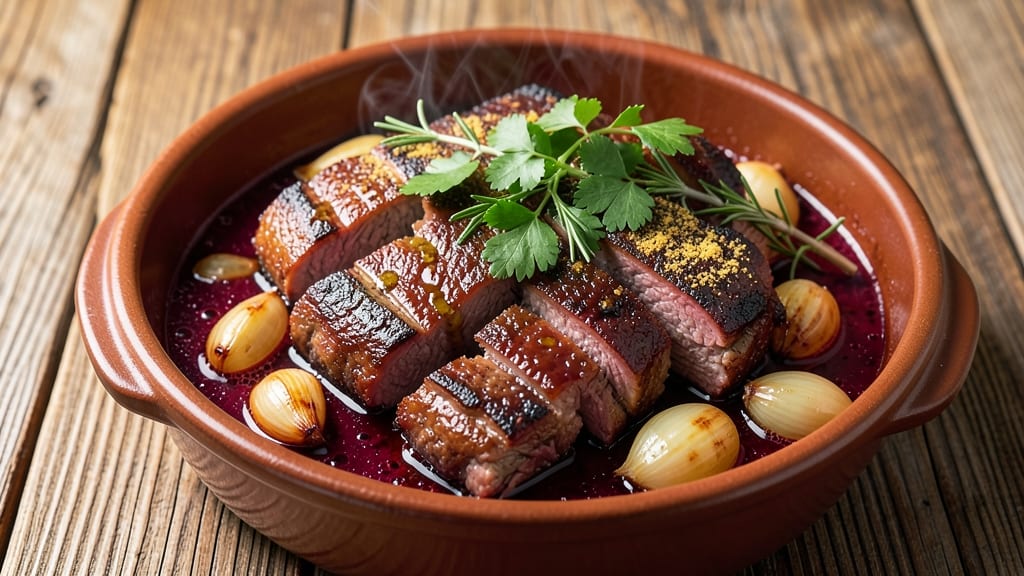
This beef Barolo recipe transforms a simple cut of beef into a restaurant-worthy masterpiece, where rich Barolo wine braises tender meat until it melts in your mouth. The deep, earthy notes of Barolo wine create a sauce so velvety and complex, it elevates every bite into something truly special.
I perfected this dish after years of experimenting with wine reductions, and the result is a dish that feels luxurious yet achievable at home.
The secret lies in the slow braising process—caramelized onions form the base, while the beef simmers until fork-tender in the wine-infused sauce. This isn’t just a stew; it’s a celebration of Italian comfort food, where the wine’s acidity balances the richness of the meat.
The sauce thickens naturally as it reduces, creating a glossy finish that clings perfectly to each piece of beef.
Pair it with creamy polenta or roasted root vegetables to complete the meal, and you’ll have a dish that’s elegant enough for dinner guests but simple enough for a weeknight.
The aroma alone—warm spices, caramelized onions, and the deep bouquet of Barolo—will have everyone at the table anticipating the first bite.
This recipe delivers restaurant-quality results with a technique that’s surprisingly approachable. The key is patience—letting the flavors develop slowly to create depth that can’t be rushed. Trust the process, and you’ll end up with a dish that’s rich, savory, and impossible to resist.
Ingredients for beef barolo
Rich, slow-cooked beef with deep Barolo wine and caramelized onions—just eight ingredients for a restaurant-worthy dish.
| Ingredient | Amount | Notes |
|---|---|---|
| Chuck Roast 🥩 | 2 ½ lb | Pre-cut into 1.5-inch cubes |
| Yellow Onions 🧅 | 2 whole | Sliced into 1/4-inch rounds |
| Barolo Wine 🍷 | 2 cups | Bold, dry variety preferred |
| Beef Broth 💧 | 1 ½ cups | Low-sodium preferred |
| Tomato Paste 🍅 | 2 tbsp | Squeeze tube preferred |
| Garlic Cloves 🧄 | 4 cloves | Minced for depth |
| Olive Oil 🫒 | 2 tbsp | Extra-virgin for richness |
| Fresh Thyme 🌿 | ¼ cup | Leaves only, chopped |
| Salt 🧂 | 1 ½ tsp | Kosher or sea salt |
| Black Pepper 🌶️ | 1 tsp | Freshly ground |
| Bay Leaves 🌿 | 2 whole | Remove before serving |
| Unsalted Butter 🧈 | 2 tbsp | For finishing sauce |
The chuck roast is your secret weapon here—it's tough enough to handle the long braise but turns fork-tender when slow-cooked. Costco or Whole Foods usually have it pre-cut into chunks, which saves time. If you're buying a whole roast, ask the butcher to cube it for you—1.5-inch pieces are perfect. For the Barolo, grab a bottle from Trader Joe's or a local wine shop—look for labels that say 'bold' or 'dry.' The deeper the color, the richer the flavor. And don't skimp on the onions—yellow onions caramelize best, giving that sweet, jammy base to the sauce.
No Barolo on hand? Dry red wine like Cabernet Sauvignon or Merlot works in a pinch, but add 1 tbsp balsamic vinegar for that extra depth. Fresh thyme? Dried thyme at one-third the amount gets you close, but fresh is ideal if you've got it. The tomato paste can be skipped entirely if you're avoiding it, but it adds a nice umami punch. For the beef broth, low-sodium is key—you don't want to over-salt the dish. And if you're feeling fancy, swap the olive oil for duck fat—it adds an incredible richness to the caramelized onions.
This dish tastes even better the next day, so make it ahead if you can. Store in an airtight container in the fridge for up to 5 days, or freeze for 3 months—the flavors only get more complex over time. To reheat, warm gently on the stove with a splash of beef broth. The sauce thickens as it cools, so if it looks too stiff when reheating, add a little extra broth. And trust me, the aroma alone will have your whole house smelling like a Tuscan trattoria.
Why You'll Love This Recipe
- One-Pot Magic: I swear by this—just sear the chuck roast, toss in onions and wine, then let it slow down. No chopping, no fuss, and that rich Barolo wine does all the work while you’re scrolling through your phone.
- Deep, Wine-Kissed Richness: The Barolo wine and tomato paste create this unreal depth—like a fancy steakhouse sauce but way easier. The beef stays tender, and the sauce? Thick, velvety, and packed with umami that’ll have you licking the plate.
- Leftovers for Days: Between us, this dish begs to be made in bulk. The flavors actually get better the next day, and reheating it is a breeze—just warm it up with a splash of broth. My freezer’s full of portions I grab on lazy mornings.
- Budget-Friendly Luxury: Chuck roast is cheap, but the Barolo wine makes it feel special. You’re getting restaurant-quality taste without the price tag, and the onions and broth stretch every ingredient. Honestly, this is my go-to for feeding the family without breaking the bank.
Step-by-step instructions for beef Barolo
Here's how to transform simple ingredients into restaurant-quality wine-braised beef.
Sear the Chuck Roast for Deep Flavor
Heat a large Dutch oven over medium-high heat until hot. Add the 2 tablespoons olive oil and swirl to coat the bottom. Working in batches, add the 2.5 lb chuck roast cut into 1.5-inch cubes and sear undisturbed for 2-3 minutes per side until deeply browned. This step creates the Maillard reaction that builds rich, caramelized flavor.
Don't crowd the pan—sear in batches if needed. You want crispy brown edges on each piece. Once all the beef is browned, transfer it to a plate and set aside. The rendered juices in the pan will form the base for your sauce, so don't wipe them out.
Caramelize the Onions and Build the Base
In the same Dutch oven, add the 2 whole yellow onions sliced into ¼-inch rounds and cook over medium heat for 10-12 minutes until softened and golden. Stir occasionally to ensure even cooking. This slow caramelization develops sweet, jammy flavors that balance the wine's acidity.
After the onions soften, add the 2 tablespoons tomato paste and stir to combine. Cook for 1-2 minutes until fragrant. Then add the 4 cloves minced garlic and cook for 30 seconds just until aromatic. This aromatic trio forms the flavor foundation for your braise.
Deglaze and Simmer with Wine and Broth
Pour in the 2 cups Barolo wine and scrape up any browned bits from the bottom of the pan. Let the wine reduce by half—about 3-4 minutes—until it's syrupy and concentrated. This step intensifies the wine's flavor and removes some of the alcohol.
Add the 1.5 cups beef broth, 1.5 teaspoons salt, 1 teaspoon black pepper, and 2 whole bay leaves. Return the browned beef to the pot, along with any accumulated juices. Bring to a gentle simmer, then reduce heat to low and cover partially. Simmer for 2-2.5 hours until the beef is fork-tender.
Finish with Thyme and Butter for Richness
After the beef is tender, stir in the ¼ cup chopped fresh thyme and 2 tablespoons unsalted butter. Simmer uncovered for 5-7 minutes until the sauce thickens slightly and the butter melts into a glossy finish. This final step adds aromatic depth and a velvety texture to the sauce.
Remove the 2 bay leaves before serving. The beef should be fork-tender with a rich, wine-infused sauce that coats every bite. Serve with crusty bread or over polenta to soak up every delicious drop.
Pro Tips For Making Beef Barolo
- SEAR THE ROAST FIRST: Chuck roast needs a deep, dark crust before it hits the wine—don’t skip this. Hit it with a heavy pan (cast iron if you have it) and let it sit undisturbed for 4-5 minutes per side until it’s the color of old leather. I used to rush this and ended up with bland beef; patience here makes all the difference.
- SWEAT ONIONS LOW AND SLOW: Yellow onions caramelize best when they’re not in a hurry. Cook them on medium-low heat for 15-20 minutes, stirring occasionally, until they’re soft and golden—not crispy. If they brown too fast, you’re losing sweetness that’ll balance the acidity of the Barolo.
- DEGLAZE WITH WINE IMMEDIATELY: As soon as you remove the roast, pour in that Barolo right away—don’t let the fond dry out. Scrape every bit off the bottom with a wooden spoon; those bits are flavor bombs. I learned this the hard way when I walked away for "just a minute" and lost half the depth of flavor.
- DILUTE THE PASTE WITH BROTH: Stir the tomato paste into a splash of beef broth first to break it up smoothly before adding it to the wine. This prevents clumpy, pasty pockets in your sauce—no one wants to chew through gummy bits when they’re supposed to be savoring the Barolo.
Serving suggestions for this recipe
Polenta Perfection
Creamy polenta is the ideal partner for this beef Barolo, soaking up the rich wine sauce like a dream. Cook 1 cup polenta in 4 cups boiling water with a pinch of salt, stirring constantly for 15-20 minutes until thick.
Finish with 2 tablespoons butter and ¼ cup grated Parmesan for extra richness. The contrast of silky polenta against the tender beef creates a textural masterpiece. 🌟
Roasted Root Vegetables
For a vibrant, colorful side, toss 2 cups diced carrots, parsnips, and sweet potatoes with 1 tbsp olive oil, ½ tsp thyme, and ½ tsp rosemary. Roast at 400°F for 30-35 minutes until caramelized. The natural sweetness of the vegetables balances the wine's acidity beautifully.
Crusty Bread Basket
No Italian meal is complete without crusty bread to mop up every last drop of sauce. I love using a baguette or ciabatta from a local bakery—slice it and warm it in the oven at 350°F for 5 minutes.
Rub with a garlic clove for extra flavor. The bread's crunch contrasts perfectly with the velvety beef and sauce.
Leafy Greens Finish
Add a fresh, bright element with a simple arugula salad. Toss 4 cups baby arugula with 1 tbsp lemon juice, 1 tbsp olive oil, and a pinch of salt. The peppery bite cuts through the richness of the beef, leaving your palate refreshed. 💛
Cheese Course Pairing
For a truly indulgent meal, follow with a selection of Italian cheeses like Parmigiano-Reggiano, Gorgonzola Dolce, and Pecorino Romano. The bold flavors of the beef Barolo complement the creamy and tangy notes of these cheeses beautifully. Serve with sliced apples or crusty bread for the perfect pairing.
Dessert: Tiramisu
End your meal with a classic Italian dessert like tiramisu. The coffee and mascarpone flavors provide a perfect contrast to the rich, wine-infused beef.
A small batch made with 2 cups mascarpone cheese, 1 cup strong coffee, and 15 ladyfingers is all you need to impress your guests. 🍮
Nutrition facts
Frequently asked questions
Can I substitute Barolo with another red wine?
Yes, but choose carefully! A bold, dry red like Cabernet Sauvignon or Chianti works best. Avoid sweet wines—they'll make the sauce cloying. For extra depth, add 1 tbsp balsamic vinegar to mimic Barolo's acidity. The key is balancing richness with acidity to cut through the beef's fat.
How do I know when the beef is tender enough?
Use a fork or meat thermometer! The beef should reach 203°F internally and fall apart easily. If it's still tough after 2.5 hours, extend the cooking time by 30 minutes. The slow braise breaks down connective tissue, so patience pays off—no need to rush!
Can I make this recipe in a slow cooker?
Sear the beef first, then transfer everything to your slow cooker. Cook on low for 6-7 hours or high for 3-4 hours. The slow cooker's gentle heat mimics the Dutch oven's braising. Just skip the final butter/thyme step—add them during the last 10 minutes on the stovetop to keep the sauce glossy.
What's the best way to reheat leftovers?
Gently reheat on the stovetop with a splash of beef broth to prevent drying. Cover and warm over low heat for 5-7 minutes. Avoid microwaving—it turns the sauce rubbery. Leftovers taste even better the next day as flavors meld further!
Why does my sauce look thin after cooking?
This happens when the wine's alcohol evaporates too quickly. To fix it, simmer uncovered for 5-10 extra minutes to reduce the sauce. For future batches, reduce the wine by ¼ cup or add 1 tbsp cornstarch mixed with water at the end. The sauce should coat the back of a spoon.