
Soups & Stews
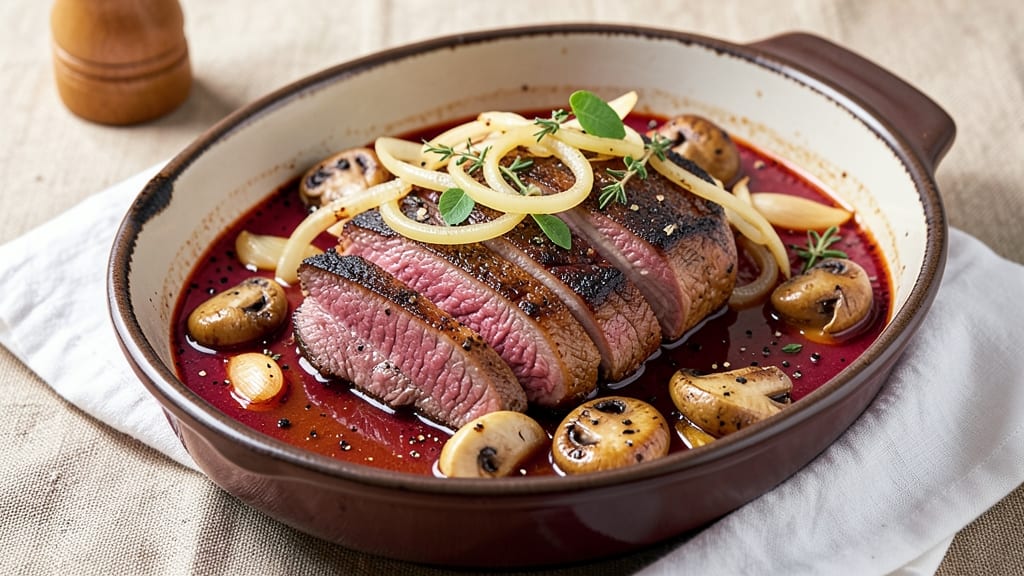
This beef au vin recipe transforms tough cuts of beef into melt-in-your-mouth perfection through slow braising in rich red wine. The deep, complex flavors develop as the meat tenderizes, creating a dish that feels like a restaurant classic.
What makes this recipe special is the balance between bold wine notes and subtle aromatics—caramelized onions and mushrooms add layers of sweetness and earthiness that elevate every bite.
The process begins with searing the beef to lock in juices, then deglazing the pan to capture flavorful browned bits. A reduction of red wine, beef broth, and aromatics creates a velvety sauce that coats the beef beautifully.
The key to success lies in patience—low and slow cooking ensures the meat becomes fork-tender while the sauce deepens in flavor. This is a dish that rewards attention to detail with restaurant-quality results.
By the time you serve it, you'll have perfectly braised beef with a glossy, wine-infused sauce that's rich yet balanced. The caramelized onions and mushrooms add texture and depth, while the herbs at the end bring freshness to cut through the richness.
This recipe delivers a satisfying, hearty meal that pairs beautifully with mashed potatoes, crusty bread, or roasted vegetables.
Perfect for special occasions or cozy weeknight dinners, this beef au vin is a showstopper that impresses without being overly complicated. The technique is straightforward, but the results are extraordinary—deep flavor, tender meat, and a sauce that's impossible to resist. Let's get started on creating this timeless classic.
Ingredients for beef au vin
Transform tough beef into restaurant-quality tenderness with these carefully selected ingredients.
| Ingredient | Amount | Notes |
|---|---|---|
| Chuck Roast 🥩 | 2 lb | Pre-cut into 1.5-inch cubes |
| Yellow Onions 🧅 | 2 whole | Thinly sliced, caramelized |
| Cremini Mushrooms 🍄 | 1 lb | Sliced into even pieces |
| Garlic Cloves 🧄 | 4 cloves | Minced, for depth of flavor |
| Red Wine 🍷 | 1 ½ cups | Bold, dry variety like Cabernet Sauvignon |
| Beef Broth 💧 | 1 ½ cups | Homemade or high-quality store-bought |
| All-Purpose Flour 🌾 | 2 tbsp | For thickening the sauce |
| Fresh Thyme 🌿 | 2 tbsp | Leaves only, chopped finely |
| Fresh Rosemary 🌿 | 1 tbsp | Chopped, for aromatic depth |
| Olive Oil 🫒 | 2 tbsp | Extra-virgin for searing |
| Unsalted Butter 🧈 | 2 tbsp | For richness in sauce |
| Kosher Salt 🧂 | 1 ½ tsp | Diamond Crystal preferred |
| Fresh Black Peppercorns 🌶️ | ½ tsp | Coarsely cracked |
| Fresh Parsley 🌿 | ¼ cup | Chopped, for garnish |
The chuck roast is non-negotiable here—its marbling and connective tissue create that melt-in-your-mouth texture when braised properly. Look for well-marbled cuts at your local butcher or the meat department of Whole Foods or Costco, where they often have it pre-cubed for convenience. For the onions, yellow or red varieties work best—they caramelize beautifully, developing that sweet, jammy texture that's essential to the dish. Mushrooms should be firm and clean; cremini or baby bella are ideal, but any white button mushrooms will suffice if you're working with a budget. The red wine is where you can splurge if you like—Cabernet Sauvignon or Merlot add depth, but even a house red from your grocery store will work in a pinch.
No red wine? Substitute beef broth with a splash of balsamic vinegar—it mimics the acidity and depth. Fresh thyme and rosemary are ideal, but dried works at one-third the amount if you're in a hurry. The flour is crucial for thickening the sauce—all-purpose works fine, but if you have cornstarch, use half the amount for a glossier finish. For the mushrooms, shiitake or oyster mushrooms add an earthy complexity if you want to elevate the dish. The butter should be unsalted to control the seasoning, and European-style butter like Plugrá or President has higher fat content for better sauce results. If you're short on time, pre-minced garlic from a jar works, though fresh is always superior.
The beef can be prepped ahead—sear and refrigerate overnight for a quicker cooking time the next day. Store the wine and broth separately in the fridge for up to 3 days before use, but the fresh herbs should be kept in a damp paper towel-lined container for maximum freshness. The finished dish reheats beautifully—simmer gently for 10-15 minutes on the stove, adding a splash of broth if needed. Leftovers keep for 4-5 days in the fridge or 3 months in the freezer, though the flavor only improves with time as the sauce deepens. Portion into individual containers for easy lunches or reheating.
Why You'll Love This Recipe
- One-Pot Magic: I swear by this recipe because it’s all in one pot—no fussing with multiple pans or dishes. Just brown the chuck roast, toss in the onions and mushrooms, deglaze with wine, and let it simmer. My counter stays clean, and my stress level drops.
- Wine’s Secret Weapon: That red wine isn’t just for show—it’s the star. It tenderizes the beef while adding depth that store-bought sauces can’t match. The mushrooms soak it up like a sponge, and the garlic? Oh, it’s the cherry on top.
- Sunday Supper Ready: Between us, this is my go-to for game days or when friends drop by. It’s hearty enough for a crowd but still feels special—like you actually cooked it from scratch. (Spoiler: You did.)
- Budget-Friendly Feast: Chuck roast is cheap, and this recipe stretches it into three or four meals. I’ll be real: my kids pick out the mushrooms first, but they still devour seconds. Leftovers? They taste even better the next day.
Step-by-step instructions for beef au vin braise
Master this classic French technique for tender beef swimming in rich, velvety red wine sauce.
Sear the Chuck Roast for Deep Flavor
Pat the 2 lb chuck roast dry with paper towels and season generously with 1.5 tsp kosher salt and 0.5 tsp cracked black peppercorns. Heat 2 tbsp olive oil in a heavy Dutch oven over medium-high heat until shimmering. Working in batches if needed, sear the beef on all sides for 3-4 minutes per side until deeply browned and crusty. This step develops the Maillard reaction, creating complex flavors that form the foundation of your braise.
Remove the seared beef and set aside. The browned bits (fond) will dissolve into the sauce later, so don't wipe the pot clean. If your pan gets too crowded, work in batches to maintain proper heat control. The beef should be medium-rare at this stage—it will finish cooking during the braising process.
Caramelize Onions and Mushrooms
In the same Dutch oven, add 2 tbsp unsalted butter and reduce heat to medium. Add the 2 whole thinly sliced yellow onions and cook for 10-12 minutes, stirring occasionally, until softened and beginning to turn golden. This slow caramelization process creates natural sweetness that balances the acidity of the wine.
Add the 1 lb sliced cremini mushrooms and cook for another 5-6 minutes until they release their moisture and begin to brown. Stir in the 4 minced garlic cloves and cook for 30 seconds until fragrant. Here's where it gets critical: sprinkle 2 tbsp all-purpose flour over the vegetables and stir vigorously for 1-2 minutes to coat everything evenly. This creates a roux that will thicken your sauce later.
Deglaze with Red Wine
Pour in the 1.5 cups bold red wine and scrape up all the browned bits from the bottom of the pot using a wooden spoon. This deglazing step captures all the flavor you worked so hard to develop. Bring the mixture to a simmer and let it reduce by half—about 5-6 minutes—until the alcohol smell dissipates and the liquid thickens slightly.
Add the 1.5 cups beef broth, then return the seared beef to the pot. The liquid should come about halfway up the sides of the beef. Bring to a gentle simmer, then add the 2 tbsp chopped fresh thyme and 1 tbsp chopped fresh rosemary. The herbs will infuse the liquid with their aromatic qualities during the long braising time.
Braise Until Fork-Tender
Cover the Dutch oven with a tight-fitting lid and transfer to a 325°F oven. Braise for 2.5-3 hours until the beef is fork-tender and easily pulls apart. I check for doneness by inserting a meat thermometer—the internal temperature should reach 203°F (well-done) for perfect texture.
During the last 30 minutes, check the sauce occasionally. If it reduces too much, add 2-3 tablespoons of hot water or beef broth to maintain the proper consistency. The beef should be so tender it nearly falls apart when pierced with a fork, and the sauce should coat the back of a spoon.
Finish and Garnish
Remove the beef from the pot and transfer it to a serving platter. Skim any excess fat from the surface of the sauce, then strain the sauce through a fine-mesh sieve into a clean saucepan if you prefer a smoother texture. Return the sauce to the Dutch oven and simmer for 2-3 minutes to reduce slightly and intensify the flavors.
Slice the beef against the grain into ¼-inch thick pieces and arrange on plates. Ladle the rich red wine sauce over the top and garnish with 0.25 cup chopped fresh parsley. Serve immediately with crusty bread or mashed potatoes to soak up every last drop of that luxurious sauce. The contrast of tender beef with the caramelized onions and mushrooms creates a symphony of textures in each bite.
Pro Tips For Making Beef Au Vin
- SEAR THE ROAST HARD: Chuck roast needs a deep, dark crust to hold up through hours of braising. I used to treat it gently—big mistake. Hit it with a hot pan (no oil needed—just the natural fat) and let it sit undisturbed for 3-4 minutes per side until it’s got that stubborn blackened crust. That’s what keeps the meat tender and the sauce rich.
- SWEAT THE ONIONS LOW: Skip the rush—onions should turn golden, not brown, or they’ll burn and make the sauce bitter. Cover the pan halfway through and let them steam for 5 minutes, stirring only once. My grandmother swore by this, and she was right: patient onions mean a sauce that tastes like actual cooking, not regret.
- DEGLAZE WITH WINE IMMEDIATELY: That browned crust on the pan? That’s flavor gold. As soon as you remove the roast, pour in the wine right away while the pan is still hot. Scrape every last bit with a wooden spoon—don’t just splash and walk away. The sauce won’t taste like cheap cooking if you do this.
- SKIP THE MUSHROOM PRE-PREP: I used to slice mushrooms thinly, and they’d turn to mush. Now I just tear them by hand—no knife, no fuss. They’ll brown faster and soak up the wine like a sponge, adding texture without falling apart. (Yes, even if you’re impatient like me.)
Serving suggestions for leftovers
Classic French Starter
Begin with a simple garlic and parsley butter—mix 2 tbsp softened unsalted butter with 1 tbsp minced garlic, 1 tbsp chopped parsley, and a pinch of salt.
Spread this on warm baguette slices or crusty bread and toast until golden. The buttery richness complements the wine's acidity perfectly. 🥖
Creamy Potato Pairings
For a heartier meal, serve with garlic mashed potatoes made with 2 lbs Yukon Gold potatoes, ½ cup heavy cream, 4 tbsp butter, and 3 minced garlic cloves. The creaminess balances the deep flavors of the beef au vin.
Alternatively, try roasted baby potatoes tossed in 2 tbsp olive oil, 1 tsp rosemary, and ½ tsp smoked paprika for a crispy contrast.
Vegetable Harmony
Brighten the plate with sautéed green beans or roasted Brussels sprouts. Toss 1 lb green beans with 1 tbsp olive oil, 1 minced garlic clove, and ½ tsp red pepper flakes, then sauté for 5-6 minutes until tender-crisp.
Brussels sprouts roasted at 400°F for 20 minutes with 1 tbsp balsamic glaze add a tangy sweetness that cuts through the richness.
Wine Pairing Perfection
Serve with the same red wine used in the recipe—a bold Cabernet Sauvignon or Merlot enhances the dish's depth. For a lighter option, a Pinot Noir adds brightness. If you prefer beer, a Belgian-style witbier or amber ale complements the dish's complexity without overpowering it. 🍷
Sauce Drizzle Technique
For presentation, use a sauce spoon to create elegant drizzles over the beef. Start with a thin line down the center of each plate, then add small dots around the beef.
Finish with a swirl of sauce around the plate's edge. Garnish with fresh parsley or a sprinkle of cracked black pepper for a restaurant-worthy touch.
Make-Ahead Serving
Prep components ahead to streamline serving. Reheat the beef au vin in a Dutch oven over medium-low heat for 10-15 minutes, adding 2-3 tbsp beef broth if needed. Keep the sauce warm in a slow cooker on low heat while you reheat the beef.
Serve with pre-made sides like mashed potatoes or roasted vegetables** straight from the fridge for a stress-free meal. ✨
Nutrition facts
Frequently asked questions
Can I use any red wine in this beef braise?
A bold, dry red wine like Cabernet Sauvignon or Merlot works best, but you can use what you have. Avoid sweet wines—they'll make the sauce cloying. For a non-alcoholic version, substitute with beef broth plus 1 tbsp balsamic vinegar to mimic the acidity and depth.
What cut of beef works best for au vin?
Chuck roast is ideal because its connective tissue breaks down beautifully during braising, creating tender, melt-in-your-mouth results. Beef short ribs or stew beef also work well. Avoid leaner cuts like sirloin—they'll dry out. Look for well-marbled meat with good fat content for maximum flavor.
How do I know when the beef is done?
Use a meat thermometer to check for 203°F internal temperature—this ensures the connective tissue has fully broken down. The beef should be fork-tender and nearly fall apart. If you don't have a thermometer, cut into a small piece: it should be easily pierced with a fork and juices should run clear.
Can I make this recipe in a slow cooker?
Yes! Brown the beef first, then transfer everything to a slow cooker and cook on low for 8 hours or high for 4-5 hours. Add ½ cup beef broth if the liquid gets too thick. The slow cooker method is perfect for hands-off cooking, though oven-braising gives slightly more control over the sauce reduction.
What's the best way to reheat leftovers?
Gently reheat in a Dutch oven over medium-low heat for 10-15 minutes, adding 2-3 tbsp beef broth if needed. Never microwave—it makes the sauce watery. For make-ahead meals, store components separately (beef, sauce, veggies) and reassemble when ready to serve. Leftovers keep for 4-5 days in the fridge.