
Soups & Stews
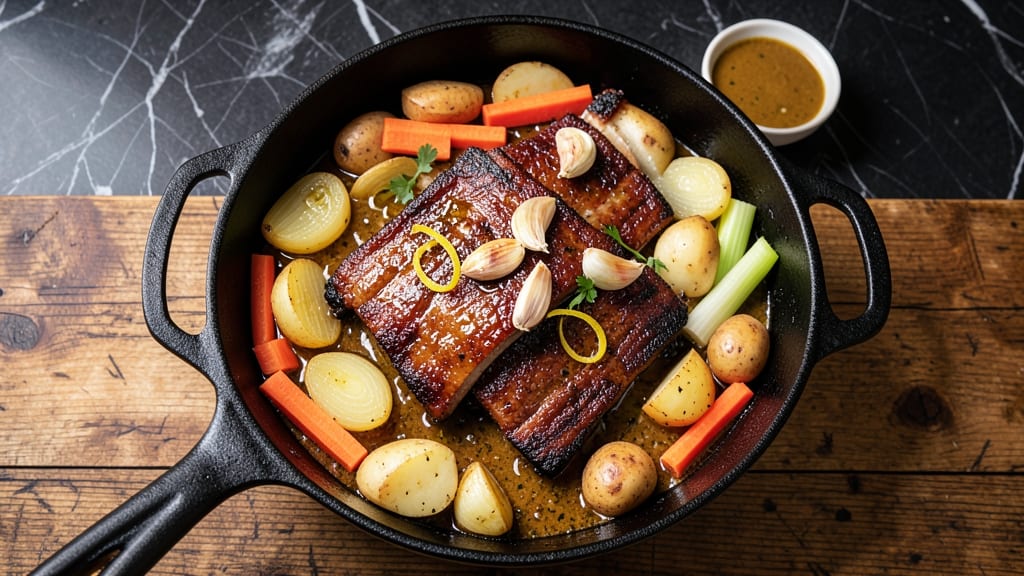
This beef back ribs stew transforms tough cuts into melt-in-your-mouth perfection through slow braising—where rich, caramelized flavors develop over hours, turning simple ingredients into a hearty masterpiece.
The secret lies in searing the ribs first to lock in juices, then letting them simmer until they practically fall apart, all while building layers of depth with aromatic spices and vegetables.
What starts as a humble pot of ingredients becomes a deeply satisfying dish that tastes even better the next day.
What sets this recipe apart is the caramelized potato topping—a crispy, golden crust that adds texture and visual appeal without overwhelming the stew’s bold flavors. The slow-cooking process ensures tender meat, while the potatoes develop a satisfying crunch that contrasts beautifully with the creamy, spiced broth.
This isn’t just a stew; it’s a foolproof method for turning a weeknight into a restaurant-quality experience, all while keeping prep simple and cleanup manageable.
The result is a rich, aromatic stew where each bite delivers tender beef, tender vegetables, and a sauce so flavorful it’ll have everyone asking for seconds. The caramelized potatoes on top add a touch of elegance, making this dish perfect for family dinners or cozy gatherings.
Whether you’re feeding a crowd or treating yourself to a comforting meal, this recipe delivers on both flavor and satisfaction.
Pair it with crusty bread to soak up every last drop of that deeply savory broth, or serve it alongside a simple green salad for balance. The beauty of this stew is in its versatility—it’s hearty enough to stand alone but flexible enough to adapt to your preferences.
Ready to master the art of slow-braised beef back ribs? Let’s get started.
Ingredients for beef back ribs stew
Six hearty ingredients transform tough beef ribs into a rich, aromatic stew with crispy potato topping.
| Ingredient | Amount | Notes |
|---|---|---|
| Beef Back Ribs 🥩 | 3 lb | Bone-in, cut into 2-inch pieces |
| Yellow Onions 🧅 | 2 whole | Chopped into 1-inch pieces |
| Carrots 🥕 | 4 whole | Cut into 1-inch chunks |
| Celery Stalks 🧄 | 3 whole | Chopped into 1-inch pieces |
| Garlic Cloves 🧄 | 6 cloves | Minced for depth of flavor |
| Russet Potatoes 🥔 | 3 lb | Peeled, cut into thin slices |
| Beef Broth 💧 | 4 cups | Low-sodium preferred |
| Red Wine 🍷 | 1 cup | Bold dry variety like Cabernet |
| Tomato Paste 🍅 | ½ cup | For rich, concentrated flavor |
| Olive Oil 🫒 | ¼ cup | For searing ribs |
| Dried Thyme 🌿 | 1 tbsp | Or 1 tbsp fresh thyme leaves |
| Bay Leaves 🍃 | 2 whole | Fresh preferred |
| Ground Black Pepper 🌶️ | 1 ½ tsp | Freshly cracked |
| Kosher Salt 🧂 | 2 tbsp | Adjust to taste |
| All-Purpose Flour 🌾 | ¼ cup | For potato topping |
The beef back ribs are the foundation—look for well-marbled cuts with good fat cap for moisture. Costco or local butchers often carry the best quality, but any grocery store with a meat counter will have suitable options. If you can't find bone-in ribs, substitute with chuck roast cut into large chunks, though the texture will differ slightly. For the potatoes, Russets are ideal—they caramelize beautifully and hold their shape during cooking. If you're short on time, pre-cut frozen hash browns work in a pinch, though fresh yields better results.
No red wine? Substitute with extra beef broth plus 1 tbsp balsamic vinegar for depth. Fresh thyme is preferred, but if you only have dried, use one-third the amount. The tomato paste can be swapped for 1 cup crushed tomatoes if you prefer a smoother sauce. For the potato topping, if you don't have flour, crushed cornflakes or panko add a satisfying crunch. The carrots and celery can be swapped for turnips or parsnips if you prefer a different vegetable profile. Always taste the broth before adding the potatoes—adjust seasoning with extra salt or a pinch of sugar if needed to balance flavors.
This stew tastes even better the next day as flavors meld. Store in an airtight container in the fridge for up to 5 days or freeze for 3 months. For the potato topping, make it ahead and refrigerate—it reheats beautifully in the oven at 400°F for 10 minutes. The ribs and broth can be prepped and refrigerated separately for 2 days before cooking. When reheating, add a splash of water or broth to prevent drying. Leftovers make fantastic lunches—portion into containers with extra broth for easy reheating.
Why You'll Love This Recipe
- One-Pot Magic: I swear by this recipe because it’s one pot—no chopping boards, no extra pans. Just toss in the ribs, onions, carrots, and celery (the classic trio, but it works), and let the slow simmer do the heavy lifting.
- Garlic Bomb Depth: Between us, the garlic cloves—minced and browned until they’re almost crispy—take this stew from good to dangerously addictive. That nutty, caramelized punch? It clings to every bite like a hug.
- Leftovers That Win: Honestly, I make this on Sundays because the second batch is even better. The ribs get more tender, the broth thickens, and reheating it is just dumping and warming—no fuss. My kids beg for it by Wednesday.
- Budget-Friendly Feast: Beef back ribs aren’t cheap, but they stretch across three meals for my family. The onions, carrots, and celery stretch the ribs further, and the flavor? It tricks everyone into thinking it’s a fancy dinner. (Between us, it is.)
Step-by-step instructions for beef back ribs stew
Master this slow-braised technique for melt-in-your-mouth ribs and crispy potato topping.
Sear the Ribs for Deep Flavor
Heat a Dutch oven over medium-high heat and add the 0.25 cup olive oil. Working in batches, sear the 3 lb beef back ribs on all sides until deeply browned, about 4-5 minutes per side. This step develops the rich Maillard reaction that forms the stew's foundation.
As you sear, I like to press down gently on the ribs with a spoon to ensure even browning. Remove the ribs as they brown and set them aside on a plate. You'll know they're ready when they develop a deep golden crust—this is your flavor anchor for the entire dish.
Build the Aromatic Base
In the same Dutch oven, add the 2 whole yellow onions, 4 whole carrots, and 3 whole celery stalks that have been chopped. Cook for 5-6 minutes until the vegetables begin to soften and the onions turn translucent.
Add the 6 cloves garlic cloves and cook for another 30 seconds until fragrant. Stir in the 0.5 cup tomato paste and cook for 2 minutes to deepen its flavor. This aromatic base forms the flavor foundation for your stew—don't rush this step.
Deglaze and Simmer the Ribs
Pour in the 1 cup red wine and scrape up all the browned bits from the bottom of the pot with a wooden spoon. This deglazing captures all the flavor you've built. Add the 4 cups beef broth, 2 tbsp kosher salt, 1.5 tsp ground black pepper, 1 tbsp dried thyme, and 2 whole bay leaves.
Return the ribs to the pot, ensuring they're mostly submerged in the liquid. Bring to a simmer over medium heat, then reduce heat to low and cover. Simmer for 2-2.5 hours until the ribs are fork-tender and easily pull away from the bone. The liquid should reduce slightly, creating a rich, flavorful broth.
Prepare the Caramelized Potato Topping
While the ribs simmer, peel and thinly slice the 3 lb russet potatoes. In a separate skillet, heat 1 tablespoon olive oil over medium heat. Add the potato slices in a single layer and cook for 3-4 minutes per side until golden brown and crispy.
Remove the potatoes and set aside. In the same skillet, sprinkle the 0.25 cup all-purpose flour over the remaining potato oil and stir constantly for 1-2 minutes until it turns a light golden color. This creates a crispy, flavorful coating for your potato topping.
Combine and Finish
Once the ribs are tender, carefully remove them from the pot and set them aside. Strain the cooking liquid through a fine-mesh sieve to remove any impurities. Return the strained liquid to the pot and bring to a gentle simmer.
Add the caramelized potatoes back to the skillet with the flour coating and toss to combine. Spoon the potatoes over the ribs in the stew pot. Cover and let everything heat through for 5-10 minutes. Serve immediately with the rich, flavorful broth ladled over the top.
Pro Tips For Making Beef Back Ribs Stew
- SEAR THE RIB BONES: After trimming excess fat, lay the ribs bone-side down in a cold pot—this prevents steam from blasting away your seasoning. Crank the heat to medium-high and let them sit undisturbed for 8-10 minutes until deep brown crusts form. I learned this the hard way—skipping this step leaves you with flavorless broth.
- CHOP ONIONS SMALLER THAN YOU THINK: Dice those yellow onions into ¼-inch pieces, not the usual ½-inch chunks. They’ll dissolve into the stew faster, sweeten the liquid, and create a silky texture instead of big, mushy bits. (Yes, even if it looks like confetti—trust me.)
- SWIM THE RIB MEAT: After searing, add just enough liquid (broth, water, or beer) to cover the ribs by 1 inch—no more. The meat will release its own juices, and you’ll end up with a rich, concentrated stew instead of a watery one. I used to overfill pots, and the ribs always turned out dry.
- SAVE THE GARLIC SKINS: After mincing the garlic, toss the skins into the pot with the ribs during the simmer. They’ll infuse subtle, earthy notes into the broth without overpowering it. Sounds weird, but it works—my grandmother swore by this, and she was right.
Essential equipment for this recipe
Dutch Oven Essentials
A heavy-duty Dutch oven is your best friend for this recipe—look for 5-6 quart capacity with a tight-fitting lid. I swear by Lodge Cast Iron for its even heat distribution and durability, though Le Creuset or All-Clad work beautifully too.
Avoid thin, lightweight pots—they can’t handle the long simmer without warping. 🔥
Meat Thermometer Must-Have
Invest in a digital instant-read thermometer like the ThermoWorks Smoke or Meater to check internal temps accurately. The ribs should reach 195-203°F for perfect tenderness. A basic oven thermometer won’t cut it here—you need precision to avoid overcooking or undercooking the meat.
Fine-Mesh Strainer
For silky-smooth broth, use a fine-mesh sieve (like OXO Good Grips) to strain out impurities after simmering. This removes any stray bits of thyme stems or bay leaves that could make the final dish taste bitter. A regular colander won’t filter fine enough for a truly refined texture.
Wooden Spoon & Tongs
Wooden spoons are ideal for deglazing and stirring—Oxo Good Grips are my go-to—they’re heat-resistant and gentle on your Dutch oven’s surface. A pair of long-handled tongs helps flip the ribs during searing without burning your hands. Avoid metal utensils that can scratch your cookware.
Skillet for Potatoes
A 10-inch cast-iron skillet (like Lodge) works best for caramelizing the potatoes—it retains heat well and creates that perfect crispy crust. If you don’t have one, a nonstick stainless steel skillet will do, but avoid nonstick coatings that can’t handle high heat.
A wire cooling rack helps drain excess oil from the potatoes for extra crispiness. ✨
Storage Containers
For leftovers, use glass airtight containers (like Pyrex or Cambro) to preserve the stew’s rich flavors. The potatoes can be stored separately in a smaller container to maintain their crispy texture. Label with dates—this stew tastes even better the next day, but only if stored properly! ❄️
Nutrition facts
Frequently asked questions about beef back ribs stew
Can I substitute back ribs with another cut of beef?
Yes, but texture may vary. For a similar result, use chuck roast cut into 2-inch chunks—it braises beautifully. If you prefer bone-in meat, beef short ribs work well, though they require slightly longer cooking (3 hours instead of 2.5 hours). Avoid lean cuts like sirloin—they won’t become tender enough during braising.
How do I know when the ribs are fully tender?
Use the fork test: Gently press a fork into the meat—it should slide in easily with no resistance. The ribs should also pull away from the bone effortlessly. For extra precision, check the internal temperature with a meat thermometer: 195-203°F for fall-apart tenderness. If they’re not tender enough, add 20-30 minutes more simmering time.
Can I make this stew in a slow cooker instead?
Sear the ribs as directed, then transfer everything (including the aromatic base) to a 6-quart slow cooker. Cook on low for 8-10 hours or high for 5-6 hours. For the potato topping, caramelize them separately in a skillet and add them during the last 30 minutes of cooking. The flavors will develop just as deeply, though the texture may be slightly softer.
What if my stew tastes too salty?
Don’t panic! Add 1-2 cups of water or extra beef broth to dilute the saltiness, then simmer uncovered for 10-15 minutes to reduce the liquid slightly. For a quicker fix, stir in 1-2 tablespoons of unsalted butter—it coats the taste buds and mellows the salt. Avoid adding acidic ingredients like lemon juice, as they can make the stew taste flat. Taste as you go!
How can I make the potato topping extra crispy?
For maximum crunch, slice the potatoes paper-thin (about 1/8-inch thick) and pat them completely dry with a towel before cooking. Use a wire cooling rack to drain excess oil after frying, then broil for 2-3 minutes at 400°F to crisp up any soft spots. Toss the potatoes with a pinch of paprika before adding them to the stew for extra color and flavor.