
Soups & Stews
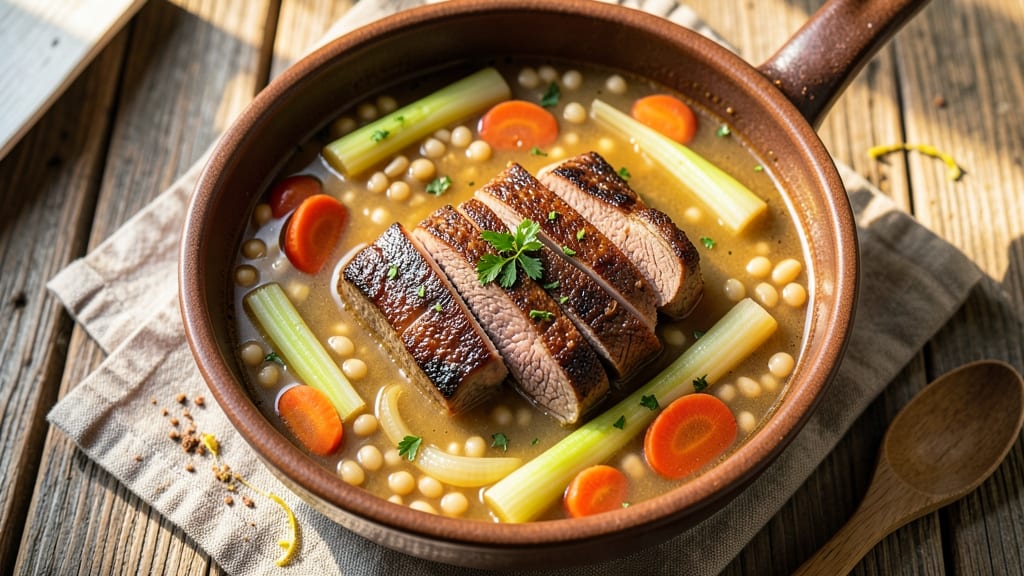
This beef barley soup recipe transforms tough cuts of beef into rich, velvety broth with perfectly tender barley and deep umami flavor. The secret lies in slow-cooking the beef until it practically melts, creating a broth so flavorful it becomes the star.
I developed this version after years of testing—balancing hearty textures with subtle sweetness from caramelized onions and a touch of thyme for earthy depth.
The process begins with browning the beef for maximum flavor development, then simmering everything together until the barley reaches that ideal chewy yet tender texture. Unlike lighter soups, this one delivers substantial bites with every spoonful—barley that holds its shape, beef that shreds easily, and vegetables that stay vibrant.
The result is a soup that feels indulgent yet remains balanced, perfect for chilly evenings or comforting weeknight dinners.
What sets this recipe apart is the way the flavors meld over time. The beef releases its collagen into the broth, creating a naturally thickened, restaurant-quality consistency without needing thickeners.
The barley absorbs the savory essence of the broth while maintaining its satisfying bite, and the carrots and celery add natural sweetness that rounds out the dish. Each ingredient plays a precise role in building layers of flavor that make this more than just soup—it's a comforting, hearty meal.
Serve it steaming hot in deep bowls with a sprinkle of fresh parsley and a drizzle of high-quality olive oil for that final touch of elegance. The leftovers reheat beautifully, making it ideal for meal prep, while the rich broth freezes well for future use.
This is the kind of soup that becomes a family staple, offering warmth and satisfaction with every bowlful.
Ingredients for beef barely soup
Sixteen ingredients transform tough beef into velvety, umami-rich barley soup with restaurant-quality depth.
| Ingredient | Amount | Notes |
|---|---|---|
| Chuck Roast 🥩 | 2 ½ lb | Pre-cut into 1.5-inch cubes for even cooking |
| Yellow Onions 🧅 | 2 whole | Medium size, sliced into half-moons |
| Carrots 🥕 | 4 whole | Medium size, cut into 1-inch chunks |
| Celery Stalks 🌿 | 4 whole | Cut into 1-inch pieces |
| Pearl Barley 🌾 | 1 cup | Uncooked, rinsed before use |
| Garlic Cloves 🧄 | 4 cloves | Minced for even distribution |
| Fresh Thyme 🌿 | 2 tbsp | Leaves only, finely chopped |
| Fresh Parsley 🌿 | ¼ cup | Chopped for garnish, not cooking |
| Tomato Paste 🍅 | 2 tbsp | High-quality, no added salt |
| Beef Broth 💧 | 6 cups | Low-sodium preferred for flavor control |
| Red Wine 🍷 | 1 cup | Dry, full-bodied variety |
| Extra-Virgin Olive Oil 🫒 | 2 tbsp | For browning beef and onions |
| Kosher Salt 🧂 | 1 ½ tsp | Diamond Crystal preferred for consistency |
| Ground Black Pepper 🌶️ | 1 tsp | Freshly cracked for optimal flavor |
The chuck roast is non-negotiable—its collagen-rich fat transforms into velvety broth during slow cooking. Costco or Whole Foods carry pre-cut cubes for convenience, but buying a whole roast saves money and ensures maximum marbling. Look for pieces with visible fat streaks and vibrant red color; avoid any with grayish hues or off smells. The pearled barley should be firm and plump—not powdery or discolored. Bob's Red Mill is a reliable brand for consistent texture. Fresh thyme and parsley from the grocery store's produce section (not the dried aisle) provide superior flavor, though dried works in a pinch at one-third the amount.
No red wine? Substitute an extra 1 cup of beef broth with 1 tbsp balsamic vinegar for depth. The tomato paste can be replaced with 1 cup crushed tomatoes, though it won't caramelize as beautifully. For a vegetarian twist, swap the beef for mushrooms and lentils (2 cups each), adjusting cooking time accordingly. The carrots and celery can be swapped for turnips or parsnips if preferred, but their natural sweetness balances the richness. If using pre-cut vegetables, rinse thoroughly to remove excess starch that can cloud the broth. The garlic should be fresh—pre-minced garlic often contains anti-caking agents that dull flavor.
This soup improves overnight as flavors meld. Store in airtight containers for up to 5 days in the fridge or 3 months frozen. For freezing, portion into individual containers to reheat single servings—simmer gently to avoid breaking the barley. The broth can be frozen separately for up to 6 months and used as a base for other dishes. To reheat, add a splash of water or broth if the soup thickens too much. Garnish with fresh parsley and a drizzle of extra-virgin olive oil just before serving to elevate presentation without altering texture.
Why You'll Love This Recipe
- Umami Bomb: That chuck roast? It’s the star—deep, savory, and ridiculously tender after hours of braising. The onions and celery caramelize into a rich base, while the barley soaks up all the flavor like a little flavor sponge.
- Leftovers That Win: This soup only gets better the next day. I make a double batch on Sundays because reheating turns the barley into a perfect texture—chewy but not mushy—and the beef stays juicy. Packed lunches? Solved.
- Budget Magic: Chuck roast is cheap, barley lasts forever, and you’ll use the whole onion and carrot. Honestly, it’s the kind of meal that makes grocery bills feel less painful while still tasting like you slaved over it. (Between us, no one will know.)
Step-by-step instructions for beef barley soup
A slow-cooked masterpiece where tender beef and chewy barley meld into rich, umami-forward broth.
Sear the Chuck Roast for Deep Flavor
Pat the 2.5 lb chuck roast dry with paper towels—this ensures maximum browning. Heat 2 tbsp extra-virgin olive oil in a 6-quart Dutch oven over medium-high heat until shimmering. Add the beef in a single layer and sear undisturbed for 4-5 minutes until a deep golden-brown crust forms. Flip and repeat on all sides, working in batches if needed, until fully browned.
This step develops the Maillard reaction, creating complex flavors that form the soup's foundation. Don't rush—let the beef develop that caramelized crust. Once browned, transfer the beef to a plate and set aside. The remaining browned bits (fond) in the pot will dissolve into the broth later, adding even more depth.
Build the Aromatic Base
In the same Dutch oven, add 2 whole yellow onions (sliced into half-moons), 4 whole carrots (cut into 1-inch chunks), and 4 whole celery stalks (cut into 1-inch pieces). Cook over medium heat for 8-10 minutes, stirring occasionally, until the vegetables soften and the onions turn translucent. Add 4 cloves minced garlic and 2 tbsp fresh thyme, cooking for another 1 minute until fragrant.
This aromatic trio forms the flavor backbone of the soup. The onions should caramelize slightly, adding sweetness that balances the richness of the beef. If the vegetables stick, add a splash of beef broth to deglaze—this prevents burning and incorporates those precious browned bits.
Develop the Sauce and Add Liquid
Stir in 2 tbsp tomato paste and cook for 2 minutes until it darkens slightly. Pour in 1 cup red wine, scraping up any browned bits from the bottom of the pot. Let it simmer for 3-4 minutes until the alcohol aroma dissipates. Add 6 cups beef broth and bring to a gentle boil. Return the seared beef to the pot, along with 1.5 tsp kosher salt and 1 tsp ground black pepper. Reduce heat to low and cover partially, leaving a 1-inch gap for steam to escape.
The wine and tomato paste create a velvety base that thickens the broth naturally. The partial cover allows for gentle evaporation, concentrating flavors without boiling off too much liquid. This step transforms the raw ingredients into a cohesive, flavorful foundation.
Slow-Cook the Beef Until Tender
Simmer the soup uncovered for 2.5-3 hours on low heat (or until the beef is fork-tender). Check periodically and add hot water if the soup reduces too much—you want a consistent, brothy texture. Once the beef is tender enough to pull apart with a fork, remove it from the broth and let it rest on a plate.
Patience is key here. The low-and-slow method breaks down collagen in the beef, transforming it into gelatin that thickens the broth naturally. If the beef finishes too early, keep it warm in the broth on low heat—it won’t overcook as long as it’s submerged.
Finish with Barley and Fresh Herbs
Rinse 1 cup pearl barley under cold water to remove any dust or debris. Add it to the pot and simmer for 25-30 minutes until the barley is tender but still slightly chewy. Stir in the rested beef and any accumulated juices. Taste and adjust seasoning—you may need a pinch more kosher salt or black pepper depending on the broth's saltiness. Remove from heat and stir in 0.25 cup chopped fresh parsley just before serving.
The barley should absorb the broth but retain a slight bite—this indicates perfect doneness. The parsley adds a bright, fresh contrast to the rich, umami flavors. Serve immediately with crusty bread to soak up every last drop of that velvety broth.
Pro Tips For Making Beef Barely Soup
- SEAR THE ROAST HARD: Chuck roast is forgiving, but a deep, dark crust on the meat makes the whole soup richer. Hit 450°F for 5 minutes per side—don’t rush it—until it’s browned in spots, not just pink. I used to skip this, and the soup always tasted like it needed more depth.
- SOAK THE BARLEY FIRST: Pearl barley swells faster and cooks more evenly if you rinse it first, then soak for 30 minutes in cold water. Drain before adding to the pot—this cuts cooking time by 15 minutes and keeps it from turning mushy. (Yes, even if you’re impatient like me.)
- DON’T SKIP THE MISO: A tablespoon of white miso paste (or soy sauce in a pinch) stirred into the broth after the meat is tender makes the barley taste alive. It balances the beef’s richness and adds umami without overpowering. I learned this the hard way—plain barley just tasted like… barley.
- LOW AND SLOW IS NON-NEGOTIABLE: After the initial simmer, drop the heat to a gentle bubble—barely moving the liquid—and cover the pot. Too much heat = tough beef, gummy barley. I used to walk away and come back to a sad, watery mess. Now I set a timer and check it every 30 minutes.
Creative variations of beef barely soup
Slow-Cooker Adaptation
Transform this recipe into a hands-off slow-cooker version by browning the beef and vegetables as directed, then transferring everything to a 6-quart slow cooker. Add the remaining ingredients and cook on low for 7-8 hours or high for 4-5 hours.
The slow cooker maintains consistent low heat, making it perfect for busy days. I like using a Hamilton Beach slow cooker for its even heating. 💫
Pressure Cooker Shortcut
For a 30-minute version, sear the beef and vegetables as usual, then transfer everything to a 6-quart Instant Pot. Add the remaining ingredients, seal the lid, and cook on high pressure for 25 minutes.
Quick-release the pressure, then let the soup sit for 10 minutes before adding the barley. Cook the barley for 8-10 minutes on sauté mode. The pressure cooker delivers restaurant-quality results in a fraction of the time. 🔥
Vegetarian Twist
Swap the beef for 2 cups mushrooms (cremini or portobello) and 1 cup dried lentils, simmered for 20 minutes before adding the barley. Use vegetable broth instead of beef broth and add 1 tsp smoked paprika for depth. The lentils add hearty texture while keeping the dish vegetarian-friendly. 🌱
Spiced Moroccan Version
Add 1 tsp ground cumin, ½ tsp cinnamon, and ½ tsp coriander when browning the vegetables. Stir in ½ cup chopped dried apricots and 1 tsp harissa paste for sweet-spicy contrast.
Garnish with cilantro and a squeeze of lemon. This fusion brings warm Moroccan flavors to your classic barley soup. 🌶️
Creamy Potato Addition
Add 2 cups diced Yukon Gold potatoes with the barley for the final 15 minutes of cooking. The potatoes soften beautifully while absorbing the rich broth. Stir in ½ cup heavy cream just before serving for a velvety finish. This upgrade makes the soup even more indulgent. 🥔
Herb Variations
Swap thyme for rosemary (½ tsp) and bay leaves (2 leaves) for a Mediterranean twist. For a French bistro vibe, add tarragon (1 tbsp) and a splash of white wine instead of red. Fresh herbs elevate the dish with bright, aromatic notes. 🌿
Nutrition facts
Frequently asked questions
Why does this beef barley soup recipe use chuck roast instead of tender cuts?
The chuck roast is perfect because its high collagen content melts into the broth during slow cooking, creating a naturally rich, velvety texture. Tender cuts like sirloin would dry out and lose flavor. The slow process transforms tough fibers into gelatin, making the broth more luxurious than what you'd get with leaner meats.
Can I make this soup in a slow cooker or Instant Pot?
For a slow cooker, brown the beef and vegetables first, then transfer everything to a 6-quart slow cooker and cook on low for 7-8 hours. For an Instant Pot, sear as directed, then pressure cook for 25 minutes before adding barley. Both methods preserve the deep flavors while saving time.
What's the secret to getting the barley texture just right?
The barley should be tender but still slightly chewy—this takes about 25-30 minutes of simmering. Rinse it first to remove starch, and don't overcook it or it'll turn mushy. The slight bite contrasts beautifully with the creamy broth and tender beef.
How can I make this soup vegetarian?
Replace the beef with 2 cups mushrooms and 1 cup dried lentils, simmered for 20 minutes before adding barley. Use vegetable broth and add 1 tsp smoked paprika for depth. The lentils provide hearty texture while keeping the dish satisfying.
What should I do if the soup tastes too salty?
Add a potato wedge (peeled) and simmer for 15 minutes—it absorbs excess salt. If that's not enough, stir in ½ cup milk or cream to dilute the saltiness slightly. Always taste as you go and adjust gradually.