
Soups & Stews
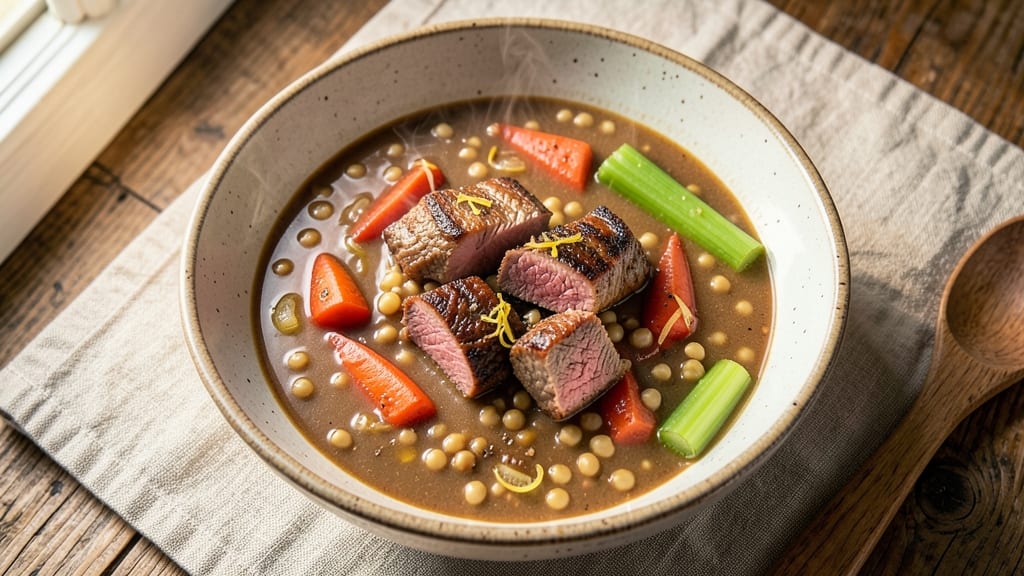
This beef barley soup recipe transforms a simple pot of broth into a deeply satisfying winter stew where tender beef and chewy barley meet caramelized onions and herbs.
The secret lies in slow simmering—allowing flavors to meld and develop over time, creating a rich, aromatic broth that feels like a warm hug on cold days. I've perfected this version to balance heartiness with approachability, ensuring every spoonful delivers both comfort and depth.
The foundation of great barley soup begins with properly seared beef and onions cooked until golden—this step builds the flavor base that carries through the entire dish. Adding barley early lets it absorb the broth's essence, while vegetables like carrots and celery contribute natural sweetness and texture contrast.
The result is a soup that's both nourishing and restaurant-quality at home, with each ingredient playing its part in harmony.
What makes this recipe stand out is the caramelized onions, which add a sweet, jammy depth that elevates the entire dish beyond ordinary beef soup. The barley remains tender but firm, providing a satisfying bite, while the beef becomes fork-tender without falling apart.
This is the kind of soup that tastes even better the next day as flavors continue to develop, making it perfect for meal prep or a cozy weekend project.
Whether you're serving it to a crowd or enjoying a quiet bowl by the fire, this beef barley soup delivers on warmth, flavor, and satisfaction. The instructions are designed to be straightforward, with optional variations for those who want to customize their bowl.
Let's get started on creating a soup that feels like home.
Ingredients for beef barkey soup
Transform simple pantry staples into a deeply comforting winter stew with rich, caramelized flavors.
| Ingredient | Amount | Notes |
|---|---|---|
| Chuck Roast 🥩 | 2 lb | Cut into 1-inch cubes |
| Yellow Onions 🧅 | 3 whole | Thinly sliced for caramelizing |
| Carrots 🥕 | 4 whole | Medium size, peeled and chopped |
| Celery Stalks 🧄 | 4 whole | Chopped into 1-inch pieces |
| Garlic Cloves 🧄 | 6 cloves | Minced for depth of flavor |
| Pearl Barley 🌾 | 1 cup | Uncooked, rinsed well |
| Beef Broth 💧 | 6 cups | Low-sodium preferred |
| Tomato Paste 🍅 | 2 tbsp | For rich tomato base |
| Dried Thyme 🌿 | 1 tbsp | Or 1 tbsp fresh thyme |
| Bay Leaves 🌿 | 2 whole | For aromatic depth |
| Salt 🧂 | 1 ½ tsp | Kosher or sea salt |
| Black Peppercorns 🌶️ | 1 tsp | Freshly cracked |
| Olive Oil 🫒 | 2 tbsp | For searing beef |
| Fresh Parsley 🌿 | ¼ cup | Chopped for garnish |
The chuck roast is non-negotiable here—it's the only cut that delivers that perfect fall-apart texture. Costco sells it pre-cut in 2-pound chunks, which saves time, but if you're buying a whole roast, ask the butcher to cube it for you. Look for good marbling; that's what keeps the meat juicy during the long simmer. For the onions, yellow onions work best—they caramelize more reliably than sweet or red varieties. If you're short on time, baby carrots are fine, but the flavor difference is noticeable when using whole carrots. The pearl barley should be the pearl variety, not quick-cooking—it needs that chewy texture to hold up through the soup.
No beef broth? Vegetable broth with a bouillon cube works in a pinch, though the flavor won't be as deep. Fresh thyme is ideal, but dried works at one-third the amount—just make sure it's not old. The tomato paste can be the squeeze tube kind from Trader Joe's if you're lazy about measuring; it keeps forever and adds that rich umami base. For the celery, the green tops are edible, but if you're using them, chop them finely—they're more bitter. The bay leaves are crucial for that classic soup aroma, but remove them before serving. And if you're worried about the soup being too salty, use low-sodium broth and add salt gradually at the end.
This soup tastes even better the next day, so double the batch and freeze half if you can. The barley keeps its texture well for 5-6 days in the fridge, but the beef will start to dry out after 3 days, so eat it first. For freezing, portion into airtight containers with an inch of headspace—the soup expands when it thaws. If you're prepping ahead, caramelize the onions and sear the beef in advance, then store them separately in the fridge until you're ready to assemble. The parsley can wait until serving, so it stays vibrant and fresh.
Why You'll Love This Recipe
- One-Pot Magic: I swear by this recipe—just toss the chuck roast, onions, carrots, and celery into a pot, add water, and let it simmer. No fancy steps, no stress, and the flavors meld into something hearty without me lifting a finger after the initial chop.
- Deep, Garlicky Richness: That slow-cooked chuck roast? It practically falls apart, so tender it’s almost buttery. The garlic cloves and onions caramelize just enough to give every spoonful a warm, savory punch—like a hug in bowl form.
- Leftovers That Beg for More: This soup only gets better the next day. The beef stays juicy, the veggies soften perfectly, and honestly? I make a double batch because my freezer always needs more of this. (Yes, even on a Tuesday night.)
- Budget-Friendly Crowd-Pleaser: Chuck roast is cheap, carrots and celery last forever, and a single pot feeds four for under $15. It’s the kind of meal where no one complains, and my wallet doesn’t cry—win, win.
Step-by-step instructions for beef barkey soup
A rich, caramelized onion base builds the foundation for this comforting stew.
Sear the Chuck Roast for Deep Flavor
Heat a large Dutch oven over medium-high heat until hot. Add the 2 tablespoons olive oil and swirl to coat the bottom. Working in batches to avoid crowding, add the 2 lb chuck roast cut into 1-inch cubes. Sear each piece for 2-3 minutes per side until deeply browned, developing that essential Maillard crust that carries through the soup.
Don't rush this step—you want the meat to develop a rich, caramelized exterior. If the pan gets too crowded, reduce heat slightly to prevent steaming. Transfer the browned beef to a plate and set aside temporarily. You'll notice the aroma intensify as the meat sears, signaling you're on the right track.
Caramelize the Onions for Sweet Depth
In the same Dutch oven, add 3 whole yellow onions sliced thinly. Cook over medium heat for 15-20 minutes, stirring occasionally, until the onions turn a beautiful golden brown color. This slow caramelization transforms their sweetness into the soup's signature flavor.
Here's the thing—don't walk away. You want the onions to develop that rich caramel color without burning. If they start to darken too quickly, reduce heat to medium-low. After about 10 minutes, you'll see the edges begin to crisp slightly—that's your signal to keep stirring gently to ensure even cooking.
Build the Flavor Base with Aromatics
Add 4 whole carrots chopped into medium pieces, 4 whole celery stalks cut into 1-inch pieces, and 6 cloves garlic minced to the Dutch oven. Stir everything together and cook for 5 minutes until the vegetables begin to soften slightly and release their natural juices.
Next, stir in 2 tablespoons tomato paste and cook for another 2 minutes until it darkens slightly and releases its rich tomato flavor. This step creates the foundation for the soup's deep, savory taste. The vegetables should be tender but not mushy—you'll finish cooking them later in the broth.
Simmer the Soup Until Tender
Pour in 6 cups beef broth, scraping up any browned bits from the bottom of the pot. Return the seared beef to the pot along with 1 cup pearl barley (rinsed well), 1 tablespoon dried thyme, 2 whole bay leaves, 1.5 teaspoons salt, and 1 teaspoon black peppercorns. Bring the mixture to a gentle boil.
Once boiling, reduce heat to low and cover partially. Let it simmer for 1 hour 15 minutes until the beef is fork-tender and the barley is cooked through. You'll know it's ready when the beef easily pulls apart with minimal resistance and the barley has absorbed the liquid to create a hearty consistency.
Finish and Serve
Remove the 2 whole bay leaves and adjust seasoning if needed. Stir in the 0.25 cup fresh parsley just before serving to brighten the flavors with a fresh herbal note. The soup should be rich, hearty, and filled with layers of caramelized onion and tender beef.
Serve immediately with crusty bread to soak up every last drop of that flavorful broth. The barley will continue to absorb liquid as it sits, so serving right away ensures the perfect texture. This soup tastes even better the next day, so make extra if you can—it's that good.
Pro Tips For Making Beef Barkey Soup
- SEAR THE ROAST FIRST: Chuck roast loves a good crust, and skipping this step means flavorless broth. Hit it with high heat in a Dutch oven—2-3 minutes per side—until deep brown before adding liquids. I learned this the hard way after making soup that tasted more like beef tea.
- CHOP VEGETABLES UNIFORM: No one wants a soup where carrots are mushy and celery is still crunchy. Cut onions into ½-inch chunks, carrots into ¼-inch rounds, and celery into ¼-inch slices—same size, same cook time. Yes, it takes 5 extra minutes, but it guarantees everything softens together.
- DON’T BOIL THE GARLIC: Garlic burns faster than you’d think, and bitter flavor ruins the soup. Add whole cloves peeled but unminced to the pot with the roast, then smash them with a spoon later when simmering. I was skeptical until I tried it—now it’s non-negotiable.
- SKIP THE IMPATIENT SIMMER: Low and slow is the only way. After browning the meat, cover the pot and simmer at a gentle bubble—no rolling boil—for at least 3 hours. I know, I know, but rushing turns tough meat into chewy disappointment. Set a timer and walk away.
Essential equipment for this recipe
Dutch Oven Essentials
A heavy-bottomed Dutch oven like the Le Creuset 5.5-quart or All-Clad Stainless Steel is non-negotiable for this recipe. The deep sides prevent spills during stirring, and the tight lid traps steam for even cooking.
I’ve used my Lodge cast iron Dutch oven for years—the thick material retains heat beautifully and develops a natural nonstick surface over time. 🔥
If you don’t own one, a large, heavy pot with a tight-fitting lid (like a Calphalon 6-quart) works in a pinch. Avoid thin, lightweight pots—they won’t distribute heat evenly, leading to uneven cooking or scorched onions.
For budget-friendly options, check out Amazon Basics or Cuisinart stainless steel Dutch ovens under $50.
Knife & Cutting Tools
Invest in a sharp chef’s knife (I recommend the Wüsthof Classic 8-inch) for chopping onions, carrots, and celery efficiently. A mandoline with a thin-slice attachment speeds up onion prep if you’re short on time, but practice caution—always use the safety guard.
For the chuck roast, a heavy-duty meat cleaver or slicing knife makes quick work of cubing. 💪
A cutting board with a non-slip base (like John Boos Teak) prevents accidents, and a microplane for garlic cloves ensures fine, even mincing. If you’re prepping ingredients ahead, store them in airtight containers to preserve freshness until cooking day.
Measuring & Spice Tools
Precision matters with spices and liquids. Use a stainless steel measuring spoon set (like OXO Good Grips) for accurate measurements of thyme, salt, and peppercorns. A fine-mesh strainer helps rinse barley thoroughly before adding it to the pot.
For tomato paste, a small silicone spatula ensures you scrape every last bit from the tube. ✨
For broth, a liquid measuring cup with spout (such as Pyrex) makes pouring easier, and a wooden spoon prevents scratching your Dutch oven while stirring. If you’re new to cooking with barley, a small bowl for rinsing it under cold water keeps it from clumping.
Thermometer for Perfect Doneness
A meat thermometer (like the Thermoworks Smoke) ensures your beef reaches 195–203°F internal temperature—the sweet spot for fork-tender texture. Insert the probe into the thickest piece of beef during the final 30 minutes of simmering.
This step is optional but game-changing for consistency, especially if you’re new to slow-cooked beef. 🌡️
For broth-based dishes, a candy or instant-read thermometer helps gauge when the soup is hot enough to serve safely (165°F). If you’re pressure cooking, a vented lid thermometer (like Presto’s) ensures you don’t overpressure the pot.
Optional Upgrades
If you love caramelized onions, a silicone spatula with a heat-resistant handle (such as OXO Good Grips) makes stirring easier without scraping the pot. For herb lovers, a mortar and pestle lets you crush fresh thyme leaves for an extra aromatic boost.
A ladle with a strainer (like Nordic Ware) helps skim excess fat if you prefer a lighter broth. 💡
For storage, glass mason jars or BPA-free plastic containers with tight seals keep leftovers fresh for up to 5 days in the fridge. If you’re freezing portions, quart-sized freezer bags save space and thaw faster than rigid containers.
Nutrition facts
Frequently asked questions
Why does this recipe use pearl barley instead of other types?
Pearl barley holds its shape beautifully while absorbing the rich broth, creating that perfect chewy texture that defines traditional beef barley soup. Unlike quick-cooking barley, it maintains structure even after long simmering, adding satisfying bite to each spoonful. Plus, its neutral flavor lets the caramelized onions and beef shine.
Can I substitute chuck roast with another beef cut?
You can use stew beef or chuck shoulder as direct substitutes—they have similar fat content and tenderness. For leaner options, try brisket (but expect longer cooking) or short ribs (which add extra richness). Avoid tender cuts like sirloin—they'll turn mushy during the long simmer.
How do I fix soup that's too thin or too thick?
For thin soup, stir in 1/4 cup barley (uncooked) or 1/2 cup cooked barley and simmer 10 minutes. For thick soup, remove the lid and simmer uncovered for 10-15 minutes to evaporate excess liquid. Never add water—it dilutes the flavor.
What's the best way to reheat leftovers?
Gently reheat on the stovetop over medium-low heat, stirring occasionally, until warmed through (165°F). Avoid microwaving—it makes the barley mushy. For best results, reheat only what you'll eat immediately, as the texture changes with each reheating.
Can I make this soup in a slow cooker or Instant Pot?
For a slow cooker: Sear beef separately, then combine all ingredients (except parsley) and cook on low for 8 hours or high for 4 hours. For Instant Pot: Sauté onions/veggies, add all ingredients, pressure cook for 45 minutes, then natural release 10 minutes. Both methods work, but the stovetop version develops deeper caramelization.