
Soups & Stews
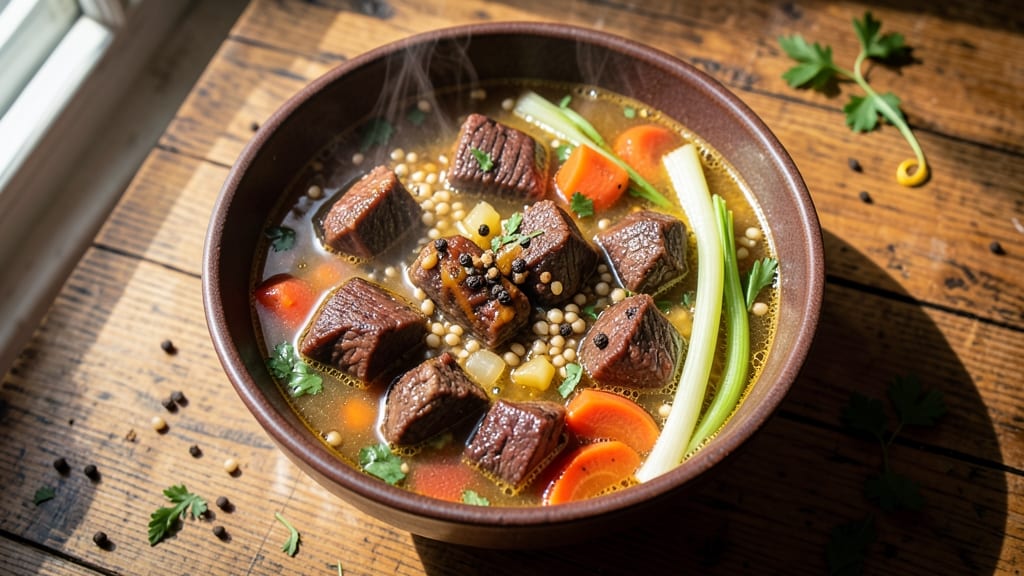
This beef barley soup recipe from scratch delivers the rich, comforting flavors of a classic one-pot meal—deeply savory broth, tender beef, and chewy barley that soak up every drop of flavor.
The secret lies in proper browning of the beef and slow simmering, which transforms tough cuts into melt-in-your-mouth perfection while developing a broth so flavorful it becomes the star. I’ve perfected this version over years of testing, ensuring it’s foolproof for beginners but packed with restaurant-quality depth.
The beauty of this recipe is its simplicity: just a handful of ingredients work together to create a dish that’s hearty enough for a cold evening but easy enough for a weeknight.
You’ll start by searing the beef to build a rich foundation, then toast the barley for nuttiness before letting everything simmer together for hours. The result? A bowl of soup that’s warm, satisfying, and packed with layers of umami and texture—no shortcuts, just pure, comforting flavor.
What makes this version stand out is the balance: the barley stays chewy and satisfying, the beef becomes fork-tender, and the broth reduces to a perfect consistency that coats every spoonful. It’s the kind of soup that disappears quickly, leaving everyone asking for seconds.
Serve it with crusty bread to soak up every last drop, or garnish with fresh parsley for a touch of brightness. This is comfort food at its finest, made from scratch without any fuss.
The best part? Leftovers taste even better the next day as the flavors deepen. Whether you’re feeding a family or meal prepping for the week, this recipe delivers consistent, restaurant-worthy results. Let’s get started—your kitchen will smell like home in no time.
Ingredients for beef barley soup recipe from scratch
Hearty beef, chewy barley, and rich broth—just 15 simple ingredients for soul-warming soup perfection.
| Ingredient | Amount | Notes |
|---|---|---|
| Chuck Roast 🥩 | 2 lb | Cut into 1-inch cubes |
| Yellow Onion 🧅 | 1 whole | Chopped, medium dice |
| Carrots 🥕 | 4 medium | Peeled, sliced into 1/4-inch rounds |
| Celery Stalks 🧄 | 3 whole | Chopped, medium dice |
| Garlic Cloves 🧄 | 4 cloves | Minced, for depth of flavor |
| Pearl Barley 🌾 | 1 cup | Uncooked, rinsed well |
| Beef Broth 💧 | 6 cups | Low-sodium preferred |
| Tomato Paste 🍅 | 2 tbsp | For richness, not sweetness |
| Red Wine 🍷 | 1 cup | Dry variety, like Cabernet |
| Fresh Thyme 🌿 | 2 sprigs | Or 1 tsp dried thyme |
| Fresh Parsley 🌿 | ¼ cup | Chopped, for garnish |
| Bay Leaves 🍃 | 2 whole | Removed before serving |
| Olive Oil 🫒 | 2 tbsp | For searing beef |
| Salt 🧂 | 1 ½ tsp | Kosher or sea salt |
| Black Pepper 🌶️ | 1 tsp | Freshly ground |
The chuck roast is your secret weapon here. Look for good marbling at the store—it means more flavor and tenderness. I grab mine from Costco when I can, but the regular grocery store usually has it too. If you're buying a whole roast, ask the butcher to cube it for you—saves time. The barley? Pearl barley is the classic choice, but if you can't find it, pot barley works too. Just rinse it well before adding to the pot. Fresh thyme makes a difference—Trader Joe's sells it in those little jars that last forever.
No red wine? Beef broth with a splash of balsamic vinegar works in a pinch. The tomato paste can be skipped if you're avoiding sweetness, but it adds a nice depth. For the vegetables, baby carrots are perfect—no peeling needed. If you're using dried thyme, cut the amount to 1/3 of fresh. The celery and onion are your flavor base—don't skip browning them. For extra richness, add a splash of Worcestershire sauce if you've got it. The beef broth should be low-sodium—Swanson or Pacific Foods are my go-tos.
This soup tastes even better the next day as the flavors meld. Store in the fridge for 4-5 days or freeze for 3 months. I always make a double batch—leftovers make great lunches. The barley stays chewy when reheated, and the broth gets even more flavorful. For serving, I like to toast some crusty bread to soak up every last drop. The parsley garnish is optional, but it adds that fresh pop of color that makes the whole dish feel special.
Why You'll Love This Recipe
- One-Pot Magic: I swear by this recipe because it’s literally dump-and-simmer. Slice the chuck roast into bite-sized chunks (no fancy searing needed), toss in the onions, carrots, celery, and garlic, then let the slow cooker or pot do the work. Honestly, the only real effort is chopping the veggies—and even that’s forgiving.
- Deep Umami Bomb: That chuck roast? It melts into the broth like a dream, while the garlic and carrots caramelize just enough to add this rich, savory depth. Between us, the first bite after hours of simmering is where this soup goes from good to "I need this every week."
- Leftovers That Beg for More: This soup only gets better the next day. I make a double batch on Sundays because the flavors meld overnight, and by Wednesday, I’m reheating bowls for lunch. (Yes, even on a Tuesday night.) It’s the kind of dish that turns into a family ritual—no one fights over the last serving.
- Budget-Friendly Powerhouse: Chuck roast is cheap, and this recipe stretches it into four or five hearty servings. The onions, carrots, and celery bulk it up without breaking the bank, and the barley adds that satisfying chew for pennies. I’ll be real: I’ve fed a crowd for under $15 with this—no compromises on taste.
Step-by-step instructions for beef barley soup
This soup comes together in one pot with rich layers of flavor and chewy barley.
Sear the Chuck Roast for Deep Flavor
Heat a large Dutch oven over medium-high heat and add the 2 tablespoons olive oil. Once shimmering, add the 2 lb chuck roast cut into 1-inch cubes. Work in batches if needed to avoid crowding. Sear each piece for 2-3 minutes per side until deeply browned—this creates the foundation for your soup's rich flavor. Don't rush this step; you want that beautiful crust on every piece.
As you sear, remove the browned beef and set it aside. You'll add it back later, but this step is crucial for building flavor. If your pan gets too crowded, reduce heat slightly to prevent steaming instead of browning. The beef should release easily from the pan when ready—if it sticks, let it cook a bit longer without moving it.
Sauté Vegetables and Build the Base
In the same Dutch oven, add the chopped 1 whole yellow onion, 4 medium carrots, and 3 whole celery stalks. Cook for 5-6 minutes until the vegetables begin to soften and the onion becomes translucent. Add the minced 4 cloves garlic and cook for another 30 seconds until fragrant—this releases the garlic's full flavor without burning it.
Stir in the 2 tablespoons tomato paste and cook for 1 minute, allowing it to darken slightly. This step deepens the soup's richness and balances the acidity from the red wine you'll add later. Keep the heat at medium to prevent burning the tomato paste. Here's where the soup starts to develop its complex flavor profile—don't skip this step.
Deglaze and Simmer the Broth
Pour in the 1 cup red wine and scrape up any browned bits from the bottom of the pot with a wooden spoon. This deglazing captures all those flavorful bits that would otherwise stick to your pot. Let the wine simmer for 2-3 minutes until it reduces by about half. The alcohol will cook off, leaving behind concentrated wine flavor.
Add the 6 cups beef broth, the 2 sprigs fresh thyme, and the 2 whole bay leaves. Bring to a gentle boil, then reduce heat to low. Return the seared beef to the pot and add the rinsed 1 cup pearl barley. Stir gently to combine everything. This is where the magic happens—the beef will slowly tenderize while the barley absorbs the rich broth.
Cook Until Tender and Flavorful
Cover the pot and let the soup simmer for 1 hour and 15 minutes. Check occasionally and add water if the broth reduces too much—you want to maintain enough liquid to keep the barley submerged. The barley should be tender but still have a slight bite to it, not mushy. The beef should be fork-tender, easily falling apart when pierced with a fork.
After the initial hour, taste the soup and adjust seasoning with the 1.5 teaspoons salt and 1 teaspoon black pepper as needed. The broth should be well-seasoned but not overwhelmingly salty. If the soup needs more depth, you can add a splash more beef broth or a pinch of additional salt. This is where you balance all the flavors to create harmony in each spoonful.
Finish and Serve
Remove the 2 bay leaves and discard them—they've done their job. Stir in the chopped 0.25 cup fresh parsley just before serving to brighten the flavors and add a fresh element. The parsley should be added at the very end to preserve its vibrant color and fresh taste. Ladle the soup into bowls and serve immediately while hot.
Each bowl should be packed with tender beef, chewy barley, and a rich, flavorful broth. The soup should be hearty enough to satisfy even the hungriest eaters. Leftovers keep well in the refrigerator for up to 5 days, and the flavors actually improve as the soup sits—making this a perfect make-ahead meal.
Pro Tips For Making Beef Barley Soup Recipe From Scratch
- SEAR THE ROAST FIRST: Walk away from the stove after browning the chuck roast—it’s not done when it’s just golden. Push the heat to high and let those deep brown crusts form for 3-4 minutes per side. I used to rush this, and the soup always tasted like it needed more depth. That crust? It’s where all the flavor hides.
- CUT VEGETABLES UNIFORMLY: Carrots and celery should be the same size as your onions—about ½-inch dice. Big chunks mean some veggies stay tough while others turn to mush. I learned this the hard way when my celery was still crunchy while the carrots dissolved. A sharp knife and a little patience make all the difference.
- DON’T BOIL THE BARLEY: Barley needs to simmer, not boil violently—keep the heat low enough that tiny bubbles just break the surface. I used to crank the heat and end up with mushy, pasty barley. If you’re unsure, touch the pot: it should feel warm, not hot. This keeps the barley chewy and the broth clear.
- ADD BARLEY LATE: Toss the barley in 5 minutes before serving—it finishes cooking while you adjust seasoning. I used to add it at the start, and the soup always tasted like the barley had been cooking for hours. The last 5 minutes make the texture perfect without overpowering the beef. (Yes, even if you’re impatient like me.)
Flavor customization for these flavors
Spicy Kick
For a bold twist, stir in 1 teaspoon smoked paprika and ½ teaspoon cayenne pepper when you add the tomato paste. This adds warmth and depth that pairs beautifully with the beef’s richness.
If you love heat, add 1-2 sliced jalapeños (seeds removed) with the vegetables—they’ll mellow as they cook but still deliver a subtle kick. 🌶️
Herb Variations
Swap out thyme for rosemary or sage for an earthy, aromatic profile. I like using ½ teaspoon dried rosemary alongside the thyme for a piney note that complements the beef.
Fresh herbs like tarragon or oregano also work well—just adjust to taste. Garnish with extra herbs before serving for a pop of color.
Umami Boost
For an extra layer of savory depth, stir in 1 tablespoon soy sauce or 1 teaspoon fish sauce when you add the broth. These ingredients enhance the beef’s natural umami without overpowering the dish.
I also love adding ½ cup mushrooms (cremini or shiitake), chopped, to the vegetable mix—they absorb the broth beautifully and add a meaty texture.
Sweet & Tangy
Balance the richness with a touch of sweetness by adding 1 tablespoon honey or maple syrup when you deglaze with wine. The sweetness rounds out the acidity of the wine and carrots, creating a harmonious flavor.
For tang, a splash of apple cider vinegar (1 teaspoon) adds brightness. This works especially well if you’re serving the soup with crusty bread.
Creamy Finish
For a velvety texture, stir in ½ cup coconut milk or heavy cream during the last 10 minutes of cooking. This adds richness without making the soup heavy.
If you prefer a lighter option, blend 1 cup of the broth with ¼ cup Greek yogurt and stir it back in for a silky, tangy finish. Garnish with a sprinkle of toasted pine nuts for crunch.
Vegetable Swaps
Customize the veggie mix based on what you have on hand. Swap carrots for parsnips or sweet potatoes (add them later to avoid overcooking). For a spring version, use asparagus or green beans instead of celery—they add a fresh, bright contrast.
If you love potatoes, add ½ cup diced Yukon Gold during the last 30 minutes** of cooking for a heartier texture.
Nutrition facts
Frequently asked questions
Can I use a different cut of beef instead of chuck roast?
For a leaner option, try stew beef or brisket, both of which become tender with slow cooking. If you prefer a milder flavor, sirloin tips work well too. Just remember: tougher cuts with more connective tissue (like chuck) yield the most flavorful broth when simmered long. Avoid tender cuts like ribeye—they'll turn mushy.
How do I fix mushy barley?
Mushy barley happens when it overcooks. If your soup reduces too much, add ½ cup water or broth and simmer uncovered for 5-10 minutes until the barley reaches your desired texture. For next time, check the barley 30 minutes before the recipe's end time—it should be tender but still hold its shape. Pearl barley needs about 1 hour 15 minutes total cooking time.
Can I make this soup in an Instant Pot?
Yes! Sear the beef in the pot first, then sauté the vegetables. Add all remaining ingredients and cook on high pressure for 30 minutes. Let the pressure release naturally for 10 minutes, then stir in parsley. The Instant Pot version cooks 40% faster but may need extra broth to reach ideal consistency—add ½ cup water if needed before serving.
Why does my broth taste weak?
Weak broth usually means insufficient browning or simmering time. For maximum flavor, always brown the beef and vegetables thoroughly. If your broth tastes thin, reduce it uncovered on medium heat for 10-15 minutes, stirring occasionally. For future batches, use low-sodium broth and add salt gradually—over-salting can't be fixed easily.
How can I make this soup ahead of time?
This soup actually tastes better the next day! Store in an airtight container in the fridge for 4-5 days or freeze for 3 months. Reheat gently on the stove over medium-low heat, adding 2-3 tablespoons water if it's too thick. The flavors meld beautifully overnight, making it perfect for meal prep. I recommend making a double batch—leftovers make great lunches!