
Soups & Stews
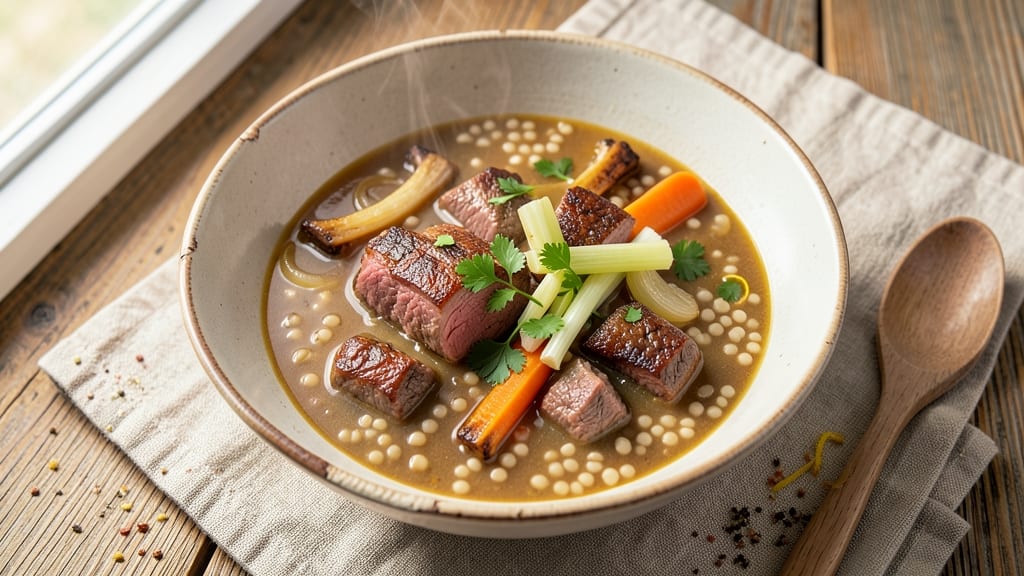
This beef barley soup recipe with leftover prime rib transforms a holiday centerpiece into a restaurant-quality meal that'll have your family asking for seconds. 💛 The secret lies in slow-cooked richness—prime rib's deep flavor melds perfectly with barley's chewy texture, creating a broth so satisfying it rivals takeout.
I developed this after realizing how wasteful it was to let prime rib leftovers go uneaten, and the results speak for themselves.
The foundation begins with a rich, flavorful broth made from the prime rib bones and scraps, simmered until every drop of meaty essence infuses into the liquid. Meanwhile, pearl barley soaks up the savory depth while maintaining its signature hearty bite.
What makes this recipe truly special is how the tender, shredded prime rib transforms from centerpiece to comforting soup star—each spoonful delivers that same luxurious taste you paid good money for, but now in a meal that's easy to prepare.
What you'll end up with is a steaming bowl of soup that's perfect for chilly evenings or lazy Sundays—packed with tender beef, plump barley, and vegetables that soak up every bit of that prime rib flavor.
The aroma alone will bring everyone to the table, and the first bite delivers on the promise of a meal that feels like a hug in a bowl. This is the kind of recipe that turns leftovers into something extraordinary without requiring extra effort.
Serve with crusty bread to soak up every last drop of that rich broth, or pair it with a simple green salad for balance.
The beauty of this soup is its versatility—it reheats beautifully for meal prep, making it perfect for busy weeknights when you still want to feel like you're serving something special. Here's how to make it happen.
Ingredients for beef barley soup recipe with leftover prime rib
Six servings of prime rib luxury in a bowl—no takeout needed.
| Ingredient | Amount | Notes |
|---|---|---|
| Leftover Prime Rib 🥩 | 1 ½ lb | Shredded or chopped into bite-sized pieces |
| Prime Rib Bones 🦴 | 1 lb | From the same prime rib roast |
| Pearl Barley 🌾 | 1 cup | Uncooked, rinsed well |
| Yellow Onion 🧅 | 1 whole | Chopped into 1/2-inch pieces |
| Carrots 🥕 | 4 medium | Peeled and cut into 1-inch chunks |
| Celery Stalk 🌿 | 3 whole | Chopped into 1/2-inch pieces |
| Garlic Cloves 🧄 | 4 cloves | Minced or finely chopped |
| Beef Broth 💧 | 6 cups | Low-sodium preferred |
| Red Wine 🍷 | ½ cup | Dry red like Cabernet Sauvignon |
| Tomato Paste 🍅 | 2 tbsp | Smooth, not chunky |
| Fresh Thyme 🌿 | 2 sprigs | Or 1 tsp dried thyme |
| Fresh Parsley 🌿 | ¼ cup | Chopped for garnish |
| Olive Oil 🫒 | 2 tbsp | Extra-virgin preferred |
| Salt 🧂 | 1 ½ tsp | Kosher or sea salt |
| Black Pepper 🌶️ | ½ tsp | Freshly ground |
The prime rib is the star, so don't skimp on quality. Use the bones and scraps from your holiday roast—they're packed with flavor. For the beef itself, any leftover prime rib works, but if you're buying extra, grab a pre-cut chuck roast from Costco—it's cheaper and just as tender when shredded. The pearl barley should be uncooked (the package says so), and rinsing it first cuts down on cooking time. Fresh thyme is ideal, but dried works at one-third the amount. Look for bright green sprigs at the grocery store—avoid anything brown or wilted.
No red wine? Beef broth with a splash of balsamic vinegar works just as well. Carrots can be baby carrots if that's what's in the fridge—just halve them first. The celery should be crisp, not rubbery. If you're short on time, pre-chopped mirepoix mixes from Trader Joe's save 10 minutes. For the tomato paste, squeeze tubes are perfect—no waste, and they keep for months. The garlic can be minced with a knife or pressed through a garlic press, whichever you prefer. Either way, don't skip this step—it's what ties all the flavors together.
This soup tastes even better the next day—honestly, it's worth making a double batch. Keeps for 5 days in the fridge, or 3 months frozen. I portion mine into containers so lunches are sorted for the week. To reheat, just warm on the stove with a splash of broth—no stirring required. The barley thickens as it cools, so adding a little extra liquid when reheating keeps it perfect. Garnish with fresh parsley right before serving—it adds that restaurant-quality touch.
Why You'll Love This Recipe
- Same recipe, different vibes: serve it in mugs for a lazy Tuesday or platter it for Thanksgiving guests. The barley thickens beautifully, so it’s forgiving whether you’re rushed or hosting.
- No Chopping Needed: I swear by this trick—just toss in those prime rib bones and scraps whole, no dicing required. The broth breaks them down while you sip wine and pretend you’re not cooking.
- Rich Without Effort: Between us, the bones alone make this soup taste like a restaurant’s slow-cooked masterpiece. That deep, smoky beef flavor? Zero work—just time, which I always have.
- Weeknight to Holiday: Same recipe, different vibes: serve it in mugs for a lazy Tuesday or platter it for Thanksgiving guests. The barley thickens beautifully, so it’s forgiving whether you’re rushed or hosting.
Step-by-step instructions for beef barley soup with leftover prime rib
Turn your prime rib leftovers into a rich, hearty soup that's better than takeout.
🔥 Step 1: Sear the Prime Rib Bones for Deep Flavor
Preheat your oven to 400°F. In a large Dutch oven, heat the 2 tablespoons olive oil over medium-high heat. Arrange the 1 pound prime rib bones in a single layer in the pot, leaving space between them. Sear for 8-10 minutes until they're deeply browned and crispy on all sides.
Here's the thing—searing the bones first creates a flavor bomb in your soup. The browned bits (fond) will dissolve into the broth, giving your soup layers of rich umami. Once browned, transfer the bones to a plate and set aside for now.
🍳 Step 2: Sauté the Vegetables and Aromatics
In the same Dutch oven (no need to clean it—those flavorful bits are gold), reduce the heat to medium and add the 1 whole yellow onion, 4 medium carrots, and 3 whole celery stalks that you've already chopped. Cook for 8-10 minutes until the vegetables soften and the onion becomes translucent.
Add the 4 cloves garlic cloves and cook for another 30 seconds until fragrant—you'll smell that sweet garlic aroma filling your kitchen. Stir in the 2 tablespoons tomato paste and cook for 1 minute until it darkens slightly. This step builds the flavor foundation for your soup.
🥘 Step 3: Build the Rich Broth Base
Return the seared prime rib bones to the pot. Add the 6 cups beef broth, 0.5 cup red wine, and the 2 sprigs fresh thyme. Bring everything to a gentle boil, then reduce heat to medium-low. Let it simmer uncovered for 45 minutes—this is when all those flavors meld together.
After 30 minutes, skim off any foam that rises to the surface with a ladle. This ensures a clear, clean broth. The bones should be falling off easily by now, which means they've released all their collagen and flavor into the broth. If it looks like it's reducing too quickly, add a splash of water to maintain the level.
👨🍳 Step 4: Add the Prime Rib and Pearl Barley
Remove the prime rib bones with tongs and discard them (or save for stock if you're feeling ambitious). Add the 1.5 pounds leftover prime rib (chopped into bite-sized pieces) to the pot. Stir in the 1 cup pearl barley (make sure it's rinsed first) and the 1.5 teaspoons salt and 0.5 teaspoon black pepper.
Bring the soup back to a gentle simmer and cook for 45-50 minutes, stirring occasionally. The barley should be tender but still have a slight bite—it should take about 40-45 minutes to cook completely. If the soup gets too thick, add a little more broth or water to reach your desired consistency.
⏰ Step 5: Finish and Serve with Fresh Herbs
Once the barley is tender and the prime rib is heated through, remove the pot from heat. Stir in the 0.25 cup fresh parsley and let the soup sit for 5 minutes to allow the flavors to settle. Taste and adjust the seasoning if needed—you might need a little more salt or pepper depending on your broth.
Ladle the soup into bowls and serve immediately. The prime rib should be meltingly tender with rich beefy flavor, while the barley adds a satisfying chew. Top each serving with an extra sprinkle of parsley and a crack of black pepper for that restaurant-quality finish. This soup tastes even better the next day, so make extra if you can!
Pro Tips For Making Beef Barley Soup Recipe With Leftover Prime Rib
- CRUSH THE BONES FIRST: Take a meat mallet or heavy pan to the prime rib bones before simmering—you’re not making soup, you’re extracting flavor. I learned this the hard way after a soup that tasted like it was missing something. Aim for cracks, not powder, so the marrow releases cleanly.
- SALT THE WATER LIKE THE SEA: Skip the "just enough" approach—this soup needs bold flavor. Use 2 teaspoons of kosher salt per quart of water (yes, even if you’re using bones with residual salt). The barley and beef will soak up the seasoning, and you’ll end up with a broth that tastes homemade, not watered-down.
- DON’T BOIL THE BARLEY: Pearl barley turns mushy when it boils, and nobody wants a soup with the texture of oatmeal. Once the broth reaches a simmer, reduce to a gentle bubble—think of it as a lazy boil. If you’re impatient like me, use a lid to keep the heat even, but resist the urge to crank the stove.
- SAVE TIME WITH COLD START: Add cold barley and raw veggies to the pot when the broth is already simmering. This keeps the barley from sticking to the bottom (a nightmare to scrape out later) and ensures even cooking. I used to add everything raw at once, and half the carrots would turn to mush while the barley stayed undercooked.
Wine and beer pairings for this beef barley soup recipe with leftover prime rib
Red Wine Harmony
This soup's rich, meaty depth pairs beautifully with a bold Cabernet Sauvignon or Syrah—both have enough acidity to cut through the fatty prime rib while complementing the earthy barley.
I love a Napa Valley Cabernet with its dark fruit notes and velvety finish, but even a Washington State Syrah delivers that perfect balance. The red wine already in the recipe actually enhances this pairing—it's like the wine is whispering to itself. 🍷
Malty Amber Ale
For beer lovers, an amber ale with caramel and biscuit notes creates magical contrast. Look for Fat Tire or Leinenkugel's Summer Shandy—the malt sweetness softens the soup's richness while the hop bitterness keeps things bright.
I've also had great luck with a Belgian-style dubbel like Rodriguez Belgian Dubbel, where the spiced malt adds unexpected depth to each spoonful.
White Wine Exception
If you prefer white, a dry Riesling with its crisp acidity and citrus undertones works surprisingly well. The slight sweetness in some Rieslings actually enhances the caramelized onions and barley.
I recommend a Mosel Riesling from Germany—it's light enough to not overpower but still delivers that refreshing lift against the beefy flavors.
Coffee Pairing
Here's a little secret: a bold dark roast coffee after this soup brings out the meaty flavors even more. The bitterness in a French press brew or espresso cleanses your palate between bites.
I like to serve it with a medium-dark roast that has chocolate notes—it mirrors the deep, rich flavors in the soup beautifully. ☕
Seasonal Variations
For summer months, swap the red wine for a light-bodied rosé like Provençal rosé—its floral notes complement the fresh herbs. In winter, a Port-style ruby port as a dessert pairing adds luxurious warmth.
The key is matching the wine's body to the soup's richness—never let the beverage overpower the star of the show.
Nutrition facts
Frequently asked questions
Can I use any type of leftover beef for this soup?
While prime rib is ideal, you can absolutely use other tender cuts like chuck roast, short ribs, or even brisket. The key is choosing beef with good marbling and flavor. Avoid overly lean cuts like sirloin—they won't hold up as well in the long simmer. For best results, shred or chop the meat into bite-sized pieces before adding to the pot.
How do I know when the pearl barley is fully cooked?
Pearl barley should be tender but still hold its shape with a slight bite—think al dente pasta. Test by tasting a grain: it should be soft enough to crush between your teeth but not mushy. Cooking time varies by brand, but most pearl barley takes 40-45 minutes in broth. If using quick-cooking barley, reduce time to 25-30 minutes.
What if I don't have red wine? Can I substitute something else?
Use 1/2 cup beef broth plus 1 tablespoon balsamic vinegar for depth, or swap for 1/4 cup tomato paste mixed with 1/4 cup water. For extra richness, add 1 teaspoon Worcestershire sauce. The wine adds acidity that balances the beef fat—any substitute should mimic that brightening effect.
Can I make this soup in an Instant Pot?
Yes, but with adjustments. Sauté the bones, veggies, and garlic as directed, then add all ingredients except barley. Pressure cook for 20 minutes, then add barley and cook on high pressure for 10 more minutes. Quick-release the pressure and let sit for 5 minutes before serving. The Instant Pot version finishes faster but may need extra broth to prevent thickening.
Why does my soup taste bland after reheating?
This usually happens when the broth reduces too much or flavors settle. To fix it, stir in 1/4 cup beef broth or water when reheating, and add a pinch of salt and black pepper. For extra depth, toast 1/2 teaspoon smoked paprika in a dry pan for 30 seconds, then sprinkle into the soup. The key is restoring moisture and rebalancing seasoning.