
Soups & Stews
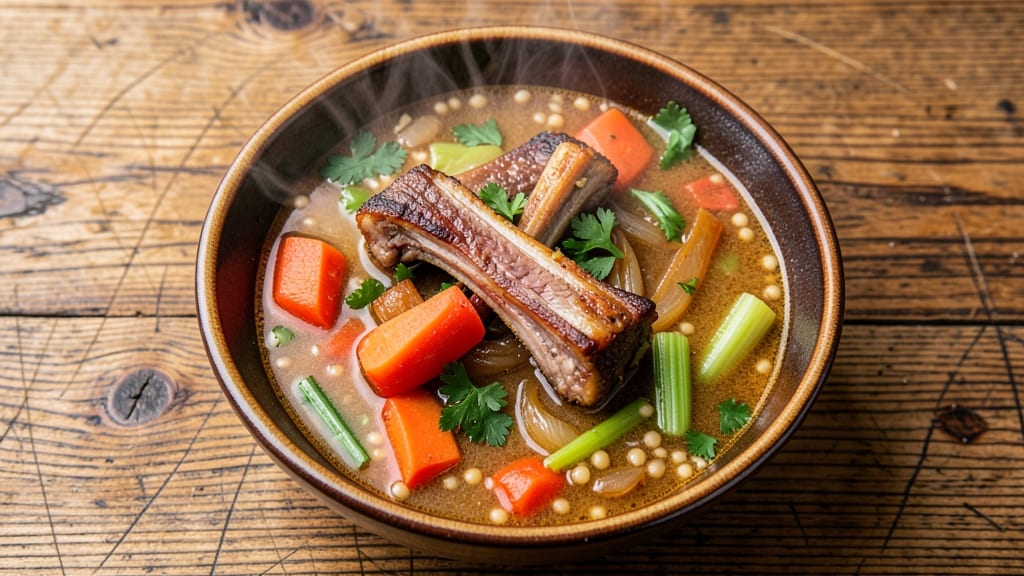
This beef barley soup recipe with prime rib bones delivers restaurant-quality depth in every spoonful, transforming simple ingredients into a velvety, collagen-rich masterpiece. The secret lies in roasting prime rib bones until deeply caramelized, unlocking layers of umami that infuse the broth during hours of simmering.
What begins as a humble pot of bones and vegetables emerges as a hearty, comforting soup with tender barley and perfectly balanced seasonings.
The process starts with high-heat roasting to render collagen from the bones, creating a broth so rich it practically melts in your mouth. As the soup simmers, you'll skim impurities for clarity and adjust seasonings carefully to let the natural beef flavor shine.
This isn't just soup—it's a complete meal in one pot, packed with protein, fiber, and warmth that lingers long after the last bite.
What makes this recipe truly special is the technique: roasting bones for maximum flavor extraction, simmering low and slow to develop depth, and finishing with barley that absorbs the broth's essence.
The result is a velvety soup with tender beef, al dente vegetables, and barley that's perfectly cooked—not mushy, not underdone. Every element works together to create a dish that feels both rustic and refined.
This recipe serves 6-8 generously and reheats beautifully, making it ideal for meal prep or feeding a crowd. The prime rib bones elevate ordinary barley soup into something extraordinary, proving that with the right technique, even simple ingredients can become something truly memorable.
Let's get started on creating this comforting classic.
Ingredients for beef barley soup recipe with prime rib bones
Prime rib bones and simple vegetables create a velvety broth with deep umami flavor.
| Ingredient | Amount | Notes |
|---|---|---|
| Prime Rib Bones 🦴 | 3 lb | With meat attached, cut into 2-inch pieces |
| Yellow Onions 🧅 | 2 whole | Medium size, roughly chopped |
| Carrots 🥕 | 4 whole | Medium size, peeled and cut into chunks |
| Celery Stalks 🧄 | 4 whole | Cut into 2-inch pieces |
| Garlic Cloves 🧄 | 8 cloves | Peeled and smashed |
| Pearl Barley 🌾 | 1 ½ cups | Rinsed thoroughly |
| Tomatoes 🍅 | 4 whole | Roma or vine-ripened, quartered |
| Beef Broth 💧 | 8 cups | Homemade or high-quality store-bought |
| Red Wine 🍷 | 1 cup | Dry red, like Cabernet Sauvignon |
| Fresh Thyme 🌿 | ¼ cup | Stems removed, chopped |
| Fresh Parsley 🌿 | ¼ cup | Chopped for garnish |
| Olive Oil 🫒 | ½ cup | Extra-virgin for roasting |
| Tomato Paste 🍅 | 2 tbsp | High-quality, no sugar added |
| Bay Leaves 🌿 | 2 whole | Dried, for infusion |
| Black Peppercorns 🌶️ | 1 tbsp | Crushed, for depth |
| Kosher Salt 🧂 | 2 tbsp | Diamond Crystal preferred |
| Fresh Bay Leaves 🌿 | 2 whole | For finishing |
The prime rib bones are the foundation of this soup—look for well-marbled cuts from a quality butcher or grocery store's meat department. Costco or Whole Foods often carry them pre-cut, saving time. If buying whole, ask for the chuck or rib section and have it cut into 2-inch pieces. Roasting them until deeply caramelized unlocks collagen and flavor; don't skip this step. For vegetables, organic carrots and celery from the store's produce section work well, but fresh is always better. The onions should be sweet, not bitter—yellow or red varieties both work, but avoid shallots for this recipe.
No prime rib bones? Substitute beef marrow bones or chuck roast cut into chunks—though the flavor won't be identical. Running short on red wine? Dry sherry or extra beef broth works in a pinch. Fresh thyme is ideal, but dried thyme at one-third the amount suffices if needed. The tomato paste can be swapped for crushed San Marzano tomatoes if you prefer. For the barley, pearled barley is standard, but pot barley works too—just adjust cooking time. The key is to rinse it well to remove excess starch. If you're using store-bought broth, look for low-sodium options like Pacific Foods or Imagine to control seasoning.
This soup tastes even better the next day as flavors meld. Store leftovers in an airtight container in the fridge for up to 5 days or freeze for 3 months. The barley thickens as it cools, so add a splash of broth when reheating. For meal prep, portion into individual containers—each serving reheats beautifully. The broth can be made ahead and refrigerated for 3 days or frozen for 6 months before adding the barley and vegetables. Fresh bay leaves should be added last to avoid bitterness, and parsley brightens the finished dish.
Why You'll Love This Recipe
- One-Pot Magic: I swear by this—just toss in the bones, chop the veggies (no measuring cups needed), and let the broth do the work. The onions caramelize right in the pot while the barley soaks up all that rich marrow flavor. No extra pans, no fuss.
- Deep Umami Bomb: That first sip? Chef’s kiss. The prime rib bones melt into the broth, turning it into a velvety, meaty elixir that makes store-bought bouillon taste sad by comparison. The garlic and celery add this earthy punch that lingers—like a hug in a bowl.
- Leftovers That Shine: This soup only gets better the next day. I make a double batch on Sundays, freeze half, and reheat it for lazy nights or when company drops by. The barley thickens just enough, and the bones keep the broth irresistibly rich—no one ever complains about seconds.
- Budget-Friendly Luxury: Prime rib bones might sound fancy, but they’re actually a steal for the flavor they unlock. A single bag of bones stretches into multiple meals, and the veggies (onions, carrots, celery) are pantry staples. It’s the kind of dish that makes you feel like you’re eating at a steakhouse without the price tag.
Step-by-step instructions for beef barley soup with prime rib bones
Transform prime rib bones into a deeply flavorful soup where every ingredient contributes to the perfect balance of richness and heartiness.
Roast the Prime Rib Bones for Maximum Flavor
Preheat your oven to 425°F and place the 3 lb prime rib bones on a rimmed baking sheet. Drizzle with 0.5 cup olive oil and season generously with 2 tbsp kosher salt and 1 tbsp crushed black peppercorns. Roast for 30-40 minutes, turning occasionally, until the bones develop a deep golden-brown crust and the meat begins to brown slightly.
This roasting step is crucial—it caramelizes the meat and bones, creating a rich foundation for the soup. The bones should smell intensely savory by the end. Remove them from the oven and let them cool slightly before proceeding. This high-heat roast ensures the broth will develop a deep, complex flavor that cannot be achieved through simmering alone.
Sauté the Aromatic Vegetables
In a large Dutch oven or heavy pot, heat 0.25 cup olive oil over medium heat. Add the 2 whole roughly chopped yellow onions, 4 whole peeled and chunked carrots, and 4 whole cut celery stalks. Sauté for 8-10 minutes, stirring occasionally, until the vegetables soften and begin to release their natural juices.
Next, add the 8 peeled and smashed garlic cloves and cook for an additional 1-2 minutes until fragrant. This step builds the flavor base of your soup, ensuring each bite carries the sweetness of the carrots, the earthiness of the celery, and the aromatic depth of the garlic. If the vegetables begin to stick, reduce the heat slightly and continue cooking until they're tender but not browned.
Build the Broth with Roasted Bones and Tomatoes
Return the roasted prime rib bones to the pot, along with the 4 quartered tomatoes, 2 whole dried bay leaves, and 1 cup red wine. Pour in the 8 cups beef broth and bring the mixture to a gentle boil. Once boiling, reduce the heat to low and let it simmer uncovered for 30 minutes, skimming off any foam or impurities that rise to the surface.
This simmering process extracts the maximum flavor from the bones and meat, creating a rich, gelatinous broth. The tomatoes and red wine add acidity and brightness, balancing the richness. After 30 minutes, remove the bones and meat, discarding the bones and setting the meat aside for later. Strain the broth through a fine-mesh sieve into a clean pot, pressing gently on the solids to extract every last drop of flavor.
Cook the Barley and Finish the Soup
Return the strained broth to the pot and stir in the 2 tbsp tomato paste and 0.25 cup chopped fresh thyme. Bring the broth back to a gentle simmer, then add the 1.5 cups rinsed pearl barley. Simmer for 30-40 minutes, stirring occasionally, until the barley is tender but still has a slight bite.
In the final 5 minutes of cooking, stir in the reserved meat from the bones, breaking it into small, bite-sized pieces. Add the 2 whole fresh bay leaves for a final infusion of aroma. Taste and adjust the seasoning with additional kosher salt and black peppercorns if needed. The soup should be rich, hearty, and perfectly balanced—neither too salty nor too bland.
Serve with Fresh Herbs and Crusty Bread
Remove the soup from heat and stir in the 0.25 cup chopped fresh parsley. Ladle the soup into bowls, garnishing each serving with an additional sprinkle of parsley and a drizzle of olive oil if desired. Serve immediately with crusty bread to soak up every last drop of that deeply flavorful broth.
The result is a soup that captures the essence of comfort food—rich, hearty, and deeply satisfying. The pearl barley adds a satisfying texture, while the prime rib bones infuse the broth with a depth of flavor that elevates this dish from ordinary to extraordinary. Each spoonful delivers a perfect balance of savory, umami, and herbal notes, making it a soup worth savoring.
Pro Tips For Making Beef Barley Soup Recipe With Prime Rib Bones
- CHAR THE BONES FIRST: Blister those prime rib bones in a dry pot over medium-high heat until they’re deep brown—about 8-10 minutes. This isn’t just for flavor; it’s the foundation. I used to skip this step and wondered why my soup always tasted like it needed more depth. (Yes, even if you’re impatient like me.)
- CUT ONIONS IN HALVES: Slice the yellow onions into ½-inch thick half-moons instead of tiny dice. They’ll soften faster and release flavor more evenly without turning to mush. I learned this the hard way—my first batch had onions that dissolved into the broth like a bad memory.
- DON’T RUSH THE SIMMER: Once everything’s in the pot, bring it to a boil once to extract flavors, then drop the heat to a low simmer. A rolling boil will cloud the broth and make the barley turn to porridge. I was skeptical until I tried it—now I swear by it.
- ADD BARLEY LATE: Stir in the barley only in the last 20-25 minutes of cooking. If you add it too early, it’ll turn mushy and release too much starch, making the soup gluey. (Your future self will thank you.)
Serving suggestions for this beef barley soup recipe with prime rib bones
Crusty Bread Pairings
This soup is made for crusty artisan bread—think a baguette or sourdough loaf from your local bakery. The crispy crust soaks up the rich broth beautifully while the soft interior provides the perfect contrast.
I love Whole Foods Market's sourdough or Panera's honey wheat bread for that extra touch of sweetness that balances the savory soup. 🥖
Herb Garnishes
Fresh herbs elevate the dish instantly. A sprinkle of chopped parsley adds brightness, while thinly sliced chives bring an oniony sharpness. For something bolder, try microgreens or baby arugula—just a pinch transforms the presentation.
I keep a small parsley plant on my windowsill for quick access, and it lasts for weeks in the fridge wrapped in a damp paper towel. ✨
Cheese Toppings
Add a grated sharp cheddar or crumbled feta for richness. A dollar slice of Gruyère melts beautifully into the hot soup, adding nutty depth. For a lighter option, try shredded Parmesan—just 2 tbsp per bowl is enough to enhance the umami.
I always keep a block of aged cheddar in the fridge for quick grating. 🧀
Acidic Accents
Brighten the soup with a squeeze of lemon juice or a dash of red wine vinegar right before serving. The acidity cuts through the richness, balancing flavors perfectly. I keep a small lemon wedge on the table for guests to add to taste.
A caper sprinkle also works wonderfully—just ½ tsp per bowl adds briny complexity. 🍋
Side Salad Contrast
A simple arugula salad with lemon vinaigrette provides the perfect crisp, peppery contrast. Toss 4 cups baby arugula with 2 tbsp olive oil, 1 tbsp lemon juice, and a pinch of flaky sea salt.
The acidity cleanses your palate between spoonfuls of rich soup. I prep this quickly while the soup simmers. 🥗
Warm Breadsticks
For a restaurant-style touch, serve with garlic butter breadsticks—warm, flaky, and packed with flavor. Brush 2 tbsp melted butter mixed with 1 minced garlic clove and ½ tsp dried parsley onto store-bought breadsticks, then bake at 375°F for 10-12 minutes.
The aroma alone makes this soup feel like a special occasion. 🍞
Nutrition facts
Frequently asked questions
Can I substitute prime rib bones with other beef bones?
Yes, but the flavor will differ. For best results, use beef marrow bones or chuck roast cut into chunks. These alternatives still provide collagen but lack the deep umami of prime rib. If using chuck, increase roasting time by 10-15 minutes to render fat properly. Avoid chicken or pork bones—they yield very different broth profiles.
How do I prevent the barley from getting mushy?
Rinse the barley thoroughly before adding it to the broth to remove excess starch. Simmer it for 30-40 minutes—never boil vigorously. For extra texture, add barley 10 minutes before the soup is fully cooked. If it's still too firm, simmer uncovered for another 5-10 minutes. The goal is al dente, not mushy!
Can I make this soup in a slow cooker?
Roast the bones as directed, then transfer everything (bones, veggies, wine, broth) to the slow cooker. Cook on low for 8-10 hours or high for 5-6 hours. Skip the skimming step—impurities will settle. Strain before adding barley, which cooks best on the stovetop for precise control. The slow cooker method yields an even richer broth.
Why does my broth look cloudy after simmering?
Cloudiness usually means unskimmed impurities or undercooked bones. Skim foam vigorously during the first 30 minutes of simmering. If the broth is still cloudy, strain it through a cheesecloth-lined sieve for extra clarity. For deeper flavor, simmer bones 15-20 minutes longer—this renders more collagen, which naturally clarifies the broth.
How can I make this soup more vegetarian-friendly?
Replace prime rib bones with mushroom stems or beef bouillon cubes for umami depth. Use vegetable broth instead of beef and add 1 tbsp soy sauce or 1 tsp miso paste for richness. For protein, stir in 1 cup cooked lentils or crumbled tempeh at the end. The barley and tomatoes will still provide hearty texture!