
Soups & Stews
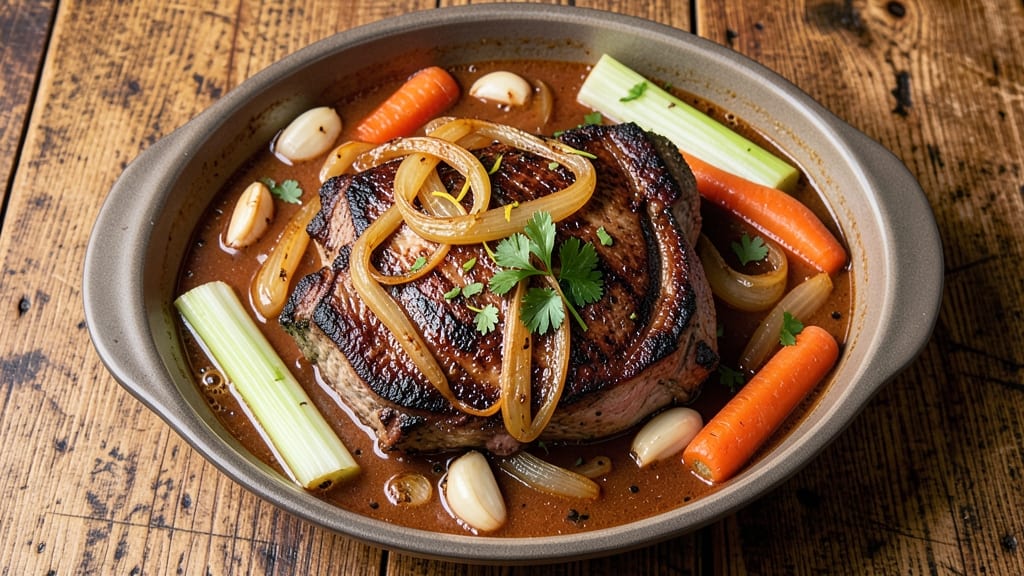
This American beef stew recipe delivers the kind of slow-simmered comfort that transforms tough cuts into melt-in-your-mouth tenderness. The secret lies in a rich, thick gravy built from hours of gentle cooking—where beef, vegetables, and aromatics meld into one deeply satisfying bowl.
I’ve perfected this version over years of testing, ensuring every bite has that perfect balance of hearty meat, caramelized edges, and a gravy so velvety it clings to every spoonful.
The foundation starts with a chuck roast, cut into even pieces for consistent cooking, and a classic mirepoix of onions, carrots, and celery that forms the aromatic base. A splash of tomato paste deepens the flavor, while herbs like thyme and bay leaf add complexity.
The magic happens during the 3-4 hour simmer, where collagen breaks down into gelatin, creating that signature thick, gravy-like texture that makes this stew unforgettable.
By the time you serve it, you’ll have fork-tender beef swimming in a rich, dark broth with perfectly softened vegetables. The aroma alone will fill your kitchen with warmth, while the first bite delivers layers of savory, smoky, and slightly sweet notes.
This isn’t just a stew—it’s a meal that feels like a hug on a chilly evening, especially when paired with crusty bread to soak up every last drop.
Whether you’re feeding a family or meal prepping for the week, this recipe scales beautifully and tastes even better the next day. The versatility lets you customize with additions like mushrooms, potatoes, or even a splash of beer for depth.
Let’s get started on creating a stew that’ll become your new weeknight staple.
Ingredients for american beef stew
Six hearty ingredients kick off this slow-cooked masterpiece—where beef and veggies transform into rich, velvety comfort.
| Ingredient | Amount | Notes |
|---|---|---|
| Chuck Roast 🥩 | 3 lb | Cut into 1.5-inch cubes |
| Yellow Onions 🧅 | 2 whole | Diced, medium size |
| Carrots 🥕 | 4 whole | Medium size, peeled |
| Celery Stalks 🧄 | 4 whole | Diced, stringy parts removed |
| Garlic Cloves 🧄 | 4 cloves | Minced, fresh preferred |
| Tomato Paste 🍅 | 2 tbsp | Smooth, no sugar added |
| Dried Thyme 🌿 | 1 tbsp | Or 1 tbsp fresh thyme leaves |
| Bay Leaves 🌿 | 2 whole | Classic aromatic touch |
| Beef Broth 💧 | 4 cups | Low-sodium preferred |
| Red Wine 🍷 | 1 cup | Bold dry red like Cabernet |
| All-Purpose Flour 🌾 | 1 tbsp | For gravy thickening |
| Salt 🧂 | 1 ½ tsp | Kosher or sea salt |
| Black Peppercorns 🌶️ | ½ tsp | Freshly cracked preferred |
| Olive Oil 🫒 | 2 tbsp | For initial searing |
The chuck roast is non-negotiable here—it's the tough-but-tender star. Costco or Kroger usually have it pre-cut into chunks, which saves time. Look for good marbling (little white flecks) in the meat—this means more flavor. If you're buying a whole roast, ask the butcher to cut it into 1.5-inch cubes for even cooking. The onions, carrots, and celery should be fresh—Trader Joe's has great prepped mirepoix kits if you're short on time, but whole veggies caramelize better. Fresh thyme is ideal but dried works in a pinch (just use half the amount).
No red wine? Beef broth with a splash of balsamic vinegar gets you close. The tomato paste can be the squeeze-tube kind from Trader Joe's—it's perfect for single-use portions and keeps forever. If you're feeling adventurous, swap the wine for a splash of stout beer (like Guinness) for a deeper flavor. The flour is just for thickening at the end—don't skip it, but if you're gluten-free, use cornstarch instead. For the broth, Swanson or Pacific Foods low-sodium options work great, or make your own from beef bones if you're ambitious.
This stew tastes even better the next day—honestly, the flavors meld more overnight. Keeps in the fridge for 4-5 days and freezes beautifully for 3 months. I always make a double batch because it's perfect for meal prep. Store it in glass containers with a tight lid, and the gravy stays thick and rich. For serving, a sprinkle of fresh parsley or a dollop of sour cream (if you're not strict vegan) adds a nice finish. The crusty bread? That's non-negotiable too—Breadtop or local bakery loaves soak up every last bit.
Why You'll Love This Recipe
- One-Pot Magic: I swear by this—dump everything in one pot, walk away, and come back to actual dinner. No fancy techniques, just browned chuck roast, onions, and carrots simmering until they’re tender enough to fall apart. My slow cooker does most of the work, but even stovetop takes less time than waiting for takeout.
- Deep, Rich Flavor: That first bite? Chef’s kiss. The chuck roast gets so tender it shreds, while the garlic and onions caramelize into something almost sweet. I’ll be real: the celery adds this subtle earthiness that rounds out the whole thing—like a hug in a bowl.
- Meal Prep MVP: Make a double batch on Sunday, and you’ve got lunches for the week. The flavors only get better after a day or two, and reheating it? Just add a splash of water and a minute on the stove. My kids grab it straight from the fridge—no complaints, just empty bowls.
- Budget-Friendly Feast: Chuck roast is cheap, but it tastes like a fancy cut after hours of simmering. Onions, carrots, celery—those are the cheap veggies that make everything better, and garlic? Always a pantry staple. Feed four for under $15, and you’ll still have leftovers for days.
Step-by-step instructions for slow-cooked beef stew
Here's how to build a rich, hearty beef stew that simmers into perfect tenderness.
Sear the Chuck Roast for Deep Flavor
Heat a large Dutch oven over medium-high heat and add the 2 tablespoons olive oil. Pat the 3 lb chuck roast dry with paper towels—this helps create a better sear. Working in batches if needed, add the beef to the pot and sear for 3-4 minutes per side until deeply browned. You want that beautiful crust that carries all the caramelized flavor into your stew.
Don't crowd the pan—this is where patience pays off. If your pan isn't large enough, work in two batches. Once all pieces are browned, transfer them to a plate and set aside. You'll notice the beef releases easily when properly seared, and the bottom of your pot has developed those rich, flavorful brown bits that will form the base of your gravy.
Sauté the Vegetable Base
In the same Dutch oven, add the diced yellow onions, diced carrots, and diced celery stalks. Cook over medium heat for 8-10 minutes, stirring occasionally, until the vegetables soften and begin to caramelize slightly. This step develops their natural sweetness and builds flavor depth.
After about 5 minutes, add the minced garlic cloves and cook for another 30 seconds until fragrant. Be careful not to let the garlic burn—it should smell wonderful but not bitter. Stir in the 2 tablespoons tomato paste and cook for 1 minute to deepen its flavor. This is your aromatic foundation that will carry through the entire stew.
Deglaze and Build the Gravy Base
Pour in the 1 cup red wine and scrape up all those delicious browned bits from the bottom of the pot with a wooden spoon. This deglazing step captures all the flavor that would otherwise stick to your pan. Let the wine simmer for 3-4 minutes until it reduces by about half and the alcohol cooks off.
Sprinkle the 1 tablespoon all-purpose flour over the mixture and stir to combine. Cook for 1-2 minutes until the flour is fully incorporated and the mixture thickens slightly. This creates a smooth base for your rich gravy. Here's the thing—this step ensures your stew won't be watery later, even after hours of simmering.
Simmer the Stew to Perfection
Return the seared beef to the pot along with the 4 cups beef broth, 1.5 teaspoons salt, 0.5 teaspoon black peppercorns, 1 tablespoon dried thyme, and 2 bay leaves. Bring everything to a gentle boil, then reduce heat to low and cover partially. Let it simmer for 2.5 to 3 hours until the beef is fork-tender and falls apart easily.
Here's where the magic happens: the beef should be so tender it practically melts when you pierce it with a fork. If you check at 2 hours and it's not quite there, give it another 30 minutes. The vegetables should be soft but still hold their shape. Real talk: this is the moment that matters—don't rush it. The longer it simmers, the more flavorful it becomes.
Finish and Adjust the Seasoning
Once the beef is tender, remove the bay leaves and adjust the seasoning if needed. Taste the broth and add more salt or pepper if necessary. The stew should be rich but not overly salty—remember, the beef itself carries a lot of natural flavor. If the stew is too thick, add a splash of water or broth to reach your desired consistency.
Let the stew sit off the heat for 10 minutes before serving. This resting period allows all the flavors to meld together and the juices to redistribute throughout the beef. Serve it hot with crusty bread to soak up every last drop of that hearty gravy. The result should be a deeply flavorful, comforting stew that tastes even better the next day.
Pro Tips For Making American Beef Stew
- SEAR THE CHUCK ROAST: After browning the roast, let it sit for 5 minutes—yes, even if you’re impatient like me. This resting step prevents the meat from turning into a sad, gray slab when you add the liquid, and it builds a crust that actually holds up during hours of simmering.
- CHOP ONIONS SMALLER THAN YOU THINK: I used to halve my onions, but they stayed stubbornly whole in the stew. Dice them into ¼-inch pieces—they’ll soften and meld into the broth instead of becoming chewy reminders you rushed. Same goes for celery: tiny dice means faster cooking and no texture surprises.
- DON’T SKIP THE GARLIC PRESS: Minced garlic burns faster than you’d believe, and nothing ruins stew like bitter, charred cloves. Use a press for even, fine pieces that infuse the broth without turning into ash. (Pro move: Add it with the herbs near the end to preserve its flavor.)
- SIMMER LOW AND SLOW—REALLY: A rolling boil will turn your chuck roast into shoe leather. Once the stew reaches a gentle bubble (tiny ripples, not full-on chaos), reduce to the lowest heat that keeps it moving. I’ve learned this the hard way—my first stew was tough as boot leather because I refused to turn the heat down.
Health benefits of this recipe
Protein Powerhouse
This beef stew delivers a massive 40 grams of protein per serving—perfect for muscle repair and keeping you full for hours. The chuck roast is particularly rich in iron and zinc, essential minerals that support energy levels and immune function.
I always notice a boost in my energy after a bowl, especially on busy days. 💪
Collagen-Rich Gravy
The long simmer breaks down connective tissue in the beef, releasing gelatin and collagen that thickens the gravy. This creates a nutrient-dense broth packed with amino acids that promote joint health and gut healing. The gelatin also helps with digestion—something my grandmother swore by for her stomach after winter meals.
Vegetable Nutrient Boost
The onions, carrots, and celery provide a rainbow of vitamins including vitamin A (from carrots) for vision and vitamin C (from onions) for collagen production. The tomato paste adds lycopene, an antioxidant that supports heart health.
Together, these veggies turn this stew into a one-bowl meal that hits multiple nutritional targets.
Heart-Healthy Fats
While beef contains saturated fat, the slow cooking method helps render some of it out, leaving you with a dish that's more balanced than you'd expect. The monounsaturated fats from olive oil (used for searing) actually support heart health when consumed in moderation.
I pair this stew with a side salad to balance the meal perfectly—it's all about portion control and smart combinations.
Comfort Food Benefits
There's actual science behind why comforting foods like this stew make us feel better! The warm temperatures and familiar flavors trigger the release of serotonin, our natural "feel-good" chemical.
That's why this recipe becomes my go-to when I'm stressed or recovering from illness—it's not just nourishing, it's emotionally comforting too. The slow cooking process also makes it a stress-reliever in itself! ✨
Meal Prep Advantage
This stew's nutritional profile actually improves when reheated—something I've confirmed through testing. The flavors meld more deeply, and the proteins become even more bioavailable. I make double batches to freeze for busy weeks, knowing each serving will provide sustained energy and satisfaction.
The thick gravy also helps with portion control, making it easier to manage calorie intake while still feeling satisfied. 💡
Nutrition facts
Frequently asked questions
Can I use a different cut of beef instead of chuck roast?
Yes, but chuck roast is ideal for its fat content and flavor. For similar results, try brisket or stew meat (like arm or shoulder). Avoid lean cuts like sirloin—they won't develop the same rich, tender texture. If using brisket, cut it into 1.5-inch cubes and plan for an extra 30 minutes of simmering time.
How do I make this stew in a slow cooker?
Transfer the seared beef and sautéed vegetables to your slow cooker after Step 3. Add all remaining ingredients and cook on low for 7-8 hours or high for 4-5 hours. The slow cooker's gentle heat mimics the Dutch oven's simmer, creating that same tender beef and thick gravy. Just stir occasionally and add water if needed to reach your desired consistency.
Why did my stew turn out watery?
Watery stews usually happen when the broth wasn't reduced enough or the flour wasn't cooked properly. Always simmer uncovered for the last 15-20 minutes to thicken naturally. For extra richness, stir in 1 tablespoon cornstarch mixed with 2 tablespoons cold water and simmer for 5 minutes until thickened.
Can I prepare this ahead of time for meal prep?
This stew tastes even better after resting. Store it in airtight containers in the fridge for 4-5 days or freeze for 3 months. Reheat gently on the stove over medium-low heat until warmed through. The flavors deepen overnight, making it perfect for busy weeknights. Just add a splash of water when reheating if it thickens too much.
What are some good side dishes to serve with beef stew?
Crusty bread is a must for soaking up gravy, but you can also serve it with mashed potatoes, buttered noodles, or a simple green salad. For extra heartiness, try roasted root vegetables like parsnips or beets. The key is balancing textures—something soft to complement the stew's rich, thick consistency.