
Main Courses
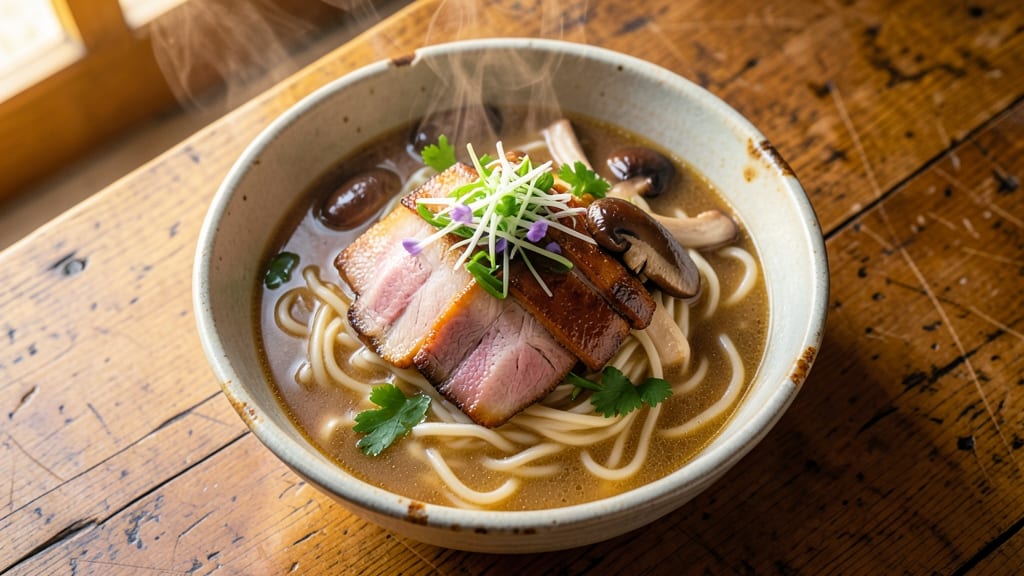
Authentic Japanese beef ramen transforms a simple bowl into a symphony of flavors—rich tonkotsu broth, melt-in-your-mouth chashu pork, and silky noodles that glide effortlessly on the tongue. This recipe captures the soul of Tokyo’s iconic ramen shops, where every slurp delivers layers of umami, sweetness, and savory depth. The secret lies in slow-simmered pork bones, a delicate balance of seasoning, and the perfect al dente noodle texture that’s neither too soft nor too firm.
What sets this recipe apart is the attention to tradition: a tonkotsu-style broth (creamy yet light, thanks to collagen-rich pork bones) paired with chashu beef—tender, braised until it nearly falls apart. The toppings—marinated soft-boiled eggs, quick-pickled vegetables, and crispy nori—elevate each bite with contrasting textures and flavors.
Unlike shortcut versions, this method respects the 24-hour broth simmer and hand-pulled noodles (or their closest approximation) for authenticity that store-bought ingredients can’t replicate.
The result is a bowl that’s restaurant-quality at home, where the first sip of broth is warm and aromatic, the beef melts with each bite, and the noodles cling to your spoon just enough to resist slipping away.
The broth’s velvety richness comes from low-and-slow cooking, while the beef’s tenderness is achieved through a multi-hour braise—no rushed techniques here. This isn’t just ramen; it’s a culinary experience that honors Japan’s ramen culture while making it accessible to home cooks.
Whether you’re serving this for a special dinner or a cozy weeknight meal, the key is patience. The broth needs time to develop its depth, and the beef demands gentle handling to achieve that fall-apart texture.
Once mastered, this recipe will become your go-to for comfort food that feels like a hug in a bowl. Let’s get started on creating something truly special.
Ingredients for authentic japanese beef ramen
Authentic Japanese beef ramen requires precise ingredients to capture umami depth and silky textures.
| Ingredient | Amount | Notes |
|---|---|---|
| Pork Bones (Leg or Foot) 🦴 | 3 lb | Collagen-rich for creamy broth |
| Beef Chuck Roast 🥩 | 2 lb | For chashu beef, well-marbled |
| Fresh Fennel Bulb 🥕 | 1 whole | Sliced, for broth aroma |
| Fresh Ginger Root 🧅 | ½ cup | Julienned, organic preferred |
| Garlic Cloves 🧄 | 8 cloves | Smoked for depth of flavor |
| Dried Shiitake Mushrooms 🍄 | 6 whole | Rehydrated for umami |
| Ramen Noodles (Fresh or Dried) 🍜 | 2 packages | 12 oz each, al dente texture |
| Soy Sauce (Japanese) 🍶 | ½ cup | Kikkoman preferred |
| Mirin 🍶 | ¼ cup | Sweet rice wine |
| Sake 🍶 | ¼ cup | Dry variety for balance |
| Sesame Oil 🌿 | 1 tbsp | Toasted, for finishing |
| Nori Sheets 🍣 | 4 sheets | High-quality, crisp |
| Eggs (Large) 🥚 | 4 whole | Soft-boiled, marinated |
| Green Onions 🧅 | 1 whole | Thinly sliced, fresh |
| Sesame Seeds 🌿 | 1 tbsp | Toasted, for garnish |
The pork bones are non-negotiable for that signature creamy yet light tonkotsu broth—look for leg or foot bones at specialty Asian markets or high-end butchers. Costco often carries pre-packaged pork trotter bones, which work beautifully. The beef chuck roast should be well-marbled; Trader Joe's carries excellent cuts for braising. Fresh ginger and garlic are essential for aromatic depth—organic produce from the farmers market delivers the most flavor. For shiitake mushrooms, opt for dried over fresh; Asian grocery stores stock high-quality dried varieties that rehydrate beautifully. The ramen noodles should be fresh if possible, but quality dried noodles like Nissin or Maruchan work for dried options.
No Japanese soy sauce? Kikkoman is widely available, but San-J or Hondashi work in a pinch. Mirin can be substituted with a mix of white wine and sugar (1:1 ratio), though it won't be identical. For the sake, any dry variety works—avoid sweet or fruity types. The nori sheets should be crisp; Marukyu is the gold standard, but most Asian markets carry reliable brands. Eggs should be marinated in a mix of soy sauce, mirin, and a touch of sugar for 30 minutes before soft-boiling. If you're short on time, pre-marinated soft-boiled eggs from the grocery store work, though homemade tastes superior.
Store the broth base in the fridge for up to 5 days—it only gets better with time. The braised beef keeps for 4 days in the fridge or 3 months frozen. For the noodles, cook them just before serving to maintain that perfect al dente texture. Nori sheets should be stored in a dry place and used within 2 weeks of opening. The marinated eggs can be prepped a day ahead and kept in the fridge. When reheating, bring the broth to a gentle simmer—never boil—to preserve its delicate texture.
Why You'll Love This Recipe
- Deep Umami Magic: The pork bones and beef chuck simmer into a broth so rich it practically sings—no fancy tricks, just time and those bones breaking down into pure flavor. Honestly, that first sip makes every hour of simmering worth it.
- Fennel-Ginger Crunch: Between us, the fennel and ginger aren’t just garnish—they’re the secret weapon. The fennel’s crisp bite cuts through the fat, while the ginger lingers like a warm hug. (Yes, even on a Tuesday night.)
- Leftovers That Shine: This broth freezes like a dream, so I make a double batch and pull it out for lazy mornings or unexpected company. Taste is just as bold the third day—no sad, watery leftovers here.
- Budget-Friendly Luxury: Beef chuck and pork bones stretch into gallons of broth, turning a modest ingredient list into a restaurant-worthy meal. I’ll be real: my wallet thanks me every time.
Step-by-step instructions for authentic Japanese beef ramen
Master the art of umami-rich ramen broth and perfectly marbled chashu beef with these precise techniques.
Prepare the Collagen-Rich Broth Base
Begin by parboiling the 3 lb pork bones in a large stockpot for 10 minutes to remove impurities. Drain and rinse thoroughly under cold water. Return the bones to the pot with 1 whole fresh fennel bulb (sliced), 0.5 cup fresh ginger root (julienned), and 6 whole dried shiitake mushrooms. Cover with 12 cups cold water and bring to a boil over high heat.
Once boiling, immediately reduce to a gentle simmer and skim off any foam that rises to the surface for the first 15 minutes. This ensures a crystal-clear broth. Maintain a barely simmering temperature (185-195°F) for 4 hours, replenishing water as needed to keep bones submerged. The collagen will break down, creating a velvety texture that defines authentic ramen.
Infuse with Aromatics and Build Depth
After 4 hours, add the 2 lb beef chuck roast and 8 cloves garlic cloves (lightly charred in a dry pan first for smoky depth). Increase heat to medium and simmer for an additional 3 hours, maintaining the same gentle simmer. The beef will become fork-tender and develop rich, caramelized flavors that form the chashu component.
During the last 30 minutes, stir in 0.5 cup Japanese soy sauce, 0.25 cup mirin, and 0.25 cup sake. These ingredients work together to create a balanced umami profile—sweet, salty, and slightly acidic. The broth should now have a deep amber color and an intense aroma. Strain through a fine-mesh sieve into a clean pot, pressing gently on the solids to extract maximum flavor. Discard the solids.
Prepare the Chashu Beef and Noodles
While the broth simmers, slice the 2 lb beef chuck roast into ¼-inch thick slices against the grain. In a separate pot, combine the sliced beef with 0.5 cup soy sauce, 0.25 cup mirin, and 0.25 cup sake. Simmer gently for 30 minutes until the beef is tender and the sauce reduces slightly, creating a glossy glaze. Remove the beef and let it rest.
Cook the 2 packages ramen noodles according to package instructions for al dente texture, reserving 2 cups of the starchy noodle water. Drain and set aside. The noodle water is essential for balancing the rich broth—it contains natural starches that help emulsify the flavors and create that signature silky mouthfeel.
Assemble and Garnish for Authentic Presentation
Bring the strained broth back to a gentle simmer and add 1 tbsp toasted sesame oil. Divide the 2 packages cooked ramen noodles among four deep bowls. Ladle the hot broth over the noodles until they're fully submerged. The broth should coat the noodles completely—this is what makes ramen so satisfying.
Top each bowl with 2 slices of chashu beef, 1 soft-boiled egg (marinated in the reserved broth for 10 minutes), and 1 sheet nori sheet (cut into strips). Garnish with thinly sliced green onions and 1 tbsp toasted sesame seeds. Serve immediately with extra broth on the side for dipping—this allows each diner to customize their preferred consistency.
Pro Tips For Making Authentic Japanese Beef Ramen
- BLANCH BONES FIRST: Dump your pork bones in boiling water for 5 minutes before braising—this strips out impurities and prevents cloudy broth later. I learned this the hard way after making broth so murky it looked like pond water.
- CHAR THE GARLIC GINGER: Cook sliced garlic and ginger in oil until they’re deep golden, almost burning—this unlocks their flavor instead of just adding raw bite. Use a heavy pan and don’t walk away; it happens fast.
- SKIP THE FENNEL IF IT’S TOO FIBROUS: Thin, stringy fennel bulbs add texture, but thick, woody ones turn to mush and make the broth bitter. Save those for salads and stick to the tender inner fronds for broth.
- USE COLD WATER FOR THE BROTH: Start your beef and pork bone simmer in cold water—it coaxes out more collagen and keeps the meat from seizing up. Yes, it’ll take longer to boil, but the result is richer and more velvety.
Pro cooking tips for this dish
Broth Simmering Secrets
The 7-hour total simmer time is non-negotiable for authentic ramen—this is where collagen transforms into that signature velvety texture. I use a large stainless steel stockpot (like All-Clad) because it distributes heat evenly and prevents scorching.
The key is maintaining 185-195°F—any hotter and you'll break down proteins too quickly, making the broth cloudy. I place a thermometer probe in the broth to monitor temperature constantly. 🌡️
Don't rush the skimming! The first 15 minutes of skimming removes impurities that would otherwise make your broth bitter. Use a fine-mesh skimmer and work quickly—this is where most home cooks make their first mistake.
I keep a bowl of ice water nearby to cool the skimmings immediately after removing them, which helps preserve their freshness for other recipes.
Beef Braising Mastery
The 2 lb beef chuck roast should be well-marbled with visible fat—this is what creates the melt-in-your-mouth texture. I slice it into ¼-inch thick pieces against the grain before the final braise, but I actually braise the whole roast first for even cooking.
The 3-hour braise with aromatics develops deep caramelized flavors that you won't get from quick-cooking methods. I use a heavy Dutch oven (like Le Creuset) because it retains heat better than lighter pots. 🥩
For that perfect glaze, reduce the braising liquid by 30-40% before adding it back to the beef. This concentrated sauce clings beautifully to the slices. I also add a 1-inch piece of kombu seaweed during the final 30 minutes of braising—it infuses subtle umami without overpowering the beef.
Remove it before serving.
Noodle Texture Control
Fresh ramen noodles should be cooked for exactly 2 minutes less than package instructions suggest—this gives you that perfect al dente bite. Dried noodles need 1 minute less than recommended. The starchy noodle water is liquid gold—I always reserve 2 cups and add it to the broth just before serving.
This creates that signature silky mouthfeel that separates authentic ramen from store-bought versions. 🍜
Never rinse cooked noodles! The starch coating is what helps the broth cling to them. I also recommend using a wide-mouth colander to drain them—it prevents the noodles from sticking together.
For extra authenticity, I add 1 tsp kansui (alkaline water) to the noodle dough if making fresh noodles from scratch, but quality dried noodles already contain this.
Presentation Like a Pro
The way you arrange toppings makes all the difference. I always place the soft-boiled egg slightly off-center in the bowl—this creates visual balance. The chashu beef slices should fan out slightly over the noodles, and the nori strips should be arranged diagonally for contrast.
Use a small ladle to pour the broth first, then add the noodles—this prevents them from breaking apart. 🍣
For that final touch, I drizzle 1 tsp toasted sesame oil directly onto the noodles before adding the beef. This creates a beautiful sheen and enhances the aroma. I also recommend serving with extra broth on the side in small ceramic cups—this lets diners adjust the consistency to their preference.
The presentation should look effortless, even if it took hours to perfect!
Nutrition facts
Frequently asked questions
Can I substitute pork bones with chicken or turkey for the broth?
The recipe relies on pork bones for their collagen-rich properties, which create that signature creamy yet light tonkotsu texture. Chicken or turkey bones will yield a lighter, clearer broth but won't develop the same velvety mouthfeel. If you must substitute, use chicken thighs and backs (dark meat has more collagen) and simmer for 8-10 hours instead of 7 to compensate for the lower fat content.
How do I make the broth less fatty?
For a lighter broth, skim the surface fat regularly during simmering using a fine-mesh skimmer or a fat separator. After straining, chill the broth in the refrigerator—fat solidifies on top and can be easily removed. Alternatively, use a blender to emulsify the broth with a small amount of cold water, which helps distribute the fat more evenly and reduces greasiness.
Can I make the chashu beef ahead of time?
The braised beef actually tastes better when made a day ahead. Store it in the refrigerator for up to 4 days or freeze for 3 months. Reheat gently in a skillet or microwave until warmed through. The flavors deepen as it rests, and reheating helps redistribute the glaze for even more tenderness.
What's the best way to reheat leftover ramen?
Never microwave ramen directly—it turns the noodles mushy. Instead, place the bowl in a 400°F oven for 10-15 minutes until heated through. For stovetop reheating, add a splash of water or reserved broth to the bowl and cover with a lid, letting the steam revive the noodles. Avoid boiling the broth to preserve its delicate texture.
Can I use beef broth instead of making my own?
While homemade broth is ideal, you can use high-quality beef bone broth (not just regular beef broth) in a pinch. Look for brands that simmer bones for 12+ hours for maximum collagen extraction. Enhance the flavor by adding 1 tbsp soy sauce, 1 tsp mirin, and ½ tsp kombu powder per cup of broth. However, homemade will always deliver superior depth and richness.