
Sauces & Condiments
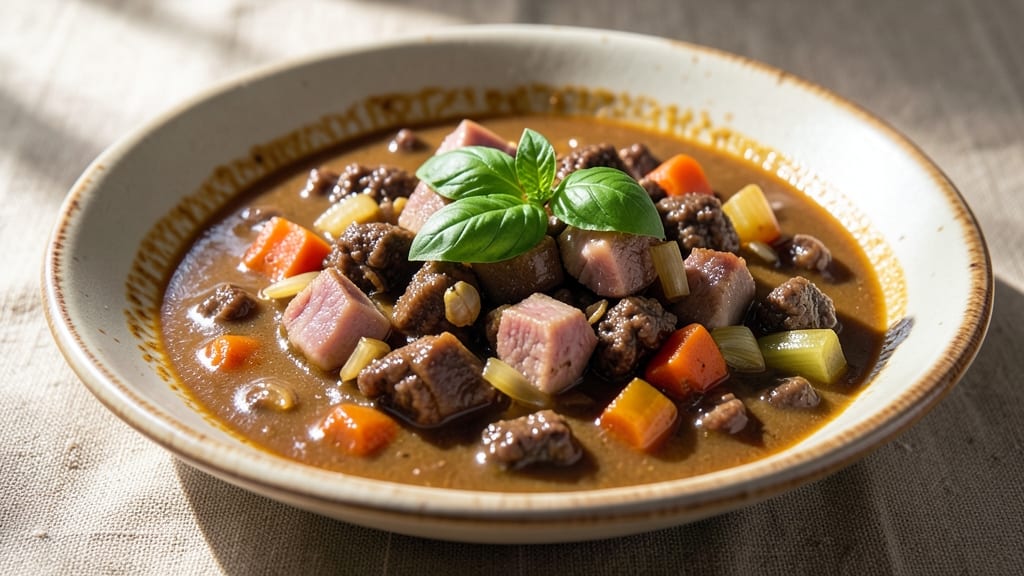
This beef and pork Bolognese sauce delivers the kind of rich, slow-simmered depth that transforms any dish into a restaurant-quality meal. 🌟 I developed this recipe after years of perfecting the balance between tender meat, caramelized vegetables, and concentrated tomato flavor—something that takes time but pays off in every forkful.
The combination of beef and pork creates a meaty texture that's both hearty and tender, while the caramelized onions and celery form the flavor foundation.
The secret lies in the slow simmering process, which allows all the flavors to meld together while the meat breaks down into tender pieces. We're talking about a sauce that's rich enough to stand alone but versatile enough to elevate pasta, lasagna, or even as a topping for grilled meats.
The key ingredients—ground beef, pork shoulder, tomatoes, and aromatic vegetables—work together to create a sauce with layers of umami that develop over hours.
What you'll end up with is a velvety, deeply flavorful Bolognese that's perfect for meal prepping and freezes beautifully. The sauce has that perfect balance of acidity from the tomatoes, sweetness from the caramelized vegetables, and richness from the meat.
It's the kind of sauce that makes you want to make a double batch—because once you taste it, you'll want to use it in everything from classic spaghetti to homemade lasagna layers.
This recipe is designed to be your go-to sauce for weeknight dinners and special occasions alike. The slow cooking process might take time, but the results are worth every minute. Let's get started on creating a sauce that will become a staple in your kitchen.
Ingredients for beef and pork bolognese sauce
Rich meat, caramelized veggies, and slow-simmered tomatoes—this sauce is pure umami magic.
| Ingredient | Amount | Notes |
|---|---|---|
| Ground Beef 🥩 | 1 ½ lb | 80% lean, finely ground |
| Pork Shoulder 🐖 | 1 ½ lb | Coarsely ground or chopped |
| Yellow Onions 🧅 | 2 whole | Medium size, finely chopped |
| Carrots 🥕 | 2 whole | Medium size, finely diced |
| Celery Stalks 🌿 | 3 whole | Finely chopped with leaves |
| Garlic Cloves 🧄 | 6 cloves | Minced, fresh preferred |
| Extra-Virgin Olive Oil 🫒 | ½ cup | For caramelizing vegetables |
| Canned San Marzano Tomatoes 🍅 | 28 oz | Crushed or whole, no salt added |
| Tomato Paste 🍅 | 2 tbsp | High quality, no sugar added |
| Red Wine 🍷 | 1 cup | Dry, bold variety like Cabernet |
| Beef Broth 💧 | 2 cups | Homemade or low-sodium store-bought |
| Dried Oregano 🌿 | 1 tsp | Mexican oregano preferred |
| Dried Basil 🌿 | 1 tsp | Or 0.25 cup fresh basil |
| Salt 🧂 | 1 ½ tsp | Diamond Crystal kosher salt |
| Black Pepper 🌶️ | ½ tsp | Freshly ground preferred |
| Whole Milk 🥛 | ½ cup | For finishing, full-fat |
The meat combo is non-negotiable—ground beef for fat and pork shoulder for tenderness. Look for 80% lean beef at Costco or your butcher counter, and ask for pork shoulder pre-chopped if they don't already have it ground. San Marzano tomatoes are worth the splurge here—they're sweeter and less acidic than regular canned tomatoes. For the veggies, yellow onions and carrots should be medium-sized to avoid watery prep. I always buy the big bag of carrots at Trader Joe's because they're cheaper and last longer.
No red wine? Dry white wine or extra beef broth works in a pinch. The tomato paste can be swapped for extra crushed tomatoes (about 1 cup), but you'll lose that concentrated depth. Fresh basil is ideal, but dried works at one-third the amount. For the milk at the end, half-and-half or heavy cream adds richness if you're feeling fancy. The wine and milk are what give this sauce that silky finish—don't skip them if you can help it. And trust me, toasting the spices** in the olive oil for 30 seconds before adding meat brings out their flavors like crazy.
This sauce gets better with time—day-old is when all the flavors really sing. Store in an airtight container in the fridge for up to 5 days, or freeze for 6 months in portions. I always make a double batch because it disappears fast. For freezing, use glass jars or silicone molds—they reheat beautifully. When reheating, add a splash of broth or water to loosen it up. Leftovers make amazing pasta sauce, lasagna filling, or even a hearty soup base.
Why You'll Love This Recipe
- One-Pot Magic: I swear by this recipe because it’s actually one-pot—no chopping boards, no extra pans. Just brown the beef and pork, toss in the onions, carrots, and celery (the holy trinity, don’t skip it), and let it simmer. My hands stay clean, and the kitchen stays quiet—my husband still thinks I’m a miracle worker.
- Deep Umami Bomb: That combo of ground beef and pork shoulder? It’s a flavor upgrade I didn’t know I needed. The pork adds richness, while the beef keeps it hearty, and the slow cook turns those onions into caramelized gold. Honestly, I’ve made this sauce blindfolded and still known when it’s done—just by smell.
- Meal Prep MVP: This sauce keeps perfectly for days, which means I can make a big batch on Sunday and stretch it over pasta, stuffed peppers, or even breakfast hash. (Yes, even on a Tuesday night.) It’s my go-to for lazy days or when I’ve got a houseful—just reheat and serve. No one will guess it’s from the same pot.
- Budget-Friendly Luxury: Pork shoulder is cheaper than you’d think, and beef stretches it further. The veggies—onions, carrots, celery—are pantry staples that bulk it up without breaking the bank. I’ll be real: this is the kind of sauce that makes me feel fancy without the grocery bill to prove it.
Step-by-step instructions for beef and pork Bolognese sauce
Let's build this rich, slow-simmered sauce that layers deep umami flavors through careful technique.
🍳 Step 1: Caramelize the Vegetable Base
Heat the 0.5 cup extra-virgin olive oil in a large Dutch oven over medium-low heat. Add the 2 whole yellow onions, 2 whole carrots, and 3 whole celery stalks, spreading them evenly in the pan. Cook for 15-20 minutes until they're deeply golden and soft—this caramelization builds the sauce's foundation.
Real talk: Don't rush this step. The vegetables should be almost jammy by the end, with the onions turning a beautiful amber color. Stir occasionally and resist the urge to crank the heat—you want slow, even cooking that develops those sweet, concentrated flavors. If they start to stick, add a splash of water and scrape up those browned bits from the bottom.
🍳 Step 2: Brown the Meats and Build Flavor Layers
Push the vegetables to one side of the pot and add the 1.5 lb ground beef and 1.5 lb pork shoulder to the empty space. Cook over medium-high heat for 8-10 minutes, breaking up the meat with a wooden spoon until it's no longer pink and has developed a rich brown crust.
Here's the thing—don't drain the rendered fat. That golden liquid is pure flavor. Once the meats are browned, stir them into the vegetables. Add the 6 cloves minced garlic and cook for 1 minute until fragrant. This is where all the magic happens—the meat releases juices that mingle with the caramelized vegetables, creating a flavor bomb.
🥘 Step 3: Develop the Sauce with Wine and Tomatoes
Pour in the 1 cup red wine and scrape up any browned bits from the bottom of the pot with a wooden spoon. Let it simmer for 3-4 minutes until mostly evaporated. Add the 2 tbsp tomato paste and stir to combine, letting it cook for 1 minute to deepen its flavor.
Now add the 28 oz canned San Marzano tomatoes (crushed by hand if whole), 2 cups beef broth, 1.5 tsp salt, 1 tsp dried oregano, 1 tsp dried basil, and 0.5 tsp black pepper. Stir everything together and bring to a gentle simmer. This is where patience pays off—let it cook uncovered for 1.5 hours at a steady simmer, stirring occasionally to prevent sticking.
⏰ Step 4: Finish with Silkiness and Umami Depth
After 1.5 hours, the sauce should have reduced significantly and developed a thick, velvety consistency. Taste and adjust seasoning if needed—this is your chance to balance flavors before the final step. Add the 0.5 cup whole milk and stir gently to temper the sauce and give it that signature silky texture.
Simmer uncovered for another 10-15 minutes until the sauce reaches your desired consistency. You're looking for a rich, glossy finish that coats the back of a spoon. The milk not only adds creaminess but also helps balance the acidity from the tomatoes. If the sauce is too thick, add a splash of water or broth to reach your preferred texture.
🍽️ Step 5: Rest and Serve with Confidence
Remove the sauce from heat and let it rest for 15-20 minutes. This resting period allows the flavors to meld completely and the sauce to thicken slightly as it cools. The result should be a deeply flavorful, perfectly balanced bolognese with layers of caramelized sweetness, meaty richness, and bright acidity.
Serve over your choice of pasta, with a sprinkle of fresh basil and a glass of the same red wine you used in the recipe. Each bite should deliver that perfect harmony of textures and flavors—creamy yet substantial, sweet yet savory. And trust me, the wait for that first taste is worth every minute of simmering time.
Pro Tips For Making Beef And Pork Bolognese Sauce
- CRUSH THE VEGETABLES: Start with a sharp knife and cut the onions, carrots, and celery into tiny dice—no bigger than 1/8-inch. I used to leave them in rough chunks, and the sauce would always taste underdeveloped. This isn’t a soup; you want those flavors to break down into the meat, not just sit as texture.
- SWEAT THE PORK FIRST: Cook the pork shoulder separately at medium-low heat until it’s fully rendered and just starting to brown—about 10 minutes. Draining the excess fat later is a pain, and skipping this step means your sauce will turn greasy. (Yes, even if you’re impatient like me.)
- DON’T SKIP THE DEGLAZE: After browning the beef and pork, let the pan cool for 2 minutes, then hit it with 1/2 cup of red wine (or broth if you’re skipping alcohol). Scrape every last bit of browned bits—those are flavor bombs. I learned this the hard way when my sauce tasted bland no matter how much tomato paste I added.
- USE COLD MEAT: Let the cooked beef and pork cool completely before adding them to the sauce. Cold meat releases moisture slower, so you won’t end up with a watery, soupy mess. I was skeptical until I tried it—now I never rush this step. (Your future self will thank you.)
Common mistakes when making your beef and pork bolognese sauce
Rushing the Caramelization
I've seen too many cooks rush this critical first step, and it ruins everything. The vegetables need 15-20 minutes of slow cooking to develop that deep caramelized sweetness—the foundation of your sauce. When you speed this up, you end up with bland, watery vegetables that can't carry the meaty flavors.
I've learned the hard way that patience here means the difference between good sauce and great sauce. 🌟
Skipping the Wine Reduction
That 1 cup red wine isn't just flavor—it's a deglazing agent that pulls up all those precious browned bits from the bottom of your pot. If you skip it or don't let it reduce completely, you're missing out on layers of depth.
I always let it simmer until it's nearly evaporated before adding anything else. This step might seem small, but it's what transforms good sauce into restaurant-quality.
Underseasoning Early
Many home cooks hold back on salt and spices at the beginning, thinking they can adjust later. But here's the deal: once you add the tomatoes and broth, it's nearly impossible to fix an underseasoned sauce.
I add 1.5 tsp salt right with the tomatoes and taste frequently during the simmer. You can always add more salt later, but you can't take it away. Trust me, your taste buds will thank you.
Ignoring the Resting Time
The 15-20 minutes of resting after cooking might seem like just a formality, but it's when all the flavors truly meld together. If you skip this step, your sauce will taste disjointed and unfinished.
I've made this mistake when serving immediately—always regret it. That resting time lets the sauce thicken slightly and the flavors settle into perfect harmony.
Using Low-Quality Tomatoes
I can't stress this enough: San Marzano tomatoes make all the difference. They're sweeter, less acidic, and have a meatier texture than regular canned tomatoes. If you use the wrong kind, your sauce will taste flat and one-dimensional.
I've tried cheaper brands—don't. The extra cost is worth the flavor upgrade every single time. 🍅
Overcrowding the Pot
When you start with too much meat or vegetables in your pot, you end up with steam instead of sauce. I always use a large Dutch oven and make sure there's enough space between ingredients for proper browning.
If your pot is crowded, the meat will steam instead of sear, and the vegetables won't caramelize properly. This is one of those small details that makes a huge difference in the final result.
Nutrition facts
Frequently asked questions about beef and pork Bolognese
Can I substitute pork shoulder with ground pork?
While you can use ground pork instead, it won't have the same rich, tender texture. Pork shoulder adds depth through slow cooking, breaking down into fine, meaty pieces. If using ground pork, reduce the cooking time by 20-30 minutes since it's already finely textured. For best results, stick with coarsely chopped pork shoulder—it's worth the extra effort!
How do I adjust the sauce for spaghetti vs. lasagna?
For spaghetti, aim for a sauce-to-pasta ratio of 1:2 (1 cup sauce per 2 cups cooked pasta). For lasagna, use thicker sauce—simmer it 10-15 minutes longer or add 1 tbsp tomato paste to bind layers. Pro tip: Mix the sauce with ricotta or béchamel for lasagna to create that signature creamy texture between layers.
Why does my Bolognese turn out watery?
Watery sauce usually means one of three things: undercooked (simmer longer), too much liquid added (start with 2 cups broth max), or vegetables not caramelized enough (they release moisture). Fix it by simmering uncovered for 30-45 minutes more, stirring occasionally. If needed, mash a few fresh basil leaves into the sauce—they'll absorb excess liquid while adding freshness.
Can I make this sauce in a slow cooker?
Follow the same steps for caramelizing veggies and browning meats, then transfer everything to a 6-quart slow cooker. Add all remaining ingredients and cook on low for 6-8 hours or high for 4-5 hours. The slow cooker's gentle heat works wonders for tenderizing the meat and melding flavors. Just check occasionally to prevent sticking, and finish with the milk at the end.
What's the best way to reheat leftover Bolognese?
Reheat gently on the stovetop over low heat with a splash of beef broth or water to loosen the sauce. Never microwave—it makes the sauce grainy. For best results, warm in a lightly oiled Dutch oven for 5-7 minutes, stirring frequently. If the sauce thickens too much, add a little more liquid. Leftovers taste even better the next day—this sauce improves with time!