
Main Courses
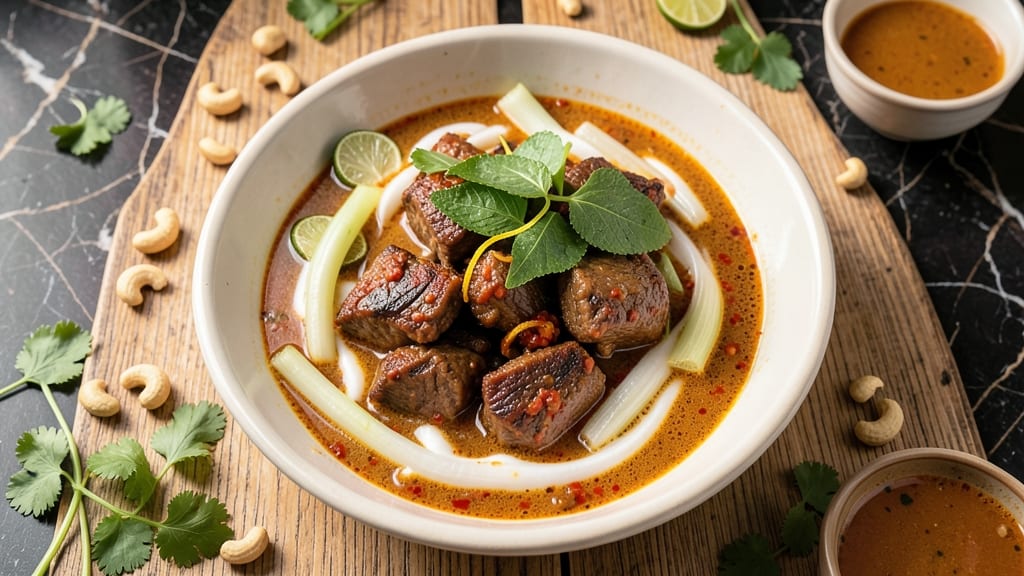
This authentic Thai beef curry recipe transports you straight to Bangkok with its fragrant blend of lemongrass, galangal, and kaffir lime leaves—each ingredient playing a crucial role in that perfect balance of sweet, sour, and spicy.
The secret lies in slow-simmering the beef until it's fork-tender while letting the coconut milk and spices meld into a velvety, aromatic sauce that coats every bite. I've perfected this recipe over years of testing, ensuring the heat is adjustable and the flavors are deeply authentic without being overly complicated.
The foundation of any great Thai curry is the paste—where fresh herbs like cilantro roots and Thai basil meet toasted spices for a complex, aromatic base. We'll build this from scratch, then let it bloom in the pot before adding the beef and coconut milk.
This method ensures the sauce develops layers of flavor rather than just masking them. The result? A dish that's rich, balanced, and packed with the kind of depth you'd expect from a street-side stall in Chiang Mai, not just a home kitchen.
What sets this recipe apart is its foolproof technique for balancing flavors: start with a touch of palm sugar to sweeten, then add fish sauce for umami, and finish with lime juice to brighten. The beef, marinated in tamarind and coconut milk, becomes impossibly tender while absorbing the aromatic spices.
By the time you serve it over steamed jasmine rice, garnished with fresh cilantro and a squeeze of lime, you'll have a restaurant-quality curry that's as satisfying as it is authentic.
This curry is designed to feed a crowd but scales perfectly for two—just halve the ingredients and adjust the rice proportionally. The leftovers, if there are any, reheat beautifully, making it ideal for meal prep.
Whether you're serving it for a dinner party or a cozy weeknight, the key is patience: let the flavors develop slowly, and the result will be worth every minute of simmering time.
Ingredients for authentic thai beef curry
Authentic Thai flavors start with these 15 ingredients—each playing its part in the perfect balance.
| Ingredient | Amount | Notes |
|---|---|---|
| Beef Chuck Roast 🥩 | 2 lb | Cut into 1-inch cubes |
| Coconut Milk 🥥 | 1 ½ cups | Full-fat, canned preferred |
| Thai Red Curry Paste 🌶️ | 3 tbsp | Store-bought or homemade |
| Lemongrass 🌿 | 1 whole | Bruised and cut into 2-inch pieces |
| Galangal 🍃 | 1 piece | About 3 inches, peeled |
| Kaffir Lime Leaves 🍋 | 4 whole | Torn into strips |
| Fresh Cilantro Roots 🌿 | 2 whole | Or 0.5 cup chopped cilantro |
| Thai Basil Leaves 🌿 | ½ cup | Packed, chopped |
| Palm Sugar 🍯 | 2 tbsp | Or light brown sugar |
| Fish Sauce 🍶 | 2 tbsp | Red Boat preferred |
| Fresh Lime Juice 🍋 | ½ cup | About 3-4 limes |
| Jasmine Rice 🍚 | 2 cups | Uncooked, for serving |
| Vegetable Oil 🫒 | 2 tbsp | For cooking |
| Fresh Cilantro 🌿 | ¼ cup | Chopped, for garnish |
| Salt 🧂 | 1 tsp | Adjust to taste |
The galangal and kaffir lime leaves are non-negotiable for that authentic Thai punch. Asian markets carry them fresh—look for firm, vibrant galangal with no black spots. Kaffir lime leaves should be bright green and fragrant. If you can't find them, substitute 1 tbsp lime zest plus 1 tsp lime juice, but it won't be the same. The Thai red curry paste is the heart of this dish—Maesri or Mae Ploy are my go-tos, but any quality brand works. For the beef, chuck roast gives you that melt-in-your-mouth texture—sirloin stays too firm. Buy it pre-cubed to save time, or ask your butcher to do it for you.
No galangal? Substitute 1 tbsp fresh ginger plus 1 tsp lime zest—it's not identical, but it'll get you close. Running low on kaffir lime leaves? Double the lime juice and add 1 tsp lime zest. The coconut milk should be full-fat for creaminess, but light coconut milk works in a pinch if that's all you've got. For the fish sauce, Red Boat is the gold standard, but any reputable brand will do. If you're avoiding fish sauce, soy sauce plus a splash of Worcestershire can mimic the umami, though it won't be as authentic. The palm sugar is key for that caramelized depth—brown sugar is a fine substitute if you're in a hurry.
This curry tastes even better the next day as the flavors meld. Store leftovers in an airtight container in the fridge for up to 5 days, or freeze for 3 months. I always make extra—it reheats beautifully and makes for quick lunches. For serving, steam the jasmine rice separately and keep it warm in a rice cooker. The curry can sit at room temperature for up to 2 hours before serving, so it's perfect for meal prep. Garnish with fresh cilantro right before eating—it adds a bright pop of color and freshness that takes the dish to the next level.
Why You'll Love This Recipe
- Here’s what sold me: a single chuck roast feeds four, and the curry paste, coconut milk, and galangal (which you can find frozen or jarred) stretch across multiple meals. I’ve made this for date nights, family dinners, and even a potluck—everyone thinks I’m a pro, but really, I’m just smart with my ingredients.
- One-Pot Magic: I swear by this recipe because it’s all in one pot—no chopping mountains of veggies, no extra pans, just that deep, smoky aroma from the curry paste and galangal simmering with the beef. The chuck roast practically melts into tender perfection while you stir, and honestly? The cleanup is just rinsing a single pot.
- Flavor Bomb: Between us, this curry hits hard—the lemongrass and galangal (yes, it’s like ginger’s cooler cousin) build layers of heat and citrus that linger. The coconut milk smooths it out just enough, but the red curry paste? That’s the secret weapon—it’s got chili, garlic, and herbs all packed in, so every bite tastes like a little vacation.
- Leftovers That Win: I make this on Sundays because it begs for seconds—and thirds. The beef stays tender for days, and the curry sauce only gets richer as it sits. Freeze half for lazy nights, or reheat it with rice and a handful of basil for a meal that still tastes fresh. My roommates steal my portions before I can.
Step-by-step instructions for authentic Thai beef curry
Here's how to build the perfect balance of spice, sweetness, and coconut richness in this classic Thai dish.
Prepare the Aromatics and Beef
Start by cutting the 2 lb beef chuck roast into 1-inch cubes—this size ensures even cooking throughout the curry. In a large pot or Dutch oven, heat 2 tablespoons vegetable oil over medium-high heat until shimmering. Add the beef in a single layer and sear for 3-4 minutes per side until deeply browned. This step develops the deep, meaty flavor that forms the base of your curry.
While the beef browns, prepare the aromatics: bruise the 1 whole lemongrass by pounding it lightly with the side of a knife, then cut into 2-inch pieces. Peel the 1 piece galangal and slice it into ¼-inch rounds. Tear the 4 whole kaffir lime leaves into strips. Once the beef is browned, remove it from the pot and set aside. Add the lemongrass, galangal, and kaffir lime leaves to the same pot and cook for 1-2 minutes until fragrant—this releases their essential oils and infuses the oil with their distinctive flavors.
Build the Curry Base
Reduce the heat to medium and stir in 3 tablespoons Thai red curry paste, spreading it evenly across the bottom of the pot. Let it cook for 1-2 minutes until it darkens slightly and releases its aroma—this deepens the flavor and removes any raw taste. Pour in 1.5 cups coconut milk and stir vigorously to combine, scraping up any browned bits from the bottom of the pot. These bits, called fond, are packed with flavor and will give your curry that authentic depth.
Return the seared beef to the pot along with 2 tablespoons fish sauce, 2 tablespoons palm sugar, and 1 teaspoon salt. Stir to coat the beef evenly in the curry mixture. The fish sauce adds umami, the palm sugar balances the heat, and the salt rounds out the flavors. Bring the mixture to a gentle simmer, then reduce the heat to low and cover the pot. Let it cook for 45-60 minutes, stirring occasionally, until the beef is fork-tender and easily pulls apart.
Finish with Fresh Herbs and Lime
Once the beef is tender, uncover the pot and increase the heat to medium. Stir in 0.5 cup chopped Thai basil leaves and 2 whole fresh cilantro roots, chopped into ¼-inch pieces. These herbs add brightness and freshness that cut through the richness of the coconut milk. Simmer for an additional 5 minutes, allowing the flavors to meld together. The basil and cilantro should wilt slightly but still retain their vibrant color.
Finish the curry by stirring in 0.5 cup fresh lime juice. This step brightens the dish and balances the richness of the coconut milk. Taste and adjust the seasoning if needed—add more fish sauce for saltiness, palm sugar for sweetness, or lime juice for acidity. The curry should be harmonious, with layers of spice, sweetness, and tang. Garnish with 0.25 cup chopped fresh cilantro just before serving to add a pop of color and freshness.
Serve Over Jasmine Rice
While the curry simmers, cook 2 cups jasmine rice according to package instructions until tender and fluffy. Serve the curry hot over the rice, allowing each bite to deliver the perfect balance of tender beef, aromatic spices, and creamy coconut milk. The rice soaks up the rich curry sauce, making every mouthful a flavorful experience. For an authentic touch, serve with extra lime wedges on the side so everyone can adjust the tanginess to their preference.
Pro Tips For Making Authentic Thai Beef Curry
- Bloom the Paste First: Toss your Thai red curry paste into the hot pot before adding oil—let it sizzle and darken for 30 seconds. This burns off the raw garlic and shallot harshness, giving that deep, toasted aroma that store-bought paste never quite delivers. (Yes, it’ll look like you’re burning it, but that’s the point.)
- Cut Galangal Thin: Skip the chunky slices—grate or julienne galangal like ginger. It blends into the sauce better and infuses flavor without leaving tough, chewy bits. If you can’t find fresh, frozen works, but thaw and pat it dry first to avoid watery curry.
- Simmer, Don’t Boil: After adding coconut milk, keep the heat low and let it bubble gently. Boiling splits the milk into a greasy mess and kills the lemongrass’s bright citrus notes. A slow simmer (15–20 minutes) builds depth—no rushing.
- Rest the Beef: Pull the chuck roast when it’s just tender (fork-tender, not falling apart). Tent with foil and let it sit 10 minutes before slicing—this keeps it juicy. Cutting too early turns it into a dry, stringy disappointment. (Trust me, I’ve done it.)
Troubleshooting great authentic thai beef curry
Curry Too Thin?
If your curry ends up too thin after simmering, don’t panic—it’s an easy fix! The key is to reduce the sauce naturally. After removing the beef, increase heat to medium-high and simmer uncovered for 10-15 minutes, stirring occasionally.
This evaporates excess liquid while concentrating flavors. For extra richness, stir in 2-3 tablespoons of coconut cream (the thick part from a can of coconut milk) or a splash of heavy cream at the end. 🔥
Beef Still Tough?
Tough beef usually means it didn’t simmer long enough. If your beef feels firm after 45-60 minutes, cover the pot and cook for another 15-20 minutes on low heat.
For faster results, add ½ cup warm water or broth to the pot—this helps tenderize the meat without thinning the sauce too much. Pro tip: Use chuck roast (not sirloin) for the best texture—it’s naturally more forgiving. 🥩
Sauce Too Spicy?
Thai curries can pack a punch, but you can balance the heat with sweetness or acidity. Stir in 1-2 tablespoons of palm sugar or brown sugar to mellow the spice, or add 1-2 tablespoons of lime juice to brighten the flavors.
If the heat is overwhelming, a dollop of coconut cream or a sprinkle of toasted rice powder can also help. Taste as you go—adjust gradually! 🌶️
Curry Too Salty?
If your curry tastes too salty, dilute it with ½ cup warm water or coconut milk, then simmer for 5 minutes to let flavors rebalance. For a natural fix, add 1-2 tablespoons of lime juice or a pinch of sugar to cut the saltiness.
Avoid adding more liquid too quickly—it can thin out the sauce. Trust your taste buds and adjust in small increments. 🧂
Lemongrass or Galangal Too Bitter?
If your aromatics taste bitter, they might be overcooked. Bruise the lemongrass and galangal lightly before adding them to the pot, and remove them after 2-3 minutes of cooking to prevent bitterness. For galangal, peel it thinly and slice it into ¼-inch rounds—this reduces bitterness while keeping the flavor.
If you’re using substitutes (like ginger), add them after the beef has browned to avoid overpowering the dish. 🍃
Curry Separated?
A separated curry usually means the coconut milk split due to high heat or sudden temperature changes. To fix it, whisk in 1 tablespoon of cornstarch mixed with 2 tablespoons of water and simmer for 2-3 minutes until thickened.
For a smoother texture, stir in 1-2 tablespoons of coconut cream or a splash of fish sauce to help emulsify the sauce. Always simmer on low heat after adding coconut milk to prevent separation. 🥥
Nutrition facts
Frequently asked questions about authentic Thai beef curry
What makes this curry taste more authentic than store-bought versions?
This recipe uses fresh aromatics like galangal and kaffir lime leaves (not dried substitutes) and builds the curry paste from scratch with Thai basil and cilantro roots. The beef is seared first for deep flavor, and the sauce simmers slowly to develop complex layers—unlike store-bought versions that often rely on pre-mixed pastes and quick cooking. The balance of palm sugar, fish sauce, and lime juice creates that signature Thai harmony.
Can I substitute any of the hard-to-find ingredients?
Yes! For galangal, use 1 tbsp ginger + 1 tsp lime zest. Skip kaffir lime leaves and add double the lime juice + 1 tsp lime zest. If you can't find Thai basil, regular basil works but lacks the anise-like flavor. For palm sugar, brown sugar is fine, though it lacks the caramel notes. The most critical swap is beef—chuck roast is ideal, but sirloin will work if cooked longer.
How do I adjust the spice level for picky eaters?
Start by reducing the curry paste to 2 tbsp instead of 3. For extra mildness, add 1 extra tbsp of palm sugar or 2 tbsp lime juice at the end. If serving kids, remove some of the Thai basil before adding it to the pot. For heat lovers, increase the paste to 4 tbsp and add ½ tsp chili flakes at the end. Always taste as you go!
Can I make this curry in a slow cooker or Instant Pot?
For a slow cooker, brown the beef first, then add all ingredients and cook on low for 6-7 hours or high for 3-4 hours. For an Instant Pot, sauté aromatics and beef, then add remaining ingredients and cook on high pressure for 25 minutes, followed by a 10-minute natural release. Both methods work, but the stovetop version develops deeper flavors from the open simmer.
What sides pair best with this curry?
The classic pairing is jasmine rice, but you can also serve it with steamed rice noodles, naan bread, or roasted potatoes. For a full Thai meal, add green papaya salad or cucumber salad to cut through the richness. Garnish with fresh cilantro, lime wedges, and crushed peanuts for extra authenticity.