
Soups & Stews
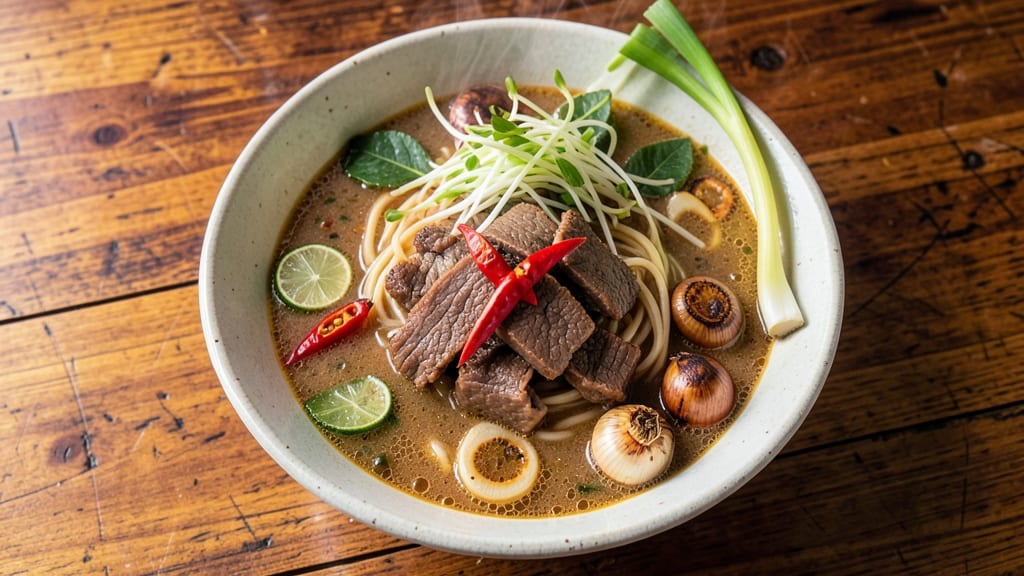
This authentic Thai beef noodle soup recipe brings the aromatic streets of Bangkok into your kitchen with every spoonful.
The secret lies in the fragrant lemongrass broth, where tender beef simmers alongside traditional aromatics like galangal, kaffir lime leaves, and lemongrass—each ingredient playing its part in creating that signature Thai balance of umami, sour, and spicy notes.
What sets this recipe apart is the attention to authenticity, from the silky rice noodles that soak up the rich broth to the delicate seasoning that transforms simple ingredients into something extraordinary.
I've perfected the technique over years of testing, ensuring the broth remains clear and fragrant while the beef stays tender and flavorful.
The result is a bowl of soup that's deeply satisfying—warm, aromatic, and packed with layers of complex flavors. The broth is light yet deeply flavorful, the beef melts in your mouth, and the rice noodles provide the perfect texture to soak up every last drop of that fragrant liquid gold.
Perfect for a comforting weeknight dinner or an impressive meal for guests, this recipe delivers restaurant-quality results with a few simple techniques and a little patience. Let's get started on creating your own bowl of Thai-inspired comfort.
Ingredients for authentic thai beef noodle soup
The aromatic foundation of this authentic Thai beef noodle soup begins with these traditional ingredients.
| Ingredient | Amount | Notes |
|---|---|---|
| Thinly Sliced Beef Chuck Roast 🥩 | 12 oz | Marinated overnight preferred |
| Fresh Lemongrass Stalk 🌿 | 3 whole | Outer leaves removed, bruised |
| Galangal Root 🌿 | 3 oz | Peeled, thinly sliced (substitute ginger) |
| Kaffir Lime Leaves 🍃 | 4 whole | Bruised, stems removed |
| Shallots 🧅 | 6 whole | Peeled, thinly sliced |
| Garlic Cloves 🧄 | 6 cloves | Peeled, smashed |
| Thai Bird's Eye Chilies 🌶️ | 4 whole | Seeds removed for mild heat |
| Full-Fat Coconut Milk 🥥 | 1 cup | Canned, unsweetened |
| Rice Noodles 🍜 | 8 oz | Fresh or dried, flat type |
| Fish Sauce 💧 | 2 tbsp | Red Boat brand preferred |
| Palm Sugar 🍯 | 2 tbsp | Or brown sugar substitute |
| Lime Juice 🍋 | 2 tbsp | Freshly squeezed |
| Fresh Thai Basil 🌿 | ¼ cup | Stems removed |
| Diamond Crystal Kosher Salt 🧂 | 1 ½ tsp | Adjust to taste |
| Vegetable Oil 🫒 | 2 tbsp | For high-heat searing |
The galangal and kaffir lime leaves are the soul of this broth—Thai specialty markets are your best bet for fresh, vibrant galangal with that citrusy, peppery bite. If you can't find galangal, ginger works in a pinch, though it lacks that unique aroma. For kaffir lime leaves, check the Asian aisle at Whole Foods or Trader Joe's—they often carry them frozen. The beef should be chuck roast, thinly sliced against the grain for that signature tenderness. I always marinate mine overnight in fish sauce and lime juice to deepen the flavor profile.
No galangal? Ginger at double the amount gets you close, though the flavor won't be identical. Running out of kaffir lime leaves? Lime zest plus a bay leaf adds some brightness. The coconut milk should be full-fat canned—light versions won't give that creamy richness. For the chilies, adjust based on heat preference: seeds in for mild, seeds out for fiery. The palm sugar is non-negotiable for that authentic caramel note, but brown sugar works in a bind. Fresh Thai basil transforms the dish—regular basil won't cut it, though Italian basil is a distant second.
Store the broth base (without noodles) for 3 days in the fridge or 3 months frozen. The rice noodles soften quickly, so soak them separately in hot water for 2-3 minutes before adding to bowls. For meal prep, assemble bowls fresh—noodles get mushy when reheated. The galangal and lime leaves can be frozen in a sealed bag for up to 6 months, though fresh is always better. Double the broth and freeze in portions for quick weeknight meals.
Why You'll Love This Recipe
- No Fuss, Big Payoff: The beef slices in this broth? They melt in your mouth after just 20 minutes of simmering—no slow-cooking, no babysitting. Honestly, I’ve made it three times in a row with zero stress, and the galangal and lemongrass do all the heavy lifting while I sip my tea.
- Umami Bomb: That first sip—wow. The galangal (it’s like ginger’s spicier cousin) and kaffir lime leaves turn the broth into liquid gold. Between us, the shallots caramelize into sweet little nuggets that make every spoonful feel like a little celebration.
- Lunch or Leftovers: I’ve served this steaming hot at 6 p.m. and reheated it the next day with zero complaints. The noodles hold up, the beef stays tender, and the flavors actually deepened overnight. (Yes, even on a Tuesday night.)
- Budget Workhorse: Thinly sliced chuck roast stretches further than you’d think, and lemongrass/galangal last ages in the freezer. I’ve fed four people for under $12—plus, the leftovers turn into a quick lunch or a last-minute guest dinner. My secret weapon.
Step-by-step instructions for authentic Thai beef noodle soup
Master the balance of aromatic broth and tender beef with these precise techniques.
Prepare the Aromatic Base
Heat the 2 tablespoons vegetable oil in a large pot over medium-high heat until shimmering. Add the 6 whole shallots, 6 cloves garlic cloves, 3 oz galangal root, and 4 whole Thai Bird's Eye Chilies. Sauté for 3-4 minutes until the shallots soften and become translucent, releasing their sweet aroma.
Next, add the 3 whole lemongrass stalks (outer leaves removed, bruised) and 4 whole kaffir lime leaves (bruised, stems removed). Stir for 1 minute until fragrant—this is where the soup's signature complexity begins. The lemongrass should release its citrusy oils while the galangal adds earthy depth. If the mixture browns too quickly, reduce heat to medium-low to prevent burning these delicate aromatics.
Sear the Beef and Build the Broth
Push the aromatics to one side of the pot and add the 12 oz thinly sliced beef chuck roast in a single layer. Let it sear undisturbed for 2-3 minutes until it develops a rich brown crust. This step is critical—it locks in flavors and prevents the beef from becoming tough. Stir occasionally to ensure even browning on all sides.
Pour in 2 cups water (enough to partially submerge the beef) and bring to a rolling boil. Once boiling, reduce heat to low and let it simmer for 15 minutes, partially covered. Skim off any foam that rises to the surface—this ensures a clear, clean broth. The beef should begin to tenderize while the aromatics continue to infuse the liquid with their signature Thai flavors.
Simmer the Broth with Coconut Milk
Add the 1 cup full-fat coconut milk, 2 tablespoons palm sugar, and 2 tablespoons fish sauce to the pot. Stir gently to combine, being careful not to break up the aromatics too much. Increase heat to medium and bring to a gentle simmer, allowing the coconut milk to meld with the broth for 10 minutes. This step creates the soup's velvety texture and balances the flavors—sweet, salty, and umami all in harmony.
Taste the broth and adjust seasoning if needed. The fish sauce should add depth, while the palm sugar rounds out the acidity. If the broth tastes too strong, add 1-2 tablespoons water to dilute slightly. The coconut milk should create a silky sheen on the surface, indicating proper emulsification.
Cook the Noodles and Finish the Soup
While the broth simmers, prepare the 8 oz rice noodles according to package instructions—typically soaking in hot water for 5-8 minutes until pliable but still slightly firm. Drain and set aside. The noodles should be al dente to avoid becoming mushy in the hot broth.
Just before serving, stir the 2 tablespoons lime juice and 0.25 cup fresh Thai basil into the broth. The lime juice brightens the flavors, while the basil adds a fresh herbal note. Divide the noodles among 4 bowls, then ladle the hot broth and beef over the top. Garnish with additional basil leaves and serve immediately, as the flavors continue to develop with each sip.
Serve with Traditional Accompaniments
This authentic Thai beef noodle soup is best enjoyed with freshly sliced cucumbers, sliced jalapeños, and extra lime wedges on the side. The cucumbers provide a crisp contrast to the rich broth, while the jalapeños add a spicy kick for those who prefer more heat. Squeeze a wedge of lime into each bowl just before eating to enhance the aromatics and balance the flavors.
The soup should have a deep golden hue from the caramelized aromatics, with tender beef slices that easily pull apart. Each spoonful should deliver a harmonious blend of lemongrass brightness, galangal earthiness, and coconut creaminess, all tied together by the umami-rich fish sauce. Serve immediately to enjoy the soup at its peak flavor and texture.
Pro Tips For Making Authentic Thai Beef Noodle Soup
- CHAR THE SHALLOTS FIRST: I learned this the hard way—skipping this step means your broth will taste flat, no matter how much lemongrass you add. Sear the sliced shallots in a dry wok or pan until they’re deep golden and crispy (about 5-7 minutes), then crush them slightly before adding to the broth. That caramelized punch is what builds the soup’s depth.
- SLICE THE GALANGAL THIN: Thick chunks of galangal just sit there like stubborn guests, refusing to release their citrusy heat. Shave it as thinly as you would ginger—almost like paper—so it dissolves into the broth instead of turning it into a mushy, flavorless pulp. (Yes, even if your knife protests.)
- DON’T BOIL THE BEEF: The moment you add raw beef to simmering broth, it’ll turn tough as shoe leather. Instead, par-cook the sliced beef in a separate pot with just enough water to cover, bringing it to a gentle simmer (not a rolling boil) for 3-4 minutes until just cooked through. Then drain and plunge into ice water to stop cooking—this keeps it fork-tender.
- USE THE LIME LEAF MIDDLE: Tossing whole kaffir lime leaves into the broth is lazy and wastes their perfume. Split each leaf lengthwise and scrape out the pale, fibrous middle—this is where the real flavor hides. Tear that middle into small pieces and add it directly to the broth; the leaves themselves can go in whole for garnish later. (Your soup will thank you.)
Troubleshooting this dish
Broth Too Cloudy?
If your broth looks murky instead of clear, you likely didn’t skim the foam properly during simmering. After boiling the beef, skim off any scum that rises to the surface for the first 5 minutes of simmering.
For extra clarity, strain the broth through a fine-mesh sieve after simmering to remove any remaining particles. This step is especially important for that restaurant-quality look. 🌟
Beef Not Tender?
Overcooking is the usual culprit here. The beef should simmer for no more than 15 minutes after adding water—any longer and it’ll turn tough. If your beef is still chewy, try slicing it thinner against the grain next time or using a slightly more tender cut like flank steak. Also,
Flavors Too Mild?
This often happens when using low-quality fish sauce or not balancing all five Thai flavors: sweet, sour, salty, bitter, and umami. Double-check your fish sauce (use Red Boat brand), add 1 extra tablespoon of palm sugar for sweetness, and finish with 1 more tablespoon of lime juice for acidity. A pinch of black pepper adds subtle bitterness that rounds out the flavor profile.
Noodles Mushy?
Rice noodles absorb liquid quickly, so never soak them in hot water for more than 5-6 minutes. For best results, use hot tap water (not boiling) and drain immediately when they’re pliable but still slightly firm.
If they seem too soft, try using fresh rice noodles instead of dried—they hold up better in hot broth. Always cook noodles separately and add them to the bowl just before ladling the hot broth on top.
Broth Too Thin?
A watery broth usually means you didn’t reduce it enough or used too much liquid. After simmering the beef, reduce the heat to low and let it cook uncovered for an extra 10-15 minutes to thicken naturally.
Alternatively, stir in 1 tablespoon of cornstarch mixed with 2 tablespoons water and simmer for 2 minutes until slightly thickened. For extra richness, add 1 extra tablespoon of coconut milk at the end.
Galangal Too Strong?
Fresh galangal has a potent, almost peppery flavor that can overpower if used too much. If your broth tastes bitter, reduce the amount to 2 oz next time or substitute with 1 oz ginger plus 1 tsp galangal powder.
For a milder version, remove the galangal after 5 minutes of simmering instead of letting it cook the full time. The key is balance—galangal should add depth, not dominate.
Nutrition facts
Frequently asked questions
Can I substitute beef with chicken or pork?
For chicken, use 12 oz boneless thighs (they stay juicier than breast) and reduce simmering time to 10 minutes. Pork works well too—try 12 oz pork shoulder sliced thinly, but increase simmering to 18 minutes for tenderness. The key is adjusting cook time based on the protein's density.
How do I make this soup spicier?
For extra heat, add 2-3 extra Thai chilies (seeds in) during the initial sauté. Finish with 1 tbsp chili garlic sauce or ½ tsp cayenne pepper stirred into the broth just before serving. For a smoky kick, add ½ tsp smoked paprika when adjusting seasoning. Remember, you can always add more chili at the table with fresh slices!
What's the best way to store leftovers?
Store the broth (without noodles) in an airtight container in the fridge for 3 days or freeze for 3 months. Reheat gently on the stove—never microwave directly from frozen. For noodles, cook fresh when reheating to prevent mushiness. The aromatics (galangal, lime leaves) lose potency when reheated, so add fresh ones when warming up.
Can I make this soup vegetarian?
Yes! Replace the beef with 12 oz mushrooms (shiitake or oyster) or tofu (extra-firm, pressed). Skip the fish sauce and use 2 tbsp soy sauce + 1 tbsp mushroom sauce for umami. Add 1 tbsp miso paste to deepen the savory notes. The broth will still shine with its aromatic base—just adjust seasoning to taste.
Why does my broth taste bitter?
Bitterness usually comes from overcooked galangal or burnt aromatics. Remove galangal after 5 minutes of simmering next time. For burnt flavors, sauté aromatics over medium-low heat and avoid stirring too vigorously. Balance with 1 extra tbsp lime juice and a pinch of sugar to brighten the broth. Fresh ingredients make all the difference!