
Main Courses
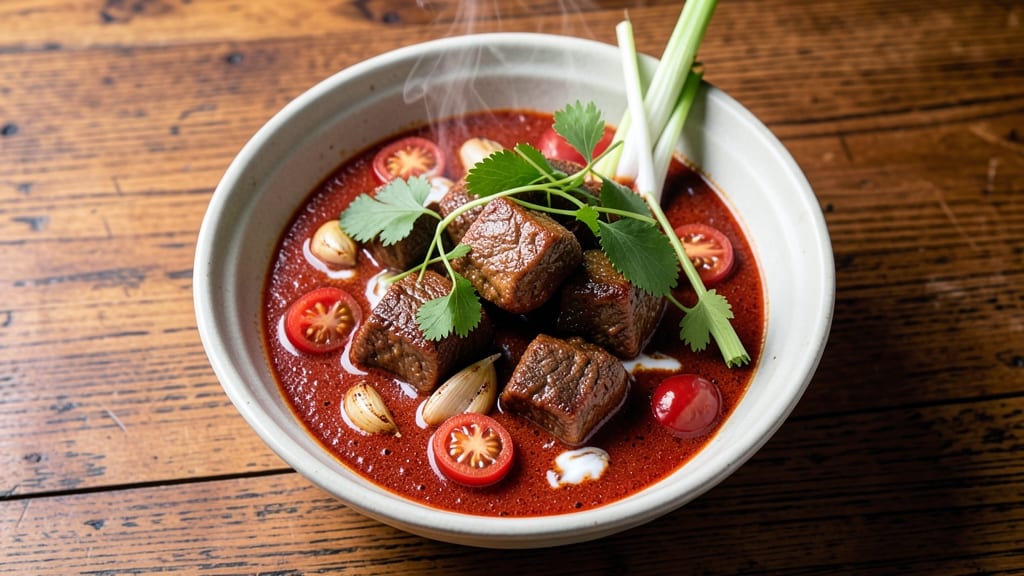
This authentic Thai red beef curry recipe delivers the bold, complex flavors of a Bangkok street stall in your own kitchen—where tender beef simmers in a rich, spiced tomato-kaffir leaf base. The secret lies in blooming whole spices and layering sweet, sour, and spicy elements for perfect balance, just like the chefs in Thailand do. I've refined this recipe over years of testing, ensuring every bite delivers that signature depth without overwhelming heat.
The foundation begins with a vibrant red curry paste—where lemongrass, galangal, and kaffir leaves infuse the oil with aromatic intensity. We build the sauce gradually, letting the spices bloom before adding coconut milk and beef to develop rich, layered flavors.
This method guarantees tender meat that practically melts in your mouth while maintaining the sauce's signature velvety texture.
What sets this curry apart is its authentic balance: sweet from tomatoes and palm sugar, sour from tamarind, and heat from fresh chilies. The kaffir leaves add a citrusy brightness that elevates everything.
Serve it over fragrant jasmine rice with a side of cucumber salad to cut through the richness—this is restaurant-quality Thai comfort food, made simple.
Whether you use homemade paste or a trusted store-bought version, this recipe delivers professional results with minimal fuss. The instructions walk you through each step, from spice blooming to flavor balancing, so you can achieve that perfect harmony of Thai red curry. Let's get cooking!
Ingredients for authentic thai red beef curry
Bold spices, tender beef, and a tomato-kaffir leaf base—this is your Thai street stall in a pot.
| Ingredient | Amount | Notes |
|---|---|---|
| Beef Chuck Roast 🥩 | 1 ½ lb | Cut into 1-inch cubes |
| Red Curry Paste 🌶️ | 3 tbsp | Store-bought or homemade |
| Coconut Milk 🥥 | 1 can | Full-fat for creaminess |
| Tomatoes | 2 medium | Ripe, diced (about 1 cup) |
| Kaffir Leaf 🌿 | 2 whole | Torn into pieces |
| Lemongrass 🌿 | 1 whole | Bruised, cut into 2-inch pieces |
| Galangal 🌿 | 1 piece | Peeled, sliced (about 2 tbsp) |
| Fish Sauce 🍶 | 1 tbsp | Red Boat preferred |
| Palm Sugar 🍯 | 2 tbsp | Or light brown sugar |
| Tamarind Paste 🍋 | 1 tbsp | Adjust for sourness |
| Fresh Red Chilies 🌶️ | 2 whole | Seeds removed, sliced |
| Garlic Cloves 🧄 | 4 cloves | Minced |
| Shallots 🧅 | 3 whole | Peeled, sliced (about 0.5 cup) |
| Green Curry Paste 🌶️ | 1 tbsp | Optional for depth |
| Jasmine Rice 🍚 | 1 ½ cups | Uncooked, for serving |
The beef is non-negotiable here—chuck roast breaks down beautifully, but sirloin works if you're in a hurry. For curry paste, Maesri or Thai Kitchen are solid store-bought options, but homemade lets you control the heat. Kaffir leaves? Asian markets sell them fresh or frozen—if you can't find them, lemongrass leaves in a pinch. Galangal's the rhizome that smells like ginger meets citrus—skip it if you can't find it, but the flavor's worth the hunt. Palm sugar adds that caramel depth, but light brown sugar works if you're out. Tamarind paste? Trader Joe's has it in tubes—no mess, no waste.
No fish sauce? Soy sauce plus a pinch of sugar mimics the umami, but you'll lose that funky depth. Fresh red chilies too spicy? Remove seeds and slice thinly—or swap for dried Thai chilies (soak first). Shallots missing? Onions work, but they're sweeter. The green curry paste is optional—just half the amount of red if you're adding it. For the tomatoes, vine-ripened is best, but canned crushed tomatoes (drained) save time. And if you're using pre-minced garlic? Toast it first—it makes all the difference.
This curry tastes even better the next day—double the batch and freeze half. Store in airtight containers for 5 days in the fridge or 3 months frozen. The rice? Cook it in advance and reheat with a splash of water—steam it covered to keep it fluffy. Leftovers reheat beautifully—just add a splash of water or coconut milk to loosen the sauce. And if you've got extra paste, freeze it in ice cube trays for future use.
Why You'll Love This Recipe
- One-Pot Magic: I swear by this recipe—just sear the beef, dump in the curry paste, add coconut milk, and let it simmer. No chopping, no fuss, and the rich, fragrant sauce does all the work while you sip your drink.
- Deep, Balanced Heat: That first spoonful? Chef’s kiss. The red curry paste delivers a slow-building warmth, but the kaffir leaf and tomatoes keep it bright and complex—not too heavy, not too spicy. The beef chuck stays tender with a melt-in-your-mouth texture.
- Weeknight to Dinner Party: Honestly, this curry works for everything. Toss it over rice for a lazy Tuesday, serve it in bowls with lime wedges for date night, or double the batch for a crowd. The leftovers? Even better the next day—if they last that long.
- Budget-Friendly Feast: Beef chuck roast is affordable, and a single jar of red curry paste stretches across multiple meals. Between us, this recipe feeds four for under $20, and the coconut milk adds richness without breaking the bank. Plus, the flavors get better as it sits.
Step-by-step instructions for authentic Thai red beef curry
Let's build this rich, aromatic curry with tender beef and bright kaffir leaf notes.
Prepare the Aromatics and Beef
Start by cutting the 1.5 lb beef chuck roast into 1-inch cubes—this size ensures even cooking without toughness. In a large pot or deep skillet, heat 1 tablespoon of oil over medium-high heat. Add the 3 whole shallots and 4 cloves garlic cloves, cooking for 2 minutes until fragrant and just beginning to color.
Push the shallots and garlic to the side, then add the 1-inch beef cubes in a single layer. Let them sear undisturbed for 2-3 minutes until they develop a deep brown crust. This initial sear locks in juices and builds rich flavor. Once browned, stir the beef and cook for another 2 minutes to ensure all sides are caramelized.
Build the Curry Base
Reduce the heat to medium and add 3 tablespoons red curry paste, stirring constantly for 1 minute to toast the spices and deepen their aroma. The paste will darken slightly—this is normal and signals the oils are releasing. Next, add the 1 piece galangal (sliced), 1 whole lemongrass (bruised and cut), and 2 whole fresh red chilies (sliced). Stir for 30 seconds to blend everything together.
Pour in 1 cup of water and scrape up any browned bits from the bottom of the pot. These bits, called fond, are packed with flavor. Add the 2 medium tomatoes (diced) and 2 whole kaffir leaves (torn), then bring the mixture to a gentle simmer. Let it cook uncovered for 5 minutes to allow the raw flavors to meld and the tomatoes to break down slightly.
Simmer the Beef in the Spiced Sauce
Add 1 tablespoon fish sauce, 2 tablespoons palm sugar, and 1 tablespoon tamarind paste, stirring well to combine. The tamarind paste will add a bright, tangy depth, while the palm sugar balances the heat. Pour in the 1 can coconut milk and stir gently—adding it gradually helps prevent curdling. The sauce should thicken slightly but remain silky.
Bring the mixture to a gentle simmer and cover the pot. Let it cook for 45-60 minutes, stirring occasionally, until the beef is fork-tender and easily pulls apart. The curry should reduce slightly, coating the beef in a glossy, aromatic sauce. If the sauce thickens too much, add 2-3 tablespoons of water to loosen it. The beef is done when it reaches an internal temperature of 195°F—this ensures melt-in-your-mouth tenderness.
Finish and Serve
Once the beef is tender, taste the curry and adjust the seasoning if needed. Add a splash more fish sauce for saltiness or a pinch of palm sugar to balance acidity. For extra depth, stir in 1 tablespoon green curry paste—this adds a layer of complexity without overpowering the red curry's signature tomato-kaffir leaf brightness.
Serve the curry immediately over 1.5 cups cooked jasmine rice, ensuring each bite delivers tender beef bathed in a rich, aromatic sauce. The kaffir leaf and lemongrass will linger on the palate, while the galangal and chilies add a subtle, spicy warmth. Garnish with fresh cilantro or Thai basil if desired, and enjoy the authentic flavors of a true Thai red curry.
Pro Tips For Making Authentic Thai Red Beef Curry
- STIR THE PASTE DRY FIRST: I learned this the hard way—adding wet ingredients to raw red curry paste straight away makes it clump like glue. Instead, toast the paste in oil over medium heat for 2-3 minutes until it smells deeply fragrant and the oils separate slightly. This step unlocks the full flavor without bitterness.
- SIMMER THE COCONUT LOW: Coconut milk splits when rushed. After adding it to the paste, bring the curry to a gentle simmer—tiny bubbles at the edges—then reduce to the lowest heat that keeps it moving. I used to crank the heat to speed things up, and half the time, the sauce would curdle. Patience here keeps the sauce velvety.
- USE HALVED TOMATOES, NOT SLICES: Whole tomatoes float and stay undercooked, while sliced ones turn to mush. Cut them in half (skin-side down) so they release flavor without falling apart. If you’re lazy, crush them lightly with your hands—just don’t skip them. They’re the bright, tangy anchor in this dish.
- SALT THE MEAT BEFORE SEARING: Season the beef chuck roast generously with salt and let it sit for 30 minutes before cooking. This ensures it seasons through, not just on the surface. I was skeptical until I tried it—now my curry tastes balanced, not bland, even with all the coconut milk’s richness.
Pro cooking tips for authentic thai red beef curry
Spice Blooming
Never skip toasting your curry paste—this step unlocks the full aromatic potential. Heat the paste in oil over medium heat for 1 minute, stirring constantly, until it darkens slightly and releases its fragrant oils.
This process, called blooming, intensifies flavors by activating the spices' essential oils. I use a heavy-bottomed pot like a Le Creuset Dutch oven to prevent scorching. 🔥
Searing Beef Properly
For perfectly tender beef, sear each side until deeply browned—this creates a Maillard reaction that builds rich, caramelized flavors. Work in batches if needed to avoid crowding the pan. I cut my 1.5 lb chuck roast into 1-inch cubes for even cooking.
After the initial sear, stir occasionally to prevent sticking, and cook until the beef reaches 195°F internal temperature for melt-in-your-mouth texture.
Balancing Flavors
Thai red curry relies on a sweet-sour-spicy balance. Start with 1 tbsp tamarind paste for sourness, 2 tbsp palm sugar for sweetness, and adjust heat with fresh chilies. Taste as you go—add more fish sauce for saltiness or a pinch of sugar to mellow acidity.
I keep Red Boat fish sauce on hand; its authentic funk is unmatched. For extra depth, finish with 1 tbsp green curry paste—it adds complexity without overpowering the red.
Coconut Milk Technique
Add coconut milk gradually to prevent curdling. Pour it in slowly while stirring gently—this helps maintain a silky texture. I use full-fat coconut milk for creaminess, but if the sauce thickens too much, thin it with 2-3 tbsp water.
Avoid boiling; simmer gently to preserve the sauce’s velvety consistency. The key is patience—let the flavors meld over 45-60 minutes of simmering.
Kaffir Leaf Magic
Kaffir leaves add a citrusy brightness that’s essential to authentic Thai red curry. Tear them into pieces and add them early in the cooking process—this allows their flavors to infuse fully. If you can’t find them, lemongrass leaves work in a pinch, but the aroma won’t be the same.
I buy mine fresh at Asian markets and store them in the freezer for up to 3 months. 🌿
Resting the Curry
Let the curry rest for 10 minutes before serving. This allows the flavors to settle and the sauce to thicken slightly, ensuring each bite is cohesive. I also recommend garnishing with fresh cilantro or Thai basil just before serving—this adds a fresh, herbaceous note that brightens the dish.
Serve with jasmine rice and a cucumber salad to cut through the richness. Trust me, this step makes all the difference! ✨
Nutrition facts
Frequently asked questions
Can I substitute beef with chicken or pork in this recipe?
For chicken, use 1.5 lbs boneless thighs (they stay juicier than breast) and reduce simmering time to 30-35 minutes. Pork works too—opt for pork shoulder and cook until tender (195°F internal temp). Just note that pork may need 5-10 extra minutes of simmering. The curry paste and coconut milk will adapt beautifully to either protein.
Why does my curry taste too spicy or not spicy enough?
The balance comes from the sweet-sour-spicy triangle. If it's too spicy, add 1 tsp more palm sugar or 1 tbsp coconut milk to mellow the heat. For more kick, add 1 extra sliced chili or a pinch of chili flakes. Remember: fresh chilies pack more heat than dried ones! Always taste as you go—Thai curries should have layers, not just one dominant flavor.
How do I make this curry less rich or more vegetarian?
For a lighter version, reduce coconut milk to ½ can and add ½ cup vegetable broth. For vegetarian, swap beef for 1.5 lbs firm tofu (pressed and cubed) or mushrooms. Use 1 tbsp soy sauce instead of fish sauce, and add 1 tsp miso paste for umami depth. The kaffir leaf and tomato base will still shine—just skip the fish sauce entirely for a fully vegan option.
Can I make this curry in a slow cooker or Instant Pot?
Slow cooker: Sauté aromatics and beef first, then transfer everything to the slow cooker. Cook on Low for 6-7 hours or High for 3-4 hours. Instant Pot: Sauté aromatics, then add remaining ingredients and cook on High Pressure for 20 minutes, followed by a 10-minute natural release. Both methods work, but the stovetop version gives you more control over the sauce's texture.
What's the best way to store and reheat leftovers?
Store in airtight containers in the fridge for 5 days or freeze for 3 months. To reheat, warm over medium-low heat with 2 tbsp water or coconut milk to loosen the sauce. Never microwave directly—it can make the sauce split. For best results, reheat gently until steaming, then adjust seasoning with a splash of fish sauce or lime juice.