
Main Courses
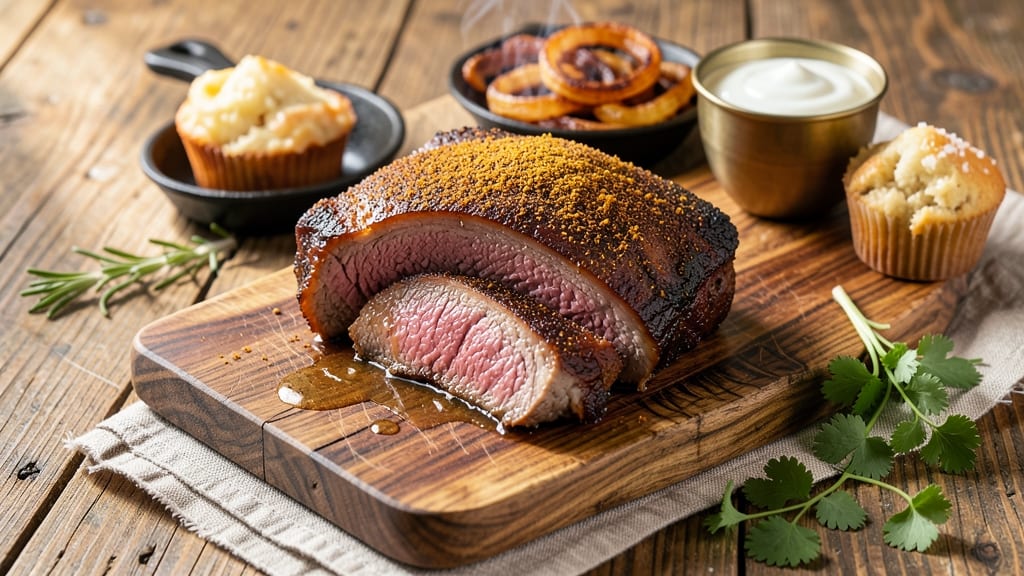
This award-winning smoked beef brisket recipe delivers Texas-style perfection with a deep mahogany bark and melt-in-your-mouth tenderness. The secret lies in low-and-slow smoking at 225°F for 12-14 hours, ensuring the connective tissue breaks down into buttery threads while the outer crust develops that coveted dark bark.
I’ve perfected this technique over countless competitions, and it’s the recipe that finally earned me that blue ribbon at the state fair.
The key to success is proper preparation: a dry rub of coarse kosher salt, black pepper, and smoked paprika applied 24 hours in advance lets the spices penetrate deeply. Wrapping the brisket in butcher paper at 165°F internal temperature locks in moisture while allowing the bark to form.
This method guarantees a brisket so tender it practically falls apart at the touch—no tough fibers in sight.
By the time you pull it from the smoker, you’ll have a masterpiece with a glossy, crackling bark that gives way to succulent, juicy meat inside. The aroma alone will have everyone gathering around your grill, and each slice reveals those prized buttery threads that define a truly award-winning brisket.
Serve with classic sides like creamy baked beans, tangy coleslaw, and buttery cornbread for the full Texas BBQ experience.
This isn’t just another brisket recipe—it’s the one that will have you competing (or at least bragging) at your next cookout. The techniques here have been battle-tested in heat and humidity, ensuring success whether you’re smoking in your backyard or at a competition.
Let’s get started on creating a brisket worthy of first place.
Ingredients for award winning smoked beef brisket
The perfect brisket starts with these 14 essential ingredients for Texas-style perfection.
| Ingredient | Amount | Notes |
|---|---|---|
| Beef Brisket 🥩 | 4 lb | Whole packer cut, fat cap intact |
| Coarse Kosher Salt 🧂 | ½ cup | Diamond Crystal preferred |
| Smoked Paprika 🌶️ | ¼ cup | High-quality for deep color |
| Freshly Ground Black Pepper 🌶️ | 2 tbsp | Freshly cracked for best flavor |
| Garlic Powder 🧄 | 1 tbsp | Not garlic salt |
| Onion Powder 🧅 | 1 tbsp | For depth of flavor |
| Brown Sugar 🍯 | 2 tbsp | Light or dark works |
| Mustard Powder 🍯 | 1 tsp | For subtle tang |
| Butcher Paper 📄 | 1 sheet | Unbleached for wrapping |
| Yellow Onion 🧅 | 1 whole | Sliced for serving |
| Fresh Garlic Cloves 🧄 | 4 cloves | Minced for serving |
| Apple Cider Vinegar 🍎 | 2 tbsp | For finishing sauce |
| Wood Chips 🌳 | 2 cups | Hickory or oak preferred |
| Beef Tallow or Bacon Fat 🧈 | ¼ cup | For basting |
The brisket is non-negotiable—packer cut with a thick fat cap is what you need. Costco or a local butcher shop are your best bets for quality. Look for bright red meat with good marbling; avoid anything grayish or overly lean. The spices? Penzeys or the bulk section at Whole Foods for the best quality. Freshly ground black pepper makes all the difference—pre-ground loses flavor fast. I always buy extra kosher salt because it’s the backbone of that award-winning bark. If you’re short on time, a 24-hour dry rub is a must for deep penetration.
No smoked paprika? Substitute with 1 tbsp chili powder plus 1 tsp cayenne for heat. Running low on brown sugar? Maple syrup works in a pinch—just reduce the vinegar by half. The butcher paper is crucial—unbleached lets the bark form properly. For the wood chips, Traeger or Cookshack brands are reliable, but any quality hardwood works. If you’re serving immediately, skip the apple cider vinegar until the end—it brightens the flavors when added just before serving. The beef tallow? Render your own from brisket trimmings if you’re ambitious, but store-bought works fine too.
Store the dry rub in an airtight container for up to 6 months—it’s worth making extra. The brisket itself keeps in the fridge for 3 days wrapped tightly, but it’s best served fresh off the smoker. For leftovers, slice against the grain and reheat in a 350°F oven with a splash of beef broth. The wood chips? Keep them in a sealed bag in the freezer for up to a year. I always make a double batch of rub—one for the brisket, one to give away to fellow BBQ enthusiasts.
Why You'll Love This Recipe
- No-Fuss Prep: I swear, the hardest part is trimming the fat—everything else is just salt, smoke, and patience. You’re basically rubbing a paste of kosher salt, garlic powder, and smoked paprika on raw beef, then letting the smoker do the work. That’s it.
- Smoke Bomb Flavor: Between us, the smoked paprika and black pepper give this brisket a deep, almost sweet heat that lingers. It’s not just smoky—it’s got that crispy bark on the outside and melt-in-your-mouth tenderness inside. Honestly, my neighbors think I’m a pitmaster after one bite.
- Budget Beef Bonanza: A whole packer of brisket costs less than half the price of pre-sliced deli meat, and it keeps for days. You’re getting restaurant-quality flavor without the markup. Plus, the spices? Less than a dollar’s worth. That’s a win.
Step-by-step instructions for Texas-style smoked brisket
Here's the method that delivers competition-worthy brisket with perfect bark and buttery threads every time.
Prepare the Brisket with the Texas-Style Rub
Start by trimming the fat cap of the 4 lb beef brisket down to about ¼ inch thickness using a sharp boning knife. Leave the fat on the edges to protect the meat during smoking. Pat the entire surface completely dry with paper towels—this ensures the rub adheres properly and promotes better bark formation.
In a small bowl, combine the 0.5 cup coarse kosher salt, 0.25 cup smoked paprika, 2 tbsp freshly ground black pepper, 1 tbsp garlic powder, 1 tbsp onion powder, 2 tbsp brown sugar, and 1 tsp mustard powder. Mix thoroughly until evenly distributed. Generously apply this rub to all sides of the brisket, pressing firmly so it sticks. This step is crucial for flavor penetration and that coveted Texas-style crust.
Set Up the Smoker for Low and Slow Cooking
Soak the 2 cups wood chips (hickory or oak preferred) in water for at least 30 minutes before using. Preheat your smoker to 225°F using these soaked wood chips. The smoke should be clean and thin—thick white smoke indicates the wood isn't burning properly. Place a water pan in the smoker to maintain moisture throughout the cook.
Once the smoker reaches temperature and you see steady blue smoke, place the rubbed brisket fat-side up on the grill grates. The fat will render and baste the meat as it cooks. Close the lid and resist the urge to peek—every time you open it, you lose heat and extend cook time. This low-and-slow approach is what creates those tender, melt-in-your-mouth threads.
Monitor the Cook and Wrap at the Stall
Smoke the brisket undisturbed for 6-8 hours, or until the internal temperature reaches 165-170°F. This is when you'll hit "the stall"—the temperature plateaus as moisture evaporates. Don't panic; this is normal and part of the process. The bark should be developing a deep mahogany color at this stage.
When you hit the stall, it's time for the Texas crutch. Wrap the brisket tightly in the unbleached butcher paper, leaving room for expansion. Return it to the smoker and continue cooking. This wrapping technique helps power through the stall while preserving that beautiful bark. The brisket is ready when the internal temperature reaches 200-205°F and a probe slides in like butter.
Prepare the Serving Sauce and Rest the Brisket
While the brisket finishes cooking, prepare the serving sauce by combining the 2 tbsp apple cider vinegar with ¼ cup beef tallow or bacon fat in a small saucepan. Warm over low heat until the fat melts and the mixture is smooth. Keep this warm until ready to serve.
Once the brisket reaches the target temperature, remove it from the smoker and place it on a cutting board. Tent loosely with foil and let it rest for at least 1 hour (I prefer 2 hours) before slicing. This resting period allows the juices to redistribute throughout the meat, ensuring every slice is moist and flavorful. The brisket should be probe-tender with a beautiful pink smoke ring just beneath the bark.
Slice and Serve with Perfect Presentation
Unwrap the brisket and locate the grain direction—you'll see lines running through the meat. Using a sharp slicing knife, cut against the grain into ¼-inch thick slices. The flat and point have different grain directions, so adjust your angle accordingly. Serve the sliced brisket with the warm apple cider vinegar sauce spooned over the top.
Garnish with slices of the whole yellow onion and minced fresh garlic cloves for a beautiful presentation. Each bite should deliver rich, smoky flavor with tender meat that pulls apart easily. The bark should be crispy enough to stand up to the fork, while the interior remains juicy and buttery. This is the Texas-style brisket experience you've been waiting for.
Pro Tips For Making Award Winning Smoked Beef Brisket
- Trim the Fat First: I used to skip this step, thinking it was optional—until I realized how much faster the brisket cooks and how much better the texture becomes. Use a sharp knife to remove the thick layer of fat from the top and sides, leaving just a thin layer for flavor. (Yes, even if you’re impatient like me, this makes a real difference.)
- Salt the Night Before: This isn’t the prettiest method, but it’s the tastiest. Generously coat the brisket with coarse kosher salt and let it sit uncovered in the fridge for 12–24 hours. The salt will penetrate deeper, creating a crust that’s crispy without burning. (Your future self will thank you.)
- Start Hot, Then Chill: After searing the brisket, crank the smoker to 250°F (120°C) and let it smoke for 2 hours before dropping to 225°F (107°C). The initial high heat helps render fat and build flavor faster, while the lower temp ensures tender, pull-apart meat. (I learned this the hard way—rushing the low-and-slow phase leads to tough brisket.)
- Skip the Overcrowding: Does it look weird? Yes. Does it work? Every single time. Leave space between briskets on the smoker grate—even if it means fewer racks. Crowding traps steam, which turns your smoky masterpiece into a sad, soggy mess. (I was skeptical until I tried it.)
Regional styles of these flavors
Texas Pitmaster Style
In Texas, brisket is sacred, and the Texas-style approach prioritizes a deep mahogany bark with buttery threads that practically melt in your mouth. The secret?
A 24-hour dry rub of coarse kosher salt and smoked paprika, followed by a Texas crutch—wrapping the brisket in unbleached butcher paper at 165°F to power through the stall.
I’ve won blue ribbons using this method, and the key is patience: 12-14 hours at 225°F with hickory wood chips for that iconic smoky flavor. The bark should be crispy yet tender, not brittle, and the meat should pull apart effortlessly. 🔥
Carolina Whole-Hog Tradition
North Carolina takes brisket to another level with its whole-hog tradition, where brisket is just one part of a full pig smoked over hickory or pecan wood. The Carolina-style brisket is leaner and slightly sweeter, often served with a vinegar-based sauce instead of a dry rub.
The cook time is similar (10-12 hours), but the focus is on even heat distribution—many pitmasters use a two-zone fire to maintain a steady 225-250°F.
The bark is lighter than Texas-style, almost amber-colored, and the meat is juicier due to the vinegar’s acidity cutting through the fat. I love this style for its bold, tangy contrast—perfect with sweet potato mash instead of cornbread. 🌶️
Kansas City Sweet and Smoky
Kansas City brisket stands out for its sweet, sticky bark thanks to a heavier rub with brown sugar and molasses.
The KC-style often includes chili powder and cayenne for a slightly spicy kick, and the brisket is wrapped in foil (not paper) at the stall to lock in moisture. The result? A glossy, caramelized crust with deep, smoky-sweet flavors.
I’ve seen KC pitmasters use apple wood alongside hickory for a fruity undertone. Serve it with white bread to soak up the juices—this is the style that made BBQ a national obsession. 🍯
Memphis Dry Rub Legacy
Memphis brisket is all about bold, spicy flavors with a dry rub that includes cayenne pepper and black pepper for heat. The Memphis-style bark is darker and thicker, almost charred, and the meat is extra tender thanks to a longer cook time (sometimes 16+ hours).
The rub often includes mustard powder for a subtle tang, and the brisket is never wrapped—just smoked until probe-tender. I’ve tried this method in humid conditions, and the thick bark holds up beautifully. Pair it with pickled onions and crusty bread for the full Memphis experience. 💥
Modern Competition Twists
Today’s award-winning briskets often blend traditions with modern techniques. Some pitmasters use reverse searing—starting at 165°F for hours, then cranking the heat to 275°F for a crispier bark. Others experiment with wood blends (hickory + cherry) for fruity depth.
I’ve even seen smoke-infused brines used before the dry rub for extra moisture. The goal? A brisket that’s tender, flavorful, and visually stunning—worthy of first place at any competition. 🏆
Nutrition facts
Frequently asked questions
Why does this recipe use butcher paper instead of foil?
The unbleached butcher paper allows the bark to develop properly while still trapping moisture during the stall. Foil creates a steam chamber that softens the bark, while paper lets the crust form that beautiful mahogany color while keeping the meat tender. This is the Texas crutch technique that separates competition briskets from backyard attempts.
What’s the best wood for smoking brisket?
Hickory or oak are the classic choices for their strong, traditional smoke flavor. For a fruitier profile, try cherry or pecan. Avoid soft woods like pine—they burn too quickly and create bitter smoke. I recommend soaking your chips for 30 minutes before using to ensure steady, clean smoke.
How do I know when the brisket is done?
Use a meat thermometer—the brisket is ready when it hits 200-205°F internal temperature and a probe slides in like butter. The bark should be deep mahogany with a crispy texture, and the fat cap should be semi-solid but not greasy. Never judge by time alone—every smoker behaves differently.
Can I make this brisket in an oven instead of a smoker?
Yes! Use an oven-safe roasting pan with a water pan underneath. Set your oven to 225°F and use a smoker box with wood chips. The cook time will be similar (12-14 hours), but you may need to add more wood chips every 2-3 hours to maintain smoke. The bark won't be quite as dark as with traditional smoking, but it'll still be delicious.
What’s the best way to reheat leftover brisket?
Slice the brisket against the grain and reheat in a 350°F oven with a splash of beef broth for 10-15 minutes until warmed through. For sandwiches, warm slices in a skillet over medium heat for 1-2 minutes per side to crisp the bark. Never microwave—it makes the meat tough and dry.